• Fri frakt över 249 kr
  • •
  • Snabba leveranser
  • •
  • Billiga böcker
Kundservice

Du är på sajten för privatpersoner.

Företag, bibliotek eller offentlig verksamhet?

Du handlar på classic.bokus.com, där alla dina funktioner finns intakta.
Till classic.bokus.com
Bokus logotyp. Gå till startsidan.
  • Erbjudanden
  • Nyheter
  • Student
  • Topplistor
  • Barn & ungdom
  • Bokus Play
  • E-böcker
  • Pocketböcker
  • Spel & pussel

10% rabatt på allt med kod: NYSTART10 →

Sidfot

Mina sidor

    Hjälp

    • Kundservice
    • Vanliga frågor och svar
    • Frakt och leverans
    • Retur vid ångerrätt
    • Reklamera vara
    • Betalning
    • Köpvillkor
    • Allmänna villkor
    • Information om webbplatsens tillgänglighet

    Om Bokus

    • Om oss
    • Pressrum
    • För studenter
    • För företag
    • För bibliotek och offentlig verksamhet
    • För leverantörer
    • Hållbarhet

    Populärt

    • Aktuella erbjudanden
    • Presentkort
    • Studentlitteratur
    • Nya böcker
    • Topplistor
    • Signerade böcker
    • Engelska böcker

    Inspiration

    • Boktips
    • BookTok
    • Populära bokserier
    • Barnbokskaraktärer
    • Populära författare
    Logotyp för Bokus
    Följ oss på Facebook (extern länk)Följ oss på Instagram (extern länk)Följ oss på YouTube (extern länk)Följ oss på TikTok (extern länk)
    bokus @ CookiesAnpassa cookiesIntegritetspolicyKöpvillkor
    Till Citymail hemsida (extern länk)Till Budbee hemsida (extern länk)Till Postnord hemsida (extern länk)Till Schenker hemsida (extern länk)Till Early Bird hemsida (extern länk)Till Walleys hemsida (extern länk)
    1. Medicin
    2. Medicin: allmänt
    3. Medicinhistoria

    Human–Bug Encounters in Multispecies Networks

    Inbunden, Engelska, 2024

    Del 8 i serien Brill's Series in the History of the Environment

    2 527 kr

    Beställningsvara. Skickas inom 3-6 vardagar. Fri frakt över 249 kr.

    Beskrivning

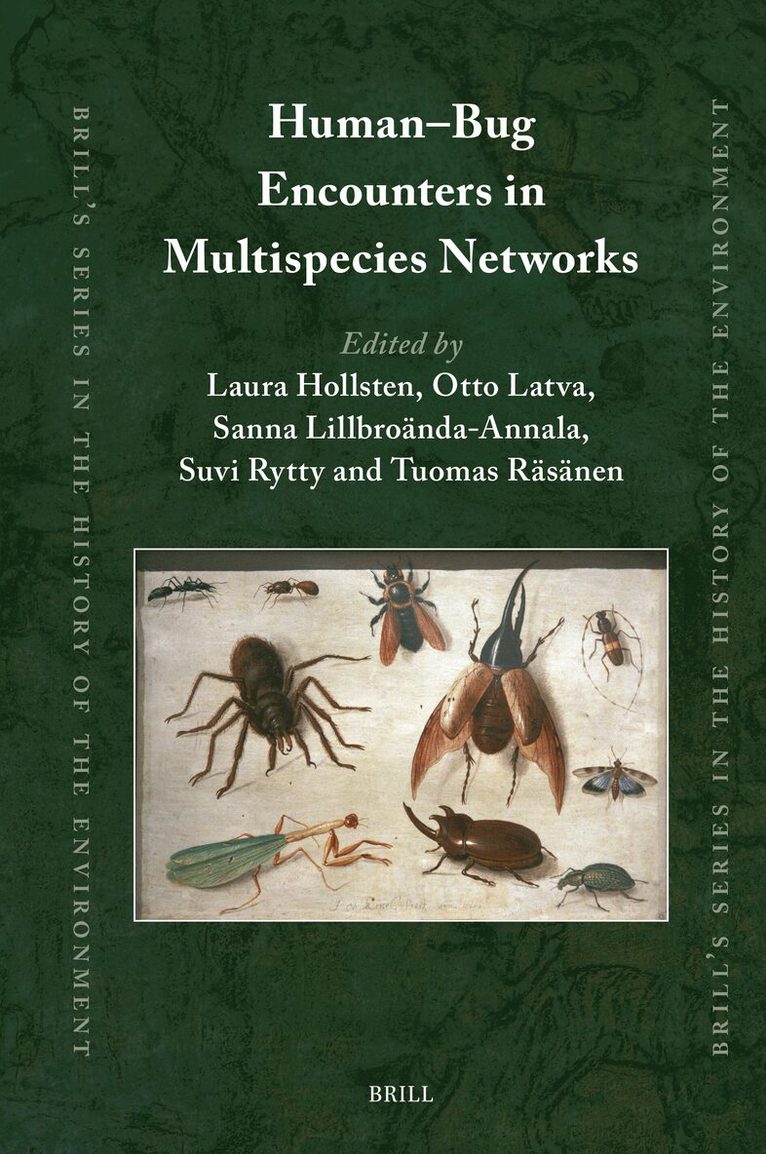
    While providing a basis for all ecosystems, bugs such as insects and arachnids also destroy crops and indirectly kill humans and other animals by the millions. This book illuminates the many ways in which human lives affect and are affected by bugs as part of a wider network of species. 14 chapters reveal how knowledge, ideas, and emotions related to bugs are historically and culturally formed. With many bug populations in free fall, how can humans and bugs coexist? This book examines this question and offers a new ethics for this coexistence. Contributors are Michaela Fenske, Minna Santaoja, Concepción Cortés Zulueta, Heidi Mikkola, Laura Hollsten, Sophie FitzMaurice, Otto Latva, Marianne Mäkelin, Taina Syrjämaa, Suvi Rytty, Sanna Lillbroända-Annala, Emily Webster, Karine Aasgaard Jansen, Heta Lähdesmäki, and Tuomas Räsänen.

    Produktinformation

    • Utgivningsdatum:2024-12-06
    • Mått:155 x 235 x 26 mm
    • Vikt:732 g
    • Format:Inbunden
    • Språk:Engelska
    • Serie:Brill's Series in the History of the Environment
    • Antal sidor:316
    • Förlag:Brill
    • ISBN:9789004680609

    Utforska kategorier

    • Medicinhistoria inom Medicin
    • Naturvetenskapens historia inom Naturvetenskap och teknik
    • Biovetenskap inom Naturvetenskap och teknik

    Mer om författaren

    Laura Hollsten, Ph.D. (2005), Åbo Akademi University, Finland, is a researcher specialised in environmental history at that university. Her research interests include human-animal studies, early modern environmental history, the history of knowledge and science, and global history.Otto Latva, Ph.D. (2019), University of Turku, Finland, is a historian focusing on human-animal and human-plant studies as well as environmental history. Latva is the author of the monograph The Giant Squid in Transatlantic Culture: The Monsterization of Molluscs (2023).Sanna Lillbroända-Annala, Ph.D. (2010), Åbo Akademi University, Finland, is an ethnologist and senior lecturer at that university. She has conducted research in urban environments from the perspective of gentrification and cultural heritage, lately with special interest towards non-humans in urban settings.Suvi Rytty, Ph.D. (2021), University of Turku, Finland, is a postdoctoral researcher specializing in the history of medicine and health. Her research interests include the history of the natural way of life, alternative medicine, vegetarianism and anti-vaccinationism.Tuomas Räsänen, Ph.D. (2015), University of Turku, Finland, is a Professor of environmental history at the University of Eastern Finland. He has studied the history of human-wildlife relationships and marine environmental history. He has been leading the research project Humans and Ticks in the Anthropocene.

    Innehållsförteckning

    • List of FiguresNotes on ContributorsIntroductionLaura Hollsten, Suvi Rytty, Otto Latva, Sanna Lillbroända-Annala and Tuomas RäsänenPart 1: Ethics1 Becoming Aware of Insects: Dangers and Endangerments in the AnthropoceneMichaela Fenske2 Deconstructing Wasp Aggression: Proposing a Critically Anthropomorphic Narrative of Shared VulnerabilityMinna SantaojaPart 2: Insects and Human Gaze3 Fly Eyes and Insect Vision at the Turn of the 20th Century: from Scientific Curiosity to Compound MenaceConcepción Cortés Zulueta4 Encounters with the Insect World: Care and Human – Insect Relationships in Wildlife DocumentariesHeidi MikkolaPart 3: Science and Knowledge5 Wild Spiders in Fragile Knowledge Networks: Spiders in Medicine, Natural History, and Silk Production in Eighteenth-Century EuropeLaura Hollsten6 Valuing Birds and Insects in America, c. 1815–1920: a Multispecies PerspectiveSophie FitzMaurice7 From Harmless Nuisance to Frightening Enemy: the Perceptions of Ticks in Finland before the Beginning of the Tick Hysteria in the 1990sOtto Latva8 Anopheline Mobilities and More-Than-Mosquito Biopolitics in Making BiotechnologyMarianne MäkelinPART 4: Bodies at Risk9 Clandestine Agents in Meadows: Ticks, Cattle and Redwater Fever in Finland, 1860s–1930sTaina Syrjämaa10 Social Construction of Tick-Borne Diseases from the 1950s to the Twenty-First Century: a View From the History of MedicineSuvi Rytty11 Tick Smart: Practices and Materializations in Human – Tick EntanglementsSanna Lillbroända-AnnalaPART 5: Multispecies Networks12 Fleas, Knowledge-Making, and the Epidemiology of Plague in British India: Perspectives from the Bombay Epidemic, 1905–1906Emily Webster13 Epidemic Encounters: Mingling with Mosquitoes in Réunion and MauritiusKarine Aasgaard Jansen14 Humans, Ticks, and the Conflict over the CervidsHeta Lähdesmäki and Tuomas RäsänenIndex