• Fri frakt över 249 kr
  • •
  • Snabba leveranser
  • •
  • Billiga böcker
Kundservice

Du är på sajten för privatpersoner.

Företag, bibliotek eller offentlig verksamhet?

Du handlar på classic.bokus.com, där alla dina funktioner finns intakta.
Till classic.bokus.com
Bokus logotyp. Gå till startsidan.
  • Erbjudanden
  • Nyheter
  • Student
  • Topplistor
  • Barn & ungdom
  • Bokus Play
  • E-böcker
  • Pocketböcker
  • Spel & pussel

10% rabatt på allt med kod: NYSTART10 →

Sidfot

Mina sidor

    Hjälp

    • Kundservice
    • Vanliga frågor och svar
    • Frakt och leverans
    • Retur vid ångerrätt
    • Reklamera vara
    • Betalning
    • Köpvillkor
    • Allmänna villkor
    • Information om webbplatsens tillgänglighet

    Om Bokus

    • Om oss
    • Pressrum
    • För studenter
    • För företag
    • För bibliotek och offentlig verksamhet
    • För leverantörer
    • Hållbarhet

    Populärt

    • Aktuella erbjudanden
    • Presentkort
    • Studentlitteratur
    • Nya böcker
    • Topplistor
    • Signerade böcker
    • Engelska böcker

    Inspiration

    • Boktips
    • BookTok
    • Populära bokserier
    • Barnbokskaraktärer
    • Populära författare
    Logotyp för Bokus
    Följ oss på Facebook (extern länk)Följ oss på Instagram (extern länk)Följ oss på YouTube (extern länk)Följ oss på TikTok (extern länk)
    bokus @ CookiesAnpassa cookiesIntegritetspolicyKöpvillkor
    Till Citymail hemsida (extern länk)Till Budbee hemsida (extern länk)Till Postnord hemsida (extern länk)Till Schenker hemsida (extern länk)Till Early Bird hemsida (extern länk)Till Walleys hemsida (extern länk)
    1. Samhälle och politik
    2. Sociologi och antropologi
    3. Sociologi

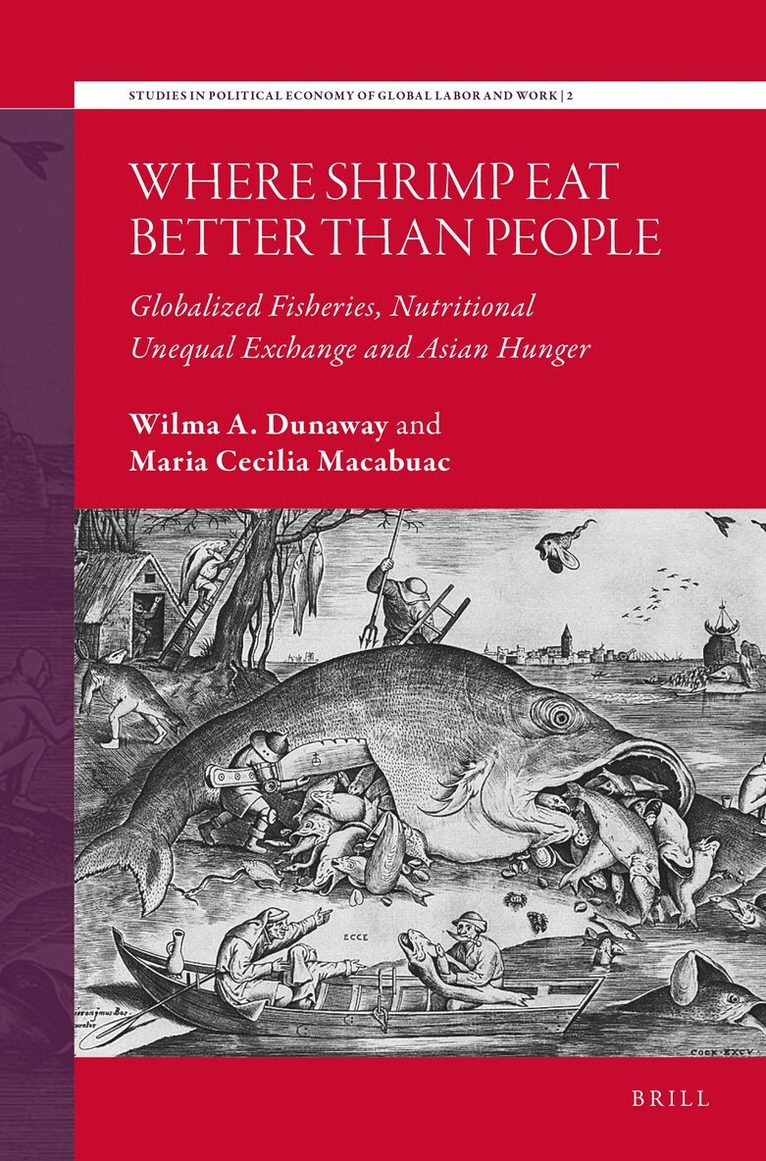
    Where Shrimp Eat Better than People

    Globalized Fisheries, Nutritional Unequal Exchange and Asian Hunger

    AvWilma Dunaway,Maria Cecilia Macabuac

    Häftad, Engelska, 2024

    Del i serien Studies in Political Economy of Global Labor and Work

    1 012 kr

    Beställningsvara. Skickas inom 5-8 vardagar. Fri frakt över 249 kr.

    Fler format och utgåvor

    Inbunden

    1 593 kr

    Beskrivning

    East, South and Southeast Asia are home to two-thirds of the world’s hungry people, but they produce more than three-quarters of the world’s fish and nearly half of other foods. Through integration into the world food system, these Asian fisheries export their most nutritious foods and import less healthy substitutes. Worldwide, their exports sell cheap because women, the hungriest Asians, provide unpaid subsidies to production processes. In the 21st century, Asian peasants produce more than 60 percent of the regional food supply, but their survival is threatened by hunger, public depeasantization policies, climate change, land grabbing, urbanization and debt bondage. *Where Shrimp Eat Better than People: Globalized Fisheries, Nutritional Unequal Exchange and Asian Hunger is now available in paperback for individual customers.

    Produktinformation

    • Utgivningsdatum:2024-04-03
    • Mått:155 x 235 x 27 mm
    • Vikt:781 g
    • Format:Häftad
    • Språk:Engelska
    • Serie:Studies in Political Economy of Global Labor and Work
    • Antal sidor:448
    • Förlag:Brill
    • ISBN:9789004695214

    Utforska kategorier

    • Sociologi inom Samhälle och politik
    • Diskriminering och rättvisa inom Samhälle och politik
    • Lantbruk, fiske och skogsbruk inom Ekonomi och Ledarskap

    Mer om författaren

    Wilma A. Dunaway, Ph.D. (1994), University of Tennessee. Professor Emerita, School of Public & International Affairs, Virginia Tech. In addition to six monographs, she is editor of Gendered Commodity Chains: Seeing the Hidden Women’s Work and Laborer Households in Global Production.Maria Cecilia Macabuac, Ph.D. (2005), Virginia Tech. Professor and Director for University Extension, Mindanao State University, Iligan Institute of Technology. Author of numerous articles about Philippine fisheries, mining communities, women’s work and depeasantization. Has extensive experience in ethnographic field research.

    Recensioner i media

    "Where Shrimp Eat Better than People offers a powerful critique of the global-industrial food regime, through the lens of the fish trade’s exploitation of Asian fisherfolk and extractive dietary impacts on fishing communities. Ethnographic and socio-ecological analysis of a Philippine coastal region reveals processes of global nutritional bifurcation as local self-provisioning declines. This is a timely and remarkable exposé of the dialectic of impoverishment via enrichment along corporate food supply chains." Philip McMichael, Cornell University.

    Innehållsförteckning

    • AcknowledgmentsList of Tables and FiguresList of AbbreviationsIntroduction1Scholarly Significance and Investigative Goals2Methods of Inquiry and Areas of Study3 What Do We Promise Readers Conceptually?4 Organization of the Book1 The Asian Fishery Crisis, Nutritional Unequal Exchange and Food Insecurity1Trends in Asian Fishery Production and Nutritional Shortfalls2Investigative Questions3 Conflict between Food Security and Food/Fishery Exporting4 Dependence on Imports as Threat to Food Security5Nonfoods and Asian Food Security6Will Aquaculture Solve Asian Protein and Iron Shortfalls?7Food Security and Pressures toward Depeasantization8Ecological Degradation of Asian Fisheries and Food Insecurity9Intra-national Inequalities in Food Access10Impacts of Wastage on Food Security11Looking to Future Chapters2 Debt, Resource Exploitation and Integration into the World Agro-Food System1The Role of External Development Agencies2Philippine Elites and Economic Restructuring3Government Promotion of Agricultural Exports4 Government Promotion of Capture Fishing for Export5 Government Promotion of Acquaculture for Export6 Ecological Impacts of the Philippine Agro-Industrial Export Strategy7 Looking to the Future3 Globalized Food and Asian Hunger The Philippine Case1Privileging Exports over Local Consumption2 Import Dependence and Risks to Food Security3 Transformation of Foods into Nonfoods4Class Polarization and Inequalities in Food Access5 Looking to the Future4 Commodity-Chained Peasants Construction of the Philippine Food Extractive Enclave 1661Transformation of Panguil Bay Agriculture2 Transformation of Capture Fishing3 Transformation and Expansion of Aquaculture4Integrating the Panguil Bay Fishery into National and Global Commodity Chains5 Is Philippine Fish Marketing Culturally Unique?6 Ecological Impacts of Global Integration7 Food Insecurity in Panguil Bay Communities8 Looking to the Future5 The World Does Not Weep for Us Semiproletarianized Households, Nonwaged Labor and Depeasantization1Hidden Household Subsidies to Export Commodity Chains2 Conceptualizing Capitalist Externalization of Costs to Households3 Externalization of Costs to Peasant Fishing Communities4Pressures to Depeasantize Panguil Bay5 Debt Bondage as Externalized Cost6 Threats to Peasant Livelihoods7 Alteration and Intensification of Women’s Work8 “The Shrimp Live Better Than We Do”: Threats to Human Survival9 Looking to the Future6 Endlessly Toiling The Gendered Inequalities of Fisher Household Survival1Conceptualizing the Semiproletarian Portfolio of Diverse Labors2 Inequitable Management of Scarce Labor Time3 Arrangement of Household Credit4Restructuring Household Boundaries5 Inequitable Pooling and Allocation of Household Resources6 Conflict over Household Budget Management7 Looking to the Future7 Climate Change, Land Grabbing and the Future of Asian Food Security1Climate Change, Peasant Persistence and Asian Food Security2 Land Grabbing and Asian Food Security3 Conclusion8 Propping Up the World Food System The Future of Hungry Asian Farmers and Fishers1Looking toward the Future of Asian Food Insecurity2 Peasant Contributions to Asian Food Security3 Will There Be an Historical Transition to Large Asian Farms?4 Deruralization, Occupational Multiplicity and Asian Peasant Persistence5 Asian Debt Bondage and the World Food System6 Will Asian Peasants Persist in the 21st Century?7 Conclusion: Seeing Hunger through the Fisherwoman’s LensBibliograhieIndex