• Fri frakt över 249 kr
  • •
  • Snabba leveranser
  • •
  • Billiga böcker
Kundservice

Du är på sajten för privatpersoner.

Företag, bibliotek eller offentlig verksamhet?

Du handlar på classic.bokus.com, där alla dina funktioner finns intakta.
Till classic.bokus.com
Bokus logotyp. Gå till startsidan.
  • Erbjudanden
  • Nyheter
  • Student
  • Topplistor
  • Barn & ungdom
  • Bokus Play
  • E-böcker
  • Pocketböcker
  • Spel & pussel

Må bättre, för mindre! Upp till 50% rabatt på hälsoböcker

Sidfot

Mina sidor

    Hjälp

    • Kundservice
    • Vanliga frågor och svar
    • Frakt och leverans
    • Retur vid ångerrätt
    • Reklamera vara
    • Betalning
    • Köpvillkor
    • Allmänna villkor
    • Information om webbplatsens tillgänglighet

    Om Bokus

    • Om oss
    • Pressrum
    • För studenter
    • För företag
    • För bibliotek och offentlig verksamhet
    • För leverantörer
    • Hållbarhet

    Populärt

    • Aktuella erbjudanden
    • Presentkort
    • Studentlitteratur
    • Nya böcker
    • Topplistor
    • Signerade böcker
    • Engelska böcker

    Inspiration

    • Boktips
    • BookTok
    • Populära bokserier
    • Barnbokskaraktärer
    • Populära författare
    Logotyp för Bokus
    Följ oss på Facebook (extern länk)Följ oss på Instagram (extern länk)Följ oss på YouTube (extern länk)Följ oss på TikTok (extern länk)
    bokus @ CookiesAnpassa cookiesIntegritetspolicyKöpvillkor
    Till Citymail hemsida (extern länk)Till Budbee hemsida (extern länk)Till Postnord hemsida (extern länk)Till Schenker hemsida (extern länk)Till Early Bird hemsida (extern länk)Till Walleys hemsida (extern länk)
    1. Samhälle och politik
    2. Sociologi och antropologi
    3. Sociologi

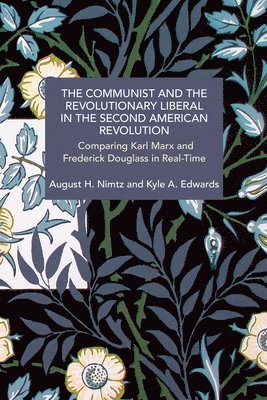
    Communist and the Revolutionary Liberal in the Second American Revolution

    Comparing Karl Marx and Frederick Douglass in Real-Time

    AvAugust H. Nimtz,Kyle A. Edwards

    Inbunden, Engelska, 2024

    Del 326 i serien Historical Materialism Book Series

    2 537 kr

    Beställningsvara. Skickas inom 5-8 vardagar. Fri frakt över 249 kr.

    Beskrivning

    Nimtz’s and Edwards’s real-time comparative political analysis offers a unique look at two historically consequential figures with two very different theoretical and political perspectives, both of whom expertly examined the most contentious issue of the nineteenth century. By juxtaposing the political thought and activism of Karl Marx and Frederick Douglass, Nimtz and Edwards are able to make insightful observations and conclusions about race and class in America. The Communist and the Revolutionary Liberal reveals how two still competing political perspectives, liberalism and Marxism, performed when the biggest breakthrough for the millennial-old democratic quest after the French Revolution occurred – the abolition of chattel slavery in the United States. In so doing, it presents potential lessons for today.Listen to the podcast about this title on New Books Network

    Produktinformation

    • Utgivningsdatum:2024-08-08
    • Mått:155 x 235 x 32 mm
    • Vikt:834 g
    • Format:Inbunden
    • Språk:Engelska
    • Serie:Historical Materialism Book Series
    • Antal sidor:420
    • Förlag:Brill
    • ISBN:9789004706378

    Utforska kategorier

    • Sociologi inom Samhälle och politik
    • Statsvetenskap och politisk teori inom Samhälle och politik
    • Marxism och kommunism inom Samhälle och politik

    Mer om författaren

    August H. Nimtz, beginning with his 2000 Marx and Engels: Their Contribution to the Democratic Breakthrough, seeks to bring Marx back to the world he consciously chose to join in 1843, namely politics. This co-authored Marx-Douglass comparison is his latest contribution toward that goal.Kyle A. Edwards is a Curriculum Administrator at the University of Minnesota. He is a member of AFSCME 3800 and author of Those Deluded, Ill-Starred Men: Frederick Douglass, the New National Era, and the Paris Commune.

    Recensioner i media

    “A brief review cannot do justice to this excellent work of committed scholarship, part of the outstanding Historical Materialism book series. While it would be easy to note its importance for our time of right-wing assaults on “race and gender ideology,” mass xenophobia, and fascistic cults of personality, the book speaks to a much broader, long-term project of political reclamation.” —Jason Dawsey, in: Against the Current (March - April 2026)“Nimtz and Edwards offer a meticulous, strikingly original, deeply researched, and profoundly insightful comparison of the real-time responses of Frederick Douglass and Karl Marx to the U.S. Civil War. They show that Douglass operated as part of a liberal abolitionist movement in which ending the institution of slavery and achieving full political rights for former slaves was an end in its own right. Yet, thousands of miles away, Marx (along with Engels) saw correctly that ending slavery could only be but one step in an inevitably longer journey. For Marx recognized that former slaves would become workers subject to capitalist exploitation. He realized that true freedom and equality required abolishing private property in general. The moral of this story applies today as much as it did then: formal democratic rights, racial inclusion, and electoral participation must not be mistaken as the end goal for working people.” —James Mahoney, Professor of Political Science and Sociology, Northwestern University“Destined to become the definitive account of Marx’s neglected writings on race, class, and revolution in the U.S. Civil War, which he viewed as the biggest social revolution he lived through. Also contains a provocative analysis of Douglass.” —Kevin B. Anderson, author of Marx at the Margins“This fascinating book brings together two of the most formidable minds of the nineteenth century and creates a dialogue full of unexpected insights. This book will enrich our understanding of Frederick Douglass, Karl Marx, and the world they inhabited.” —Don H. Doyle, author of The Cause of All Nations (2015) and The Age of Reconstruction: How Lincoln’s New Birth of Freedom Changed the World (forthcoming 2024).“We live amid a longstanding struggle to achieve a fully democratic society, according to August Nimtz and Kyle Edwards, proceeding in fits and starts since the mid-19th century in both Europe and the U.S. In their new book, Nimtz and Edwards seek to illuminate the historical roots of this struggle, via a surprisingly unusual juxtaposition. The authors take a “parallel lives” approach to the thinking and action of Karl Marx and Friedrich Engels, on one side, and of Frederick Douglass on the other—exemplaries, respectively, of European revolutionary socialism and of American revolutionary liberalism. The book won’t settle the contest between the two camps, but thoughtful partisans of each will find it challenging and informative. Of particular interest are the discussions of Marx’s and Engels’s extensive commentary on the US Civil War and Douglass’s assessments of the revolutionary events in Europe in 1848 and 1871. All in all, with this book Nimtz and Edwards make a well researched and forcefully argued contribution in two large and growing fields of scholarship.” —Peter Myers, author of Frederick Douglass: Race and the Rebirth of American Liberalism (2008) “In comparing Douglass and Marx in real time, Nimtz and Edwards ingeniously follow two central figures in 19th-century thought as they wrestle with defining issues of the age, especially slavery, the Civil War and Reconstruction. They capture the moments where liberal revolutionaries and communists diverged and converged and provide a fresh perspective on classic debates about what remains the most-significant moment in US history.” —Gregory Downs, author of After Appomattox: Military Occupation and the Ends of War (2019) and The Second American Revolution: The Civil War-Era Struggle over Cuba and the Rebirth of the American Republic”A thoroughly gripping and prodigiously researched book that produces a genuinely new account of Marx and Douglass, activating their words and deeds in revolutionary partnership in the ‘real-time’ of the U.S. Civil War. Deploying comparative method with in-depth historical insight, textual interpretive acumen, and heaps of documentary evidence, Nimtz and Edwards immerse us in an event-driven, moment-to-moment, drama of Marx and Douglass’s respective responses to the abomination of racial slavery and the problems thrown forward by ‘America’s Second Revolution.’ From this creative juxtaposition the authors also offer a provocative revolutionary analysis of why the struggles between race and class that pervade contemporary U.S. politics require us to grasp the fundamental incompatibility of democracy and capitalism, while keeping alive the conviction that “what the proletariat needs to do is win.” —Mary Dietz, John Evans Emerita Professor of Political Theory and Gender and Sexuality Studies, Northwestern University

    Innehållsförteckning

    • AcknowledgementsIntroduction1 Two Biographies – or, Two Routes to the Quest for ‘True Democracy’1 From Chattel Slave to Revolutionary Liberal2 From Radical Democrat to Communist2 Prelude to the Conflagration: From Paris to Fort Sumter1 The European Spring2 The Coming American Spring3 Toward the Convergence of Douglass and Marx: From Fort Sumter to the Trent Affair1 The ‘Fall of Sumter’2 Douglass Gets on Board3 Marx’s Return4 Marx and Douglass Converge5 ‘What’s Happening at Manassas Junction?’6 ‘Complications with Foreign Powers’: The Trent Affair4 From a Constitutional to a Revolutionary Civil War: ‘the Cruel and Apocalyptic War Had Become Holy’1 ‘A Turning Point in the War Policy Had Been Reached’2 ‘At Last the Tide of Battle Seems Fairly Turned’3 Two Real-Time Assessments of ‘the Tremendous Conflict’4 Slouching Toward Redemption5 Redemption Time6 The Preliminary Emancipation Proclamation7 The Slave’s Appeal to Great Britain5 The End of the War and the Rise and Fall of Radical Reconstruction1 The Long Grinding Road to Appomattox2 ‘That the Paper Proclamation Must Now Be Made Iron, Lead and Fire’3 The Reality of Recruitment4 Toward Lincoln’s Re-election and Union Victory5 ‘A Missed Revolutionary Opportunity’6 Weydemeyer’s ‘On the Negro Vote’7 Douglass and Marx on the Same Political Page – AlmostConclusion1 The Key Takeaways of the Comparison2 ‘What Is to Be Done?’– TodayAppendix A: Douglass and Marx on the Paris Commune and the Labour Question in the United StatesAppendix B: Marx and Engels on the Race Question: A Response to CriticsBibliographyIndex