• Fri frakt över 249 kr
  • •
  • Snabba leveranser
  • •
  • Billiga böcker
Kundservice

Du är på sajten för privatpersoner.

Företag, bibliotek eller offentlig verksamhet?

Du handlar på classic.bokus.com, där alla dina funktioner finns intakta.
Till classic.bokus.com
Bokus logotyp. Gå till startsidan.
  • Erbjudanden
  • Nyheter
  • Student
  • Topplistor
  • Barn & ungdom
  • Bokus Play
  • E-böcker
  • Pocketböcker
  • Spel & pussel

10% rabatt på allt med kod: NYSTART10 →

Sidfot

Mina sidor

    Hjälp

    • Kundservice
    • Vanliga frågor och svar
    • Frakt och leverans
    • Retur vid ångerrätt
    • Reklamera vara
    • Betalning
    • Köpvillkor
    • Allmänna villkor
    • Information om webbplatsens tillgänglighet

    Om Bokus

    • Om oss
    • Pressrum
    • För studenter
    • För företag
    • För bibliotek och offentlig verksamhet
    • För leverantörer
    • Hållbarhet

    Populärt

    • Aktuella erbjudanden
    • Presentkort
    • Studentlitteratur
    • Nya böcker
    • Topplistor
    • Signerade böcker
    • Engelska böcker

    Inspiration

    • Boktips
    • BookTok
    • Populära bokserier
    • Barnbokskaraktärer
    • Populära författare
    Logotyp för Bokus
    Följ oss på Facebook (extern länk)Följ oss på Instagram (extern länk)Följ oss på YouTube (extern länk)Följ oss på TikTok (extern länk)
    bokus @ CookiesAnpassa cookiesIntegritetspolicyKöpvillkor
    Till Citymail hemsida (extern länk)Till Budbee hemsida (extern länk)Till Postnord hemsida (extern länk)Till Schenker hemsida (extern länk)Till Early Bird hemsida (extern länk)Till Walleys hemsida (extern länk)
    1. Naturvetenskap och teknik
    2. Teknik och industri
    3. Agronomi och lantbruk
    4. Djurhållning

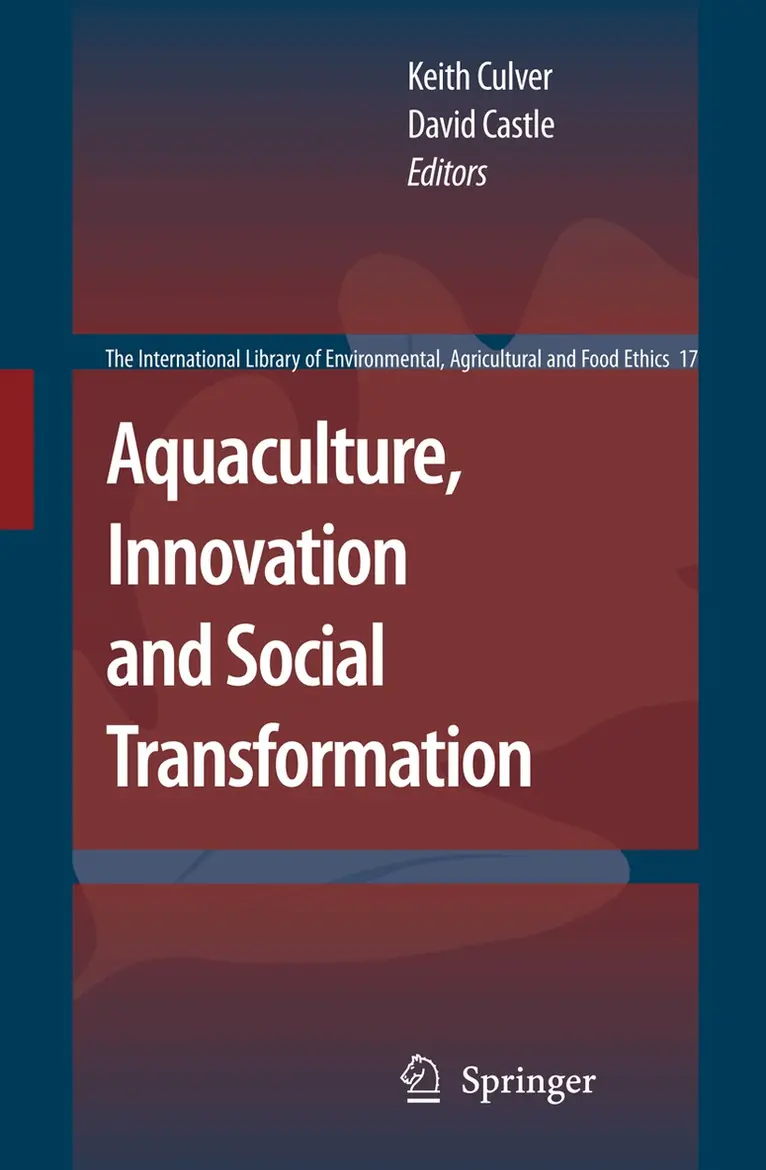
    Aquaculture, Innovation and Social Transformation

    AvKeith Culver,David Castle

    Häftad, Engelska, 2010

    Del 17 i serien International Library of Environmental, Agricultural and Food Ethics

    1 626 kr

    Beställningsvara. Skickas inom 10-15 vardagar. Fri frakt över 249 kr.

    Beskrivning

    Keith Culver and David Castle Introduction Aquaculture is at the leading edge of a surprisingly polarized debate about the way we produce our food. According to the United Nations Food and Agriculture Organization, aquaculture production has increased 8. 8% per year since 1970, far surpassing productivity gains in terrestrial meat production at 2. 8% in the same period (FAO 2007). Like the ‘green revolution’ before it, the ‘blue revolution’ in aquaculture promises rapidly increased productivity through technology-driven - tensi?cation of aquaculture animal and plant production (Costa-Pierce 2002; The Economist 2003). Proponents of further aquaculture development emphasize aq- culture’s ancient origins and potential to contribute to global food security d- ing an unprecedented collapse in global ?sheries (World Fish Center; Meyers and Worm 2003; Worm et al. 2006). For them, technology-driven intensi?cation is an - dinary and unremarkable extension of past practice. Opponents counter with images of marine and freshwater environments devastated by intensive aquaculture pr- tices producing unsustainable and unhealthy food products. They view the promised revolutionasascam,nothingmorethanclever marketingbypro?t-hungry ?shfa- ers looking for ways to distract the public from the real harms done by aquaculture. The stark contrast between proponents and opponents of modern aquaculture recalls decades of disputes about intensive terrestrial plant and animal agriculture, disputes whose vigor shows that the debate is about much more than food production (Ruse and Castle 2002).

    Produktinformation

    • Utgivningsdatum:2010-11-19
    • Mått:155 x 235 x 20 mm
    • Vikt:546 g
    • Format:Häftad
    • Språk:Engelska
    • Serie:International Library of Environmental, Agricultural and Food Ethics
    • Antal sidor:346
    • Förlag:Springer
    • ISBN:9789048180028

    Utforska kategorier

    • Djurhållning inom Naturvetenskap och teknik
    • Miljövetenskap och miljöpolitik inom Naturvetenskap och teknik
    • Biovetenskap inom Naturvetenskap och teknik

    Recensioner i media

    From the reviews: "Presents oppositional evidence around seven contentious issues surrounding aquaculture in an advanced industrial country ... . very interesting book-and a way to learn about aquaculture as a future source of animal protein. ... required reading for those interested in aquaculture as a source of food and trade. It is also useful for scholars of ethics, knowledge, and governance of production and natural resources. ... Contested knowledges, particularly of impacts, of both scientists and fishers is the basis of governance in times of rapid change."--- (Cornelia Butler Flora, Journal of Agricultural and Environmental Ethics, Vol. 23, 2010)

    Innehållsförteckning

    • Editors’ Introduction.- Editors’ Introduction.- Animal Welfare in Aquaculture.- Animal Welfare in Aquaculture.- Science and Governance Issues in Aquaculture AnimalWelfare.- Welfare and Aquaculture Industry Practice.- Knowledge Management and Intellectual Property Issues in Aquaculture.- The Mark of Innovation in Aquaculture: The Role of Intangible Assets.- New School Fish Production vs Old School Fish Harvesting.- Return on Investment or How Not to Pay Commercial Licenses for Your Own Technology.- The Environmental Sustainability of Aquaculture.- Environmental Aspects of Aquaculture.- Ethics, Governance and Regulation.- A Synopsis of Environmental Issues Associated with Salmon Aquaculture in Canada.- The Interaction Between Traditional and Local Knowledge, and Modern Aquaculture.- “It All Depends on the Lens, B’y”1: Local Ecological Knowledge and Institutional Science in an Expanding Finfish Aquaculture Sector.- “S’kuu See”: Integrating Forms of Knowledge.- Oral History and Traditional Ecological Knowledge.- Messages, Consumers and Aquaculture: New Products, New Worries.- Public Engagement Regarding Aquaculture Products Produced Through Biotechnology.- Consumers and Aquaculture, New Products – New Worries.- Aquaculture Innovation and the Role of Popular and Trade Media.- The Final Frontier: Integrated Coastal Zone Management.- Integrated Systems Analysis for Marine Site Evaluations and Multicriteria Decision Support for Coastal Aquaculture.- Integrated Systems Analysis for Marine Site Evaluation: Appropriate for the Canadian Marine Farming Industry?.- Models for Analysis and Practical Realities of Marine Aquaculure Siting.- New practices for Global Competitiveness: Alternate Species, Alternate Uses, and Value-Added Aquaculture.- Governance for GlobalCompetitiveness: The Future of Aquaculture Policy in aWorld Turned Upside Down.- Consumer Confidence, Food Safety, and Salmon Farming.- Aquaculture Policies for Global Competitiveness: An Industry Perspective.