• Fri frakt över 249 kr
  • •
  • Snabba leveranser
  • •
  • Billiga böcker
Kundservice

Du är på sajten för privatpersoner.

Företag, bibliotek eller offentlig verksamhet?

Du handlar på classic.bokus.com, där alla dina funktioner finns intakta.
Till classic.bokus.com
Bokus logotyp. Gå till startsidan.
  • Erbjudanden
  • Nyheter
  • Student
  • Topplistor
  • Barn & ungdom
  • Bokus Play
  • E-böcker
  • Pocketböcker
  • Spel & pussel

10% studentrabatt med kod TERM26

Sidfot

Mina sidor

    Hjälp

    • Kundservice
    • Vanliga frågor och svar
    • Frakt och leverans
    • Retur vid ångerrätt
    • Reklamera vara
    • Betalning
    • Köpvillkor
    • Allmänna villkor
    • Information om webbplatsens tillgänglighet

    Om Bokus

    • Om oss
    • Pressrum
    • För studenter
    • För företag
    • För bibliotek och offentlig verksamhet
    • För leverantörer
    • Hållbarhet

    Populärt

    • Aktuella erbjudanden
    • Presentkort
    • Studentlitteratur
    • Nya böcker
    • Topplistor
    • Signerade böcker
    • Engelska böcker

    Inspiration

    • Boktips
    • BookTok
    • Populära bokserier
    • Barnbokskaraktärer
    • Populära författare
    Logotyp för Bokus
    Följ oss på Facebook (extern länk)Följ oss på Instagram (extern länk)Följ oss på YouTube (extern länk)Följ oss på TikTok (extern länk)
    bokus @ CookiesAnpassa cookiesIntegritetspolicyKöpvillkor
    Till Citymail hemsida (extern länk)Till Budbee hemsida (extern länk)Till Postnord hemsida (extern länk)Till Schenker hemsida (extern länk)Till Early Bird hemsida (extern länk)Till Walleys hemsida (extern länk)
    1. Samhälle och politik
    2. Samhälle och kultur
    3. Sociala grupper och identitet
    4. Etnicitet

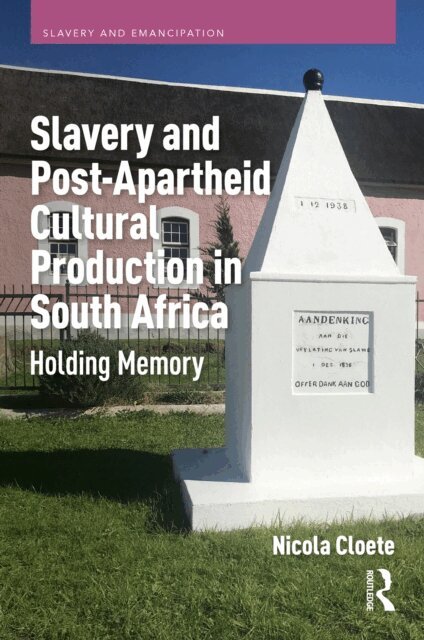
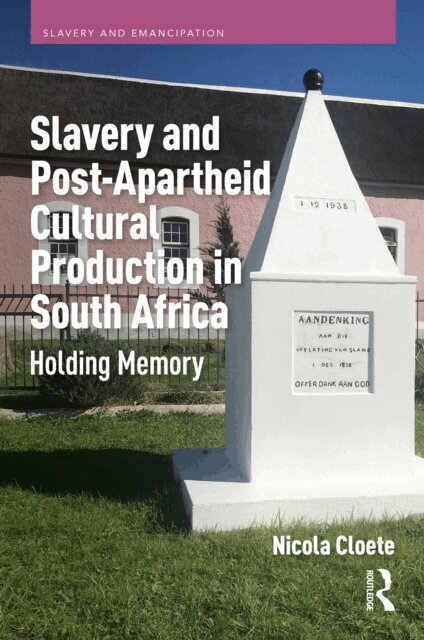
    Slavery and Post-Apartheid Cultural Production in South Africa

    Holding Memory

    AvNicola Cloete

    Inbunden, Engelska, 2026

    Del i serien Slavery and Emancipation

    2 506 kr

    Beställningsvara. Skickas inom 10-15 vardagar. Fri frakt över 249 kr.

    Fler format och utgåvor

    E-bok

    831 kr

    E-bok

    831 kr

    Beskrivning

    In Slavery and Post-Apartheid Cultural Production in South Africa: Holding Memory, Nicola Cloete investigates the intricacies of memory, heritage, identity, and nation-building within the context of South Africa’s history of slavery.Combining theoretical, archival, and ethnographic research through an interdisciplinary use of memory, the author crafts new frameworks for analysing how memory is mobilised in recovering histories of slavery in post-apartheid South Africa. By examining wine farms, museums and memorials, walking tours, and ethnographic experiences, the book elucidates how memory is embodied and emplaced through affective encounters. Using diverse theoretical approaches to memory, Cloete devises a theory of ‘holding memory’ and ultimately argues that memory enables a validated claim for participation and belonging in the post-apartheid nation for a range of stakeholders through the mobilisation of a previously marginalised historic event.An important contribution, this book shows how memories of slavery are negotiated and deployed between cultural identity and national discourses of race and reconciliation. It will be of interest to researchers in the fields of cultural and sensory studies and memory studies.

    Produktinformation

    • Utgivningsdatum:2026-05-08
    • Mått:156 x 234 x 13 mm
    • Vikt:430 g
    • Format:Inbunden
    • Språk:Engelska
    • Serie:Slavery and Emancipation
    • Antal sidor:134
    • Förlag:Taylor & Francis Ltd
    • ISBN:9789048569090

    Utforska kategorier

    • Etnicitet inom Samhälle och politik
    • Afrikas historia inom Historia och arkeologi
    • Kolonialism och imperialism inom Historia och arkeologi

    Mer om författaren

    Dr Nicola Cloete is a Senior Lecturer in the Department of Curatorial, Public and Visual Studies at Wits University. Her writing can be found in the International Journal of Heritage Studies, the South African Historical Journal, de Arte, Research in Drama Education, and elsewhere.

    Innehållsförteckning

    • Introduction: Being shaped by slaveryBackground—finding a placeFinding a name Finding a trace—memory and loss Archives and loss A meagre story Resurgences Race and nationalism as discursive formation Slavery and racial identities Interdisciplinary approaches to slavery in South Africa Emplacement The politics of memory, identity, and heritage Representation, memory, and discourses of the nation in South Africa Structure of the book Chapter outline A note on terminology and naming practices Returning to meagre stories 1 Digesting institutional memories of slavery Introduction Cape Town’s slave heritage—transforming memory into living legacy Pan-African heritage—reconciling memory and markets in Ghana The memory of slavery as a transnational discourse Museums Palatable narratives of slavery The Slave Lodge Museum Remembering slavery History of exhibition development The Slave Lodge and a palimpsestic exhibition practice São José Monuments and memorials The Memorial to the Enslaved Slave forts as memorial sites Conclusion 2 Histories in motion: Walking tours as critical engagements with the geography and memory of slavery Introduction Walking as methodology Walking and forms of commemoration Heritage tourism and walking tours Slavery and ‘Coloured’ identities ‘Coloured’ as social and historical category Setting out—Cape Town heritage tours Attempts at progressive engagement—Slave Heritage Walks of Cape Town Remembering as return—Transcending History Tours Walking with slavery Simon’s Town Walking History Tour Conclusion 3 Seeing slavery today: The social politics of wine farms Introduction ‘Coloured’ as political identity Seeing slavery Solms-Delta today Solms-Delta historyTheoretical framings Considering memory and place Solms-Delta—a sociopolitical and economic reconstruction of the past Slave narratives in museum and wine-tasting contexts Museum van de Caab Slavery in Museum van de Caab Groot Constantia Wine Farm and Museum complex Aesthetic reflections of enslavement—Spier Wine Farm Conclusion Conclusion: The naming of Karel Cloete and emergent histories of enslavement All I have inherited is the forgetting Finding the thread—family photographs, oral histories, memories, and archives Bringing some threads together Finding myself in the objects Index