Häftad, Engelska, 2026
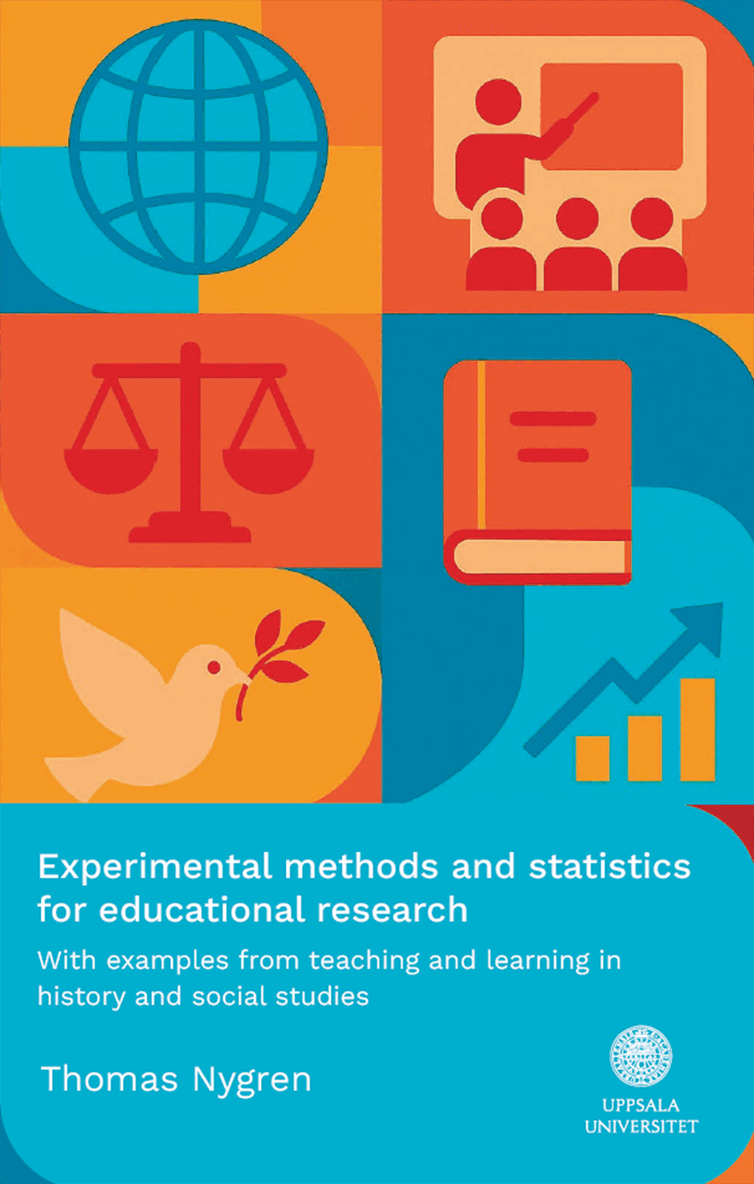
Experimental methods and statistics for educational research : With examples from teaching and learning in history and social studies
186 kr
Beställningsvara. Skickas inom 5-8 vardagar. Fri frakt över 249 kr.
Beskrivning
How can teachers and researchers know what works in teaching, when it works, and for which students? To identify which instructional approaches truly make a difference—across school subjects and student groups—we need experimental methods that can clarify causal relationships without losing sight of classroom complexity.
Experimental methods and statistics for educational research is a practical guide to experimental and quasi-experimental studies in school settings. While the starting point is teaching and learning in history and social studies, the examples and methods are relevant across the curriculum.
The book introduces key concepts such as intervention, control group, randomization, validity, reliability, constructs, and effect sizes. It presents design options ranging from small classroom trials to larger, more robust studies, along with their strengths, limitations, and ethical considerations. It also shows how teachers’ wisdom of practice and mixed methods can be
combined with systematic testing of instructional approaches.
Step by step, the reader is guided from an initial idea and task design, through classroom implementation, to analysis and interpretation. Drawing on practical examples and current research on educational impact, the book introduces foundational statistical analyses—descriptive statistics, t-tests,
and chi-square tests—with practical guidance and simple exercises in the user-friendly statistics program Jamovi.
The book is written for preservice teachers, practicing teachers, doctoral students, and researchers who want to deepen their understanding of how experimental methods can be used in education research. The goal is not to turn everyone into statisticians, but to support planning, evaluating, and
conducting studies that contribute to a stronger scientific foundation for teaching and learning.
Experimental methods and statistics for educational research is a practical guide to experimental and quasi-experimental studies in school settings. While the starting point is teaching and learning in history and social studies, the examples and methods are relevant across the curriculum.
The book introduces key concepts such as intervention, control group, randomization, validity, reliability, constructs, and effect sizes. It presents design options ranging from small classroom trials to larger, more robust studies, along with their strengths, limitations, and ethical considerations. It also shows how teachers’ wisdom of practice and mixed methods can be
combined with systematic testing of instructional approaches.
Step by step, the reader is guided from an initial idea and task design, through classroom implementation, to analysis and interpretation. Drawing on practical examples and current research on educational impact, the book introduces foundational statistical analyses—descriptive statistics, t-tests,
and chi-square tests—with practical guidance and simple exercises in the user-friendly statistics program Jamovi.
The book is written for preservice teachers, practicing teachers, doctoral students, and researchers who want to deepen their understanding of how experimental methods can be used in education research. The goal is not to turn everyone into statisticians, but to support planning, evaluating, and
conducting studies that contribute to a stronger scientific foundation for teaching and learning.
Produktinformation
- Utgivningsdatum: 2026-06-22
- Mått: 140 x 220 x 7 mm
- Vikt: 203 g
- Format: Häftad
- Språk: Engelska
- Antal sidor: 122
- Förlag: Uppsala University Publications
- ISBN: 9789150631784
Utforska kategorier
Betyg & recensioner
0 recensioner
Inga recensioner tillgängliga.