• Fri frakt över 249 kr
  • •
  • Snabba leveranser
  • •
  • Billiga böcker
Kundservice

Du är på sajten för privatpersoner.

Företag, bibliotek eller offentlig verksamhet?

Du handlar på classic.bokus.com, där alla dina funktioner finns intakta.
Till classic.bokus.com
Bokus logotyp. Gå till startsidan.
  • Erbjudanden
  • Nyheter
  • Student
  • Topplistor
  • Barn & ungdom
  • Bokus Play
  • E-böcker
  • Pocketböcker
  • Spel & pussel

10% rabatt på allt med kod: NYSTART10 →

Sidfot

Mina sidor

    Hjälp

    • Kundservice
    • Vanliga frågor och svar
    • Frakt och leverans
    • Retur vid ångerrätt
    • Reklamera vara
    • Betalning
    • Köpvillkor
    • Allmänna villkor
    • Information om webbplatsens tillgänglighet

    Om Bokus

    • Om oss
    • Pressrum
    • För studenter
    • För företag
    • För bibliotek och offentlig verksamhet
    • För leverantörer
    • Hållbarhet

    Populärt

    • Aktuella erbjudanden
    • Presentkort
    • Studentlitteratur
    • Nya böcker
    • Topplistor
    • Signerade böcker
    • Engelska böcker

    Inspiration

    • Boktips
    • BookTok
    • Populära bokserier
    • Barnbokskaraktärer
    • Populära författare
    Logotyp för Bokus
    Följ oss på Facebook (extern länk)Följ oss på Instagram (extern länk)Följ oss på YouTube (extern länk)Följ oss på TikTok (extern länk)
    bokus @ CookiesAnpassa cookiesIntegritetspolicyKöpvillkor
    Till Citymail hemsida (extern länk)Till Budbee hemsida (extern länk)Till Postnord hemsida (extern länk)Till Schenker hemsida (extern länk)Till Early Bird hemsida (extern länk)Till Walleys hemsida (extern länk)
    1. Juridik
    2. Särskilda rättsområden
    3. Straffrätt: process och brott
    4. Straffprocessrätt

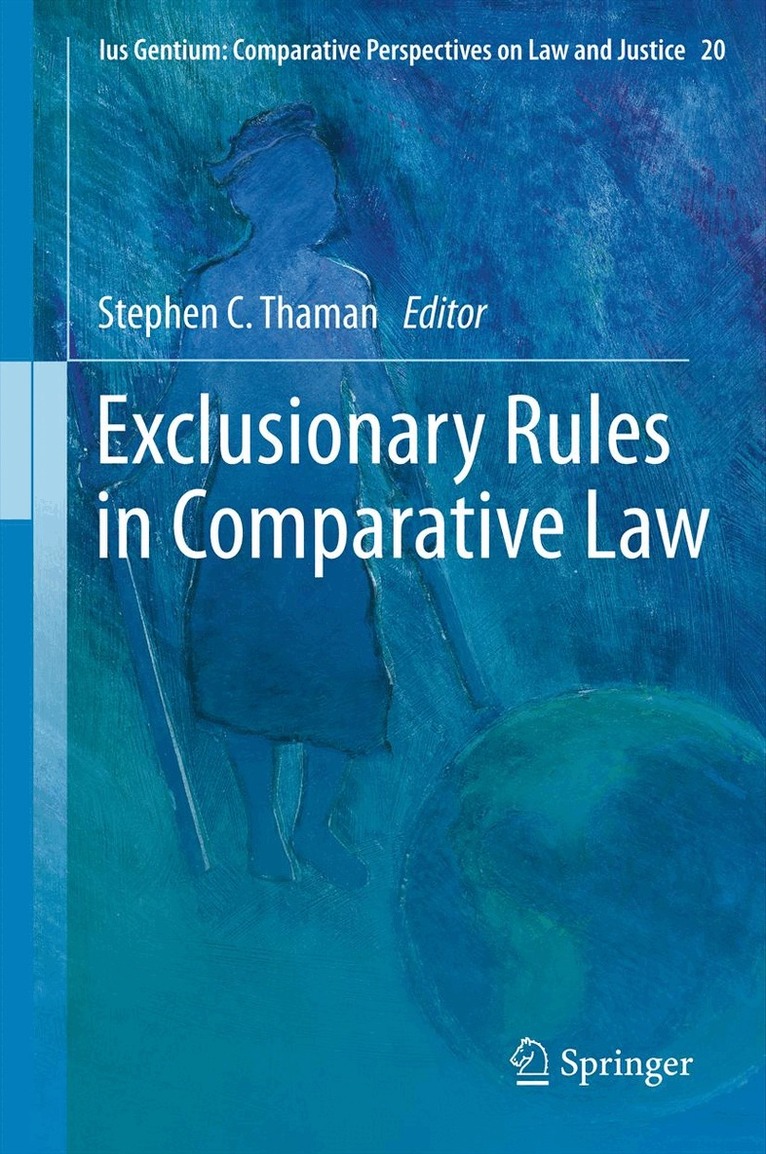
    Exclusionary Rules in Comparative Law

    AvStephen C. Thaman

    Inbunden, Engelska, 2012

    Del i serien Ius Gentium: Comparative Perspectives on Law and Justice

    1 495 kr

    Beställningsvara. Skickas inom 10-15 vardagar. Fri frakt över 249 kr.

    Beskrivning

    This book is a comparative study of the exclusion of illegally gathered evidence in the criminal trial , which includes 15 country studies, a chapter on the European Court of Human Rights, and a comparative synthetic conclusion.  No other book has undertaken such a broad comparative study of exclusionary rules, which have now become a  world-wide phenomenon. The topic is one of the most controversial in criminal procedure law, because it reveals a constant tension between the criminal court’s duty  to ascertain the truth, on the one hand, and its duty to uphold important constitutional rights on the other,  most importantly, the privilege against self-incrimination and the right to privacy in one's home and one's private communications. The chapters were contributed by noted world experts on the subject for the XVIII Congress of the International Academy of Comparative Law in Washington in July 2010.

    Produktinformation

    • Utgivningsdatum:2012-12-30
    • Mått:155 x 235 x 31 mm
    • Vikt:869 g
    • Format:Inbunden
    • Språk:Engelska
    • Serie:Ius Gentium: Comparative Perspectives on Law and Justice
    • Antal sidor:456
    • Upplaga:2013
    • Förlag:Springer
    • ISBN:9789400753471

    Utforska kategorier

    • Straffprocessrätt inom Juridik
    • Internationell rätt: transport och handel inom Juridik
    • Komparativ rätt inom Juridik

    Innehållsförteckning

    • Introduction; Stephen C. Thaman.- Part One: The Vicissitudes of Court-Made Exclusionary Tests: Section One: Common Law Jurisdictions.- Chapter 1: The United States: The Rise and Fall of the Constitutional Exclusionary Rule; Mark E. Cammack.- Chapter 2:  Ireland: A Move to Categorical Exclusion?; Arnaud Cras and Yvonne Daly.- Chapter  3: Scotland: A Plea for Consistency; Fiona Leverick and Findlay Stark.- Chapter 4:  Israel: The Supreme Court’s New, Cautious Exclusionary Rule; Yuval Merin and Rinat Kitai-Sangero.- Part One: The Vicissitudes of Court-Made Exclusionary Tests:Section Two: Civil Law Balancing.- Chapter 5:  Germany: Balancing Truth against Protected Constitutional Interests; Sabine Gless.- Part Two: From Nullities to Statutory Exclusionary Rules in Continental Europe:  Section One: The Traditional Approach Based on Statutory Nullities.- Chapter 6:  France: Procedural Nullities and Exclusion; Jean Pradel.- Part Two: From Nullities to Statutory Exclusionary Rules in Continental Europe: Section Two: From Nullities to Balancing.- Chapter 7: Belgium: From Categorical Nullities to a Judicially Created Balancing Test; Marie-Aude Beernaert and Philip Traest.- Chapter 8:  The Netherlands: Statutory Balancing and a Choice of Remedies: Matthias Borgers and Lonneke Stevens.- Part Two: From Nullities to Statutory Exclusionary Rules in Continental Europe: Section Three:  From Nullities to Statutory Exclusionary Rules.- Chapter 9:  Spain: The Constitutional Court’s Move From Categorical Exclusion to Limited Balancing; Lorena Bachmaier Winter.- Chapter 10:  Italy: Statutory Nullities and Non-Usability; Giulio Illuminati.-  Chapter 11:  Greece: From Nullities to Categorical Statutory and Constitutional Exclusionary Rules; George Triantafyllou.- Chapter 12: Turkey: The Move to Categorical Exclusion of Illegally Gathered Evidence; Adem Sözüer.- Chapter 13:  Serbia: Courts Struggle With a New CategoricalStatutory  Exclusionary Rule; Snežana Brkić.- Part Three:  The Fair Trial Test for Exclusion.- Chapter 14: England and Wales: Fair Trial Analysis and the Presumed Admissibility of Physical Evidence; Andrew L-T Choo.- Chapter  15:  Taiwan: The Codification of a Judicially-Made Discretionary Exclusionary Rule; Jaw-perng Wang.- Chapter 16: The European Court of Human Rights: The Fair Trial Analysis under Article 6 of the European Convention of Human Rights; Pinar Ölcer.- Part Four: A Comparison of Exclusionary Jurisprudence.- Chapter 17: Balancing Truth Against Human Rights: A Comparative Analysis of the Use of Illegally Gathered Evidence in the Criminal Trial; Stephen C. Thaman.-About the contributors.- index.