• Fri frakt över 249 kr
  • •
  • Snabba leveranser
  • •
  • Billiga böcker
Kundservice

Du är på sajten för privatpersoner.

Företag, bibliotek eller offentlig verksamhet?

Du handlar på classic.bokus.com, där alla dina funktioner finns intakta.
Till classic.bokus.com
Bokus logotyp. Gå till startsidan.
  • Erbjudanden
  • Nyheter
  • Student
  • Topplistor
  • Barn & ungdom
  • Bokus Play
  • E-böcker
  • Pocketböcker
  • Spel & pussel

10% rabatt på allt med kod NYSTART10 →

Sidfot

Mina sidor

    Hjälp

    • Kundservice
    • Vanliga frågor och svar
    • Frakt och leverans
    • Retur vid ångerrätt
    • Reklamera vara
    • Betalning
    • Köpvillkor
    • Allmänna villkor
    • Information om webbplatsens tillgänglighet

    Om Bokus

    • Om oss
    • Pressrum
    • För studenter
    • För företag
    • För bibliotek och offentlig verksamhet
    • För leverantörer
    • Hållbarhet

    Populärt

    • Aktuella erbjudanden
    • Presentkort
    • Studentlitteratur
    • Nya böcker
    • Topplistor
    • Signerade böcker
    • Engelska böcker

    Inspiration

    • Boktips
    • BookTok
    • Populära bokserier
    • Barnbokskaraktärer
    • Populära författare
    Logotyp för Bokus
    Följ oss på Facebook (extern länk)Följ oss på Instagram (extern länk)Följ oss på YouTube (extern länk)Följ oss på TikTok (extern länk)
    bokus @ CookiesAnpassa cookiesIntegritetspolicyKöpvillkor
    Till Citymail hemsida (extern länk)Till Budbee hemsida (extern länk)Till Postnord hemsida (extern länk)Till Schenker hemsida (extern länk)Till Early Bird hemsida (extern länk)Till Walleys hemsida (extern länk)
    1. Naturvetenskap och teknik
    2. Matematik och naturvetenskap
    3. Fysik
    4. Materietillstånd

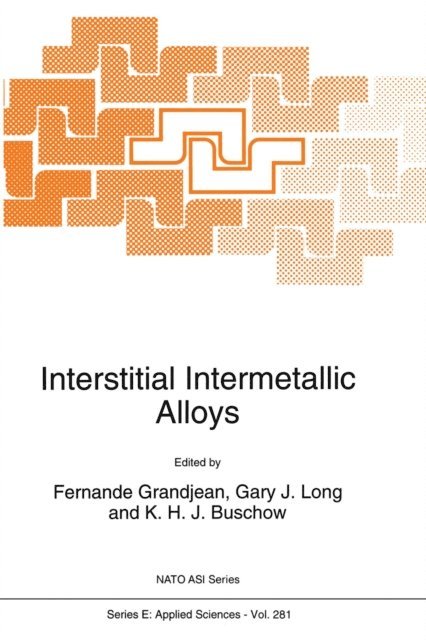
    Interstitial Intermetallic Alloys

    AvK.H.J Buschow,G.J Long

    E-bok
    PDF, Engelska, 2012

    710 kr

    Läs direkt i Bokus Reader – eller ladda ned till din enhet (PDF kräver ofta zoom och scroll på små skärmar).

    Beskrivning

    It is well known that the density of molecular hydrogen can be increased by compression and/or cooling, the ultimate limit in density being that of liquid hydrogen. It is less well known that hydrogen densities of twice that of liquid hydrogen can be obtained by intercalating hydrogen gas into metals. The explanation of this unusual paradox is that the absorption of molecular hydrogen, which in TiFe and LaNis is reversible and occurs at ambient temperature and pressure, involves the formation of hydrogen atoms at the surface of a metal. The adsorbed hydrogen atom then donates its electron to the metal conduction band and migrates into the metal as the much smaller proton. These protons are easily accomodated in interstitial sites in the metal lattice, and the resulting metal hydrides can be thought of as compounds formed by the reaction of hydrogen with metals, alloys, and intermetallic compounds. The practical applications of metal hydrides span a wide range of technologies, a range which may be subdivided on the basis of the hydride property on which the application is based. The capacity of the metal hydrides for hydrogen absorption is the basis for batteries as well as for hydrogen storage, gettering, and purification. The temperature-pressure characteristics of metal hydrides are the basis for hydrogen compressors, sensors, and actuators. The latent heat of the hydride formation is the basis for heat storage, heat pumps, and refrigerators.

    Produktinformation

    • Utgivningsdatum:2012-12-06
    • Språk:Engelska
    • Filformat:PDF
    • Kopieringsskydd:LCP
    • ISBN:9789401102957
    • Förlag:Springer Netherlands

    Utforska kategorier

    • Materietillstånd inom Naturvetenskap och teknik
    • Analytisk kemi inom Naturvetenskap och teknik
    • Tillverkningsteknik inom Naturvetenskap och teknik