• Fri frakt över 249 kr
  • •
  • Snabba leveranser
  • •
  • Billiga böcker
Kundservice

Du är på sajten för privatpersoner.

Företag, bibliotek eller offentlig verksamhet?

Du handlar på classic.bokus.com, där alla dina funktioner finns intakta.
Till classic.bokus.com
Bokus logotyp. Gå till startsidan.
  • Erbjudanden
  • Nyheter
  • Student
  • Topplistor
  • Barn & ungdom
  • Bokus Play
  • E-böcker
  • Pocketböcker
  • Spel & pussel

Må bättre, för mindre! Upp till 50% rabatt på hälsoböcker

Sidfot

Mina sidor

    Hjälp

    • Kundservice
    • Vanliga frågor och svar
    • Frakt och leverans
    • Retur vid ångerrätt
    • Reklamera vara
    • Betalning
    • Köpvillkor
    • Allmänna villkor
    • Information om webbplatsens tillgänglighet

    Om Bokus

    • Om oss
    • Pressrum
    • För studenter
    • För företag
    • För bibliotek och offentlig verksamhet
    • För leverantörer
    • Hållbarhet

    Populärt

    • Aktuella erbjudanden
    • Presentkort
    • Studentlitteratur
    • Nya böcker
    • Topplistor
    • Signerade böcker
    • Engelska böcker

    Inspiration

    • Boktips
    • BookTok
    • Populära bokserier
    • Barnbokskaraktärer
    • Populära författare
    Logotyp för Bokus
    Följ oss på Facebook (extern länk)Följ oss på Instagram (extern länk)Följ oss på YouTube (extern länk)Följ oss på TikTok (extern länk)
    bokus @ CookiesAnpassa cookiesIntegritetspolicyKöpvillkor
    Till Citymail hemsida (extern länk)Till Budbee hemsida (extern länk)Till Postnord hemsida (extern länk)Till Schenker hemsida (extern länk)Till Early Bird hemsida (extern länk)Till Walleys hemsida (extern länk)
    1. Historia och arkeologi
    2. Historia
    3. Europas historia

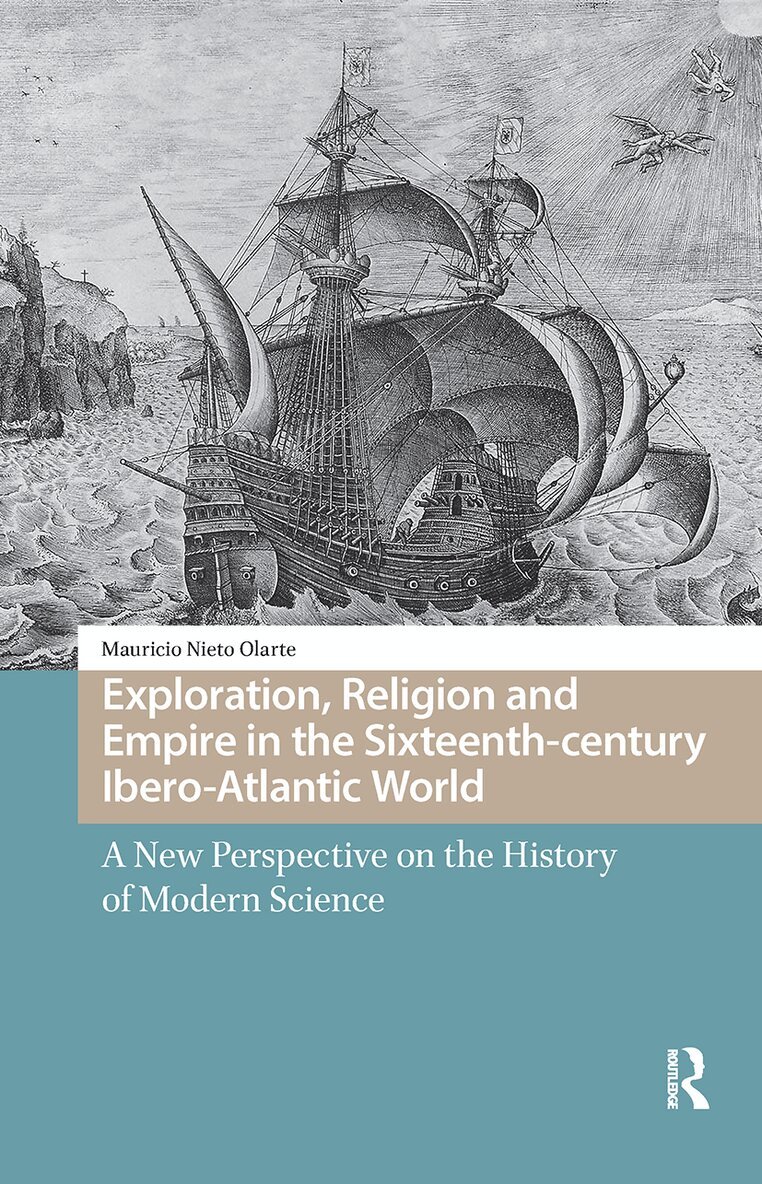
    Exploration, Religion and Empire in the Sixteenth-century Ibero-Atlantic World

    A New Perspective on the History of Modern Science

    AvMauricio Nieto Olarte

    Inbunden, Engelska, 2021

    Del i serien Maritime Humanities, 1400-1800

    2 493 kr

    Beställningsvara. Skickas inom 10-15 vardagar. Fri frakt över 249 kr.

    Fler format och utgåvor

    E-bok

    829 kr

    E-bok

    829 kr

    Häftad

    701 kr

    Beskrivning

    This book offers convincing evidence to incorporate the Catholic world of early modernity into the history of modern science.

    Produktinformation

    • Utgivningsdatum:2021-12-21
    • Mått:156 x 234 x 25 mm
    • Vikt:770 g
    • Format:Inbunden
    • Språk:Engelska
    • Serie:Maritime Humanities, 1400-1800
    • Antal sidor:330
    • Förlag:Amsterdam University Press
    • ISBN:9789463725316

    Utforska kategorier

    • Europas historia inom Historia och arkeologi
    • Teknik: allmänt inom Naturvetenskap och teknik
    • Geografi inom Naturvetenskap och teknik

    Mer om författaren

    Mauricio Nieto Olarte is titular Professor at the Department of History and Geography as well as Dean of the Faculty of Social Sciences at the Universidad de los Andes, Bogota, Colombia.

    Recensioner i media

    "This study is a welcome addition to the growing body of literature that seeks to re-evaluate Iberian scientific activity in America in the early modern period. It is an ambitious work that takes an original approach to establishing how the Spanish sought to build and understand their Atlantic empire, viewing technological practices as part of the broad networks of diverse actors where scientific, technical, political, religious and commercial factors converged. Nieto’s clear and compelling narrative highlights the importance of understanding the interactions of these "machines of empire", an approach that allows us to understand anew how the Spanish saw themselves as fulfilling a providential mission in America." - Dr Edward Collins, University College Dublin ''...this is a very informative and well-written book that invites a wider, primarily anglophone, audience to become better acquainted with the history of proto-scientific knowledge in the Iberian world. It will also be of interest to maritime historians who wish to learn more about the intellectual underpinnings and knowledge-production contexts of Europe’s interoceanic shipping''. -Edgar Pereira, International Journal of Maritime History, 35(2), 2023

    Innehållsförteckning

    • Introduction, The New World and the problem of Eurocentrism, Science and empire, Summary of the chapters in this book, 1. The Iberian Peninsula and the Atlantic, Portugal and Spain, Winds, currents, and sailing ships in the Atlantic, Gold, silver, slaves, souls, and a thousand kinds of trees, 2. The imperial bureaucracy and the appropriation of the New World, Seville and the Casa de Contratacion, The universal monarchy, 3. The piloto mayor: cosmography and the art of navigation, The post of piloto mayor: seamanship and cartography, The navigation manuals, Manuals for the Empire, Publications, dissemination, and secrecy, Humanism and the classics, Experience and authority, Man against the sea: shipwrecks and meteorology, Routes and chorographic descriptions: The New World within the new global order, 4. Machines of the empire, The ships, Shipbuilding, War and artillery, Navigational instruments, The astrolabe, The cross-staff, The mariner's compass, Time and clocks, The sounding/plumb line, The navigation charts, Astronomical tables, Instruments, measurements, precision, and standardization, The crew, The captain/admiral, The pilot, The shipmaster (maestre) and quartermaster (contramaestre), The boatswain (guardian), The ordinary seamen (marineros), Midshipmen (grumetes) and cabin boys (pajes), The carpenter, steward, cooper, and cook, The scribe, master-at-arms, and overseer, The cannoneer, The barber/surgeon, The priest, Life on board, The argot of the sailors, Overcrowding, Food and health, Men of the sea and men of God, 5. The Master Map (Padrón Real) and the cartography of the New World, Nautical charts and how they were made, The making of a chart, The charts of tierra firme: the earliest maps of the New World, Three early maps of the New World, Juan de la Cosa (1500), Waldseemuller (1507), Diego Ribero (1520) 6. The creatures of God never seen before: natural history, Nature in the New World, The classics and the Bible, Monsters in paradise, To describe, classify, and name, Medicine, botany, and the knowledge of the natives, The Empire and natural history, 7. The New World, global science, and Eurocentrism, Plus ultra, Experience and authority, The Empire and the challenge of standardization, Eurocentrism, Bibliography, About the Author, Index.