• Fri frakt över 249 kr
  • •
  • Snabba leveranser
  • •
  • Billiga böcker
Kundservice

Du är på sajten för privatpersoner.

Företag, bibliotek eller offentlig verksamhet?

Du handlar på classic.bokus.com, där alla dina funktioner finns intakta.
Till classic.bokus.com
Bokus logotyp. Gå till startsidan.
  • Erbjudanden
  • Nyheter
  • Student
  • Topplistor
  • Barn & ungdom
  • Bokus Play
  • E-böcker
  • Pocketböcker
  • Spel & pussel

10% rabatt på allt med kod: NYSTART10 →

Sidfot

Mina sidor

    Hjälp

    • Kundservice
    • Vanliga frågor och svar
    • Frakt och leverans
    • Retur vid ångerrätt
    • Reklamera vara
    • Betalning
    • Köpvillkor
    • Allmänna villkor
    • Information om webbplatsens tillgänglighet

    Om Bokus

    • Om oss
    • Pressrum
    • För studenter
    • För företag
    • För bibliotek och offentlig verksamhet
    • För leverantörer
    • Hållbarhet

    Populärt

    • Aktuella erbjudanden
    • Presentkort
    • Studentlitteratur
    • Nya böcker
    • Topplistor
    • Signerade böcker
    • Engelska böcker

    Inspiration

    • Boktips
    • BookTok
    • Populära bokserier
    • Barnbokskaraktärer
    • Populära författare
    Logotyp för Bokus
    Följ oss på Facebook (extern länk)Följ oss på Instagram (extern länk)Följ oss på YouTube (extern länk)Följ oss på TikTok (extern länk)
    bokus @ CookiesAnpassa cookiesIntegritetspolicyKöpvillkor
    Till Citymail hemsida (extern länk)Till Budbee hemsida (extern länk)Till Postnord hemsida (extern länk)Till Schenker hemsida (extern länk)Till Early Bird hemsida (extern länk)Till Walleys hemsida (extern länk)
    1. Samhälle och politik
    2. Politik och statsskick
    3. Politiska ideologier och rörelser
    4. Högerradikalism och högerextremism

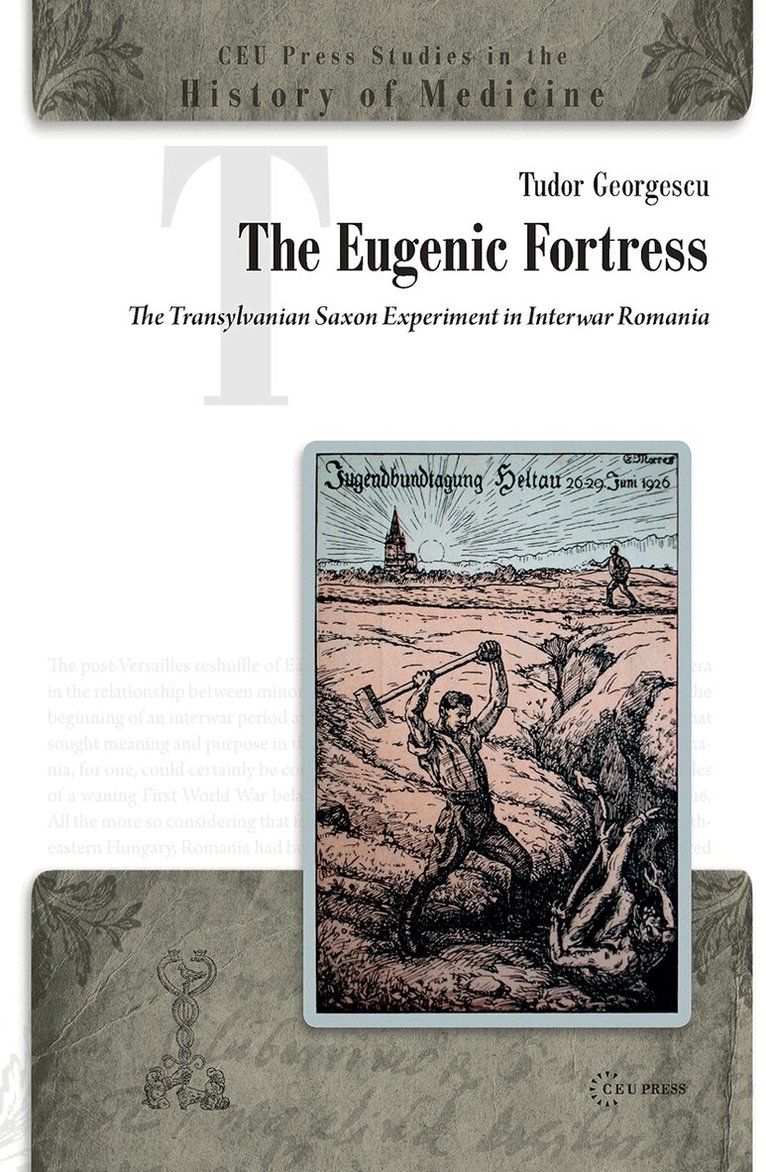
    Eugenic Fortress

    The Transylvanian Saxon Experiment in Interwar Romania

    AvTudor Georgescu

    Inbunden, Engelska, 2016

    Del i serien CEU Press Studies in the History of Medicine

    1 770 kr

    Beställningsvara. Skickas inom 10-15 vardagar. Fri frakt över 249 kr.

    Beskrivning

    The ever growing library on the history of eugenics and fascism focuses largely on nation states, while this monograph asks why an ethnic minority, the Transylvanian Saxons, turned to eugenics as a means of self-empowerment in interwar Romania. The Eugenic Fortress investigates and unpacks the eugenic movement that emerged in the early twentieth century, and focuses on its conceptual and methodological evolution during the interwar period. Further on, the book analyzes the gradual process of politicisation and radicalisation at the hands of a second generation of Saxon eugenicists in conjunction with the rise of an equally indigenous fascist movement. The Saxon case study offers valuable insights into why an ethnic minority would seek to re-entrench itself behind the race-hygienic walls of a 'eugenic fortress', as well as the influence host and home nations had upon its design. Georgescu's work is ground breaking in the sense that the history of this uprooted community is usually handled with sensitivity and serious (and critical) research into Transylvanian Saxon involvement with Nazism has been energetically resisted.

    Produktinformation

    • Utgivningsdatum:2016-10-10
    • Mått:152 x 229 x 21 mm
    • Vikt:700 g
    • Format:Inbunden
    • Språk:Engelska
    • Serie:CEU Press Studies in the History of Medicine
    • Antal sidor:290
    • Förlag:Central European University Press
    • ISBN:9789633861394

    Utforska kategorier

    • Högerradikalism och högerextremism inom Samhälle och politik
    • Europas historia inom Historia och arkeologi

    Mer om författaren

    Tudor Georgescu is Associate Lecturer in the department of History, Philosophy and Religion at Oxford Brookes University and Co-investigator of the Centre for Hidden Histories at the University of Nottingham.

    Innehållsförteckning

    • LIST OF ILLUSTRATIONS, ACKNOWLEDGMENTS, LIST OF ABBREVIATIONS, INTRODUCTION i. Imagining a “Eugenic Fortress”: Fascist Who and Eugenic What? ii. Exclusions iii. Unpacking the Past CHAPTER I. Locating and Defining the Transylvanian Saxon Eugenic Discourse i. Heinrich Siegmund and the Origins of Saxon Eugenics ii. Saxon Racial Anthropology between Berlin and Vienna iii. The “Child Enthusiast” Alfred Csallner iv. Fritz Fabritius’s Self-Help, from “Building Society” to Rebuilding Society v. Wilhelm Schunn’s National Neighborhoods and Honorary Gifts CHAPTER II. Assessing the Dysgenic Crisis: Key Concepts and Theses in Alfred Csallner’s Definition of Saxon Degeneration i. The Lost Children: Family Planning and the Demographic Collapse ii. The Quality Question: The Nation’s Hereditarily “Best” under Threat of Extinction iii. Emigration: The Loss of Saxon Hereditary Substance iv. Mixed Marriages: The End of Racial Distinctiveness v. Lebensraum: Of “Foreign Invaders,” Saxon Employers, and Society’s Scourges, Alcohol and Tobacco CHAPTER III. Alfred Csallner in Search of Eugenic Solutions and Institutional Means i. Eugenic Missionaries: Visions of Priests Old and New ii. Csallner’s Population Policy Proposals and the Church iii. Going It Alone: The Society of Child Enthusiasts, 1927–30 138 iv. The Self-Help Race Office, 1932–35 v. The Reinvention of the Race Office as National Department or Statistics, Population Policy, and Genealogy, 1935–38 vi. The National Office for Statistics and Genealogy and Its ix Departments, 1938–41 CHAPTER IV. Fascist Visions of a Eugenic Fortress: The Self-Help’s Origins and Rise to Power, 1922–33 i. Fritz Fabritius and the Origins of Saxon Fascism ii. Early Development, 1922–29 iii. Expansion and Radicalization, 1929–32 iv. The NSDR Victorious, 1932–33 CHAPTER V. Saxon Fascism in Power, 1933–40 i. The Self-Help’s Various Forms and Formats, 1933–34 ii. War and Peace: The National Community of Germans in Romania, 1935–40 iii. The Mighty Pen: The 1935 National Program of Germans in Romania iv. Building a Bristling Eugenic Fortress, One Neighborhood at a Time: Wilhelm’s Schunn’s National Neighborhoods, 1933–40 CHAPTER VI. 1940 and Everything After CONCLUSIONS, BIBLIOGRAPHY, INDEX OF NAMES, INDEX OF PLACES.