Inbunden, Engelska, 2026
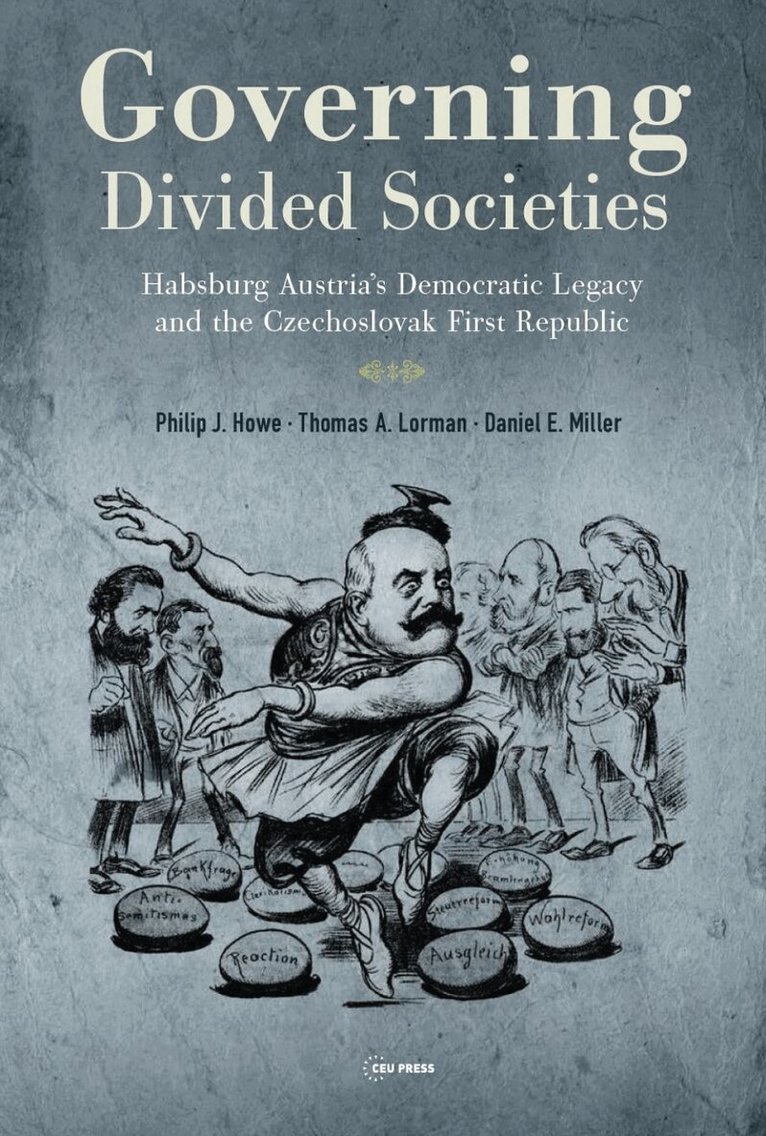
Governing Divided Societies
Av Philip Howe, Thomas Lorman, Daniel Miller
1961 kr
Beställningsvara. Skickas inom 10-15 vardagar. Fri frakt över 249 kr.
Beskrivning
The authors of this volume challenge conventional notions about Habsburg and Czechoslovak politics, arguing that they were more democratic than they often appear. They use the consociational model of democracy as a means of combining political science and history. The theory, associated with Arend Lijphart, asserts that consociationalism guarantees minorities a say in government and helps preserve democracy in societies that experience deep ideological, cultural, or ethnic divisions. Consociationalism enables the main segments to be isolated organizationally from each other, thus avoiding conflict but affording the leaders opportunities to make compromises for the good of the whole. Consociationalism has proven its worth as a model for describing contemporary democracies and diagnosing their ills. By exploring the institutions and practices of the Habsburg Monarchy before 1918 and the Czechoslovak First Republic, Howe, Lorman, and Miller prove the value of the consociational theory in analyzing the past. They hold that a multitude of parties, frequent cabinet changes, and reliance on cabinets of experts do not necessarily signal flawed democracies. In fact, they are features of consociationalism. This volume challenges historians and social scientists to view the Austrian half of the Habsburg Monarchy before 1918 as evolving toward consociational democracy and the Czechoslovak First Republic as a fully consociational state.
Produktinformation
- Utgivningsdatum: 2026-08-31
- Mått: 156 x 234 x 25 mm
- Vikt: 798 g
- Format: Inbunden
- Språk: Engelska
- Serie: Central European University Press
- Antal sidor: 446
- Förlag: Central European University Press
- ISBN: 9789633865859
Utforska kategorier
Betyg & recensioner
0 recensioner
Inga recensioner tillgängliga.