• Fri frakt över 249 kr
  • •
  • Snabba leveranser
  • •
  • Billiga böcker
Kundservice

Du är på sajten för privatpersoner.

Företag, bibliotek eller offentlig verksamhet?

Du handlar på classic.bokus.com, där alla dina funktioner finns intakta.
Till classic.bokus.com
Bokus logotyp. Gå till startsidan.
  • Erbjudanden
  • Student
  • Topplistor
  • Barn & ungdom
  • Bokus Play
  • E-böcker
  • Ljudböcker
  • Pocketböcker
  • Spel och pussel

Pocketfynda! Hundratals böcker för 49 kr/st →

Sidfot

Mina sidor

    Hjälp

    • Kundservice
    • Vanliga frågor och svar
    • Frakt och leverans
    • Retur vid ångerrätt
    • Reklamera vara
    • Betalning
    • Köpvillkor
    • Allmänna villkor
    • Information om webbplatsens tillgänglighet

    Om Bokus

    • Om oss
    • Pressrum
    • För studenter
    • För företag
    • För bibliotek och offentlig verksamhet
    • För leverantörer
    • Hållbarhet

    Populärt

    • Aktuella erbjudanden
    • Presentkort
    • Studentlitteratur
    • Nya böcker
    • Topplistor
    • Signerade böcker
    • Engelska böcker

    Inspiration

    • Boktips
    • BookTok
    • Barnbokskaraktärer
    • Populära författare
    Logotyp för Bokus
    Följ oss på Facebook (extern länk)Följ oss på Instagram (extern länk)Följ oss på YouTube (extern länk)Följ oss på TikTok (extern länk)
    bokus @ CookiesAnpassa cookiesIntegritetspolicyKöpvillkor
    Till Citymail hemsida (extern länk)Till Budbee hemsida (extern länk)Till Postnord hemsida (extern länk)Till Schenker hemsida (extern länk)Till Early Bird hemsida (extern länk)Till Walleys hemsida (extern länk)
    1. Historia och arkeologi
    2. Historia
    3. Historia: särskilda händelser och ämnen
    4. Socialhistoria och kulturhistoria

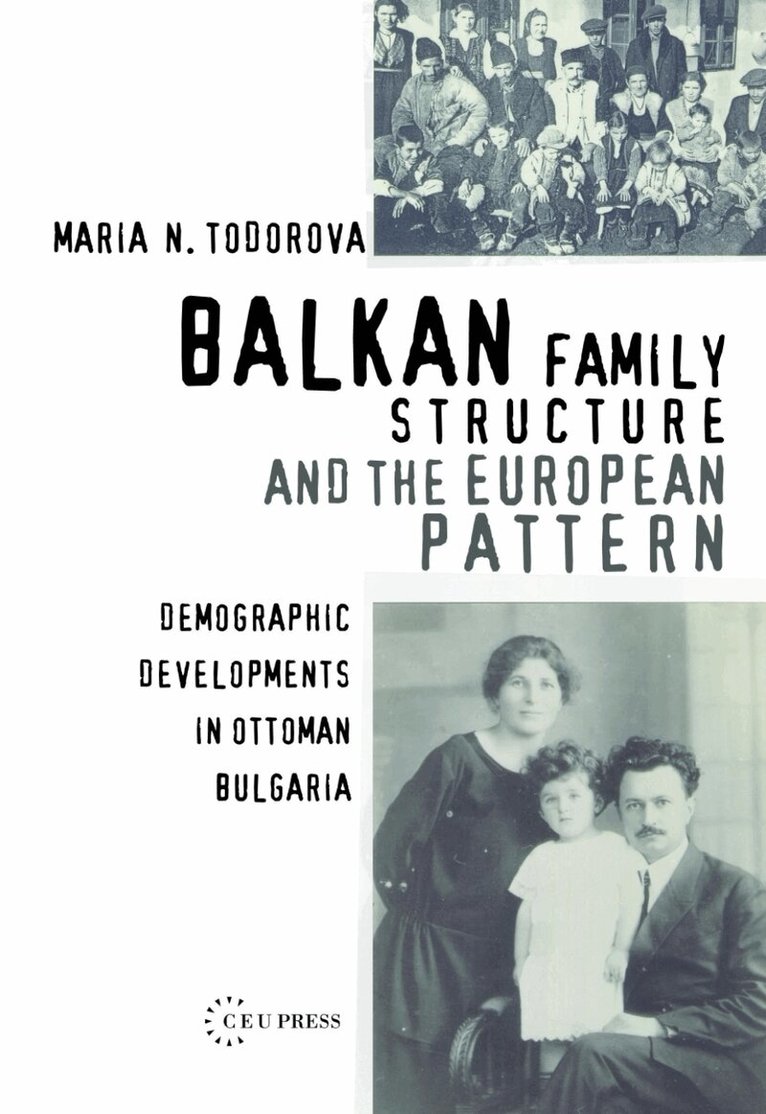
    Balkan Family Structure and the European Pattern

    Demographic Developments in Ottoman Bulgaria

    AvMaria Todorova

    Inbunden, Engelska, 2006

    Del i serien Pasts Incorporated: Studies in the Humanities - CEU Press

    1 705 kr

    Beställningsvara. Skickas inom 10-15 vardagar. Fri frakt över 249 kr.

    Beskrivning

    This study, which is an updated, extended, and revised version of the out-of-print 1993 edition, reassesses the traditional stereotype of the place of the Balkans in the model of the European family in the nineteenth century on the basis of new source material and by synthesizing existing research. The work first analyzes family structure and demographic variables as they appear in population registers and other sources, and the impact of these findings on theoretical syntheses of the European family pattern. On most features, such as population structure, marriage and nuptiality, birth and fertility, death and mortality rates, family and household size and structure, as well as inheritance patterns, the Balkans show an enormous deal of internal variety. This variability is put in a comparative European context by matching the quantifiable results with comparable figures and patterns in other parts of Europe. The second section of the book is a contribution to the long-standing debate over the zadruga, the complex, collective, joint or extended family in the Balkans. Finally, the book considers ideology and mythology and the ways it has adversely affected scholarship on the family, and broadly on population history.

    Produktinformation

    • Utgivningsdatum:2006-05-10
    • Mått:159 x 234 x 20 mm
    • Vikt:517 g
    • Format:Inbunden
    • Språk:Engelska
    • Serie:Pasts Incorporated: Studies in the Humanities - CEU Press
    • Antal sidor:264
    • Förlag:Central European University Press
    • ISBN:9789637326455

    Utforska kategorier

    • Socialhistoria och kulturhistoria inom Historia och arkeologi
    • Sociologi inom Samhälle och politik

    Mer om författaren

    Maria N. Todorova is a Professor of History at the University of Illinois, Urbana-Champaign.

    Recensioner i media

    "An important contribution to major discussions in the area of historical demography. Its basic criticism of structural and historical generalizations fits well into ongoing research efforts to question their theoretical and empirical foundations. Its skepticism of using historical concepts of family history to strengthen 'the myth of the individualistic European Sonderweg' is highly welcome. This book suggests that currents surveys in Western-language historiographies should be checked carefully for stereotypes about the social and economic history of Southern, Southeastern, and Eastern Europe."

    Innehållsförteckning

    • Preface to the second edition; Acknowledgements; Introduction: Rethinking the Unknown; II. Population Structure; Age Structure; Sex Structure; III. Marriage and Nuptiality; The Marriage Ritual and Seasonal Patterns of Marriage; Age at Marriage; Remarriage, Cross-Kin Marriages and Other Characteristics; IV. Birth and Fertility; Births, Baptisms and Their Registration; Measurements of Fertility; Twins in a Closed Population; V. Death and Mortality; Gender and Age Specific Mortality; Seasonal Patterns of Mortality and Causes of Death; VI. Family and Household Size and Structure; Family and Household Structure; Family and Household Size; Inheritance Patterns; VII. The Problem of the South Slav Zadruga; Distribution and Development of the zadruga in the Balkans; An Alternative Explanation; VIII. Conclusion: A Hypothesis of Converging Theories; A Summary of Conclusions; Appendices; Notes; References and Bibliography; Index