Pasts Incorporated: Studies in the Humanities - CEU Press - Böcker
Visar alla böcker i serien Pasts Incorporated: Studies in the Humanities - CEU Press. Handla med fri frakt och snabb leverans.
6 produkter
6 produkter
1 604 kr
Skickas inom 10-15 vardagar
Ascensions on high took many forms in Jewish mysticism and they permeated most of its history from its inception until Hasidism. The book surveys the various categories, with an emphasis on the architectural images of the ascent, like the resort to images of pillars, lines, and ladders. After surveying the variety of scholarly approaches to religion, the author also offers what he proposes as an eclectic approach, and a perspectivist one. The latter recommends to examine religious phenomena from a variety of perspectives. The author investigates the specific issue of the pillar in Jewish mysticism by comparing it to the archaic resort to pillars recurring in rural societies. Given the fact that the ascent of the soul and pillars constituted the concerns of two main Romanian scholars of religion, Ioan P. Culianu and Mircea Eliade, Idel resorts to their views, and in the Concluding Remarks analyzes the emergence of Eliade's vision of Judaism on the basis of neglected sources.
642 kr
Skickas inom 10-15 vardagar
Ascensions on high took many forms in Jewish mysticism and they permeated most of its history from its inception until Hasidism. The book surveys the various categories, with an emphasis on the architectural images of the ascent, like the resort to images of pillars, lines, and ladders. After surveying the variety of scholarly approaches to religion, the author also offers what he proposes as an eclectic approach, and a perspectivist one. The latter recommends to examine religious phenomena from a variety of perspectives. The author investigates the specific issue of the pillar in Jewish mysticism by comparing it to the archaic resort to pillars recurring in rural societies. Given the fact that the ascent of the soul and pillars constituted the concerns of two main Romanian scholars of religion, Ioan P. Culianu and Mircea Eliade, Idel resorts to their views, and in the Concluding Remarks analyzes the emergence of Eliade's vision of Judaism on the basis of neglected sources.
Balkan Family Structure and the European Pattern
Demographic Developments in Ottoman Bulgaria
Inbunden, Engelska, 2006
1 652 kr
Skickas inom 10-15 vardagar
This study, which is an updated, extended, and revised version of the out-of-print 1993 edition, reassesses the traditional stereotype of the place of the Balkans in the model of the European family in the nineteenth century on the basis of new source material and by synthesizing existing research. The work first analyzes family structure and demographic variables as they appear in population registers and other sources, and the impact of these findings on theoretical syntheses of the European family pattern. On most features, such as population structure, marriage and nuptiality, birth and fertility, death and mortality rates, family and household size and structure, as well as inheritance patterns, the Balkans show an enormous deal of internal variety. This variability is put in a comparative European context by matching the quantifiable results with comparable figures and patterns in other parts of Europe. The second section of the book is a contribution to the long-standing debate over the zadruga, the complex, collective, joint or extended family in the Balkans. Finally, the book considers ideology and mythology and the ways it has adversely affected scholarship on the family, and broadly on population history.
1 739 kr
Skickas inom 10-15 vardagar
This is a collection of essays on current questions of historiography, illustrated with reference to Islamic historiography. The main concerns are conceptions of time and temporality, the uses of the past, historical periodisation, historical categorisation, and the constitution of historical objects, not least those called civilisation and Islam. One of the aims of the book is to apply to Islamic materials the standard conceptual equipment used in historical study, and to exercise a large-scale comparativist outlook.
2 181 kr
Skickas inom 10-15 vardagar
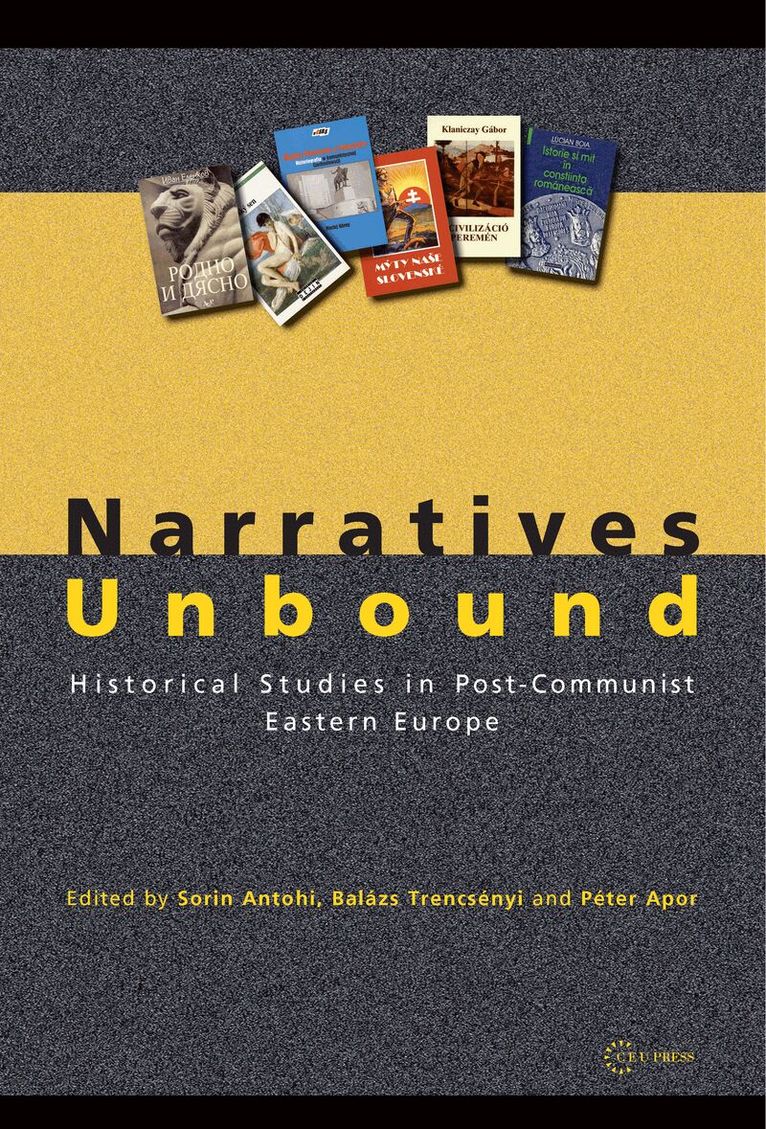
The first work that covers the post-Communist development of historical studies in six Eastern European countries: Bulgaria, Czech Republic, Hungary, Poland, Romania, and Slovakia. A uniquely critical and qualitative analysis from a comparative and critical perspective, written by scholars from the region itself. Focusing on the first post-Communist decade, 1989–1999, the book offers a longer-term perspective that includes the immediate 'prehistory' of that momentous decade as well as its 'posthistoire'. The authors capture the spirit of 1989, that heady mix of elation, surprise, determination, and hope: l'ivresse du possible. This was the paradoxical beginning of Eastern European post-Communism: ushered in by 'anti-Utopian' revolutions, and slowly finding its course towards a bureaucratic, imitative, challenging, and anachronistic restoration of a capitalism that had changed almost beyond recognition when it had mutated into the negative double of Communism. Each individual chapter has numerous and detailed notes and references.
1 658 kr
Skickas inom 10-15 vardagar
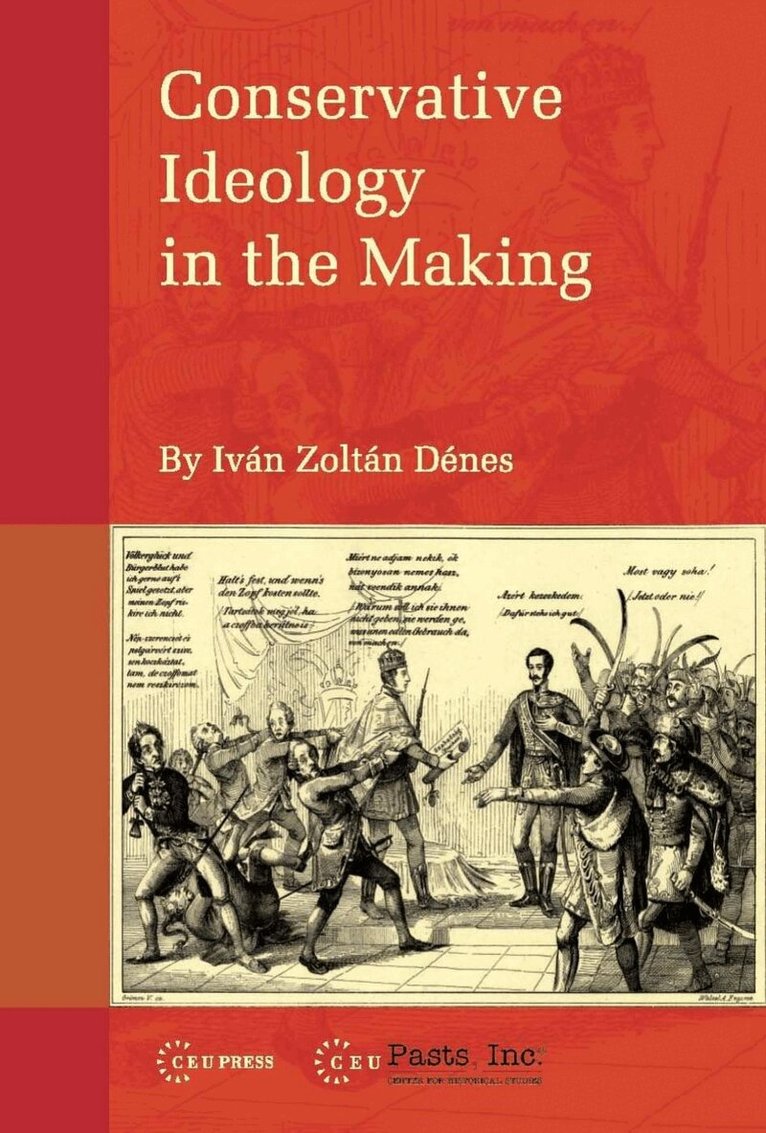
The fifty years or so preceding the watershed of 1848–49 witnessed the emergence of liberal nationalism in Hungary, along with a transmutation of conservatism which appeared then as a party and an ideological system in the political arena. The specific features of the conservatism, combining the protection of the status quo with some reform measures, its strategic vision, conceptual system, argumentation, assessment criteria and values require an in depth exploration and analysis. Different conservative groups were in the background or in opposition from 1848 to 1918, while in the period between the two World Wars, they constituted the overwhelming majority of ruling parties. During the one-party system, from 1949 to 1989, the liberals and conservatives—like all other political groups—were illegal, a status from which they could later emerge upon the change of the political system. The inheritance of the autocratic system frozen up and undigested by the one-party state was thawed after the peaceful regime change, the constitutional revolution and its discrete components began to be reactivated, including the enemy images of earlier discourses. "Liberal" and "conservative" had become state-party stigmas in line with fascist, reactionary, rightist, and bourgeois. In reaction to that, at first conservative then liberal, intellectual fashions and renascences unfolded in the 1980s. The attempts by liberal and conservative advocates to find predecessors did not favor an objective approach.The first step toward objectivity is establishing distance from the different kinds of enemy images and their political idioms. This is a pressing need because, although several pioneering works have appeared on different variants of the Hungarian liberalisms and conservatisms, there are no serious unbiased syntheses. This work is urgent because the political poles of the constitutional revolution and the ensuing period have up till now been described in terms of different conspiracy theories.