• Fri frakt över 249 kr
  • •
  • Snabba leveranser
  • •
  • Billiga böcker
Kundservice

Du är på sajten för privatpersoner.

Företag, bibliotek eller offentlig verksamhet?

Du handlar på classic.bokus.com, där alla dina funktioner finns intakta.
Till classic.bokus.com
Bokus logotyp. Gå till startsidan.
  • Erbjudanden
  • Nyheter
  • Student
  • Topplistor
  • Barn & ungdom
  • Bokus Play
  • E-böcker
  • Pocketböcker
  • Spel & pussel

10% studentrabatt med kod TERM26

Sidfot

Mina sidor

    Hjälp

    • Kundservice
    • Vanliga frågor och svar
    • Frakt och leverans
    • Retur vid ångerrätt
    • Reklamera vara
    • Betalning
    • Köpvillkor
    • Allmänna villkor
    • Information om webbplatsens tillgänglighet

    Om Bokus

    • Om oss
    • Pressrum
    • För studenter
    • För företag
    • För bibliotek och offentlig verksamhet
    • För leverantörer
    • Hållbarhet

    Populärt

    • Aktuella erbjudanden
    • Presentkort
    • Studentlitteratur
    • Nya böcker
    • Topplistor
    • Signerade böcker
    • Engelska böcker

    Inspiration

    • Boktips
    • BookTok
    • Populära bokserier
    • Barnbokskaraktärer
    • Populära författare
    Logotyp för Bokus
    Följ oss på Facebook (extern länk)Följ oss på Instagram (extern länk)Följ oss på YouTube (extern länk)Följ oss på TikTok (extern länk)
    bokus @ CookiesAnpassa cookiesIntegritetspolicyKöpvillkor
    Till Citymail hemsida (extern länk)Till Budbee hemsida (extern länk)Till Postnord hemsida (extern länk)Till Schenker hemsida (extern länk)Till Early Bird hemsida (extern länk)Till Walleys hemsida (extern länk)
    1. Djur och Natur
    2. Djurböcker
    3. Vilda djur
    4. Fjärilar, insekter, spindlar

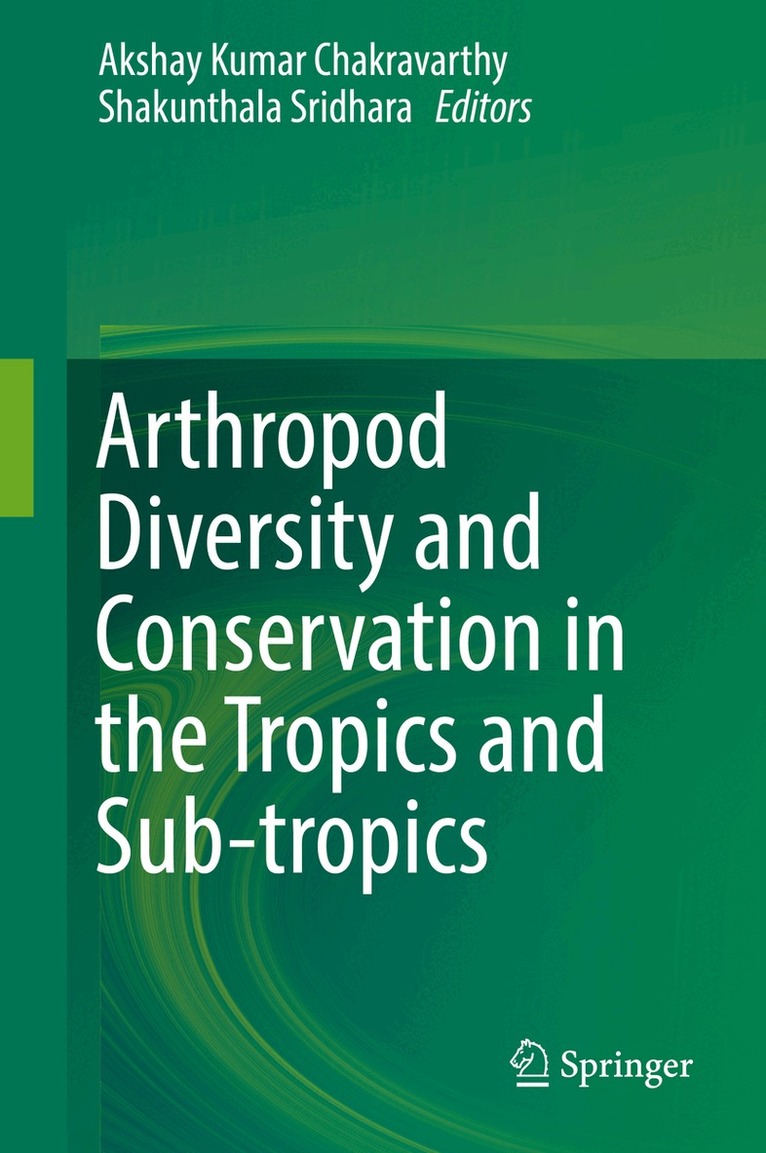
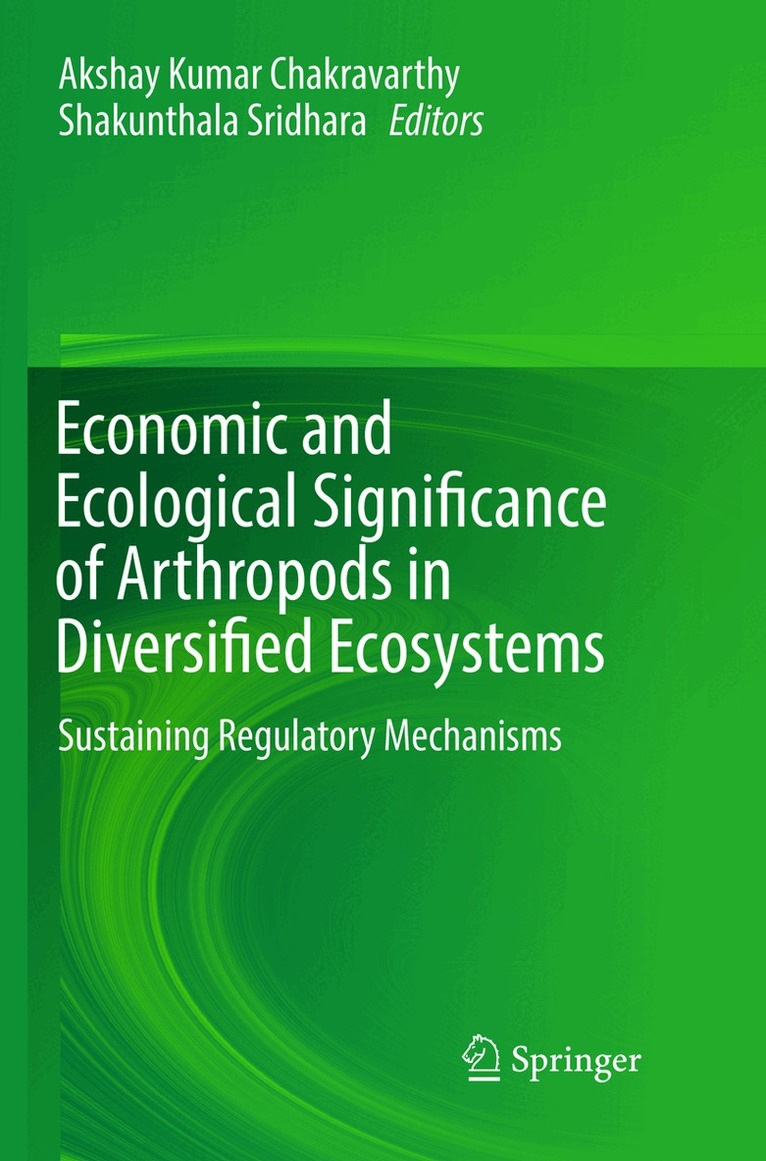
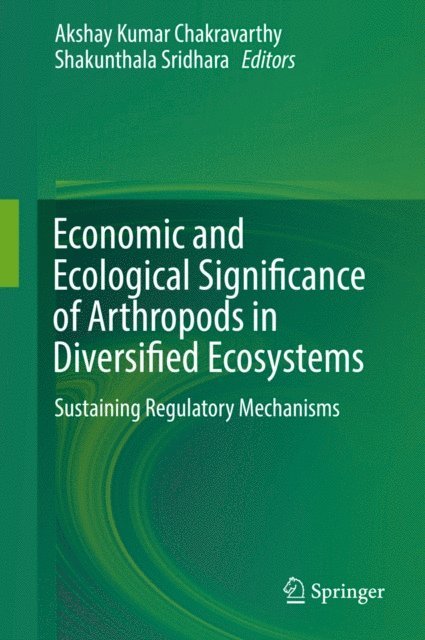
    Economic and Ecological Significance of Arthropods in Diversified Ecosystems

    Sustaining Regulatory Mechanisms

    AvAkshay Kumar Chakravarthy,Shakunthala Sridhara

    Inbunden, Engelska, 2016

    2 381 kr

    Beställningsvara. Skickas inom 10-15 vardagar. Fri frakt över 249 kr.

    Beskrivning

    Arthropods are invertebrates that constitute over 90% of the animal kingdom, and their bio-ecology is closely linked with global functioning and survival.Arthropods play an important role in maintaining the health of ecosystems, provide livelihoods and nutrition to human communities, and are important indicators of environmental change. Yet the population trends of several arthropods species show them to be in decline. Arthropods constitute a dominant group with 1.2 million species influencing earth’s biodiversity. Among arthropods, insects are predominant, with ca. 1 million species and having evolved some 350 million years ago. Arthropods are closely associated with living and non-living entities alike, making the ecosystem services they provide crucially important. In order to be effective, plans for the conservation of arthropods and ecosystems should include a mixture of strategies like protecting key habitats and genomic studies to formulate relevant policies for insitu and ex situ conservation.This two-volume book focuses on capturing the essentials of arthropod inventories, biology, and conservation. Further, it seeks to identify the mechanisms by which arthropod populations can be sustained in terrestrial and aquatic ecosystems, and by means of which certain problematic species be managed without producing harmful environmental side-effects. This edited compilation includes chapters contributed by over 80 biologists on a wide range of topics embracing the diversity, distribution, utility and conservation of arthropods and select groups of insect taxa. More importantly, it describes in detail the mechanisms of sustaining arthropod ecosystems, services and populations. It addresses the contribution of modern biological tools such as molecular and genetic techniques regulating gene expression, as well as conventional, indigenous practices in arthropod conservation. The contributors reiterate the importance of documenting and understanding the biology of arthropods from a holistic perspective before addressing conservation issues at large. This book offers a valuable resource for all zoologists, entomologists, ecologists, conservation biologists, policy makers, teachers and students interested in the conservation of biological resources.

    Produktinformation

    • Utgivningsdatum:2016-11-17
    • Mått:155 x 235 x 30 mm
    • Vikt:834 g
    • Format:Inbunden
    • Språk:Engelska
    • Antal sidor:422
    • Upplaga:16001
    • Förlag:Springer Verlag, Singapore
    • ISBN:9789811015236

    Utforska kategorier

    • Fjärilar, insekter, spindlar inom Djur och Natur
    • Insekter inom Naturvetenskap och teknik
    • Miljöekonomi inom Ekonomi och Ledarskap

    Mer om författaren

    Dr. A.K.Chakravarthy, Head, Principal Scientist, Division of Entomology and Nematology is an author of many books and over 300 scientific papers and 25 chapters in Entomology and natural history. His interest includes Insects, birds, bats, rodents and mammals. With over three decades of experience of teaching, research and extension. Dr. Chakravarthy has been the investigator for over 30 research projects and has guided more than 20 students for post graduation. A PhD, from Punjab Agriculture University and Fellow from IARI, New Delhi, he is a member of several National and International scientific academia, an advisor, a panelist, a referee, reviewer, editor and he is associated with publication of several national and international journals worldwide. A field orientated, widely travelled biologist, he is actively working on novel approaches in Integrated Pest management, Host Plant Interaction, vertebrate pest management, Biodiversity and environmental conservation issues. Recently he has published a book entitled “New Horizons in Insect Science: Towards Sustainable Pest Management” with springer, the book will ready by January, 2015.Professor Shakunthala Sridhara obtained her B.Sc (1967)., M.Sc. (1969) and Ph.D.(1973) from Bangalore University, Bangalore. In late 1973 she joined the University of Agricultural Sciences, Bangalore. From 1973 to 2007 she taught and carried out research on plant protection. After retiring as Professor and Head, Dr. Sridhara was selected as Emeritus Scientist of Indian Council of Agricultural research, New Delhi for a period of two years. (May 2007 to April 2009). Currently she is a consultant to pesticide companies and is also busy writing scientific books for reputed national and international publishers. During her 38 years of research, Dr. Sridhara has published 132 research papers, participated and presented 87 research papers in national and international conferences in United Kingdom, USA,Austria, Germany, Spain and Hawai. So far she has published ten books on pest management in agricultural systems including arthropods.

    Recensioner i media

    “It chiefly covers the status, function, importance and control of insects and other Arthropods in agricultural systems. … there is clearly a huge amount of valuable and interesting information in this book, which is an important reference work. I thoroughly enjoyed reading it. … there are a number of colour plates of Arthropods and their habitats.” (Tom Brereton, Journal of Insect Conservation, Vol. 21, 2017)

    Innehållsförteckning

    • 1. Arthropods: Evolution and EcologyA. K. Chakravarthy, Vasudev Kammar and P. R. Shashank2. Soil biodiversity and arthropods: Role in soil fertilityD. J. Bagyaraj, C. J. Nethravathi and K. S. Nitin3. Butterfly Communities of Ritchie’s Archipelago in Andaman and Nicobar Islands, India: Implications for Conservation of Arthropods and Their HabitatsC. Sivaperuman and K. Venkataraman4. Documenting Arthropods in select Wild and Cultivated Ecosystems in Iran and KuwaitA. A. Seraj, M. Esfandiari and Wasmia Al-Houty5. An Appraisal of Select Insect Taxa in Sri LankaJ. P. Edirisinghe, W. A. I. P. Karunaratne, I. I. Hemachandra, N. R. Gunawardene and C. M. D. Bambaradeniya6. Utility of arthropods by indigenous communities: Sustaining natural resources M. Jayashankar, M. Charles, Vijeth V. Arya and Jayalaxmi Hegde7. Insects as human foodA. K. Chakravarthy, G. T. Jayasimha, R. R. Rachana and G. Rohini8. Arthropod communities on Rice: A blend of terrestrial and aquatic species L. Vijay Kumar, K. S. Nitin and Rajendra Prasad9. Arthropods on cotton: A comparison between Bt and non-Bt cottonA.  K. Chakravarthy, Manja Naik and T. N. Madhu 10. Arthropod Biodiversity on Jute and Allied Fibre CropsK. Selvaraj, B. S. Gotyal, S. P. Gawande, S. Satpathy and S. K. Sarkar 11. Arthropod Diversity and Management in Legume Based Cropping Systems in the TropicsV. Sridhar and L. S. Vinesh12. Arthropod diversity in non-leguminous vegetable cropsN. R. Prasannakumar, K. P. Kumar and A. T. Rani13. Diversity of Mites on Vegetable crops, Kerala, South India: Documentation for Conserving Predatory and other Beneficial Mites on VegetablesK. V. Binisha, Haseena Bhaskar and Sosamma Jacob14. Arthropod Communities Associated with Mango (Mangifera indica L.): Diversity and InteractionsPoluru Venkata Rami Reddy and Kolla Sreedevi15. Arthropod communities on cashew: A perennial reservoir of species assemblagesP.S. Bhat, K. Vanitha, T.N. Raviprasad and K. K. Srikumar16. The Coconut Mite: Current Global Scenario N. S. Aratchige, A. D. N. T. Kumara and N. I. Suwandharathne 17. Arthropod communities in coffee: Reflecting tropical forest arthropod communities N. E. Thyagaraj, Manjunath Reddy, B. Doddabasappa and S. Onkara Naik18. Arthropod Pests and Natural Enemies Communities in Tea Ecosystems of IndiaNarayanannair Muraleedharan and Somnath Roy19. Forest Arthropod Communities in India: Their role and ConservationG. Mathew, K. P. Kumar and M. Chandrashekhariah20. Awareness on Pesticide Residues in Food Crops: A ChallengeG. V. Ranga Rao, B. Ratna Kumari, K. L. Sahrawat and S. P. Wani