• Fri frakt över 249 kr
  • •
  • Snabba leveranser
  • •
  • Billiga böcker
Kundservice

Du är på sajten för privatpersoner.

Företag, bibliotek eller offentlig verksamhet?

Du handlar på classic.bokus.com, där alla dina funktioner finns intakta.
Till classic.bokus.com
Bokus logotyp. Gå till startsidan.
  • Erbjudanden
  • Nyheter
  • Student
  • Topplistor
  • Barn & ungdom
  • Bokus Play
  • E-böcker
  • Pocketböcker
  • Spel & pussel

10% rabatt på allt med kod: NYSTART10 →

Sidfot

Mina sidor

    Hjälp

    • Kundservice
    • Vanliga frågor och svar
    • Frakt och leverans
    • Retur vid ångerrätt
    • Reklamera vara
    • Betalning
    • Köpvillkor
    • Allmänna villkor
    • Information om webbplatsens tillgänglighet

    Om Bokus

    • Om oss
    • Pressrum
    • För studenter
    • För företag
    • För bibliotek och offentlig verksamhet
    • För leverantörer
    • Hållbarhet

    Populärt

    • Aktuella erbjudanden
    • Presentkort
    • Studentlitteratur
    • Nya böcker
    • Topplistor
    • Signerade böcker
    • Engelska böcker

    Inspiration

    • Boktips
    • BookTok
    • Populära bokserier
    • Barnbokskaraktärer
    • Populära författare
    Logotyp för Bokus
    Följ oss på Facebook (extern länk)Följ oss på Instagram (extern länk)Följ oss på YouTube (extern länk)Följ oss på TikTok (extern länk)
    bokus @ CookiesAnpassa cookiesIntegritetspolicyKöpvillkor
    Till Citymail hemsida (extern länk)Till Budbee hemsida (extern länk)Till Postnord hemsida (extern länk)Till Schenker hemsida (extern länk)Till Early Bird hemsida (extern länk)Till Walleys hemsida (extern länk)
    1. Naturvetenskap och teknik
    2. Teknik och industri
    3. Agronomi och lantbruk
    4. Lantbruksteknik

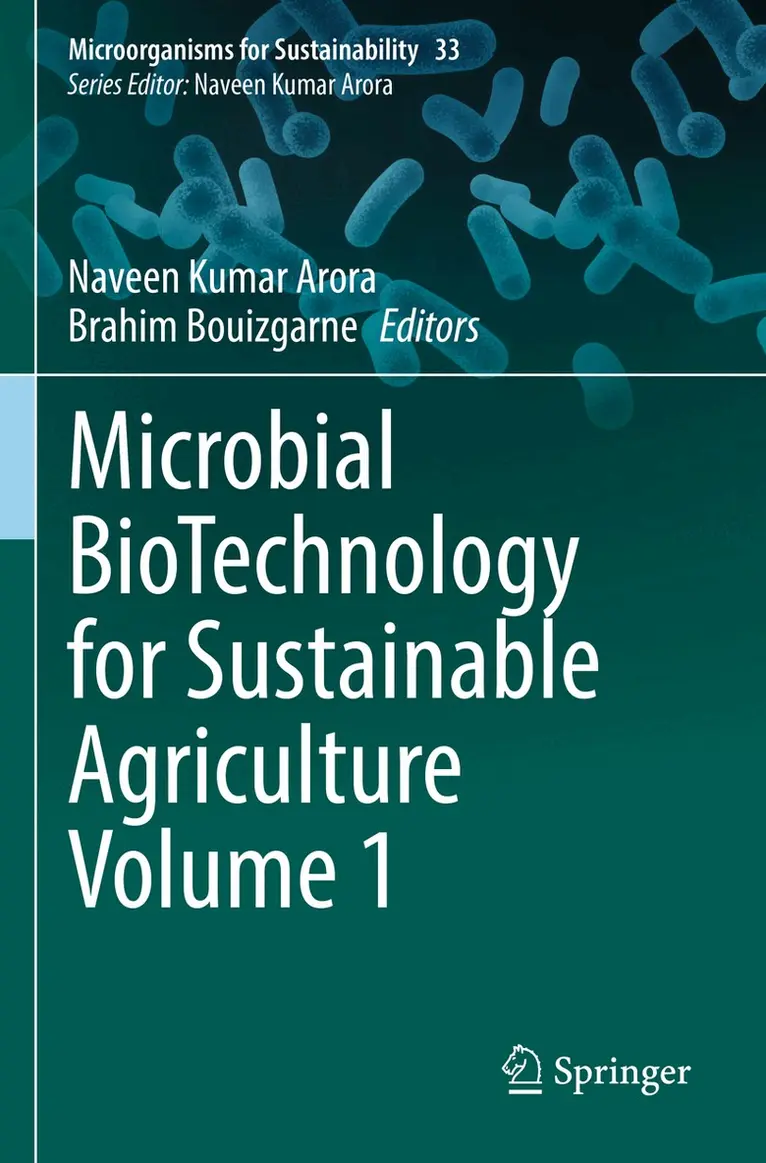
    Microbial BioTechnology for Sustainable Agriculture Volume 1

    AvNaveen Kumar Arora,Brahim Bouizgarne

    Häftad, Engelska, 2023

    Del 33 i serien Microorganisms for Sustainability

    1 949 kr

    Beställningsvara. Skickas inom 10-15 vardagar. Fri frakt över 249 kr.

    Beskrivning

    This volume explains the recent findings on the mutualistic plant–microbe interactions and how they can be utilized for sustainable agriculture practices including land reclamation. The book covers mainly plant growth promoting microorganisms (PGPMs) including both the symbiotic bacteria and fungi and their role in mobilization of nutrients, providing protection to the crops from phytopathogens and abiotic stresses. PGPMs play important roles in survival and health of the plant. These useful microorganisms provide plants with nutrients, protect them from pathogens and help them combat abiotic stresses. It is important that these mutualistic interactions between plant and soil microbes are well understood so as to develop reliable products in the form of biostimulants and biopesticides, as well as managing biotic and abiotic stresses in crops. Apart from enhancing crop productivity plant–microbe interactions can also perform activities such as reclamation of degraded lands, degradation of pollutants and remediation of saline or marginal lands.This book is of interest to teachers, researchers, plant scientists and microbiologists. Also, the book serves as additional reading material for undergraduate and graduate students of agriculture, microbiology, biotechnology, ecology, soil science and environmental sciences.

    Produktinformation

    • Utgivningsdatum:2023-05-05
    • Mått:155 x 235 x 32 mm
    • Vikt:873 g
    • Format:Häftad
    • Språk:Engelska
    • Serie:Microorganisms for Sustainability
    • Antal sidor:573
    • Förlag:Springer Verlag, Singapore
    • ISBN:9789811648458

    Utforska kategorier

    • Lantbruksteknik inom Naturvetenskap och teknik
    • Biovetenskap inom Naturvetenskap och teknik
    • Biologi inom Naturvetenskap och teknik

    Mer om författaren

    Prof (Dr) Naveen Kumar Arora, PhD in Microbiology, fellow of the International Society of Environmental Botanists (FISEB), Dean, School of Earth and Environmental Sciences, and Head Department of Environmental Science, Babasaheb Bhimrao Ambedkar University (A Central University), Lucknow, Uttar Pradesh, India, is a renowned researcher in the field of environmental microbiology and biotechnology. His specific area of research is plant–microbe interactions, sustainable agriculture and the environment. He has more than 100 research articles published in premium international journals and several articles published in magazines and dailies. Dr Arora is editor of 35 books, published by Springer Nature. He is the series editor of book series Microorganisms for Sustainability published by Springer Nature. Dr Arora is the Editor-in-Chief of the journal Environmental Sustainability, also published by Springer Nature. He is member of several national and international societies, editorial board member of four journals, and reviewer of several international journals. He has one patent to his name. Dr Arora has successfully completed six R&D projects sanctioned by funding agencies such as DST, DBT, CSIR, UPCST and UGC and at present has three ongoing projects funded by the Ministry of Science and Technology, New Delhi, India. He has delivered invited and keynote talks in conferences and seminars around the globe. Some of these include international conferences in USA, Portugal, China, Turkey, Morocco, Uzbekistan, Vietnam and Tashkent. Eleven scholars have been awarded PhD under his guidance. He has been awarded by national and international bodies and societies for research and academic work. Although an academician and researcher by profession, he is passionate about wildlife and its conservation and has authored a book on this subject entitledSplendid Wilds. Dr Arora is president of the Society for Conservation of Wildlife and secretary of the Society for Environmental Sustainability.Brahim BOUIZGARNE obtained his PhD in 2005 at Cadi Ayyad University, Marrakesh, Morocco, in Microbial and Plant Biotechnology. He worked at Ibn Zohr University (Agadir, Morocco) as assistant professor in 2007. Currently, Brahim BOUIZGARNE is a full professor (Professor of Higher Education PES) in Microbial and Plant Biotechnology, and he is head of the research team Microbial Biotechnologies (Laboratory of Plant Biotechnology), at the Faculty of Sciences, Ibn Zohr University. His specific area of research is soil and agriculture microbiology, actinobacteria taxonomy, rhizosphere microbiology, plant-microbe interactions, phytopathology, plant growth-promoting rhizobacteria (PGPR), and biofertilizers and biopesticide development. Brahim Bouizgarne supervises 6 PhD candidates and has published 13 papers and 4 chapters with Springer. He is a reviewer of several international journals. He contributed to six research projects and supervises two research projects. He is also a member of the Moroccan Association of Biotechnology and Protection of Natural Resources “Microbiona.” He was the chair of the fourth edition of Microbiod 4 “Microbial Biotechnology for Sustainable Development,” Agadir, 2019, and served as a member of scientific committees of other conferences.

    Innehållsförteckning

    • Chapter 1. Nutrient acquisition and soil fertility: contribution of rhizosphere microbiomes in sustainable agriculture.- Chapter 2. Role of plant growth-promoting rhizobacteria in combating abiotic and biotic stresses in plants.- Chapter 3. Endophytic seed bacteria: a relevant pool of microorganisms with ability to promote plant growth.- Chapter 4. Microorganisms as biocontrol agents of pests and diseases.- Chapter 5. An insight into role of microorganisms in composting and its applications in Agriculture.- Chapter 6. Plant growth promoting bacteria as biostimulants of crops in saline agroecosystems.- Chapter 7. Signaling of rhizosphere microbiomes: benign and malign borders.- Chapter 8. Ecology of arbuscular mycorrhizae and influence on drought tolerance in crop plants.- Chapter 9.Role of metabolites produced by plant growth promoting bacteria in biocontrol of phytopathogens under saline conditions.- Chapter 10. Endophytic fungi: important source of biologically active molecules.- Chapter 11. Drought stress and sustainable sugarcane production.- Chapter 12. The beneficial effects of arbuscular mycorrhizal fungi and compost on plant tolerance to drought and salinity stresses: a study on date palm and alfalfa.- Chapter 13. Phosphate solubilizing actinomycetes as biofertilizers and biopesticides: bioformulations for sustainable agriculture.- Chapter 14. Active role of yeast in environmental sustainability.- Chapter 15. Suppressive effect of root knot nematode Meloidogyne spp. during composting of tomato residues.- Chapter 16. Analyzing the capabilities of actinobacteria for remediation through metagenomic analysis of contaminated habitats.- Chapter 17. Microbial degradation of polychlorinated biphenyls (PCBs): usage of bacteria and fungi.