• Fri frakt över 249 kr
  • •
  • Snabba leveranser
  • •
  • Billiga böcker
Kundservice

Du är på sajten för privatpersoner.

Företag, bibliotek eller offentlig verksamhet?

Du handlar på classic.bokus.com, där alla dina funktioner finns intakta.
Till classic.bokus.com
Bokus logotyp. Gå till startsidan.
  • Erbjudanden
  • Nyheter
  • Student
  • Topplistor
  • Barn & ungdom
  • Bokus Play
  • E-böcker
  • Pocketböcker
  • Spel & pussel

10% rabatt på allt med kod NYSTART10 →

Sidfot

Mina sidor

    Hjälp

    • Kundservice
    • Vanliga frågor och svar
    • Frakt och leverans
    • Retur vid ångerrätt
    • Reklamera vara
    • Betalning
    • Köpvillkor
    • Allmänna villkor
    • Information om webbplatsens tillgänglighet

    Om Bokus

    • Om oss
    • Pressrum
    • För studenter
    • För företag
    • För bibliotek och offentlig verksamhet
    • För leverantörer
    • Hållbarhet

    Populärt

    • Aktuella erbjudanden
    • Presentkort
    • Studentlitteratur
    • Nya böcker
    • Topplistor
    • Signerade böcker
    • Engelska böcker

    Inspiration

    • Boktips
    • BookTok
    • Populära bokserier
    • Barnbokskaraktärer
    • Populära författare
    Logotyp för Bokus
    Följ oss på Facebook (extern länk)Följ oss på Instagram (extern länk)Följ oss på YouTube (extern länk)Följ oss på TikTok (extern länk)
    bokus @ CookiesAnpassa cookiesIntegritetspolicyKöpvillkor
    Till Citymail hemsida (extern länk)Till Budbee hemsida (extern länk)Till Postnord hemsida (extern länk)Till Schenker hemsida (extern länk)Till Early Bird hemsida (extern länk)Till Walleys hemsida (extern länk)
    1. Naturvetenskap och teknik
    2. Matematik och naturvetenskap
    3. Biologi
    4. Biokemi

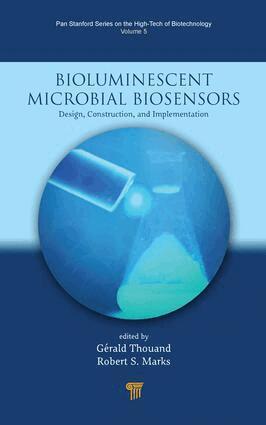
    Bioluminescent Microbial Biosensors

    Design, Construction, and Implementation

    AvGerald Thouand,Robert S. Marks

    Inbunden, Engelska, 2015

    Del i serien Jenny Stanford Series on the High‐Tech of Biotechnology

    1 622 kr

    Beställningsvara. Skickas inom 5-8 vardagar. Fri frakt över 249 kr.

    Beskrivning

    This book describes the design and the use of bioluminescent biosensors. It introduces beginners and experienced researchers starting in the microbiological biosensor domain to the practical aspects of building a luminescent microbial biosensor. It is also a source of information about other applications that use microbial cells. Each chapter focuses as far as possible on the technological conception of the presented biosensor with a clear demonstration of the issues in the design and how to reach the proof of concept. The book is divided into three practical sections facilitating the reader to easily access the information.

    Produktinformation

    • Utgivningsdatum:2015-12-02
    • Mått:152 x 229 x undefined mm
    • Vikt:466 g
    • Format:Inbunden
    • Språk:Engelska
    • Serie:Jenny Stanford Series on the High‐Tech of Biotechnology
    • Antal sidor:236
    • Förlag:Pan Stanford Publishing Pte Ltd
    • ISBN:9789814613651

    Utforska kategorier

    • Biokemi inom Naturvetenskap och teknik
    • Teknik: allmänt inom Naturvetenskap och teknik
    • Biologi inom Naturvetenskap och teknik

    Mer om författaren

    Gérald Thouand is full professor in microbiology at the University of Nantes, deputy for research innovation at the French Ministry of Research (DRRT Pays de La Loire), and auditor at the Institute of Higher Studies for Science and Technology, Paris. He received his PhD in microbiology from the University of Nancy, France, in 1993. His research interests include environmental monitoring of biodegradation and biotechnology using microbial biosystems. He is mainly involved in the development of biosensors for the detection of chemical pollutants and pathogenic bacteria. Prof. Thouand is a member of the French Society of Microbiology, France; the Society for Applied Microbiology, UK; and the scientific committee of the International Society of Bioluminescence and Chemiluminescence. He is associate editor for Frontiers in Microbiology and editor for Environmental Science and Pollution Research. His scientific contribution includes 44 international peer-reviewed articles, 4 patents, 12 book chapters, and 59 international conferences.Robert S. Marks earned his PhD from the Weizmann Institute of Science and did his postdoctoral research at the University of Cambridge. He is full professor at the Department of Biotechnology Engineering, the Ben-Gurion University of the Negev, Israel, and is affiliated to the National Institute for Biotechnology in the Negev and the Ilse Katz Centre for Nanotechnology. He is currently a program coordinator for the NRF CREATE program "Nanomaterials for Water and Energy Management" through MSE at the Nanyang Technological University. Prof. Marks has published in viral immunosensors and has extensive experience in biosensors. He has developed new sensor configurations, such as establishing diagnostics based on luminescence emitted by primed neutrophils, and is the editor-in-chief of the 2007 two-volume Wiley Handbook in Biosensors and Biochips as well as author of more than 100 papers and numerous chapters.

    Innehållsförteckning

    • Luminescent Biosensors with Free Suspended Cells. Fully Automated Fluidic Analyzer for Food Quality Assessment Using Bioluminescent Biosensors. Technological Design of Optical Bacterial Biosensors for the Online Environmental Monitoring of Water Pollutants. Luminescent Biosensors with Immobilized Cells. Fiber Optic Biosensors for Environmental Monitoring. Non-Fiber Optic Bioluminescent Biosensors. Biosensor with Immobilized Cells and Lensless Imaging Detection Luca CeveniniaA biosensor with Genetically Modified Bacteria Immobilized on a Fiber and a Glass Slide. Development and Characterization of a Living-Cell Bioluminescent Bioreporter Integrated Circuit (BBIC). BOD Sensor with Immobilized Luminous Cells on ChipBioluminescent Whole-Cell Sensors: Integration of Bacterial Reporter Cells onto Hardware Platforms. Luminescent Biosensors with Bioluminescent Sporulated Cells ("Sporosensor"). Luminescent Biosensing Systems Based on Genetically Engineered Spore-Forming Bacteria.