• Fri frakt över 249 kr
  • •
  • Snabba leveranser
  • •
  • Billiga böcker
Kundservice

Du är på sajten för privatpersoner.

Företag, bibliotek eller offentlig verksamhet?

Du handlar på classic.bokus.com, där alla dina funktioner finns intakta.
Till classic.bokus.com
Bokus logotyp. Gå till startsidan.
  • Erbjudanden
  • Nyheter
  • Student
  • Topplistor
  • Barn & ungdom
  • Bokus Play
  • E-böcker
  • Pocketböcker
  • Spel & pussel

10% rabatt på allt med kod: NYSTART10 →

Sidfot

Mina sidor

    Hjälp

    • Kundservice
    • Vanliga frågor och svar
    • Frakt och leverans
    • Retur vid ångerrätt
    • Reklamera vara
    • Betalning
    • Köpvillkor
    • Allmänna villkor
    • Information om webbplatsens tillgänglighet

    Om Bokus

    • Om oss
    • Pressrum
    • För studenter
    • För företag
    • För bibliotek och offentlig verksamhet
    • För leverantörer
    • Hållbarhet

    Populärt

    • Aktuella erbjudanden
    • Presentkort
    • Studentlitteratur
    • Nya böcker
    • Topplistor
    • Signerade böcker
    • Engelska böcker

    Inspiration

    • Boktips
    • BookTok
    • Populära bokserier
    • Barnbokskaraktärer
    • Populära författare
    Logotyp för Bokus
    Följ oss på Facebook (extern länk)Följ oss på Instagram (extern länk)Följ oss på YouTube (extern länk)Följ oss på TikTok (extern länk)
    bokus @ CookiesAnpassa cookiesIntegritetspolicyKöpvillkor
    Till Citymail hemsida (extern länk)Till Budbee hemsida (extern länk)Till Postnord hemsida (extern länk)Till Schenker hemsida (extern länk)Till Early Bird hemsida (extern länk)Till Walleys hemsida (extern länk)
    1. Samhälle och politik
    2. Samhälle och kultur
    3. Kultur och medier
    4. Kulturvetenskap

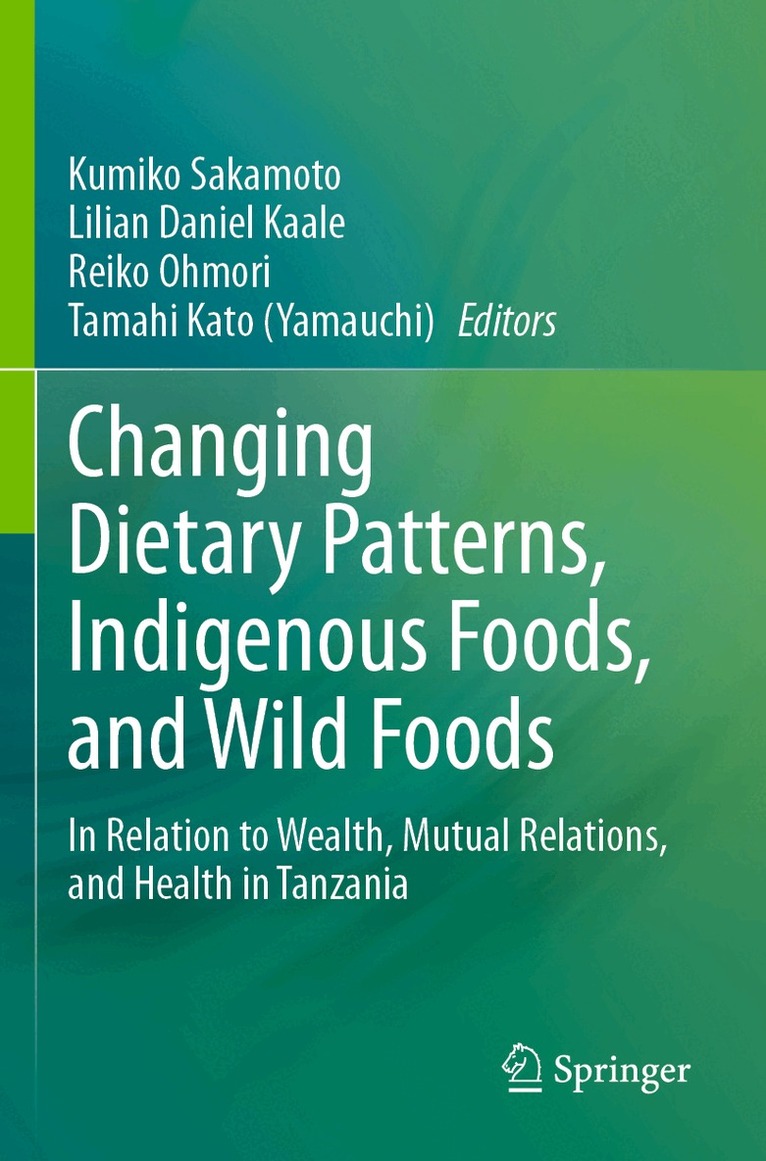
    Changing Dietary Patterns, Indigenous Foods, and Wild Foods

    In Relation to Wealth, Mutual Relations, and Health in Tanzania

    AvKumiko Sakamoto,Lilian Daniel Kaale

    Häftad, Engelska, 2024

    1 674 kr

    Beställningsvara. Skickas inom 10-15 vardagar. Fri frakt över 249 kr.

    Beskrivning

    This book presents different dietary patterns, some utilizing wild foods and others facing drastically changing dietary patterns, and shows their implications for health in terms of wealth, mutual assistance, food sufficiency and food diversity. The book examines these globally important issues through a case study of Tanzania.   Using a novel methodology based on a global standard quality of life indicator, the book sheds light on the relationship between wild food intake and health in Tanzania. Descriptive case studies illustrate the impact of various food patterns and wild food intake on human health. It also highlights the divergence between food production sufficiency and food diversity. It then discusses the influence of wealth, mutual relations, and methods of food access. Finally, the book concludes with recommendations for maintaining good health in various environments.   The intended readers of this book are academicsand professionals in the fields of development, nutrition, and environment in East Africa. These include, but are not limited to, regional and district personnel who are actively engaged in development, relevant ministries of food and agriculture, and international organizations such as FAO, UNICEF, UNDP, and UNEP. In the academic field, students and researchers in international studies, development studies, African studies, social studies, cultural studies, nutrition, agriculture, and environmental studies are targeted. This book won the 2024 Japan Society for International Development Committee Special Award.

    Produktinformation

    • Utgivningsdatum:2024-09-01
    • Mått:155 x 235 x 19 mm
    • Vikt:631 g
    • Format:Häftad
    • Språk:Engelska
    • Antal sidor:340
    • Förlag:Springer Verlag, Singapore
    • ISBN:9789819933723

    Utforska kategorier

    • Kulturvetenskap inom Samhälle och politik
    • Referensverk och tvärvetenskap inom Samhälle och politik
    • Miljövetenskap och miljöpolitik inom Naturvetenskap och teknik

    Mer om författaren

    Kumiko Sakamoto is a Professor at the School of International Studies, Utsunomiya University in Japan, presently serving as sub-leader of UU-A program and a counselor. She holds a Ph.D. and an MA from Waseda University. She has worked with UNICEF and UNDP in Tanzania, and has conducted researched in Tanzania for over 23 years focusing on social development and culture, endogenous development, and wild food.   Lilian Daniel Kaale is a Senior Lecturer at the Department of Food Science and Technology, University of Dar es Salaam (UDSM) in Tanzania. She holds a Ph.D. in Food Science and Engineering and currently serves as the Head of the Department of Food Science and Technology, at the University of Dar es Salaam. Dr. Kaale’s main research interests are in Food Nutrition, Food Processing (food value addition), and antimicrobial substances for food preservation and safety.   Reiko Ohmori is a professor at the School of Regional Design, UtsunomiyaUniversity in Japan. She holds a Ph.D. and M.S. degree from Ochanomizu University and has worked at the National Defense Medical College. She has also belonged to the National Institute of Health and Nutrition, and Ochanomizu University as visiting researcher. Her research is focused on the association among health, dietary, and genetic factors. She has also researched the relationship between health and social capital.   Tamahi Kato is a researcher at the Center for African Area Studies, Kyoto University and part-time lecturer. She teaches at several universities in Japan and also does consultancy work. Dr. Kato has extensive experience working in Tanzania, including at the JICA Tanzania office, and has conducted research in Tanzania and Guatemala for more than 19 years. She holds a Ph.D. degree in Development Studies from the University of Sussex, UK.

    Innehållsförteckning

    • Chapter 1. Introduction Changing Dietary Patterns, Indigenous Foods, and Wild Foods in Relation to Wealth, Mutual Relations, and Health in Tanzania.- Chapter 2. Environment, Dietary Patterns, and Combinations of Food Intake in Tanzania.- Chapter 3. Purchase, Cultivation, and Forage: Does it Make a Difference in Food Intake Frequency?.- Chapter 4. Does Staple Food Sufficiency Ensure Food Variety? A Comparative Analysis from Southern, Southeastern, and Central Tanzania.- Chapter 5. Changing Dietary Patterns and Associated Social Context Subjective Health Quality of Life, Wealth, and Mutual Relations in Tanzania.- Chapter 6.Social Capital and Subjective “Poverty” Contribute to People’s Subjective Health, but Financial Support Does Not.- Chapter 7. Growth with Disparity in a Rich Diverse City: Case of the Economic Capital Dar es Salaam.- Chapter 8. High Maize Productive Rural Inland Areas: Ample Staple Food, but What about Health?.- Chapter 9. Coastal Traditional and Changing DietaryPatterns: Protein from Fish and Pulses as well as Patterns of Purchased Food.- Chapter 10. Does Intake of Wild Foods Improve Subjective Health? Evidence from 3 Areas of Tanzania.- Chapter 11. Case of Inland Forest Vicinities in Tanzania: General Low Health Evaluation but Higher for Those Who Access Variety of Wild foods?.- Chapter 12. Traditional Semi-arid Agro-pastoral Inland Food Patterns and Society: Frequent Food Deficits but Balanced BMI and Prevention of Anemia.- Chapter 13. Nutrition Potential of African Wild Leafy Vegetables: Evidence from Semi-arid Central Tanzania.- Chapter 14. Conclusions What is the Secret to Good Health, and How are Wealth and Mutual Assistance Related?.