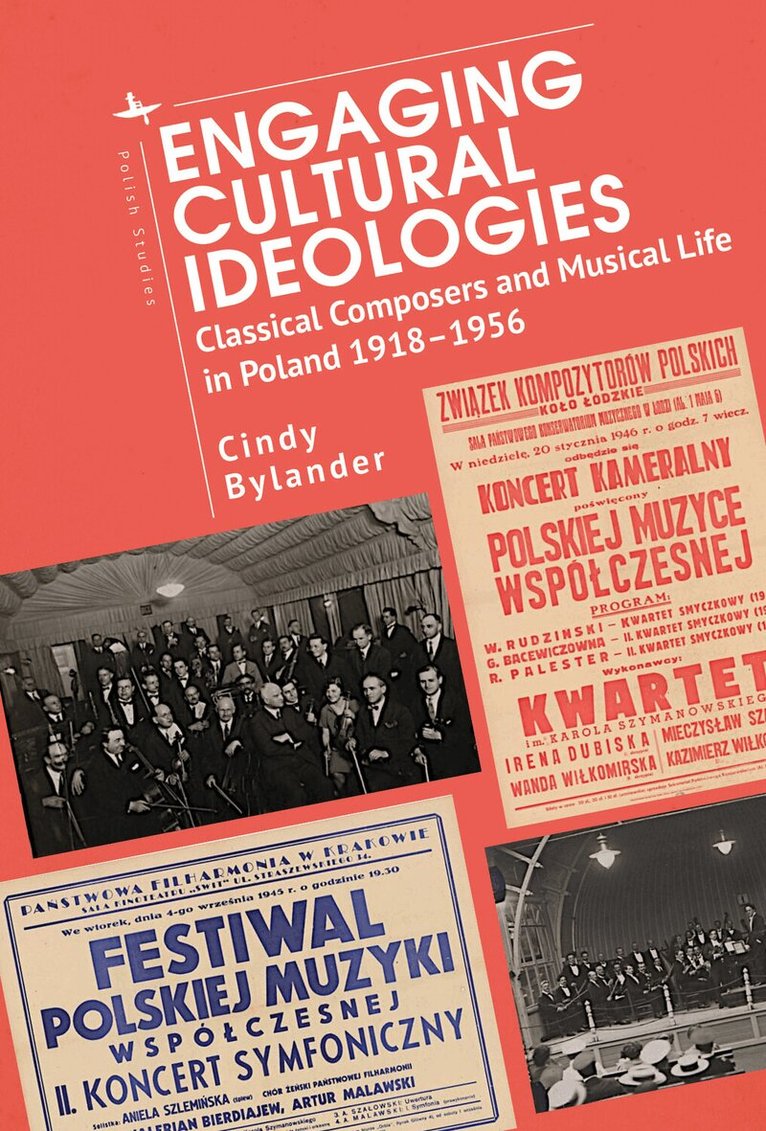
Engaging Cultural Ideologies
Classical Composers and Musical Life in Poland 1918-1956
1 421 kr
Skickas . Fri frakt över 249 kr.
Du är på sajten för privatpersoner.
1 421 kr
Skickas . Fri frakt över 249 kr.
Cindy Bylander is a musicologist and independent scholar living in Fort Collins, Colorado. A recipient of the Polish Composers’ Union’s Honorary Award and Poland’s Gloria Artis Bronze medal, her research focuses on twentieth-century musical life in Poland.
“[T]he volume is filled with an impressive number of details about musical institutions, publishing houses, orchestras, choirs, radio broadcasting, music schools, music societies, music journals, concert programming, and economic conditions in the music sector of the Polish economy, as well as details concerning lives of contemporary Polish composers and the evolution of their creative output.”— Slawomir Dobrzanski, The Polish Review “Cindy Bylander’s book is engaging for a number of reasons. First of all, it is interesting how the history of Polish music is described by a non-Polish author. Secondly, thetimespan the work covers: 1918–1956, allows us to see the history of Polish musical culture over nearly 40 years and three completely different periods. To sum up, … Bylander’s book deserves attention as a very well-written sociological history of Polish music in the immediate post-war period”.— Michał Piekarski, Zeitschrift für Ostmitteleuropa-Forschung"The book brings a new interpretation of archival materials, in as much as it includes the first such broad analysis of concert programs... Her knowledge of sources is impressive, as is her excellent insight into the meanderings of Polish culture."— Marta Szoka, Ruch Muzyczny (translated from the Polish)“As a synthesis of current Polish- and English-language scholarly debates, Engaging Cultural Ideologies is essential to scholars, students and Polish music enthusiasts looking for an entry point on the subject. Most of all, as promised in the book’s introduction, Bylander delivers a ‘penetrating picture of the life cycle and performance history of contemporary Polish compositions’ (p. 9) by providing an unparalleled overview of Polish composition and programming practices between 1918 and 1956.”— Marta Beszterda van Vliet, SEER
Du är på sajten för privatpersoner.
1 421 kr
Skickas . Fri frakt över 249 kr.
Cindy Bylander is a musicologist and independent scholar living in Fort Collins, Colorado. A recipient of the Polish Composers’ Union’s Honorary Award and Poland’s Gloria Artis Bronze medal, her research focuses on twentieth-century musical life in Poland.
“[T]he volume is filled with an impressive number of details about musical institutions, publishing houses, orchestras, choirs, radio broadcasting, music schools, music societies, music journals, concert programming, and economic conditions in the music sector of the Polish economy, as well as details concerning lives of contemporary Polish composers and the evolution of their creative output.”— Slawomir Dobrzanski, The Polish Review “Cindy Bylander’s book is engaging for a number of reasons. First of all, it is interesting how the history of Polish music is described by a non-Polish author. Secondly, thetimespan the work covers: 1918–1956, allows us to see the history of Polish musical culture over nearly 40 years and three completely different periods. To sum up, … Bylander’s book deserves attention as a very well-written sociological history of Polish music in the immediate post-war period”.— Michał Piekarski, Zeitschrift für Ostmitteleuropa-Forschung"The book brings a new interpretation of archival materials, in as much as it includes the first such broad analysis of concert programs... Her knowledge of sources is impressive, as is her excellent insight into the meanderings of Polish culture."— Marta Szoka, Ruch Muzyczny (translated from the Polish)“As a synthesis of current Polish- and English-language scholarly debates, Engaging Cultural Ideologies is essential to scholars, students and Polish music enthusiasts looking for an entry point on the subject. Most of all, as promised in the book’s introduction, Bylander delivers a ‘penetrating picture of the life cycle and performance history of contemporary Polish compositions’ (p. 9) by providing an unparalleled overview of Polish composition and programming practices between 1918 and 1956.”— Marta Beszterda van Vliet, SEER