Ajay Kumar Thakur – författare
1 691 kr
Skickas inom 10-15 vardagar
909 kr
Läs direkt efter köp
Crop Improvement: Biotechnological Advances – Biomedical Science
The field of biotechnology is advancing at a fast pace. The availability of low-cost DNA/genome sequencing technologies has led to the discovery and functional characterization of myriad of genes imparting stress tolerance and quality traits. The ‘omics’ group of technologies including genomics, proteomics, transcriptomics and metabolomics has revolutionized the agricultural biotechnology sector. The Nobel Prize-winning technology, such as the genome editing technique, is being employed to edit various gene functions in plants aiding in crop improvement. This technology may be adopted very quickly by consumers compared with the transgenic technique because the genome-edited plants have no adverse effects on the genome of the plant itself and on the environment and related species/non-target organisms.
In this book, authors have attempted to compile the latest techniques of agricultural biotechnology and their applications in crop improvement. Certain chapters have been dedicated to describe the use of nanotechnology, a fast emerging new technique in the agriculture sector.
Features
Development, potential and safety issues in biotechnology
Advances in genomics, proteomics and transcriptomics in agriculture
Protein bioinformatics and its applications
Genetically modified (GM) technology and its implications
Genome editing in crop improvement
Marker-assisted selection (MAS) in crop improvement
Mutation breeding
Cryobiotechnology
Nanotechnology and biosensors
This book includes real-world examples and applications making it accessible to a broader interdisciplinary readership. We hope that it will serve as a reference book for researchers engaged in molecular biology and biotechnology and will act as a ready reckoner for postgraduate (PG) students in the biotechnology discipline.
909 kr
Läs direkt efter köp
Crop Improvement: Biotechnological Advances – Biomedical Science
The field of biotechnology is advancing at a fast pace. The availability of low-cost DNA/genome sequencing technologies has led to the discovery and functional characterization of myriad of genes imparting stress tolerance and quality traits. The ‘omics’ group of technologies including genomics, proteomics, transcriptomics and metabolomics has revolutionized the agricultural biotechnology sector. The Nobel Prize-winning technology, such as the genome editing technique, is being employed to edit various gene functions in plants aiding in crop improvement. This technology may be adopted very quickly by consumers compared with the transgenic technique because the genome-edited plants have no adverse effects on the genome of the plant itself and on the environment and related species/non-target organisms.
In this book, authors have attempted to compile the latest techniques of agricultural biotechnology and their applications in crop improvement. Certain chapters have been dedicated to describe the use of nanotechnology, a fast emerging new technique in the agriculture sector.
Features
Development, potential and safety issues in biotechnology
Advances in genomics, proteomics and transcriptomics in agriculture
Protein bioinformatics and its applications
Genetically modified (GM) technology and its implications
Genome editing in crop improvement
Marker-assisted selection (MAS) in crop improvement
Mutation breeding
Cryobiotechnology
Nanotechnology and biosensors
This book includes real-world examples and applications making it accessible to a broader interdisciplinary readership. We hope that it will serve as a reference book for researchers engaged in molecular biology and biotechnology and will act as a ready reckoner for postgraduate (PG) students in the biotechnology discipline.
1 691 kr
Skickas inom 10-15 vardagar
909 kr
Läs direkt efter köp
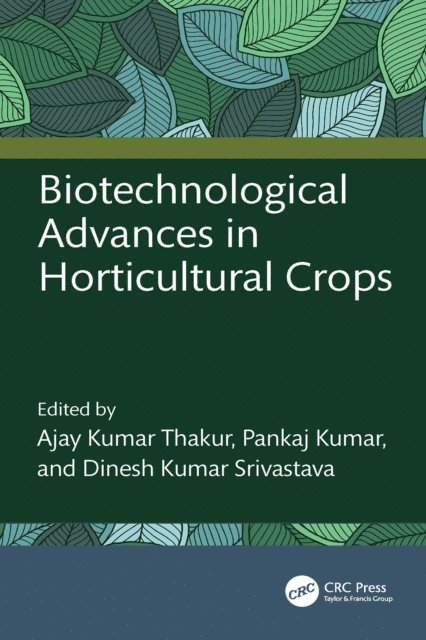
The field of horticultural biotechnology has witnessed remarkable growth in recent years, offering profound insights and innovations that are reshaping agriculture''s future. Biotechnological Advances in Horticultural Crops serves as a comprehensive guide to the latest innovations and applications. This meticulously curated volume bridges the gap between fundamental knowledge and cutting-edge advancements. From plant tissue culture to genomic approaches, this book spans a diverse array of topics, catering to a broad audience of students, researchers, and academics.
Key Features:
In-depth exploration of plant tissue culture and its applications in horticultural crop improvement. Insightful coverage of transgenic approaches in fruit crops, including genetic modifications for enhancing fruit quality, yield, and resistance to pests and diseases. Detailed examination of the application of omics sciences in tropical fruits, opening up new perspectives for crop improvement and sustainable production. Extensive discussion on the potential of in vitro production techniques for underutilized and unconventional horticultural crops. Exploration of sustainable agriculture practices, including the use of beneficial microbes and the scientific validation of natural and organic farming practices.This book is more than just a collection of topics; it’s a gateway to the transformative potential of biotechnology in horticulture. It empowers readers (students, researchers, and academicians) to comprehend and harness these advancements, promoting innovation and sustainability in horticultural crop improvement.
909 kr
Läs direkt efter köp
The field of horticultural biotechnology has witnessed remarkable growth in recent years, offering profound insights and innovations that are reshaping agriculture''s future. Biotechnological Advances in Horticultural Crops serves as a comprehensive guide to the latest innovations and applications. This meticulously curated volume bridges the gap between fundamental knowledge and cutting-edge advancements. From plant tissue culture to genomic approaches, this book spans a diverse array of topics, catering to a broad audience of students, researchers, and academics.
Key Features:
In-depth exploration of plant tissue culture and its applications in horticultural crop improvement. Insightful coverage of transgenic approaches in fruit crops, including genetic modifications for enhancing fruit quality, yield, and resistance to pests and diseases. Detailed examination of the application of omics sciences in tropical fruits, opening up new perspectives for crop improvement and sustainable production. Extensive discussion on the potential of in vitro production techniques for underutilized and unconventional horticultural crops. Exploration of sustainable agriculture practices, including the use of beneficial microbes and the scientific validation of natural and organic farming practices.This book is more than just a collection of topics; it’s a gateway to the transformative potential of biotechnology in horticulture. It empowers readers (students, researchers, and academicians) to comprehend and harness these advancements, promoting innovation and sustainability in horticultural crop improvement.
909 kr
Läs direkt efter köp
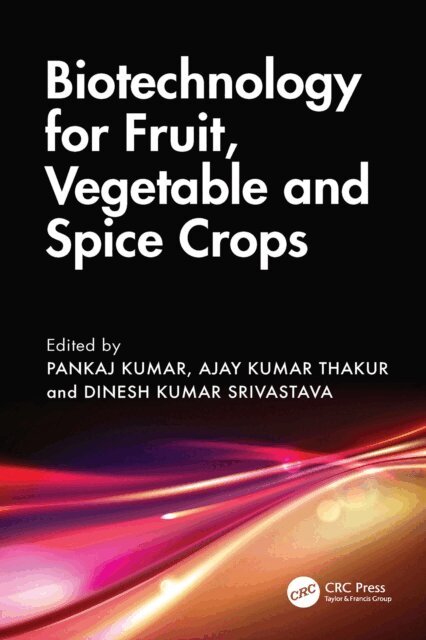
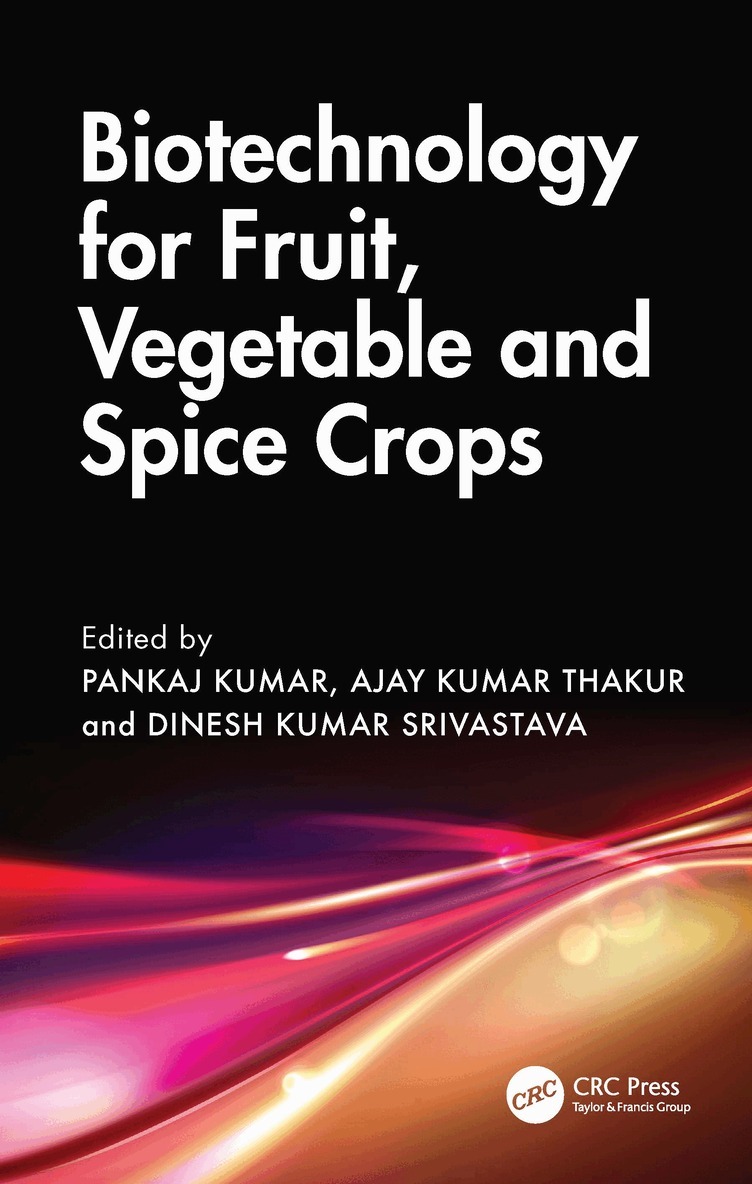
Biotechnology has revolutionized horticulture by enhancing the productivity, resilience, and nutritional quality of fruit, vegetable, and spice crops. This comprehensive volume provides an in-depth exploration of cutting-edge biotechnological advancements that are reshaping horticultural science. From genomics-driven crop improvement to the development of functional foods, this book presents a meticulously curated compilation of research and methodologies addressing key challenges and opportunities in modern horticulture. By integrating molecular techniques, plant-microbe interactions, and bioprocess innovations, this book provides a unique perspective on sustainable and precision-driven horticultural practices.
Key Features
Insights into genomic approaches for understanding abiotic stress tolerance and developing climate-resilient varieties. Advances in tissue culture, marker-assisted selection, and genome editing for apple, grapevine, and potato breeding. Molecular and biocontrol strategies for tackling major threats such as root rot disease in apples. Applications of soilless cultivation techniques and plant growth-promoting rhizobacteria (PGPR) to optimize crop yield and quality. Biotechnological tools for developing probiotic-enriched fruits and vegetables and the valorization of non-grape fruit wines.With contributions from leading researchers, this book serves as an essential reference for graduate students, academics, and professionals in plant biotechnology, horticulture, and food science. It provides a valuable resource for those seeking to harness the power of biotechnology to drive sustainable innovation in horticultural crop production.
917 kr
Läs direkt efter köp
Biotechnology has revolutionized horticulture by enhancing the productivity, resilience, and nutritional quality of fruit, vegetable, and spice crops. This comprehensive volume provides an in-depth exploration of cutting-edge biotechnological advancements that are reshaping horticultural science. From genomics-driven crop improvement to the development of functional foods, this book presents a meticulously curated compilation of research and methodologies addressing key challenges and opportunities in modern horticulture. By integrating molecular techniques, plant-microbe interactions, and bioprocess innovations, this book provides a unique perspective on sustainable and precision-driven horticultural practices.
Key Features
Insights into genomic approaches for understanding abiotic stress tolerance and developing climate-resilient varieties. Advances in tissue culture, marker-assisted selection, and genome editing for apple, grapevine, and potato breeding. Molecular and biocontrol strategies for tackling major threats such as root rot disease in apples. Applications of soilless cultivation techniques and plant growth-promoting rhizobacteria (PGPR) to optimize crop yield and quality. Biotechnological tools for developing probiotic-enriched fruits and vegetables and the valorization of non-grape fruit wines.With contributions from leading researchers, this book serves as an essential reference for graduate students, academics, and professionals in plant biotechnology, horticulture, and food science. It provides a valuable resource for those seeking to harness the power of biotechnology to drive sustainable innovation in horticultural crop production.
1 691 kr
Skickas inom 10-15 vardagar
1 630 kr
Skickas inom 10-15 vardagar
2 036 kr
Läs direkt efter köp
Global population is mounting at an alarming stride to surpass 9.3 billion by 2050, whereas simultaneously the agricultural productivity is gravely affected by climate changes resulting in increased biotic and abiotic stresses. The genus Brassica belongs to the mustard family whose members are known as cruciferous vegetables, cabbages or mustard plants. Rapeseed-mustard is world’s third most important source of edible oil after soybean and oil palm. It has worldwide acceptance owing to its rare combination of health promoting factors. It has very low levels of saturated fatty acids which make it the healthiest edible oil that is commonly available. Apart from this, it is rich in antioxidants by virtue of tocopherols and phytosterols presence in the oil. The high omega 3 content reduces the risk of atherosclerosis/heart attack. Conventional breeding methods have met with limited success in Brassica because yield and stress resilience are polygenic traits and are greatly influenced byenvironment. Therefore, it is imperative to accelerate the efforts to unravel the biochemical, physiological and molecular mechanisms underlying yield, quality and tolerance towards biotic and abiotic stresses in Brassica. To exploit its fullest potential, systematic efforts are needed to unlock the genetic information for new germplasms that tolerate initial and terminal state heat coupled with moisture stress. For instance, wild relatives may be exploited in developing introgressed and resynthesized lines with desirable attributes. Exploitation of heterosis is another important area which can be achieved by introducing transgenics to raise stable CMS lines. Doubled haploid breeding and marker assisted selection should be employed along with conventional breeding. Breeding programmes aim at enhancing resource use efficiency, especially nutrient and water as well as adoption to aberrant environmental changes should also be considered. Biotechnological interventions are essential for altering the biosynthetic pathways for developing high oleic and low linolenic lines. Accordingly, tools such as microspore and ovule culture, embryo rescue, isolation of trait specific genes especially for aphid, Sclerotinia and alternaria blight resistance, etc. along with identification of potential lines based on genetic diversity can assist ongoing breeding programmes. In this book, we highlight the recent molecular, genetic and genomic interventions made to achieve crop improvement in terms of yield increase, quality and stress tolerance in Brassica, with a special emphasis in Rapeseed-mustard.
1 630 kr
Skickas inom 10-15 vardagar
2 991 kr
Skickas inom 10-15 vardagar
3 809 kr
Läs direkt efter köp
This book caters to the need of researchers working in the ever-evolving field of agricultural biotechnology. It discusses and provides in-depth information about latest advancements happening in this field. The book discusses evolution of plant tissue culture techniques, development of doubled haploids technology, role of recombinant-DNA technology in crop improvement. It also provides an insight into the global status of genetically modified crops, use of RNAi technology and mi-RNAs in plant improvement. Chapters are also dedicated for different branches of ‘omics’ science including genomics, bioinformatics, proteomics, metabolomics and phenomics along with the use of molecular markers in tagging and mapping of various genes/QTLs of agronomic importance. This book also covers the role of enzymes and microbes in agriculture in productivity enhancement. It is of interest to teachers, researchers of biotechnology and agriculture scientists. Also the book serves as additional readingmaterial for undergraduate and postgraduate students of biotechnology, agriculture, horticulture, forestry, ecology, soil science, and environmental sciences. National and international biotechnologists and agricultural scientists will also find this to be a useful read.
2 991 kr
Skickas inom 10-15 vardagar