Ana Deumert – författare
1 457 kr
Skickas inom 5-8 vardagar
414 kr
Skickas inom 11-20 vardagar
293 kr
Skickas
640 kr
Skickas inom 3-6 vardagar
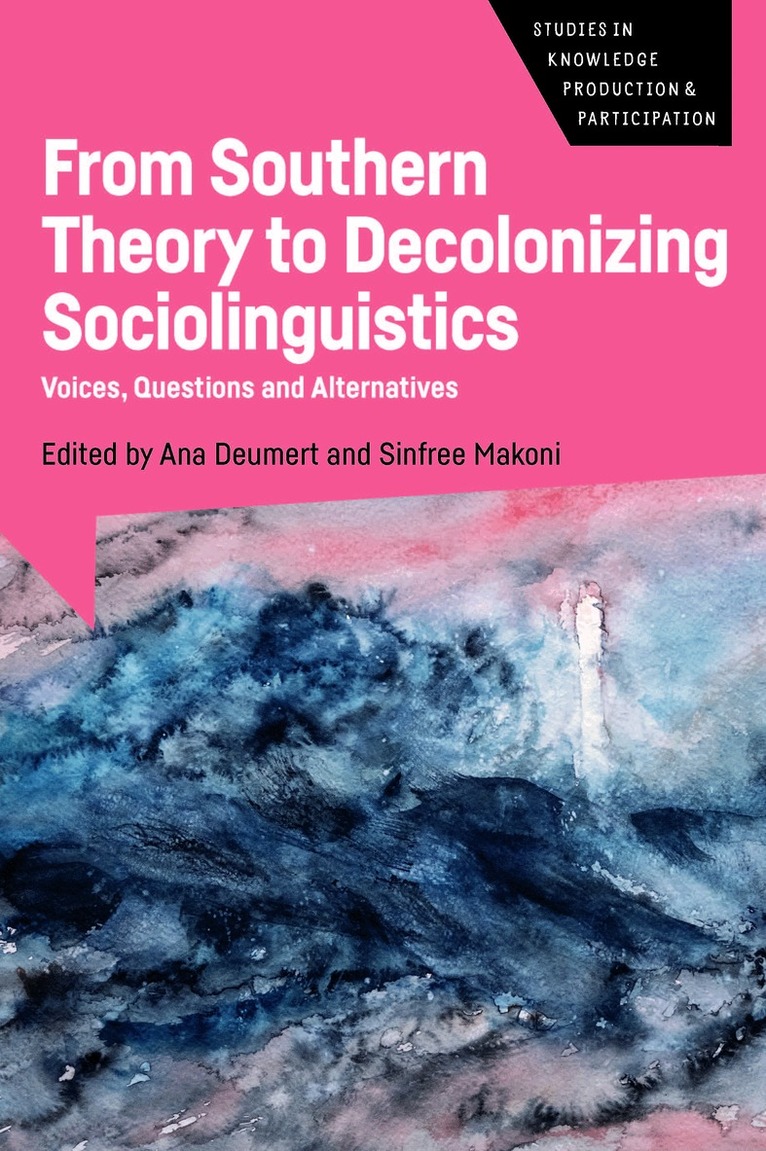
From Southern Theory to Decolonizing Sociolinguistics
Voices, Questions and Alternatives
639 kr
Skickas inom 5-8 vardagar
From Southern Theory to Decolonizing Sociolinguistics
Voices, Questions and Alternatives
1 958 kr
Skickas inom 5-8 vardagar
From Southern Theory to Decolonizing Sociolinguistics : Voices, Questions and Alternatives
Voices, Questions and Alternatives
2 499 kr
Tillfälligt slut
This book, which combines scholarly articles with interviews, seeks to imagine a decolonized sociolinguistics. All the chapters are firmly grounded in southern approaches to knowledge production, focusing not only on epistemology but also on the complex relationship between epistemology and ontology. The chapters address issues ranging from author positionality to the central theorists of a southern sociolinguistics, and roam from the language classroom to the church, in ways which invite us to begin to decolonize ourselves and rethink normative assumptions about everything from academic writing to research methods and language teaching. The book provides scholars and teachers with inspiration for how to teach linguistics in ways that challenge colonial hegemonies and that allow one to ‘do’ sociolinguistics otherwise. It also makes a powerful argument that debates about decolonization, southern theory and social justice are not just academic pursuits: what is at stake is our future and how we imagine it.
From Southern Theory to Decolonizing Sociolinguistics : Voices, Questions and Alternatives
Voices, Questions and Alternatives
2 485 kr
Tillfälligt slut
This book, which combines scholarly articles with interviews, seeks to imagine a decolonized sociolinguistics. All the chapters are firmly grounded in southern approaches to knowledge production, focusing not only on epistemology but also on the complex relationship between epistemology and ontology. The chapters address issues ranging from author positionality to the central theorists of a southern sociolinguistics, and roam from the language classroom to the church, in ways which invite us to begin to decolonize ourselves and rethink normative assumptions about everything from academic writing to research methods and language teaching. The book provides scholars and teachers with inspiration for how to teach linguistics in ways that challenge colonial hegemonies and that allow one to ‘do’ sociolinguistics otherwise. It also makes a powerful argument that debates about decolonization, southern theory and social justice are not just academic pursuits: what is at stake is our future and how we imagine it.
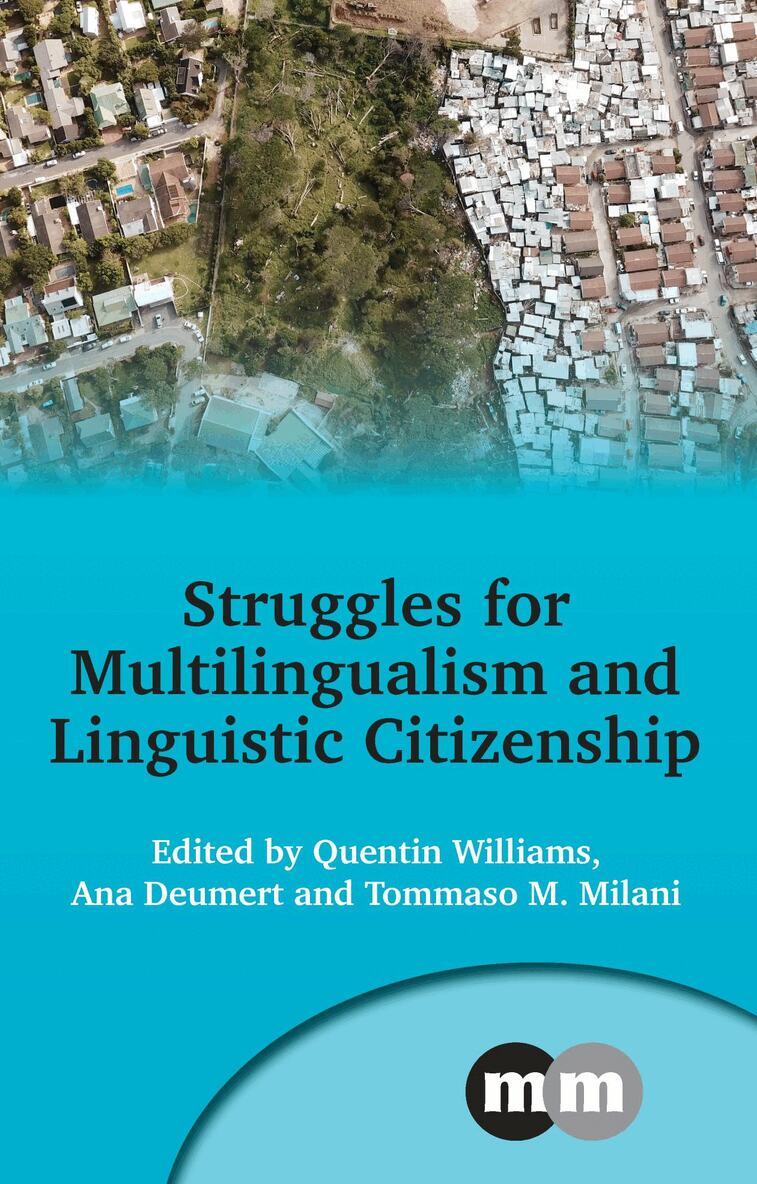
Struggles for Multilingualism and Linguistic Citizenship
472 kr
Skickas inom 5-8 vardagar
Struggles for Multilingualism and Linguistic Citizenship
1 640 kr
Skickas inom 5-8 vardagar
2 070 kr
Tillfälligt slut
This book offers a fresh perspective on the social life of multilingualism through the lens of the important notion of linguistic citizenship. All of the chapters are underpinned by a theoretical and methodological engagement with linguistic citizenship as a useful heuristic through which to understand sociolinguistic processes in late modernity, focusing in particular on linguistic agency and voices on the margins of our societies. The authors take stock of conservative, liberal, progressive and radical social transformations in democracies in the north and south, and consider the implications for multilingualism as a resource, as a way of life and as a feature of identity politics. Each chapter builds on earlier research on linguistic citizenship by illuminating how multilingualism (in both theory and practice) should be, or could be, thought of as inclusive when we recognize what multilingual speakers do with language for voice and agency.
2 070 kr
Tillfälligt slut
This book offers a fresh perspective on the social life of multilingualism through the lens of the important notion of linguistic citizenship. All of the chapters are underpinned by a theoretical and methodological engagement with linguistic citizenship as a useful heuristic through which to understand sociolinguistic processes in late modernity, focusing in particular on linguistic agency and voices on the margins of our societies. The authors take stock of conservative, liberal, progressive and radical social transformations in democracies in the north and south, and consider the implications for multilingualism as a resource, as a way of life and as a feature of identity politics. Each chapter builds on earlier research on linguistic citizenship by illuminating how multilingualism (in both theory and practice) should be, or could be, thought of as inclusive when we recognize what multilingual speakers do with language for voice and agency.