Ana Moreira – författare
Visar alla böcker från författaren Ana Moreira. Handla med fri frakt och snabb leverans.
8 produkter
8 produkter
Del 14588 - Lecture Notes in Computer Science
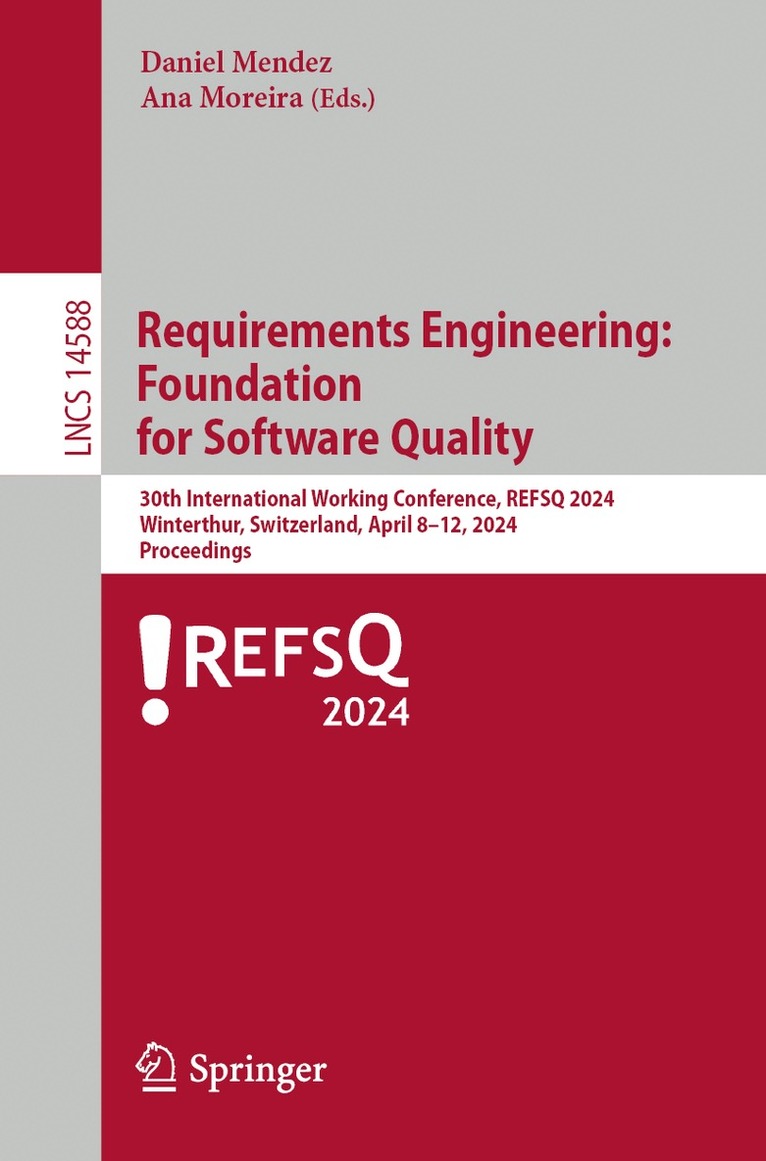
Requirements Engineering: Foundation for Software Quality
30th International Working Conference, REFSQ 2024, Winterthur, Switzerland, April 8–11, 2024, Proceedings
Häftad, Engelska, 2024
784 kr
Skickas inom 10-15 vardagar
This book constitutes the refereed proceedings of the 30th International Working Conference on Requirements Engineering: Foundation for Software Quality, REFSQ 2024, held in Winterthur, Switzerland, during April 8–12, 2024.The 14 full papers and 8 short papers included in this book were carefully reviewed and selected from 59 submissions. They are organized in topical sections as follows: quality models for requirements engineering; quality requirements; explainability with and in requirements engineering; artificial intelligence for requirements engineering; natural language processing for requirements engineering; requirements engineering for artificial intelligence; crowd-based requirements engineering; and emerging topics and challenges in requirements engineering.
Häftad, Engelska, 2002
556 kr
Skickas inom 10-15 vardagar
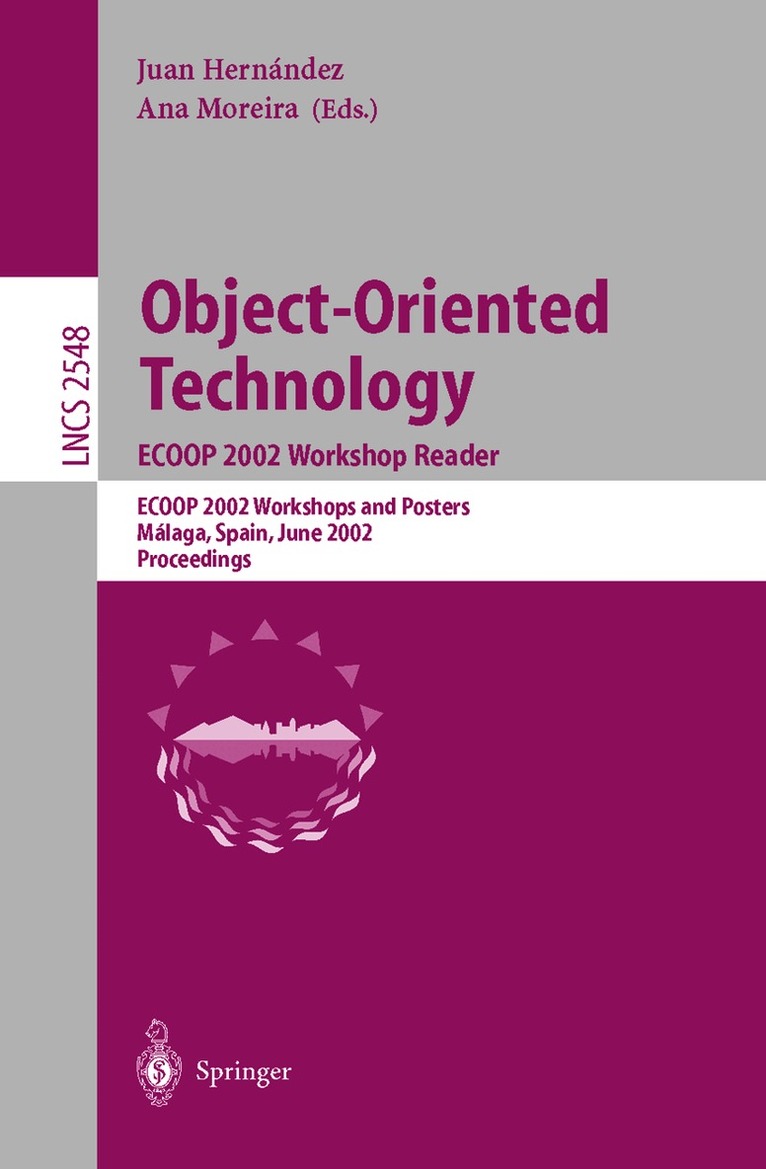
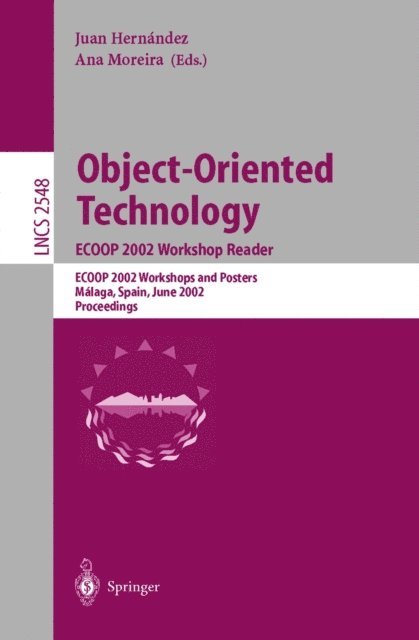
TheEuropeanConferenceonObject-OrientedProgramming(ECOOP)conf- ence series, in cooperation with Springer-Verlag, is glad to o?er the obje- orientedresearchcommunitythesixtheditionoftheECOOPWorkshopReader, acompendiumofworkshopreportsandpostersummariesfromthe16thEu- peanConferenceonObject-OrientedProgramming(ECOOP2002). ECOOP2002washeldinMal 'aga,Spain,fromJune10thtoJune14th2002. Asusual,theworkshopstookplaceduringthe?rsttwodaysoftheconference andgaveauthorsandparticipantsanopportunitytopresentanddiscussideas thataretopicalandinnovativeinobject-orientedtechnology,inanatmosphere thatfosteredinteraction,exchange,andproblemsolving. ECOOP2002hosted19high-qualityworkshopscoveringalargespectrumof researchtopicsrelatedtoobject-orientedtechnology. Thisyear,theseworkshops wereselectedfrom25proposalsbytheworkshopselectioncommittee,prim- ilyinaccordancewiththeirscienti?cmeritandtheirprobabilityofgenerating livelydiscussion. Thisvolumecontainsthereportsofthose19workshops. Each chaptercoversoneworkshop,summarizingthecurrentresearchbeingcarried outintheworkshoptopic,themajorissuesdiscussed,themainconclusions, andpossibledirectionsforfurtherresearch. Eachchapter?nisheswithalistof updatedreferenceswherethereadercan?ndcomplementaryinformationabout theworkshoptheme. Thelastchaptercontainsthesummariesoftheposters displayedatECOOP2002. Thisbookwasonlypossiblethankstothee?ortofalargegroupofp- plecontributinginmanydi?erentways. Wewouldliketothankthemembers oftheselectioncommittee,eachworkshoporganizer,andeachworkshopand posterparticipant. Theadditionalworkfortheworkshoporganizersinterms ofrecordingandsummarizingthediscussionswillcertainlybeappreciatedby thereaders. Finallywewishtoconveyourwarmappreciationtoourcolleagues oftheECOOP2002organizationteamfortheiruniqueblendofe?ciencyand comradeship. Preparingforandholdingtheconferencewasalotoffun. Organizingtheworkshopsandthisbookprovedtobeverystimulatingand instructive;wewishourreadersanequallyfruitfulexperience. Wearepretty surethattheECOOP2002workshopreaderwillprovideyou,thereader,with anexcellentsnapshotofthemajortrendsinobject-orientedtechnology. October2002 JuanHerna'ndez AnaMoreira Organization ECOOP2002wasorganizedbytheDepartmentofLenguajesyCienciasdela Computaci'onoftheUniversityofMal 'aga,andtheDepartmentofInformat 'ica of the University of Extremadura, under the auspices of AITO (Association InternationalepourlesTechnologiesObjets).TheproceedingsofthemainconferencewerepublishedasLNCS2374. WorkshopChairs: JuanHerna'ndez(UniversityofExtremadura) AnaMoreira(UniversidadeNovadeLisboa,Portugal) PosterChair: JuanM. Murillo(UniversityofExtremadura) WorkshopSelectionCommittee MehmetAksit UniversityofTwente,TheNetherlands Jo"aoArau'jo UniversidadeNovadeLisboa,Portugal ElisaBertino Universit'adegliStudidiMilano,Italy RobertFrance ColoradoStateUniversity,USA JuanHerna'ndez UniversidaddeExtremadura,Spain AnaMoreira UniversidadeNovadeLisboa,Portugal AmbrosioToval UniversidaddeMurcia,Spain Contents ResourceManagementforSafeLanguages...1 GrzegorzCzajkowski,JanVitek GenerativeProgramming ...15 KrzysztofCzarnecki,KasperOsterbye,MarkusVolt .. er ToolsandEnvironmentsforLearningObject-OrientedConcepts...30 IsabelMichiels,Ju..rgenB..orstler,KimB. Bruce 12thWorkshopforPhDStudentsinObjectOrientedSystems ...44 MiguelA. P'erez,PedroJ. Clemente Web-OrientedSoftwareTechnology ...55 OscarPastor,DanielSchwabe,GustavoRossi,LuisOlsina Component-OrientedProgramming...70 JanBosch,ClemensSzyperski,WolfgangWeck ConcreteCommunicationAbstractionsoftheNext701Distributed ObjectSystems...79 AntoineBeugnard,SalahSadou,LaurenceDuchien,EricJul UnanticipatedSoftwareEvolution...92 G..unterKniesel,JoostNoppen,TomMens,JimBuckley CompositionLanguages...107 MarkusLumpe,Jean-GuySchneider,BastiaanSch..onhage, ThomasGenssler TheInheritanceWorkshop...117 GabrielaAr'evalo,AndrewBlack,YaniaCrespo,MichelDao, ErikErnst,PeterGrogono,MarianneHuchard,MarkkuSakkinen Model-BasedSoftwareReuse ...135 AndreasSpeck,ElkePulvermu..ller,RagnhildVanDerStraeten, RalfH. Reussner,MatthiasClauss QuantitativeApproachesinObject-OrientedSoftwareEngineering...147 MarioPiattini,FernandoBritoeAbreu,GeertPoels, HouariA. Sahraoui MultiparadigmProgrammingwithObject-OrientedLanguages...154 KeiDavis,YannisSmaragdakis,J..orgStriegnitz VIII Contents Knowledge-BasedObject-OrientedSoftwareEngineering...160 MajaD'Hondt,KimMens,EllenVanPaesschen Object-OrientationandOperatingSystems...174 AndreasGal,OlafSpinczyk,DarioAlvarez IntegrationandTransformationofUMLModels ...184 Jo"aoArau'jo,JonathanWhittle,AmbrosioToval,RobertFrance MobileObjectSystems ...192 Ciar'anBryce Feyerabend:Rede?ningComputing...197 WolfgangDeMeuter,PascalCostanza,MartineDevos, DaveThomas FormalTechniquesforJava-likePrograms...203 SophiaDrossopoulou,SusanEisenbach,GaryT. Leavens, ArndPoetzsch-He?ter,ErikPoll PosterSession...211 JuanManuelMurillo,FernandoSan 'chez AuthorIndex ...223 ResourceManagement forSafeLanguages 1 2 GrzegorzCzajkowski andJanVitek 1 Sun Microsystems Laboratories, grzegorz. czajkowski@sun. com 2 Purdue University, jv@cs. purdue. edu Abstract. Safe programming languages o?er safety and security f- tures making them attractive for developing extensible environments on a wide variety of platforms, ranging from large servers all the way down tohand-helddevices. Extensibleenvironmentsfacilitatedynamicho- ingofavarietyofpotentiallyuntrustedcodes. Thisrequiresmechanisms to guarantee isolation among hosted applications and to control their usageofresources.
Häftad, Engelska, 2004
556 kr
Skickas inom 10-15 vardagar
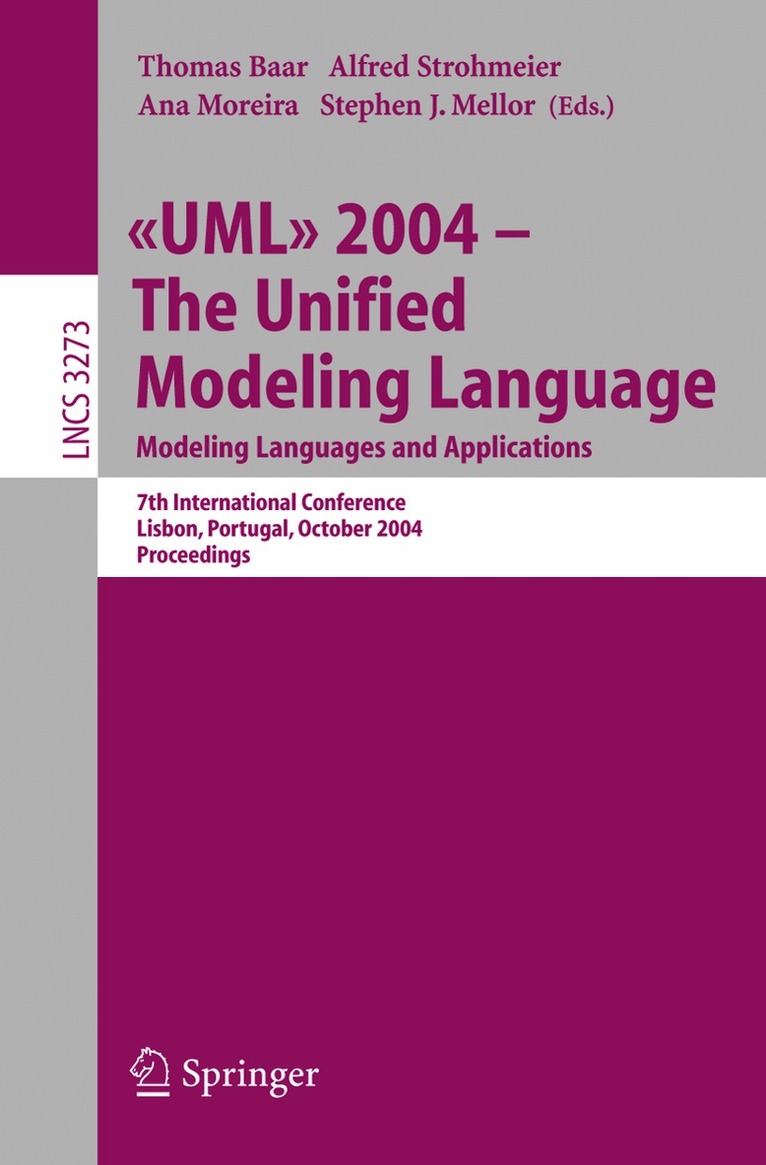
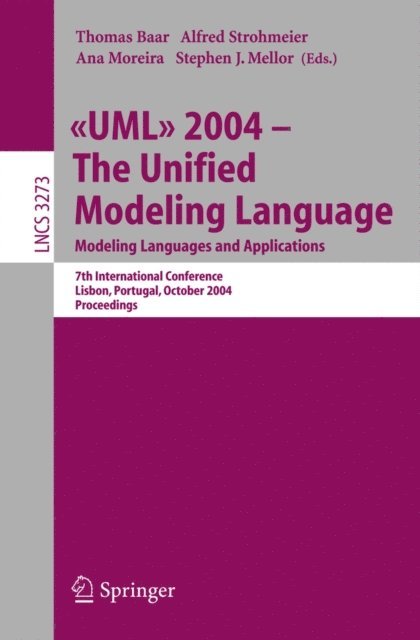
This volumecomprises the ?nal versionsof the technicalpapers presented at the UML 2004 conference held in Lisbon (Portugal), October 11-15, 2004. UML 2004 was the seventh conference in a series of annual UML conferences. The series started in 1998 and was located at Mulhouse (France); the following years saw the conference move to Fort Collins (USA) in 1999, York (UK) in 2000,Toronto (Canada) in 2001,Dresden (Germany) in 2002,San Francisco (USA) in 2003, and now Lisbon (Portugal) in 2004. During this time, the UML conference became one of the leading conferences in the area of object-oriented modeling. While in the ?rst years the focus of the conference was on the scienti?c investigation of the Uni?ed Modeling Language (UML), which had just been adopted by the Object Management Group (OMG) at the time, the focus has changed in recent years to innovations in techniques such as metamodeling, model transformations, model validation and veri?cation, aspect orientation, and beyond. Many recent research activities have been especially stimulated by the Model Driven Architecture (MDA) initiative, started in 2000 by the OMG. The goal of MDA is the de?nition of a framework to enable the development of software purely based on models.In order to re?ect the changes of recent years, the conference series UML will be continued, from 2005 onwards,under thenameMODELS(MOdelDrivenEngineering,Languagesand Systems). The call for papers for UML 2004 encouraged authors around the world to submit 157abstractsand 135technicalpapers. Eachsubmissionwasreviewed by at least three referees, in most cases by four.
Häftad, Engelska, 2000
556 kr
Skickas inom 10-15 vardagar
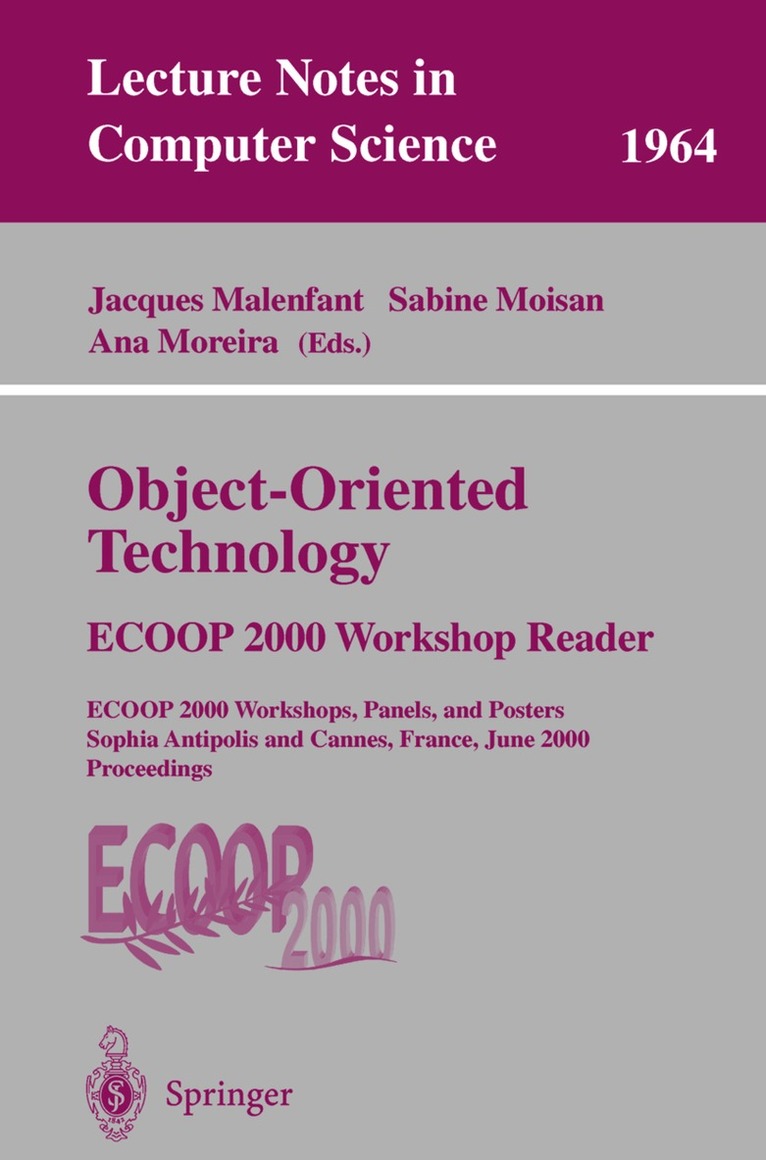
For the fourth time this year, in cooperation with Springer-Verlag, the Eu- peanConferenceonObject-OrientedProgramming(ECOOP)conferenceseries is gladto o?erthe object-orientedresearchcommunity the ECOOP2000Wo- shop Reader, a compendium of workshop reports, panel transcripts and poster abstractspertainingtotheECOOP2000conference,heldinCannesandSophia Antipolis from 12 to 16 June. WorkshopReports Thisyear,ECOOP2000hosted22high-qualityworkshopscoveringalargesp- trum ofhotresearchtopics.Theseworkshopswerechosenfrom38 proposalsby a workshopselectioncommittee, followinga tight peer reviewprocess. Our?rst thanks go to the members of this selection committee who worked hard during late 1999and early 2000to select the best proposals,proposepotential merges, and help those selected to enhance their ?nal material. Given the quality of the proposals,theselectionwastough;wethereforeoweaspecialthankstoallofthe submitters fortheir e?orts,whichhelped inmakingtheECOOP2000workshop programa success.Together,the22workshopsheldinconjunctionwiththeconferenceattracted more than 500 position papers, and so gathered more that 500 participants on ' the Ecole Sup' erieure en Sciences Informatiques/Institut National de Recherche enInformatiqueetenAutomatique(ESSI/INRIA)campusofSophiaAntipolis on12-13June2000.Youwill?ndinthis volumethereportsfromtheworkshop organizersof 18 of these. Following the e?orts of our preceding workshop chairs, we strived for hi- quality value-adding and open-ended workshop reports. The result, as you can judge in the following pages, is a tremendous thought-provoking snapshot of thecurrentresearchinobject-orientation,fullofpointersforfurtherexploration of the covered topics. We have to thank in a very special way our workshop organizerswho,despitetheadditionalburdenputontheirshoulders,didagreat job.
Häftad, Engelska, 1999
556 kr
Skickas inom 10-15 vardagar
The 13th European Conference on Object-Oriented Programming (ECOOP'99) brought some 500 participants to Lisbon from June 14th to June 18th, 1999. As usual, the workshops took place during the rst two days of the conference and gave authors and participants an opportunity to present and discuss the most topicalandinnovativeideasinobject-oriented technology.Theimportanceofthe workshopswithinthecontext ofECOOPisbecomingincreasinglyrecognised; for the rs t time inthe history of the conference, the number of workshopproposals for ECOOP'99 actually exceeded the slots availableand some had to be refused. In addition to the usual conference proceedings, Springer-Verlag has also undertaken, forthe pasttwo years, the publicationof a WorkshopReader, which bringstogether the results of the workshops, panels, and posters held during the conference. This book, the 4th ECOOP WorkshopReader, di ers from previous editions in two signi cant ways. Firstly, instead of simply reproducing the position - pers, it presents an overview of the main points made by the authors as well as a summary of the discussions that took place.Secondly, to make the text more uniformandreadable, allchapters havebeen written ina commonformat(using LaTeX lncs style les). This book was only possible thanks to the eo rt of each workshop organiser in particular, and each workshop, poster, and panel participant in general. The innovations introduced in this book implied additional work for the workshop organisers in terms of recording and summarising the discussions as well as adapting the written presentations to a common format. This extra e ort will certainly be appreciated by the readers.
Inbunden, Engelska, 2013
1 105 kr
Skickas inom 10-15 vardagar
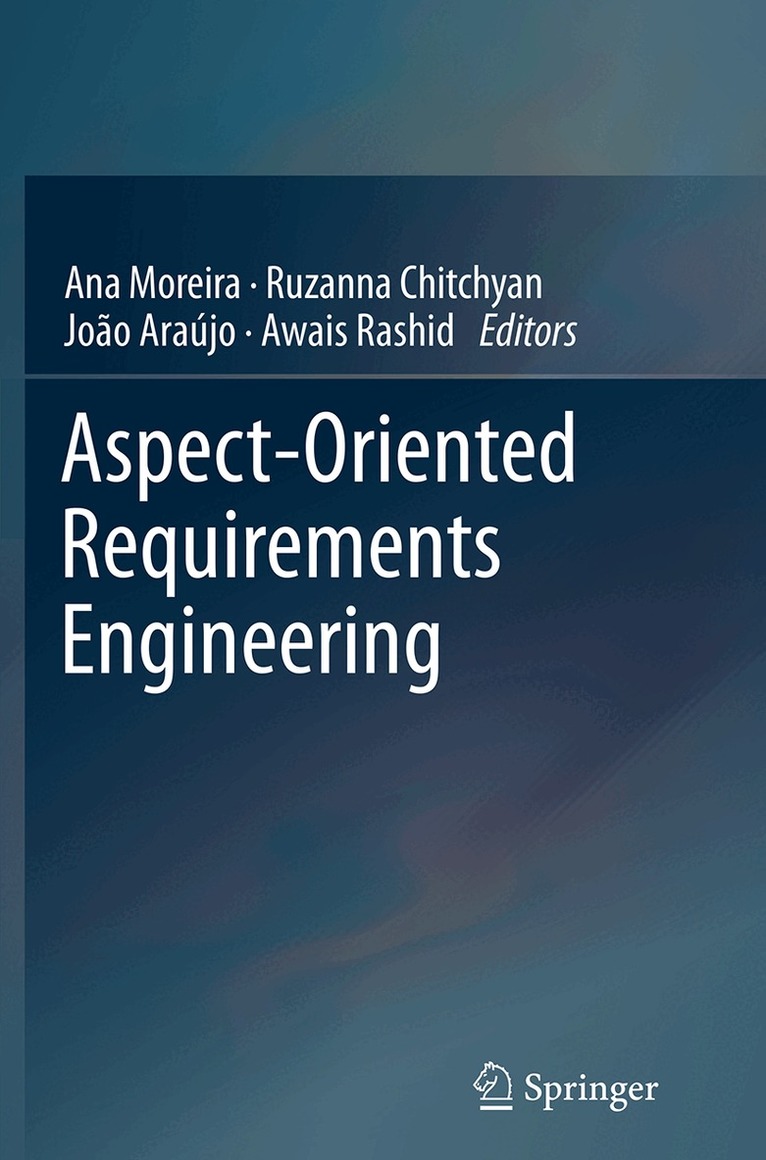
Broadly-scoped requirements such as security, privacy, and response time are a major source of complexity in modern software systems. This is due to their tangled inter-relationships with and effects on other requirements. Aspect-Oriented Requirements Engineering (AORE) aims to facilitate modularisation of such broadly-scoped requirements, so that software developers are able to reason about them in isolation - one at a time. AORE also captures these inter-relationships and effects in well-defined composition specifications, and, in so doing exposes the causes for potential conflicts, trade-offs, and roots for the key early architectural decisions.Over the last decade, significant work has been carried out in the field of AORE. With this book the editors aim to provide a consolidated overview of these efforts and results. The individual contributions discuss how aspects can be identified, represented, composed and reasoned about, as well as how they are used in specific domains and in industry. Thus, the book does not present one particular AORE approach, but conveys a broad understanding of the aspect-oriented perspective on requirements engineering. The chapters are organized into five sections: concern identification in requirements, concern modelling and composition, domain-specific use of AORE, aspect interactions, and AORE in industry.This book provides readers with the most comprehensive coverage of AORE and the capabilities it offers to those grappling with the complexity arising from broadly-scoped requirements - a phenomenon that is, without doubt, universal across software systems. Software engineers and related professionals in industry, as well as advanced undergraduate and post-graduate students and researchers, will benefit from these comprehensive descriptions and the industrial casestudies.
Häftad, Engelska, 2013
556 kr
Skickas inom 10-15 vardagar
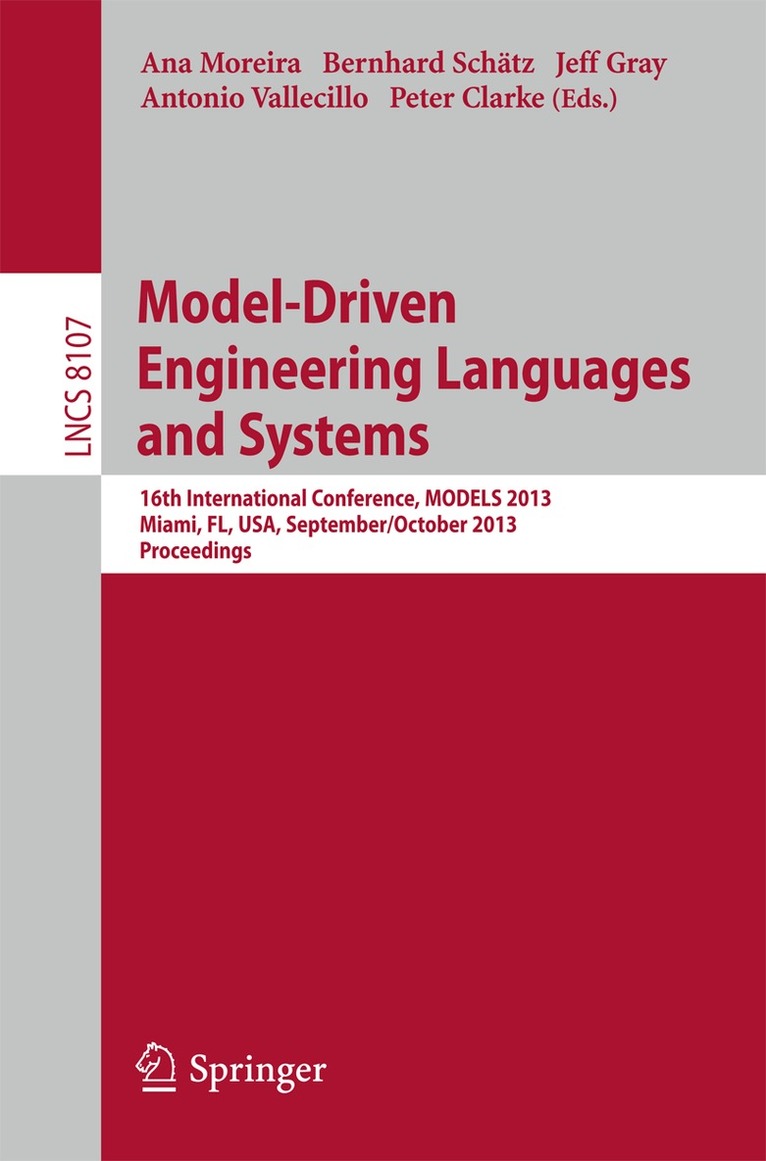
This book constitutes the refereed proceedings of the 16th International Conference on Model Driven Engineering Languages and Systems, MODELS 2013, held in Miami, FL, USA, in September/October 2013. The 47 full papers presented in this volume were carefully reviewed and selected from a total of 180 submissions. They are organized in topical sections named: tool support; dependability; comprehensibility; testing; evolution; verification; product lines; semantics; domain-specific modeling languages; models@RT; design and architecture; model transformation; model analysis; and system synthesis.
Häftad, Engelska, 2016
1 105 kr
Skickas inom 10-15 vardagar
Broadly-scoped requirements such as security, privacy, and response time are a major source of complexity in modern software systems. This is due to their tangled inter-relationships with and effects on other requirements. Aspect-Oriented Requirements Engineering (AORE) aims to facilitate modularisation of such broadly-scoped requirements, so that software developers are able to reason about them in isolation - one at a time. AORE also captures these inter-relationships and effects in well-defined composition specifications, and, in so doing exposes the causes for potential conflicts, trade-offs, and roots for the key early architectural decisions.Over the last decade, significant work has been carried out in the field of AORE. With this book the editors aim to provide a consolidated overview of these efforts and results. The individual contributions discuss how aspects can be identified, represented, composed and reasoned about, as well as how they are used in specific domains and in industry. Thus, the book does not present one particular AORE approach, but conveys a broad understanding of the aspect-oriented perspective on requirements engineering. The chapters are organized into five sections: concern identification in requirements, concern modelling and composition, domain-specific use of AORE, aspect interactions, and AORE in industry.This book provides readers with the most comprehensive coverage of AORE and the capabilities it offers to those grappling with the complexity arising from broadly-scoped requirements - a phenomenon that is, without doubt, universal across software systems. Software engineers and related professionals in industry, as well as advanced undergraduate and post-graduate students and researchers, will benefit from these comprehensive descriptions and the industrial casestudies.