Anand V. Swamy – författare
Visar alla böcker från författaren Anand V. Swamy. Handla med fri frakt och snabb leverans.
15 produkter
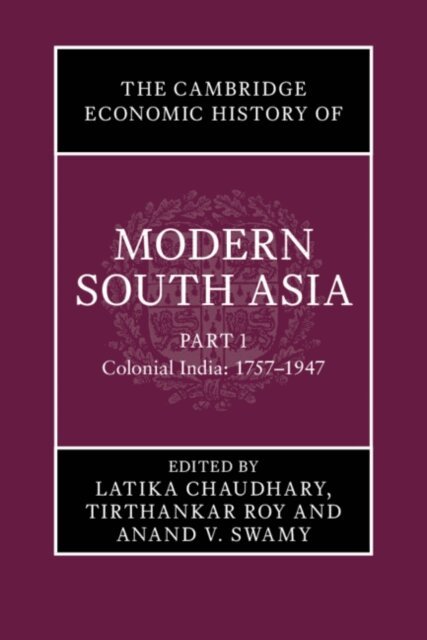
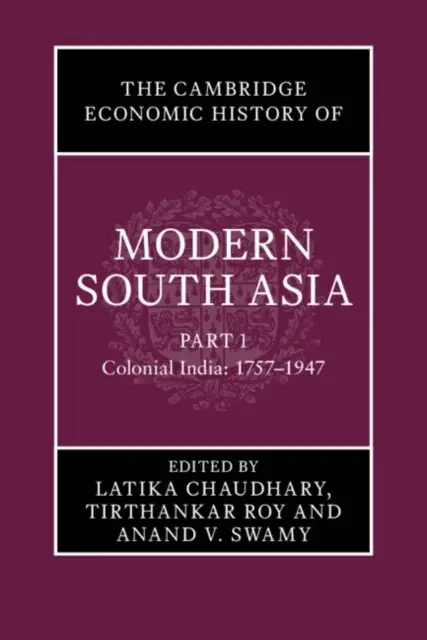
The Cambridge Economic History of Modern South Asia, Part 1, Colonial India, 1757-1947
Av Tirthankar (London School of Economics and Political Science) Roy, Massachusetts) Swamy, Anand V. (Williams College m. fl.
Inbunden, 2026
1769 kr
Lägg i varukorg
South Asia's economies, as well as the scholarship on their economic histories, have been transformed in recent decades. This landmark new reference history will guide economists and historians through these transformations in Bangladesh, India and Pakistan. Part I revisits the colonial period with …
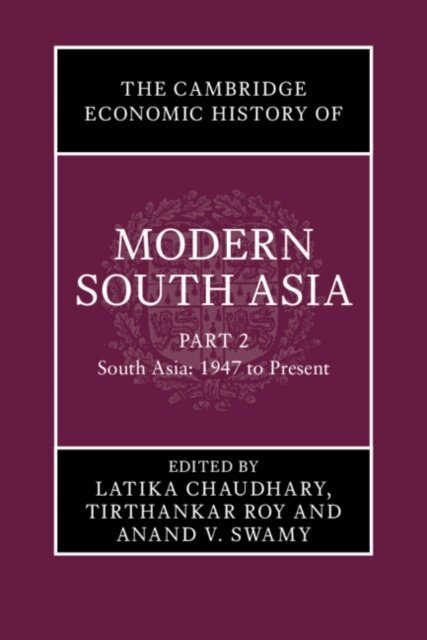
The Cambridge Economic History of Modern South Asia, Part 2, South Asia, 1947 to Present
Av Latika Chaudhary, Tirthankar Roy m. fl.
Inbunden, 2026
1769 kr
Lägg i varukorg
South Asia's economies, as well as the scholarship on their economic histories, have been transformed in recent decades. This landmark new reference history will guide economists and historians through these transformations in Bangladesh, India and Pakistan. Part I revisits the colonial period with …
Cambridge Economic History of Modern South Asia, Part 2, South Asia, 1947 to Present
Av Anand V. Swamy, Tirthankar Roy m. fl.
E-bok, 2026
2014 kr
Lägg i varukorg
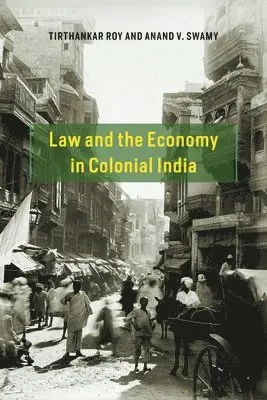
Law and the Economy in Colonial India
Av Anand V. Swamy, Tirthankar Roy
E-bok, 2016
837 kr
Lägg i varukorg
Since the economic reforms of the 1990s, India’s economy has grown rapidly. To sustain growth and foreign investment over the long run requires a well-developed legal infrastructure for conducting business, including cheap and reliable contract enforcement and secure property rights. But it’s …
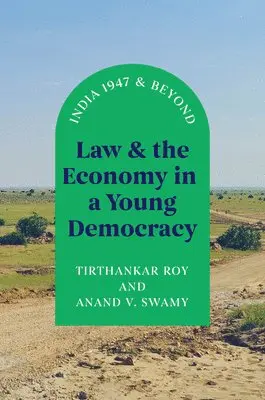
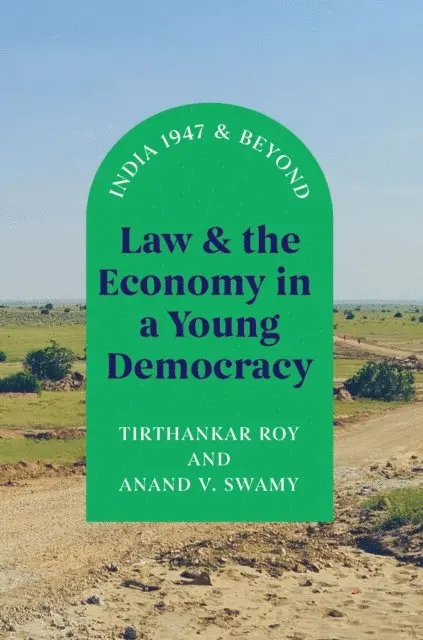
Law and the Economy in a Young Democracy
India 1947 and Beyond
Av Tirthankar Roy, Anand V. Swamy
Inbunden, 2022
436 kr
Lägg i varukorg
An essential history of India's economic growth since 1947, including the legal reforms that have shaped the country in the shadow of colonial rule.Economists have long lamented how the inefficiency of India's legal system undermines the country’s economic capacity. How has this come to be? The …
Law and the Economy in a Young Democracy
India 1947 and Beyond
Av Anand V. Swamy, Tirthankar Roy
E-bok, 2022
829 kr
Lägg i varukorg
An essential history of India''s economic growth since 1947, including the legal reforms that have shaped the country in the shadow of colonial rule. Economists have long lamented how the inefficiency of India''s legal system undermines the country’s economic capacity. How has this come to be? The …
Cambridge Economic History of Modern South Asia, Part 2, South Asia, 1947 to Present
Av Anand V. Swamy, Tirthankar Roy m. fl.
E-bok, 2026
2014 kr
Lägg i varukorg
Cambridge Economic History of Modern South Asia, Part 1, Colonial India, 1757-1947
Av Anand V. Swamy, Tirthankar Roy m. fl.
E-bok, 2026
1971 kr
Lägg i varukorg
Cambridge Economic History of Modern South Asia, Part 1, Colonial India, 1757-1947
Av Anand V. Swamy, Tirthankar Roy m. fl.
E-bok, 2026
2014 kr
Lägg i varukorg
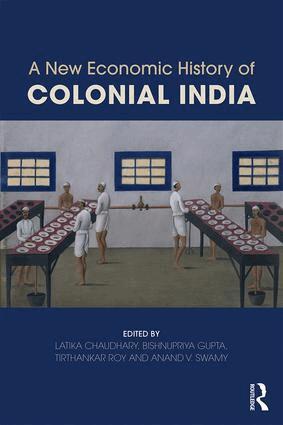
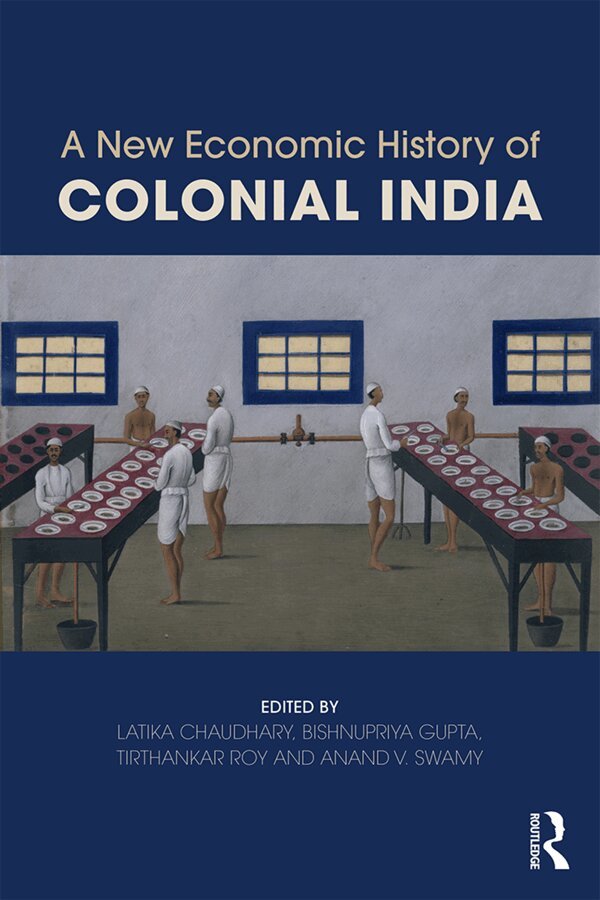
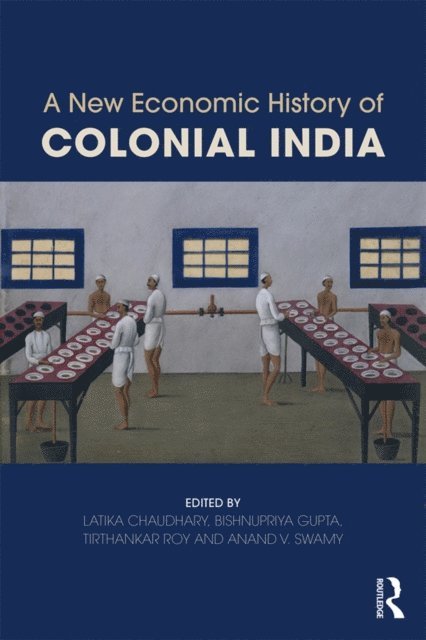
New Economic History of Colonial India
Av Latika Chaudhary, Bishnupriya Gupta m. fl.
Inbunden, 2015
2581 kr
Lägg i varukorg
A New Economic History of Colonial India provides a new perspective on Indian economic history. Using economic theory and quantitative methods, it shows how the discipline is being redefined and how new scholarship on India is beginning to embrace and make use of concepts from the larger field of …
New Economic History of Colonial India
Av Latika Chaudhary, Bishnupriya Gupta m. fl.
Häftad, 2015
785 kr
Lägg i varukorg
A New Economic History of Colonial India provides a new perspective on Indian economic history. Using economic theory and quantitative methods, it shows how the discipline is being redefined and how new scholarship on India is beginning to embrace and make use of concepts from the larger field of …
New Economic History of Colonial India
Av Latika Chaudhary, Bishnupriya Gupta m. fl.
E-bok, 2015
927 kr
Lägg i varukorg
A New Economic History of Colonial India provides a new perspective on Indian economic history. Using economic theory and quantitative methods, it shows how the discipline is being redefined and how new scholarship on India is beginning to embrace and make use of concepts from the larger field of …
New Economic History of Colonial India
Av Latika Chaudhary, Bishnupriya Gupta m. fl.
E-bok, 2015
927 kr
Lägg i varukorg
A New Economic History of Colonial India provides a new perspective on Indian economic history. Using economic theory and quantitative methods, it shows how the discipline is being redefined and how new scholarship on India is beginning to embrace and make use of concepts from the larger field of …
Law and the Economy in Colonial India
Av Tirthankar Roy, Anand V. Swamy
Inbunden, 2016
381 kr
Tillfälligt slut
Since the economic reforms of the 1990s, India's economy has grown rapidly. To sustain growth and foreign investment over the long run requires a well-developed legal infrastructure for conducting business, including cheap and reliable contract enforcement and secure property rights. But it's …
The Cambridge Economic History of Modern South Asia 2 Volume Set Hardback
Av Latika Chaudhary, Tirthankar Roy m. fl.
2026
4421 kr
Tillfälligt slut
South Asia's economies, as well as the scholarship on their economic histories, have been transformed in recent decades. This landmark new reference history will guide economists and historians through these transformations in Bangladesh, India and Pakistan. Part 1 revisits the colonial period with …