Anthony J. Steinbock – författare
Visar alla böcker från författaren Anthony J. Steinbock. Handla med fri frakt och snabb leverans.
26 produkter
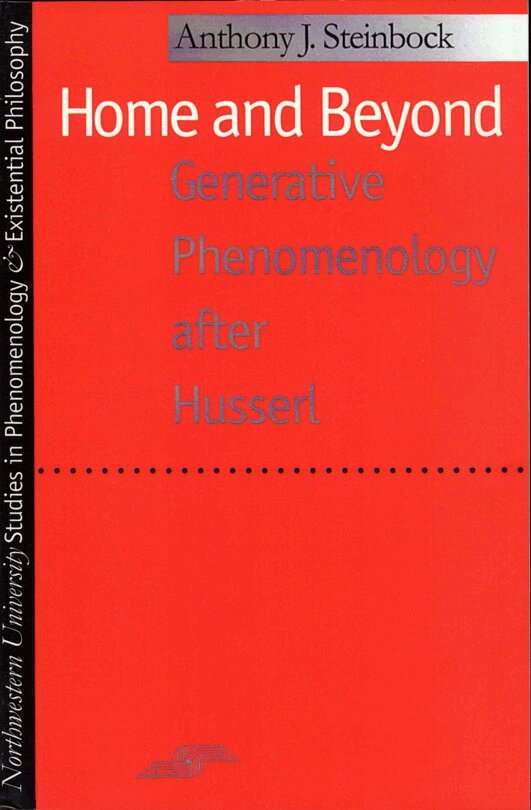
Home and Beyond
Generative Phenomenology After Husserl
Häftad, 1995
356 kr
Lägg i varukorg
At a time in which many philosophers have concluded that Husserl's philosophy is exhausted, but when the alternatives to Husserl appear to be exhausted as well, this work aims to presents an innovative approach to Husserlian phenomenology. The author implicitly attacks the most fundamental …
Phenomenology and Mysticism
The Verticality of Religious Experience
Häftad, 2009
303 kr
Lägg i varukorg
Exploring the first-person narratives of three figures from the Christian, Jewish, and Islamic mystical traditions—St. Teresa of Avila, Rabbi Dov Baer, and Rūzbihān Baqlī—Anthony J. Steinbock provides a complete phenomenology of mysticism based in the Abrahamic religious traditions. He relates a …
Phenomenology and Mysticism
The Verticality of Religious Experience
Inbunden, 2007
515 kr
Lägg i varukorg
Exploring the first-person narratives of three figures from the Christian, Jewish, and Islamic mystical traditions—St. Teresa of Avila, Rabbi Dov Baer, and Rūzbihān Baqlī—Anthony J. Steinbock provides a complete phenomenology of mysticism based in the Abrahamic religious traditions. He relates a …
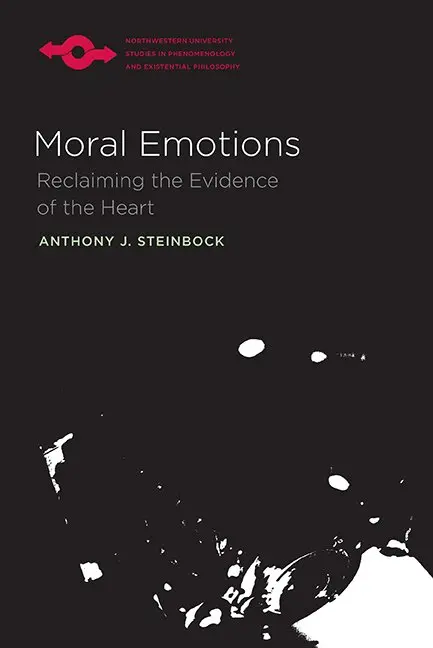
Moral Emotions
Reclaiming the Evidence of the Heart
Häftad, 2014
384 kr
Lägg i varukorg
Moral Emotions builds upon the philosophical theory of persons begun in Phenomenology and Mysticism and marks a new stage of phenomenology. Author Anthony J. Steinbock finds personhood analysing key emotions, called moral emotions. Moral Emotions offers a systematic account of the moral emotions, …
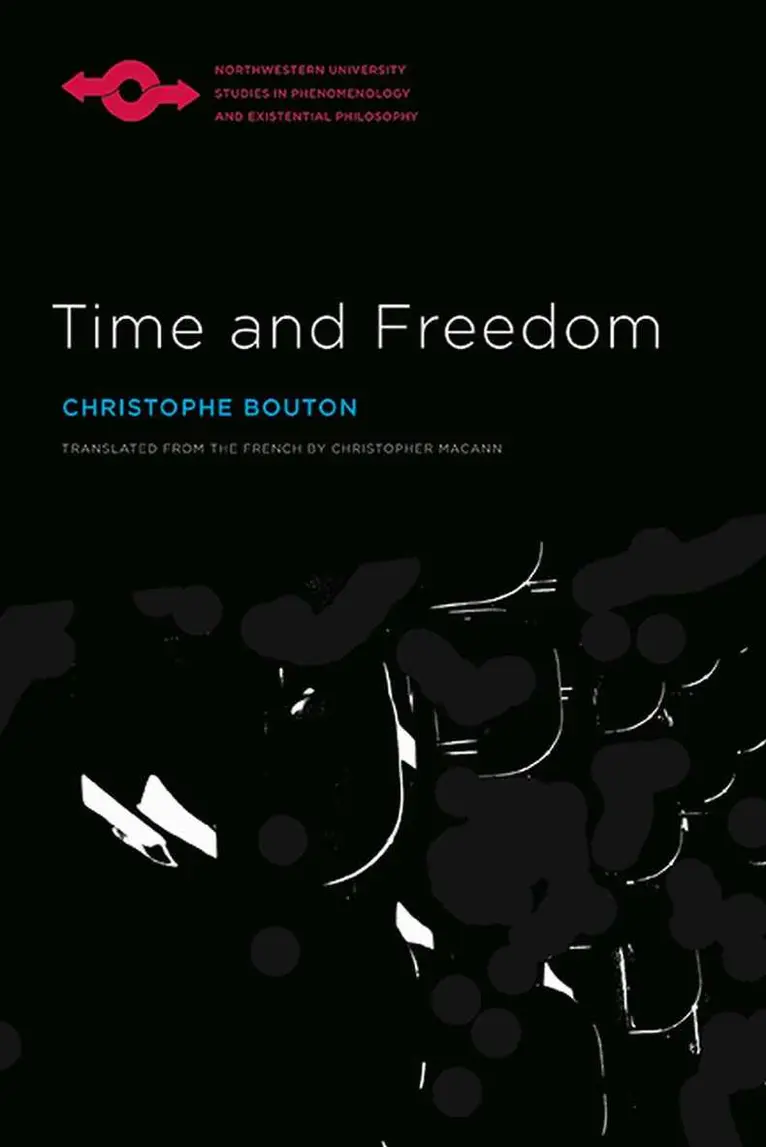
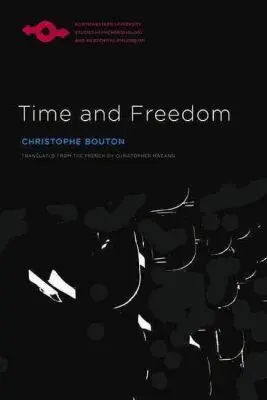
Time and Freedom
Av Christophe Bouton, Anthony J. Steinbock
Häftad, 2014
384 kr
Lägg i varukorg
Christophe Bouton’s Time and Freedom addresses the problem of the relationship between time and freedom as a matter of practical philosophy, examining how the individual lives time and how her freedom is effective in time.Bouton first charts the history of modern philosophy’s reengagement with the …
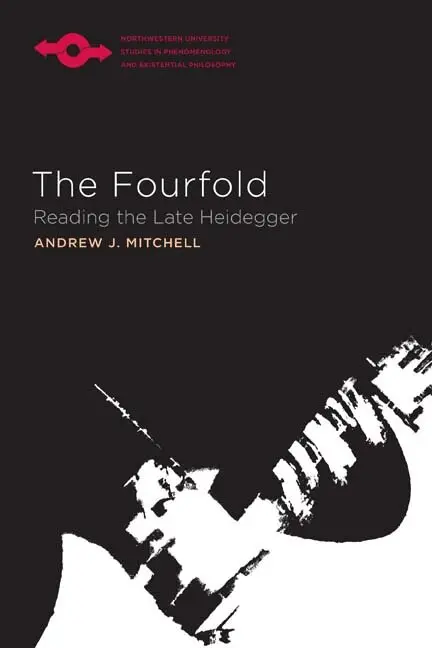
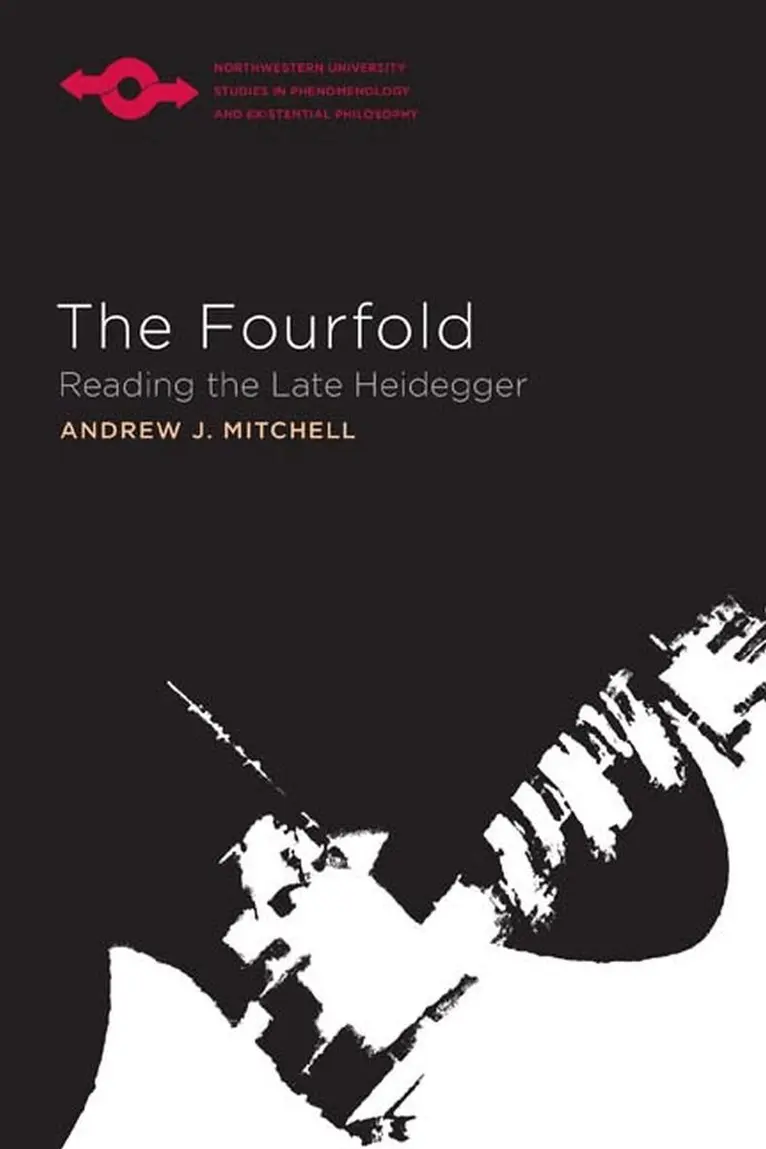
Fourfold
Reading the Late Heidegger
Av Andrew J. Mitchell, Anthony J. Steinbock
Häftad, 2015
384 kr
Lägg i varukorg
Heidegger’s later thought is a thinking of things, so argues Andrew J. Mitchell in The Fourfold. Heidegger understands these things in terms of what he names “the fourfold”—a convergence of relationships bringing together the earth, the sky, divinities, and mortals—and Mitchell’s book is the first …
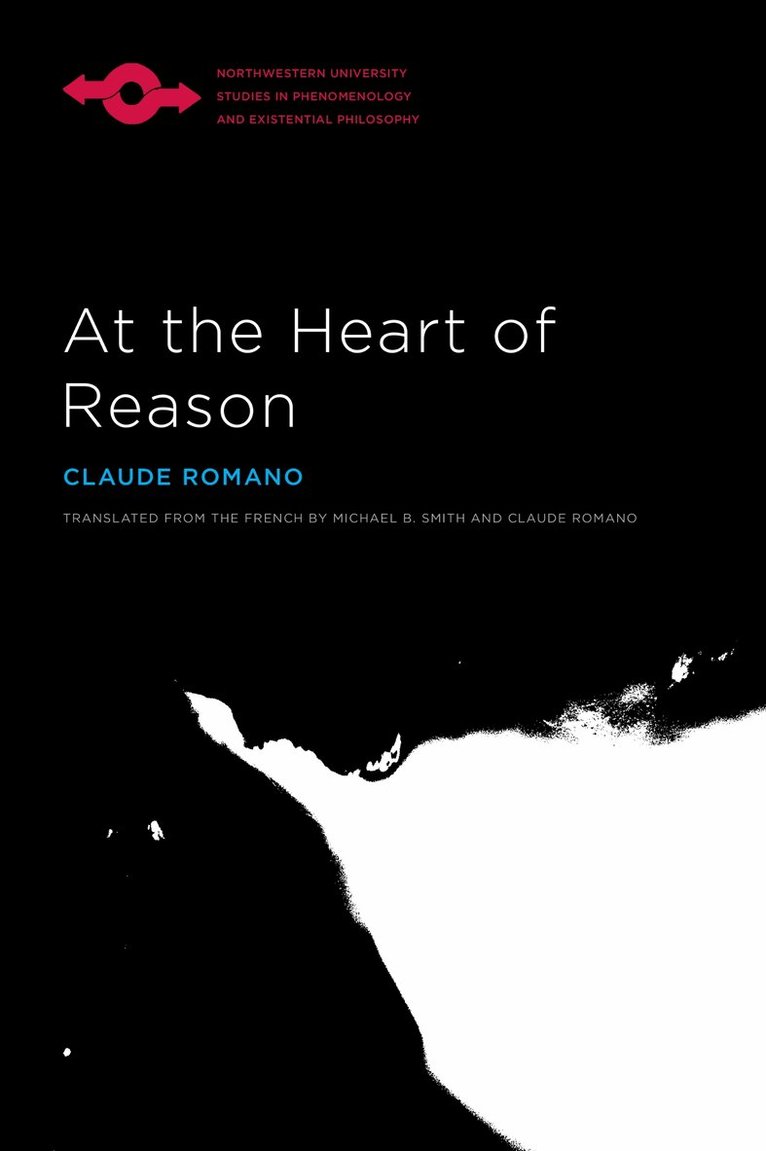
At the Heart of Reason
Av Claude Romano, Anthony J. Steinbock
Häftad, 2015
496 kr
Lägg i varukorg
In At the Heart of Reason, Claude Romano boldly calls for a reformulation of the phenomenological project. He contends that the main concern of phenomenology, and its originality with respect to other philosophical movements of the last century, such as logical empiricism, the grammatical …
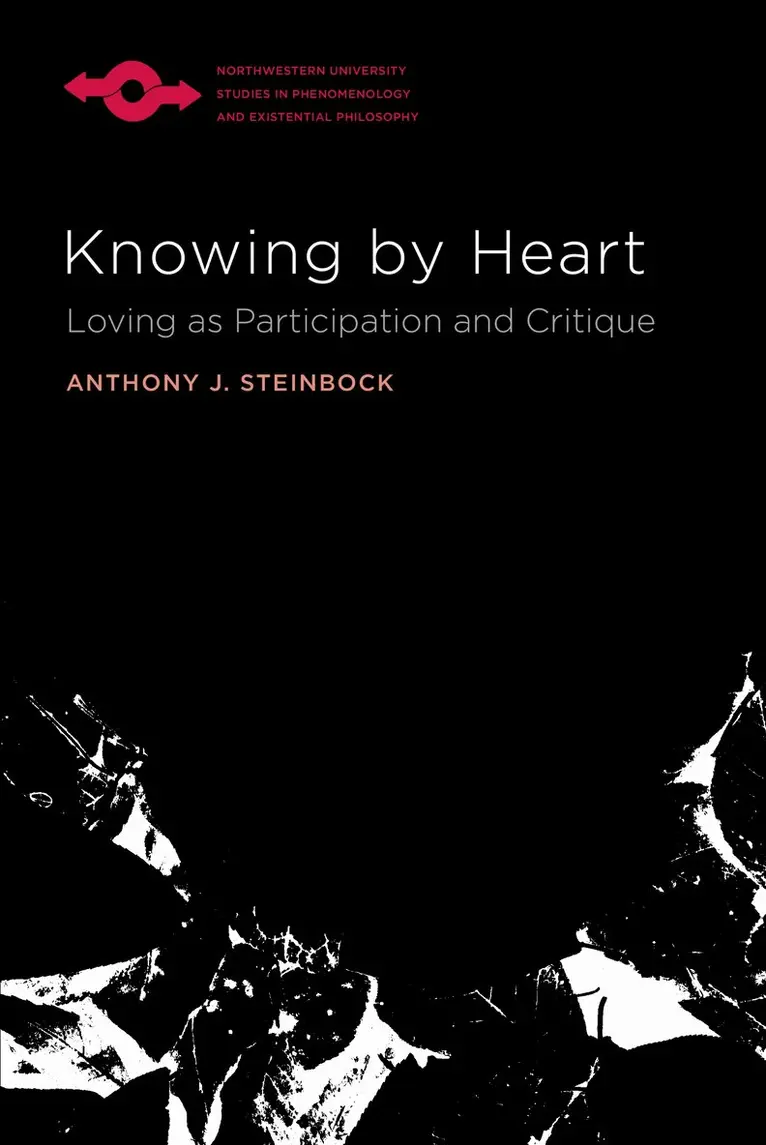
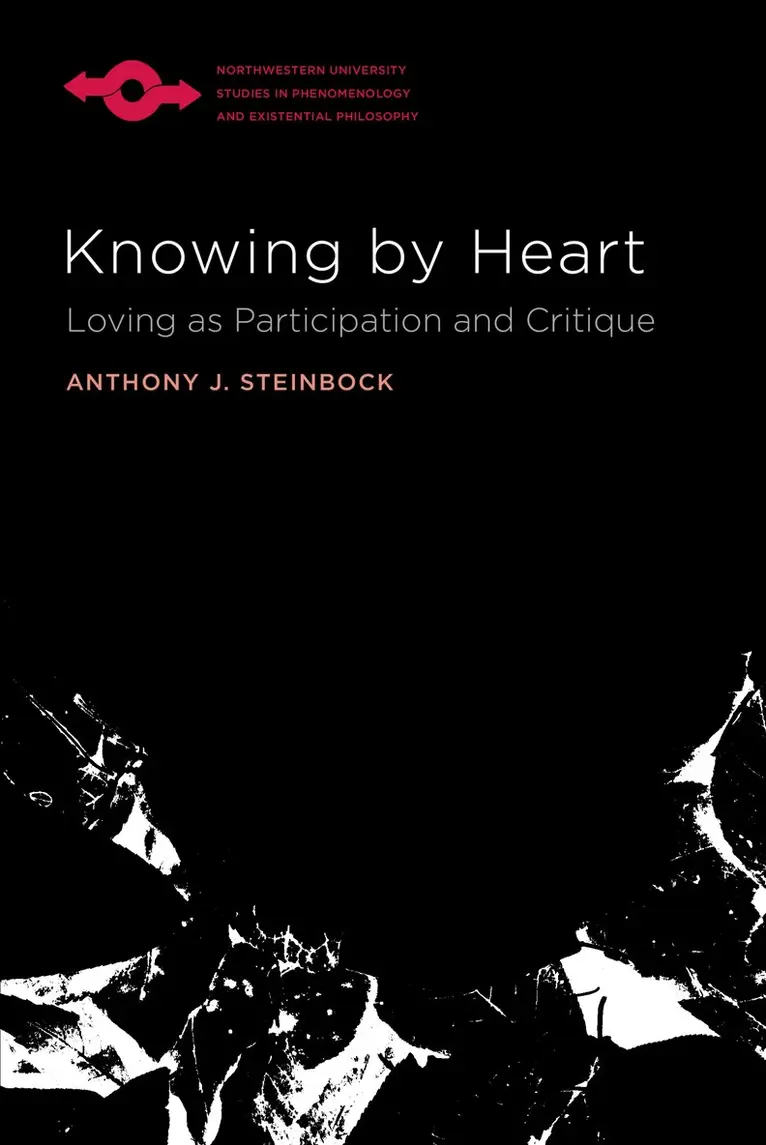
Knowing by Heart
Loving As Participation and Critique
Häftad, 2021
384 kr
Lägg i varukorg
Drawing on and developing the phenomenological work of figures such as Edmund Husserl and Max Scheler, Knowing by Heart: Loving as Participation and Critique provides an account of the various feelings and feeling‑states that pertain to matters of the heart. Anthony J. Steinbock’s work investigates …
Knowing by Heart
Loving As Participation and Critique
Inbunden, 2021
1135 kr
Lägg i varukorg
Drawing on and developing the phenomenological work of figures such as Edmund Husserl and Max Scheler, Knowing by Heart: Loving as Participation and Critique provides an account of the various feelings and feeling‑states that pertain to matters of the heart. Anthony J. Steinbock’s work investigates …
Limit-Phenomena and Phenomenology in Husserl
Inbunden, 2017
1705 kr
Lägg i varukorg
Recent discussions around limit-problems, namely the questions concerning what can appear in phenomenological reflection, as well as what phenomenology as philosophical reflection can handle, call for a concerted treatment of the problem of limit-phenomena. In this important new book, Anthony J. …
Limit-Phenomena and Phenomenology in Husserl
Häftad, 2017
601 kr
Lägg i varukorg
Recent discussions around limit-problems, namely the questions concerning what can appear in phenomenological reflection, as well as what phenomenology as philosophical reflection can handle, call for a concerted treatment of the problem of limit-phenomena. In this important new book, Anthony J. …
Limit-Phenomena and Phenomenology in Husserl
E-bok, 2017
655 kr
Lägg i varukorg
Recent discussions around limit-problems, namely the questions concerning what can appear in phenomenological reflection, as well as what phenomenology as philosophical reflection can handle, call for a concerted treatment of the problem of limit-phenomena. In this important new book, Anthony J. …
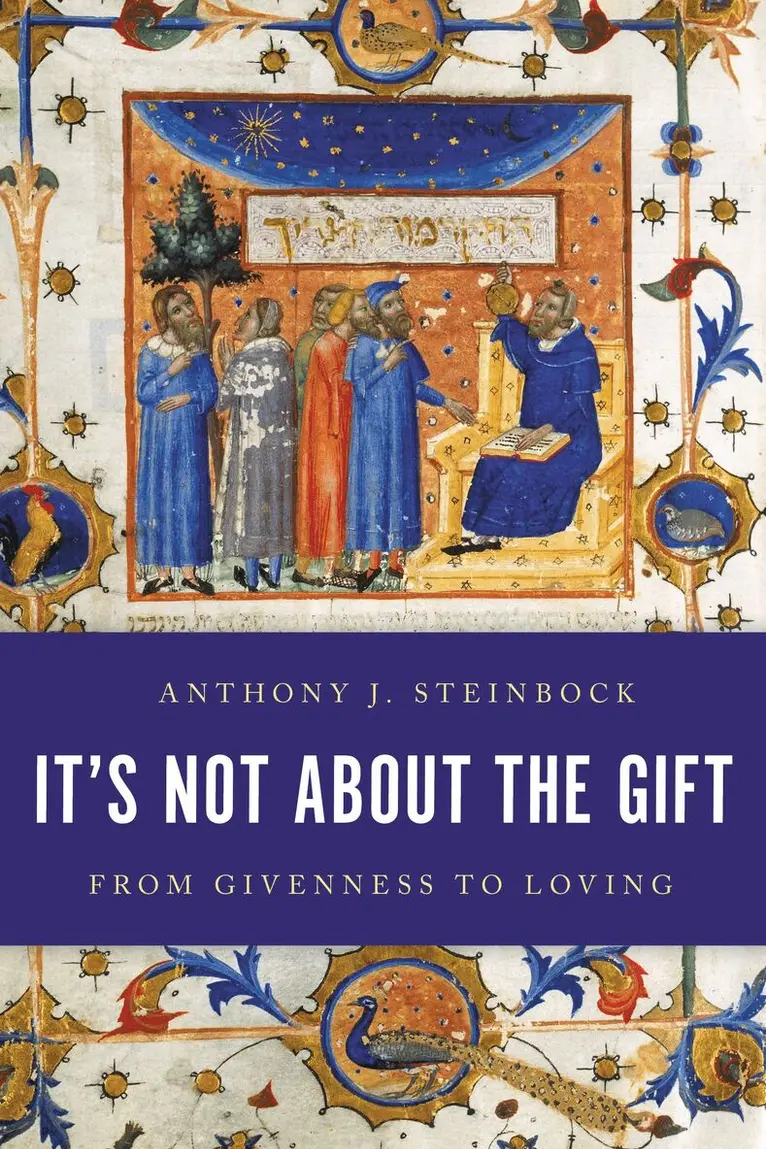
It's Not About the Gift
From Givenness to Loving
Inbunden, 2018
1210 kr
Lägg i varukorg
In his fascinating new book, leading phenomenologist Anthony Steinbock intervenes in contemporary debate around the idea of the gift through a set of critical readings in which he situates the gift in the context of interpersonal relations. While taking up the key figures in the discussion …
It's Not About the Gift
From Givenness to Loving
Häftad, 2018
460 kr
Lägg i varukorg
In his fascinating new book, leading phenomenologist Anthony Steinbock intervenes in contemporary debate around the idea of the gift through a set of critical readings in which he situates the gift in the context of interpersonal relations. While taking up the key figures in the discussion …
It's Not About the Gift
From Givenness to Loving
E-bok, 2018
499 kr
Lägg i varukorg
In his fascinating new book, leading phenomenologist Anthony Steinbock intervenes in contemporary debate around the idea of the gift through a set of critical readings in which he situates the gift in the context of interpersonal relations. While taking up the key figures in the discussion …
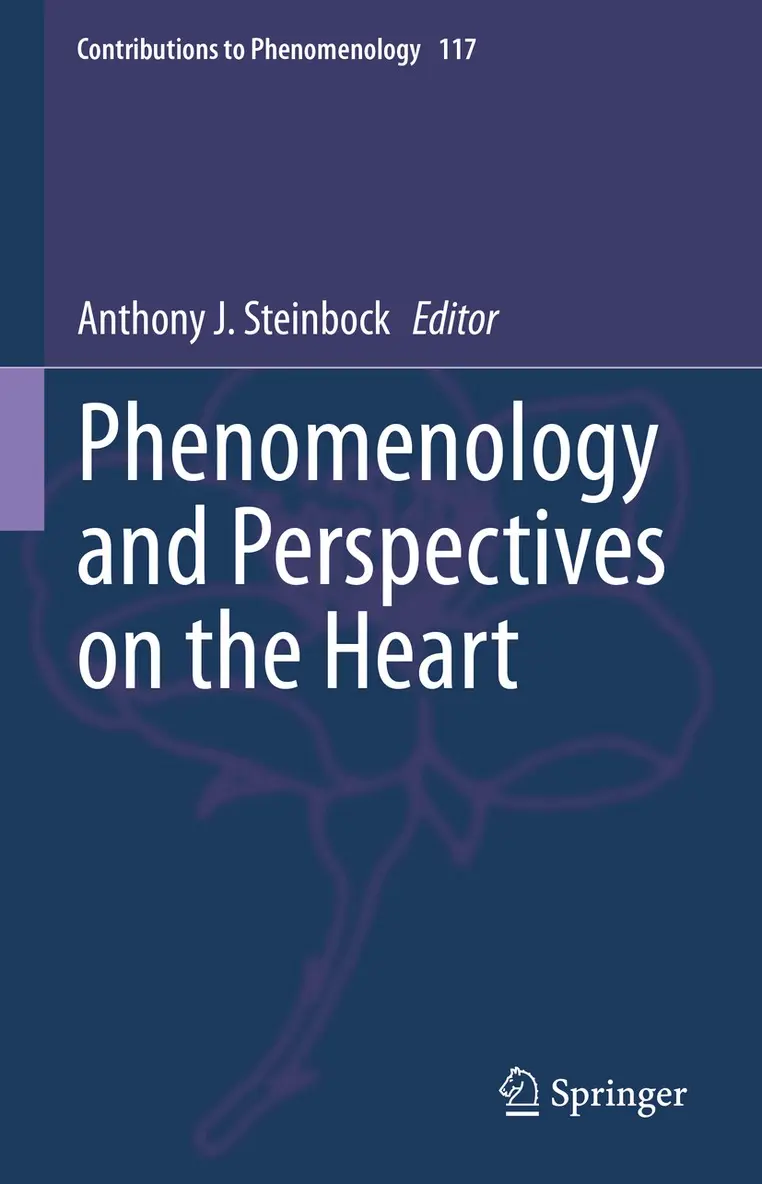
Phenomenology and Perspectives on the Heart
Inbunden, 2022
1532 kr
Lägg i varukorg
This edited collection marks a new wave of international and philosophical scholarship on “the heart”- that rich dimension of our emotional being in the world. This text addresses the relation between feeling and knowing and investigates whether or not the heart has its own way of cognition and …
Phenomenology and Perspectives on the Heart
E-bok, 2022
1948 kr
Lägg i varukorg
This edited collection marks a new wave of international and philosophical scholarship on “the heart”- that rich dimension of our emotional being in the world. This text addresses the relation between feeling and knowing and investigates whether or not the heart has its own way of cognition and …
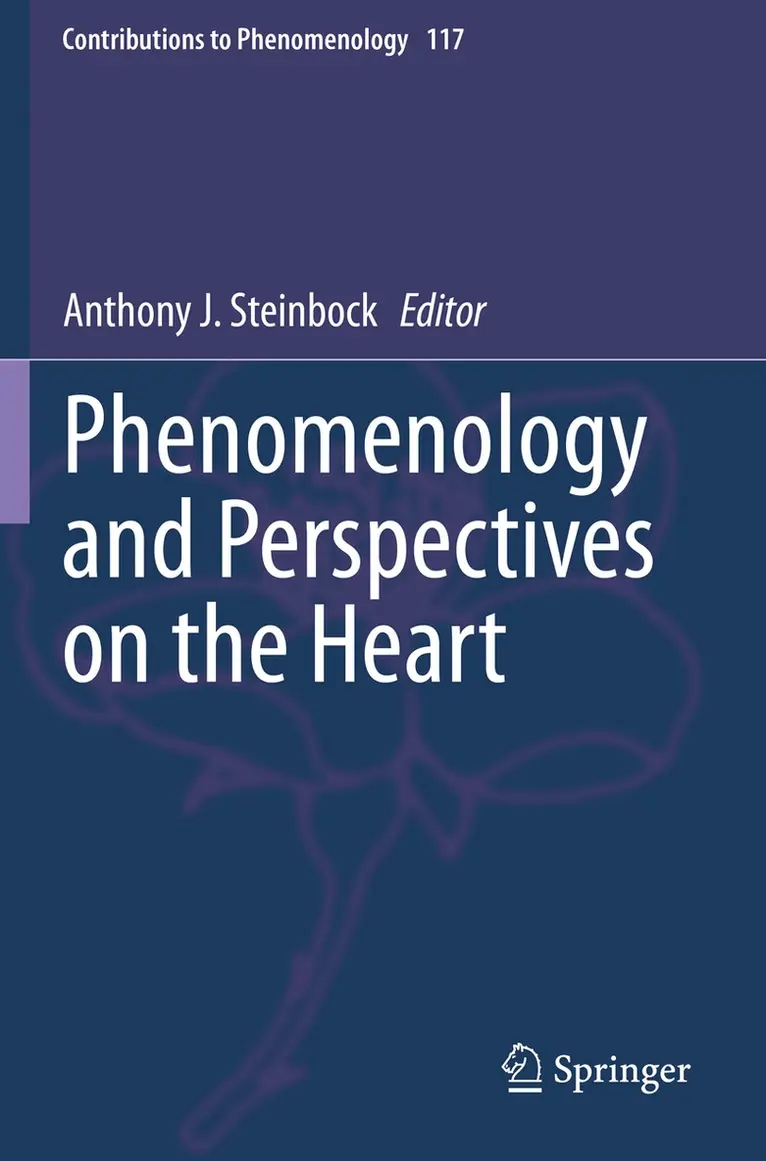
Phenomenology and Perspectives on the Heart
Häftad, 2023
1532 kr
Lägg i varukorg
This edited collection marks a new wave of international and philosophical scholarship on “the heart”- that rich dimension of our emotional being in the world. This text addresses the relation between feeling and knowing and investigates whether or not the heart has its own way of cognition and …
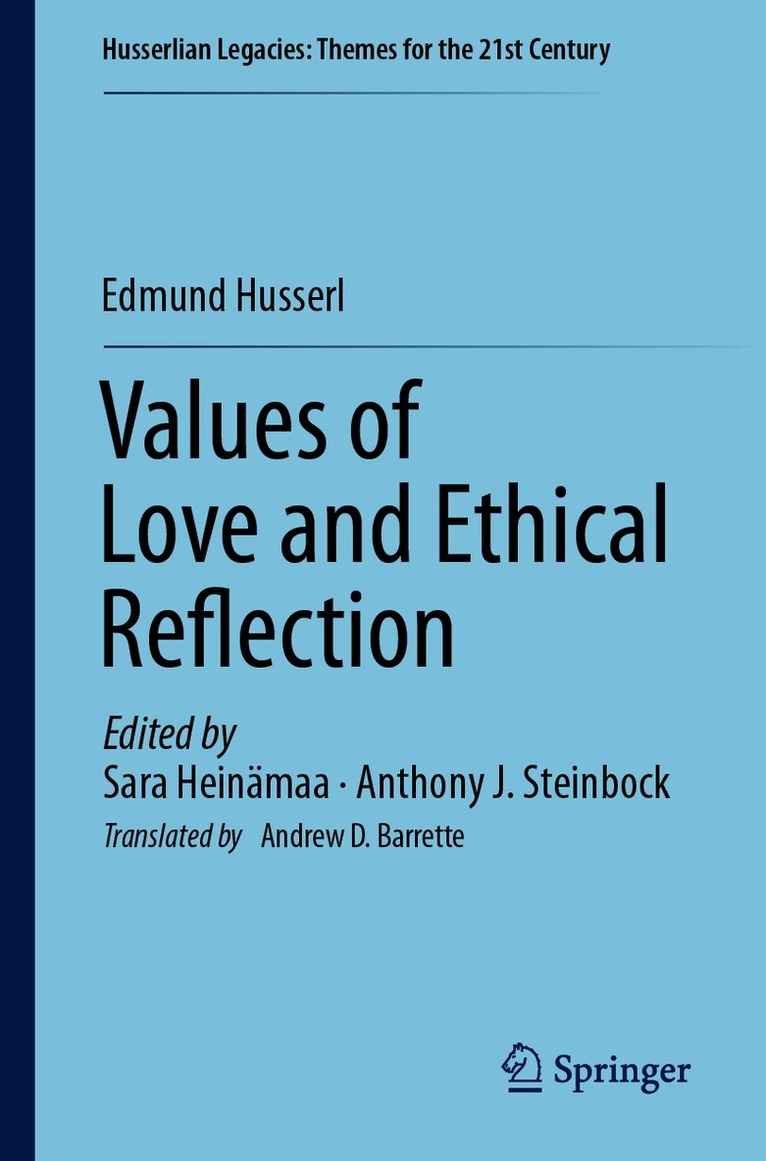
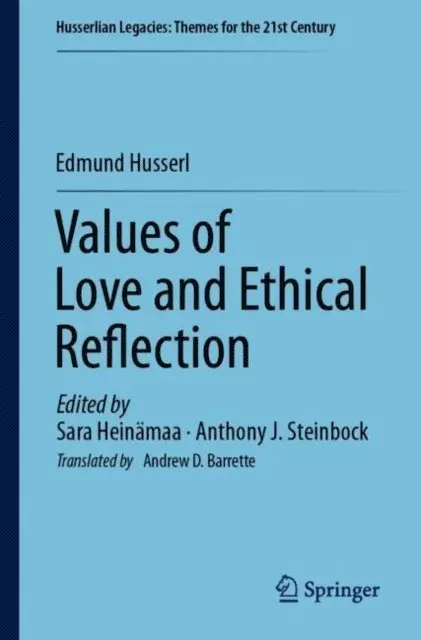
Values of Love and Ethical Reflection
New Insights from Husserl's Phenomenology
Av Edmund Husserl, Sara Heinämaa m. fl.
Häftad, 2024
552 kr
Lägg i varukorg
This first volume of Husserlian Legacies: Themes for the 21st Century focuses on hitherto underexamined dimensions of Husserl’s philosophical thinking and in particular, values and love. Texts in this series draw from the variety of Husserl’s rich original works; they are selected and arranged with …
Values of Love and Ethical Reflection
Av Edmund Husserl, Anthony J. Steinbock m. fl.
E-bok, 2024
718 kr
Lägg i varukorg
This first volume of Husserlian Legacies: Themes for the 21st Century focuses on hitherto underexamined dimensions of Husserl’s philosophical thinking and in particular, values and love. Texts in this series draw from the variety of Husserl’s rich original works; they are selected and arranged with …
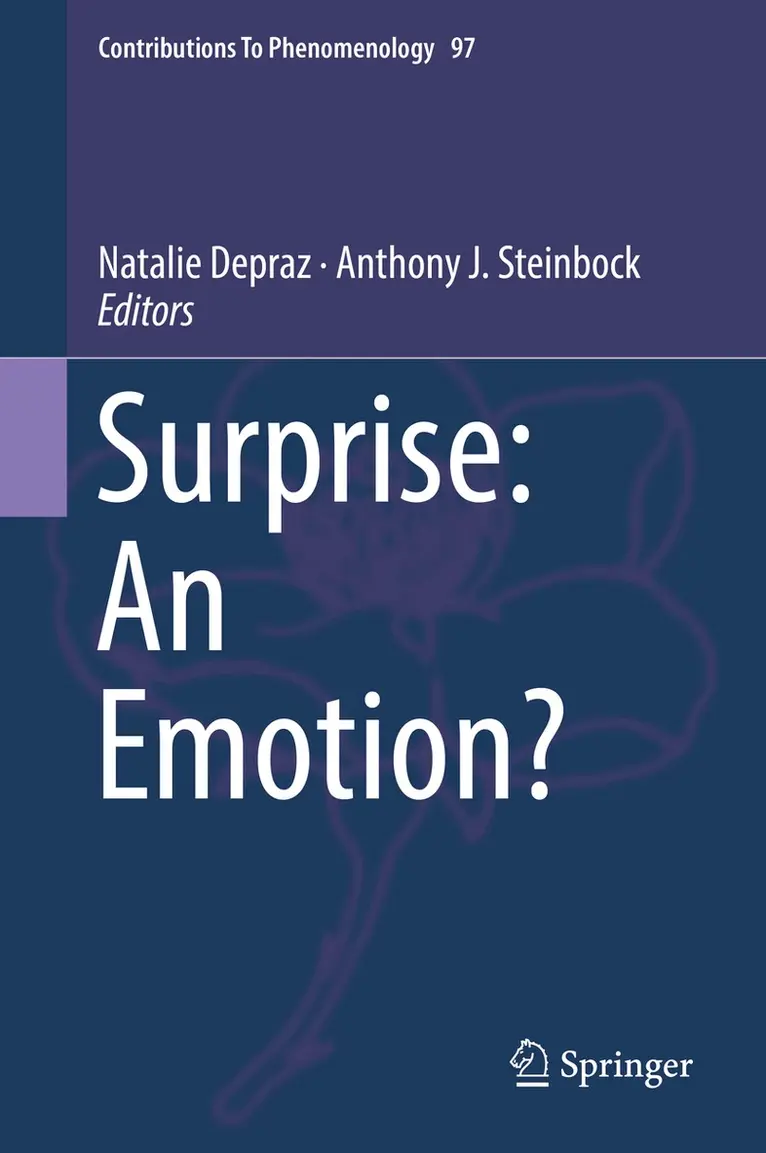
Surprise: An Emotion?
Av Natalie Depraz, Anthony J. Steinbock
Inbunden, 2019
1314 kr
Lägg i varukorg
This volume offers perspectives on the theme of surprise crossing philosophical, phenomenological, scientific, psycho-physiology, psychiatric, and linguistic boundaries. The main question it examines is whether surprise is an emotion. It uses two main theoretical frameworks to do so: psychology, in …
Surprise: An Emotion?
Av Anthony J. Steinbock, Natalie Depraz
E-bok, 2019
1785 kr
Lägg i varukorg
This volume offers perspectives on the theme of surprise crossing philosophical, phenomenological, scientific, psycho-physiology, psychiatric, and linguistic boundaries. The main question it examines is whether surprise is an emotion. It uses two main theoretical frameworks to do so: psychology, in …
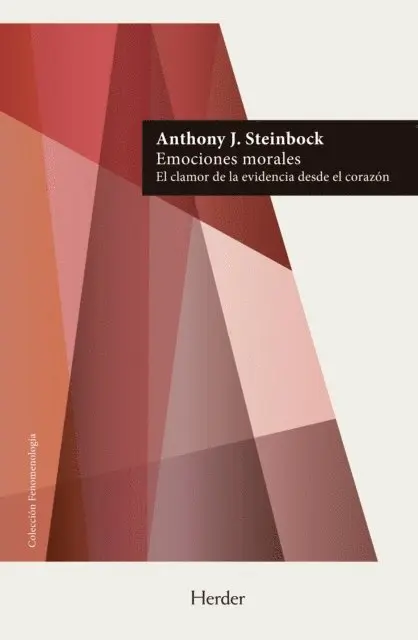
Emociones morales
El clamor de la evidencia desde el corazón
E-bok, 2022
397 kr
Lägg i varukorg
La tesis fundamental de Steinbock es que las emociones morales no solo tienen su propia temporalidad sino que permiten formas específicas de evidencia que clarifican el sentido de la personalidad, además de relanzar nociones como libertad, crítica y normatividad.
Moral Emotions
Reclaiming the Evidence of the Heart
Inbunden, 2014
1012 kr
Tillfälligt slut
Winner, 2015 CSCP Symposium Book AwardMoral Emotions builds upon the philosophical theory of persons begun in Phenomenology and Mysticism and marks a new stage of phenomenology. Author Anthony J. Steinbock finds personhood analyzing key emotions, called moral emotions. Moral Emotions offers a …
Time and Freedom
Av Christophe Bouton, Anthony J. Steinbock
Inbunden, 2014
1012 kr
Tillfälligt slut
Christophe Bouton’s Time and Freedom addresses the problem of the relationship between time and freedom as a matter of practical philosophy, examining how the individual lives time and how her freedom is effective in time.Bouton first charts the history of modern philosophy’s reengagement with the …
Fourfold
Reading the Late Heidegger
Av Andrew J. Mitchell, Anthony J. Steinbock
Inbunden, 2015
1124 kr
Tillfälligt slut
Heidegger’s later thought is a thinking of things, so argues Andrew J. Mitchell in The Fourfold. Heidegger understands these things in terms of what he names “the fourfold”—a convergence of relationships bringing together the earth, the sky, divinities, and mortals—and Mitchell’s book is the first …