Arnim Langer - Böcker
Visar alla böcker från författaren Arnim Langer. Handla med fri frakt och snabb leverans.
7 produkter
7 produkter
Building Sustainable Peace
Timing and Sequencing of Post-Conflict Reconstruction and Peacebuilding
Inbunden, Engelska, 2016
1 972 kr
Skickas inom 7-10 vardagar
Countries emerging from civil war or protracted violence often face the daunting challenge of rebuilding their economy while simultaneously creating the political and social conditions for a stable peace. The implicit assumption in the international community that rapid political democratisation along with economic liberalisation holds the key to sustainable peace is belied by the experiences of countries such as Iraq and Afghanistan. Often, the challenges of post-conflict reconstruction revolve around the timing and sequencing of different reform that may have contradictory implications. Drawing on a range of thematic studies and empirical cases, this book examines how post-conflict reconstruction policies can be better sequenced in order to promote sustainable peace. The book provides evidence that many reforms that are often thought to be imperative in post-conflict societies may be better considered as long-term objectives, and that the immediate imperative for such societies should be 'people-centred' policies.
1 824 kr
Skickas inom 7-10 vardagar
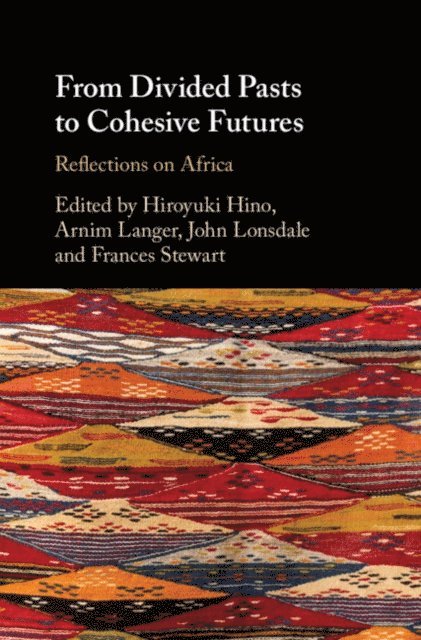
Today, the cohesion of multi-ethnic societies is at risk across the globe. Throughout history, to the present day, African countries have been facing this challenge. Historical inequalities and social division undermine cohesion and sow seeds of instability. How can Africa build a future where ethnic and other differences are a strength, a driver of growth and development, rather than sources of division and instability? Drawing together historians, economists and political scientists, each an authority on Africa, this book delivers a comprehensive study of that question through an exploration of the continent's divided histories, to understand where Africans stand now, and to reflect on how they might now work towards a more trusting society. Numerous case studies, statistical expositions and theoretical reflections bring conceptual clarity to the often poorly understood processes and contexts of social cohesion, not only in Africa, but across the developing and developed world.
757 kr
Skickas inom 7-10 vardagar
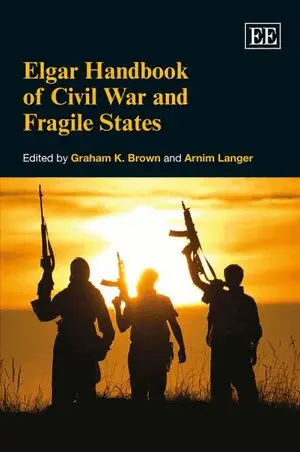
The Elgar Handbook of Civil War and Fragile States brings together contributions from a multidisciplinary group of internationally renowned scholars on such important issues as the causes of violent conflicts and state fragility, the challenges of conflict resolution and mediation, and the obstacles to post-conflict reconstruction and durable peace-building.While other companion volumes exist, this detailed and comprehensive book brings together an unrivalled range of disciplinary perspectives, including development economists, quantitative and qualitative political scientists, and sociologists. Topical chapters include: Post-Conflict and State Fragility, Ethnicity, Human Security, Poverty and Conflict, Economic Dimensions of Civil War, Climate Change and Armed Conflict, Rebel Recruitment, Education and Violent Conflict, Obstacles to Peace Settlements and many others.With detailed and comprehensive coverage, this Handbook will appeal to postgraduate and undergraduate students, policymakers, researchers and academics in conflict and peace studies, international relations, international politics and security studies.Contributors include: P. Aall, T. Addison, P.H. Baker, R.H. Bates, J. Bercovitch, G.K. Brown, H. Buhaug, P. Clark, C.A. Crocker, H. Dorussen, V.P. Fortna, S. Fukuda-Parr, K.S. Gleditsch, N.P. Gleditsch, Y. Guichaoua, F.O. Hampson, C.A. Hartzell, H. Hegre, H. Holtermann, L.M. Howard, P. Justino, A. Langer, R. Licklider, K. Long, C. Lutmar, D.M. Malone, J. McGarry, C. Messineo, N.W. Metternich, R. Muggah, S.M. Murshed, H. Nitzscke, B. O Leary, J. Ohiorhenuan, A. Ruggeri, B.R. Sørensen, F. Stewart, M.Z. Tadjoeddin, O.M. Theisen, H. Urdal, P. Vermeersch, S. Wolff
3 627 kr
Skickas inom 7-10 vardagar
The Elgar Handbook of Civil War and Fragile States brings together contributions from a multidisciplinary group of internationally renowned scholars on such important issues as the causes of violent conflicts and state fragility, the challenges of conflict resolution and mediation, and the obstacles to post-conflict reconstruction and durable peace-building.While other companion volumes exist, this detailed and comprehensive book brings together an unrivalled range of disciplinary perspectives, including development economists, quantitative and qualitative political scientists, and sociologists. Topical chapters include: Post-Conflict and State Fragility, Ethnicity, Human Security, Poverty and Conflict, Economic Dimensions of Civil War, Climate Change and Armed Conflict, Rebel Recruitment, Education and Violent Conflict, Obstacles to Peace Settlements and many others.With detailed and comprehensive coverage, this Handbook will appeal to postgraduate and undergraduate students, policymakers, researchers and academics in conflict and peace studies, international relations, international politics and security studies.Contributors include: P. Aall, T. Addison, P.H. Baker, R.H. Bates, J. Bercovitch, G.K. Brown, H. Buhaug, P. Clark, C.A. Crocker, H. Dorussen, V.P. Fortna, S. Fukuda-Parr, K.S. Gleditsch, N.P. Gleditsch, Y. Guichaoua, F.O. Hampson, C.A. Hartzell, H. Hegre, H. Holtermann, L.M. Howard, P. Justino, A. Langer, R. Licklider, K. Long, C. Lutmar, D.M. Malone, J. McGarry, C. Messineo, N.W. Metternich, R. Muggah, S.M. Murshed, H. Nitzscke, B. O Leary, J. Ohiorhenuan, A. Ruggeri, B.R. Sørensen, F. Stewart, M.Z. Tadjoeddin, O.M. Theisen, H. Urdal, P. Vermeersch, S. Wolff
1 064 kr
Skickas inom 10-15 vardagar
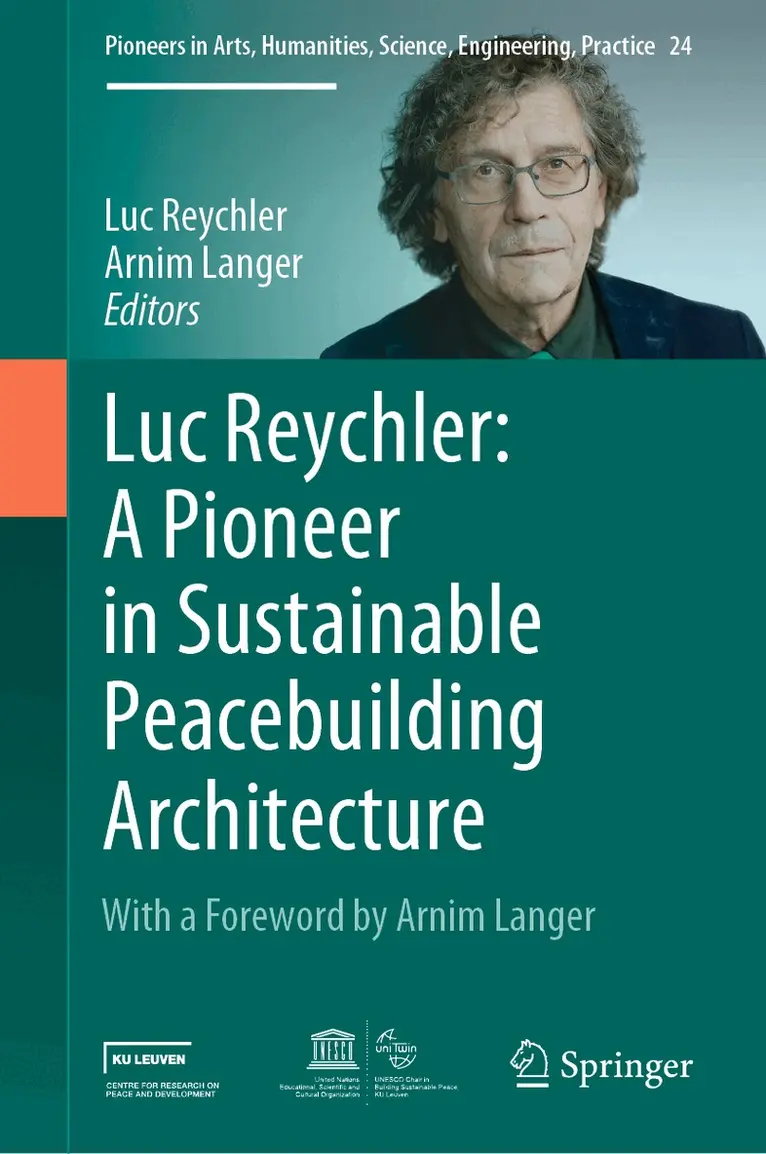
This book provides a unique personal perspective on the field of peace research. It not only highlights Luc Reychler’s significant contributions to the theory and praxis of sustainable peacebuilding, but also offers important reflections on the evolution of peace research as an independent discipline. The central concept of this book – and of Reychler’s academic career, for that matter – is sustainable peacebuilding architecture. Reychler introduced this concept in order to draw attention to the architectural principles and considerations that have to be addressed in sustainable peacebuilding processes. Reychler’s work on sustainable peacebuilding architecture has been groundbreaking and has not lost any of its relevance in the twenty-first century. By bringing together Reychler’s seminal texts on sustainable peacebuilding architecture, the current book aims to offer academics, students and policymakers an essential guide to understanding, studying and applying this crucial concept.•Provides a unique personal view of the development of peace research•Lists the necessary building blocks for sustainable peacebuilding•Offers tools for monitoring and evaluating interventions•Discusses the scientific nature and often provocative findings of peace research •Discusses ten lessons learned and the future (Peace Research III)
1 064 kr
Skickas inom 10-15 vardagar
This book provides a unique personal perspective on the field of peace research. It not only highlights Luc Reychler’s significant contributions to the theory and praxis of sustainable peacebuilding, but also offers important reflections on the evolution of peace research as an independent discipline. The central concept of this book – and of Reychler’s academic career, for that matter – is sustainable peacebuilding architecture. Reychler introduced this concept in order to draw attention to the architectural principles and considerations that have to be addressed in sustainable peacebuilding processes. Reychler’s work on sustainable peacebuilding architecture has been groundbreaking and has not lost any of its relevance in the twenty-first century. By bringing together Reychler’s seminal texts on sustainable peacebuilding architecture, the current book aims to offer academics, students and policymakers an essential guide to understanding, studying and applying this crucial concept.•Provides a unique personal view of the development of peace research•Lists the necessary building blocks for sustainable peacebuilding•Offers tools for monitoring and evaluating interventions•Discusses the scientific nature and often provocative findings of peace research •Discusses ten lessons learned and the future (Peace Research III)
Oil Wealth and Development in Uganda and Beyond
Prospects, Opportunities and Challenges
Häftad, Engelska, 2020
508 kr
Skickas inom 5-8 vardagar
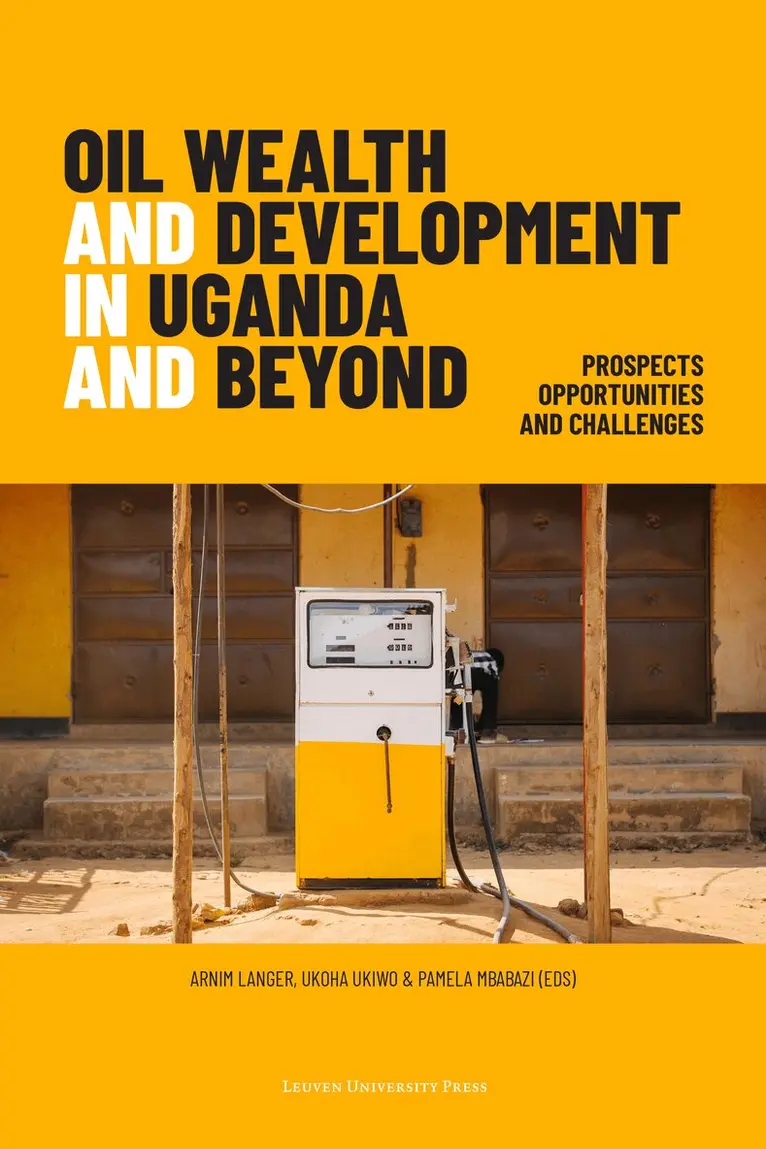
Large quantities of oil were discovered in the Albertine Rift Valley in Western Uganda in 2006. The sound management of these oil resources and revenues is undoubtedly one of the key public policy challenges for Uganda as it is for other African countries with large oil and/or gas endowments. With oil expected to start flowing in 2021, the current book analyzes how this East African country is preparing for the challenge of effectively, efficiently, and transparently managing its oil sector and resources. Adopting a multidisciplinary, comprehensive, and comparative approach, the book identifies a broad scope of issues that need to be addressed in order for Uganda to realize the full potential of its oil wealth for national economic transformation. Predominantly grounded in local scholarship and including chapters drawing on the experiences of Nigeria, Ghana, and Kenya, the book blazes a trail on governance of African oil in an era of emerging producers. Oil Wealth and Development in Uganda and Beyond will be of great interest to social scientists and economic and social policy makers in oil producing countries. It is suitable for course adoption across such disciplines as International/Global Affairs, Political Economy, Geography, Environmental Studies, Economics, Energy Studies, Development, Politics, Peace, Security and African Studies.Ebook available in Open Access. This publication is GPRC-labeled (Guaranteed Peer-Reviewed Content).Contributors: Badru Bukenya (Makerere University), Moses Isabirye (Busitema University), Wilson Bahati Kazi (Uganda Revenue Authority), Corti Paul Lakuma (Economic Policy Research Centre), Joseph Mawejje (Economic Policy Research Centre), Pamela Mbabazi (Uganda National Planning Authority), Martin Muhangi (independent researcher), Roberts Muriisa (Mbarara University of Science and Technology), Chris Byaruhanga Musiime (independent researcher), Germano Mwabu (University of Nairobi), Jackson A. Mwakali (Makerere University), Tom Owang (Mbarara University of Science and Technology), Joseph Oloka-Onyango (Makerere University), Peter Quartey (University of Ghana), Peter Wandera (Transparency International Uganda), Kathleen Brophy (Transparency International Uganda), Jaqueline Nakaiza (independent researcher), Babra Beyeza (independent researcher), Jackson Byaruhanga (Bank of Uganda), Emmanuel Abbey (University of Ghana).