250 kr
Skickas
250 kr
Skickas
704 kr
Skickas inom 10-15 vardagar
1 673 kr
Skickas inom 10-15 vardagar
1 625 kr
Skickas inom 10-15 vardagar
1 673 kr
Skickas inom 10-15 vardagar
725 kr
Skickas inom 10-15 vardagar
496 kr
Skickas inom 10-15 vardagar
409 kr
Skickas inom 10-15 vardagar
452 kr
Skickas inom 10-15 vardagar
467 kr
Skickas inom 10-15 vardagar
537 kr
Skickas inom 10-15 vardagar
1 067 kr
Skickas inom 10-15 vardagar
1 482 kr
Skickas inom 5-8 vardagar
381 kr
Skickas inom 11-20 vardagar
429 kr
Skickas inom 5-8 vardagar
415 kr
Läs direkt efter köp
415 kr
Läs direkt efter köp
1 222 kr
Kommande
1 161 kr
Skickas inom 3-6 vardagar
1 177 kr
Skickas inom 3-6 vardagar
575 kr
Läs direkt efter köp
The third edition of Reading the Middle Ages retains the strengths of previous editions—thematic and geographical diversity, clear and informative introductions, and close integration with A Short History of the Middle Ages—and adds significant new materials, especially on the Byzantine and Islamic worlds and the Mediterranean region. This volume spans the period c.300 to c.1150. The stunning "Reading through Looking" color insert, which showcases medieval artifacts, has been expanded to include essays on weapons and warfare by medievalist Riccardo Cristiani. New maps, timelines, and genealogies aid readers in following knotty but revealing sources. On the History Matters website (www.utphistorymatters.com), students have access to hundreds of Questions for Reflection.
575 kr
Läs direkt efter köp
The third edition of Reading the Middle Ages retains the strengths of previous editions—thematic and geographical diversity, clear and informative introductions, and close integration with A Short History of the Middle Ages—and adds significant new materials, especially on the Byzantine and Islamic worlds and the Mediterranean region. This volume spans the period c.900 to c.1500. The stunning "Reading through Looking" color insert, which showcases medieval artifacts, has been expanded to include essays on weapons and warfare by medievalist Riccardo Cristiani. New maps, timelines, and genealogies aid readers in following knotty but revealing sources. On the History Matters website (www.utphistorymatters.com), students have access to hundreds of Questions for Reflection.
648 kr
Skickas inom 5-8 vardagar
237 kr
Skickas inom 5-8 vardagar
263 kr
Läs direkt efter köp
What Is the History of Emotions? offers an accessible path through the thicket of approaches, debates, and past and current trends in the history of emotions. Although historians have always talked about how people felt in the past, it is only in the last two decades that they have found systematic and well-grounded ways to treat the topic. Rosenwein and Cristiani begin with the science of emotion, explaining what contemporary psychologists and neuropsychologists think emotions are. They continue with the major early, foundational approaches to the history of emotions, and they treat in depth new work that emphasizes the role of the body and its gestures. Along the way, they discuss how ideas about emotions and their history have been incorporated into modern literature and technology, from children''s books to videogames. Students, teachers, and anyone else interested in emotions and how to think about them historically will find this book to be an indispensable and fascinating guide not only to the past but to what may lie ahead.
118 kr
Skickas inom 5-8 vardagar
212 kr
Läs direkt efter köp
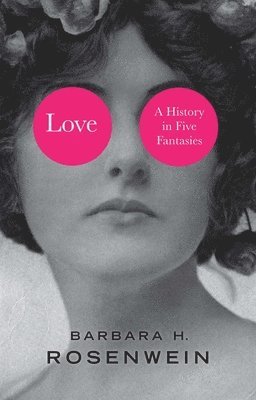
We make sense of love with fantasies, stories that shape feelings that are otherwise too overwhelming, incoherent, and wayward to be tamed. For love is a complex, bewildering, and ecstatic emotion covering a welter of different feelings and moral judgments.
Drawing on poetry, fiction, letters, memoirs, and art, and with the aid of a rich array of illustrations, historian Barbara H. Rosenwein explores five of our most enduring fantasies of love: like-minded union, transcendent rapture, selfless giving, obsessive longing, and insatiable desire. Each has had a long and tangled history with lasting effects on how we in the West think about love today. Yet each leads to a different conclusion about what we should strive for in our relationships.
If only we could peel back the layers of love and discover its “true” essence. But love doesn’t work like that; it is constructed on the shards of experience, story, and feeling, shared over time, intertwined with other fantasies. By understanding the history of how we have loved, Rosenwein argues, we may better navigate our own tumultuous experiences and perhaps write our own scripts.
1 308 kr
Läs direkt efter köp
"The rhinoceros, that is, any powerful man, is bound with a thong so that he may crush the clods of the valleys, that is, the oppressors of the humble."—Odo of Cluny, Vita Geraldi i.8To the second abbot of the great monastery at Cluny, Saint Odo, tenth-century Europe was a world filled with violent men oppressing at whim the poor and the powerless. As royal authority waned, local magnates, unrestrained by any authority, divine or human, seized the opportunity to enhance their positions. Odo, along with Cluny''s other founding spiritual and ideological leaders, created within the protective walls of the monastery a model of restraint, instituting in place of the instability of everyday life an interpretation of the Benedictine Rule that stressed ritual, order, and lawfulness. Such were the beginnings of the monastery that Pope Urban II in the eleventh century would call "the light of the world," the fountainhead of what would become one of the most far-reaching religious reform movements in European history.Barbara Rosenwein in Rhinoceros Bound focuses on Cluny''s founding and early growth within the context of a society shaped by the needs of those set adrift in the social upheaval of the tenth century. Examining in the first chapter traditional approaches to Cluniac studies, the author reveals that historians have generally considered Cluny''s eleventh-century role in church reform without analyzing the peculiar combination of forces and founders that created the Cluniac ideal and gave it its original momentum. This fundamental problem is the topic of the second chapter. She then examines how the early Cluniacs perceived the world outside the monastery and how they viewed their own world inside of it.Rosenwein concludes with a chapter on Cluny in the tenth century that combines traditional historical techniques with contemporary sociological insights. She provides in this study a significant reassessment of a period crucial to the political development of Europe, as well as a case study of institutional response to acute and political change.
1 672 kr
Skickas inom 5-8 vardagar
954 kr
Skickas inom 5-8 vardagar