Ben O'Loughlin – författare
2 220 kr
Skickas inom 10-15 vardagar
768 kr
Skickas inom 10-15 vardagar
2 325 kr
Skickas inom 10-15 vardagar
580 kr
Skickas inom 10-15 vardagar
483 kr
Skickas inom 5-8 vardagar
1 278 kr
Skickas inom 5-8 vardagar
931 kr
Skickas inom 5-8 vardagar
316 kr
Skickas inom 5-8 vardagar
351 kr
Läs direkt efter köp
War is diffused through a complex mesh of our everyday media. Paradoxically, this both facilitates and contains the presence and power of enemies near and far. The conventions of so-called traditional warfare have been splintered by the availability and connectivity of the principal locus of war today: the electronic and digital media. Hoskins and O''Loughlin identify and illuminate the conditions of what they term "diffused war" and the new challenges it raises for the actors who wage and counter warfare, for their agents and mechanisms of the new media and for mass publics.
This book offers an invaluable review of the key literature and presents a fresh approach to the understanding of the dynamic relationships between war and media. It will be welcomed by a broad range of students taking courses on war and media and related modules, especially in media, communication and cultural studies, politics and international relations, sociology, journalism, and security studies.
900 kr
Läs direkt efter köp
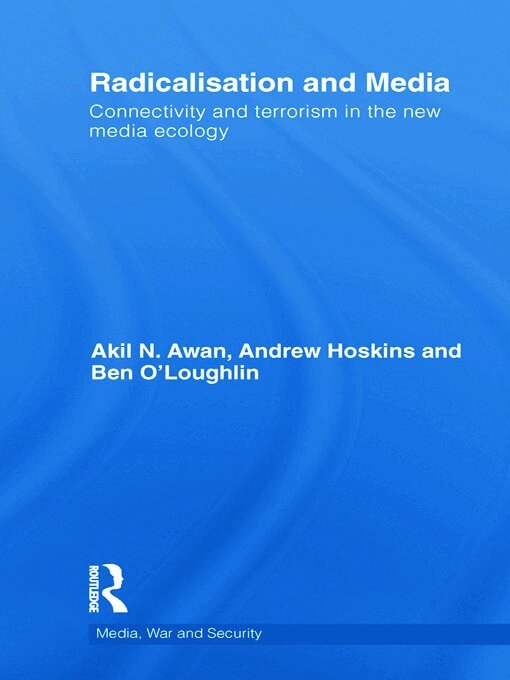
This book examines the circulation and effects of radical discourse by analysing the role of mass media coverage in promoting or hindering radicalisation and acts of political violence.
There is a new environment of conflict in the post-9/11 age, in which there appears to be emerging threats to security and stability in the shape of individuals and groups holding or espousing radical views about religion, ideology, often represented in the media as oppositional to Western values. This book asks what, if anything is new about these radicalising discourses, how and why they relate to political acts of violence and terror, and what the role of the mass media is in promoting or hindering them.
This includes exploring how the acts themselves and explanations for them on the web are picked up and represented in mainstream television news media or Big Media, through the journalistic and editorial uses of words, phrases, graphics, images, and videos. It analyses how interpretations of the term ''radicalisation'' are shaped by news representations through investigating audience responses, understandings and misunderstandings. Transnational in scope, this book seeks to contribute to an understanding of the connectivity and relationships that make up the new media ecology, especially those that appear to transcend the local and the global, accelerate the dissemination of radicalising discourses, and amplify media/public fears of political violence.
This book will be of interest to students of security studies, media studies, terrorism studies, political science and sociology.
892 kr
Läs direkt efter köp
This book examines the circulation and effects of radical discourse by analysing the role of mass media coverage in promoting or hindering radicalisation and acts of political violence.
There is a new environment of conflict in the post-9/11 age, in which there appears to be emerging threats to security and stability in the shape of individuals and groups holding or espousing radical views about religion, ideology, often represented in the media as oppositional to Western values. This book asks what, if anything is new about these radicalising discourses, how and why they relate to political acts of violence and terror, and what the role of the mass media is in promoting or hindering them.
This includes exploring how the acts themselves and explanations for them on the web are picked up and represented in mainstream television news media or Big Media, through the journalistic and editorial uses of words, phrases, graphics, images, and videos. It analyses how interpretations of the term ''radicalisation'' are shaped by news representations through investigating audience responses, understandings and misunderstandings. Transnational in scope, this book seeks to contribute to an understanding of the connectivity and relationships that make up the new media ecology, especially those that appear to transcend the local and the global, accelerate the dissemination of radicalising discourses, and amplify media/public fears of political violence.
This book will be of interest to students of security studies, media studies, terrorism studies, political science and sociology.
682 kr
Läs direkt efter köp
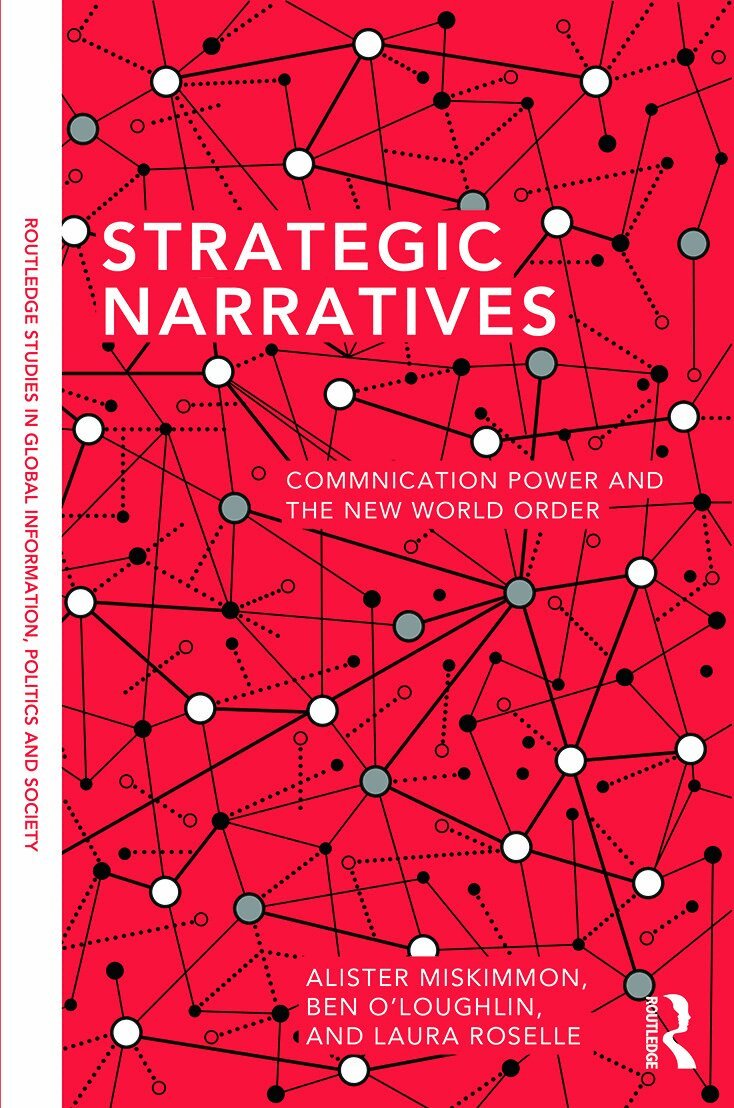
Communication is central to how we understand international affairs. Political leaders, diplomats, and citizens recognize that communication shapes global politics. This has only been amplified in a new media environment characterized by Internet access to information, social media, and the transformation of who can communicate and how. Soft power, public diplomacy 2.0, network power – scholars and policymakers are concerned with understanding what is happening.
This book is the first to develop a systematic framework to understand how political actors seek to shape order through narrative projection in this new environment. To explain the changing world order – the rise of the BRICS, the dilemmas of climate change, poverty and terrorism, the intractability of conflict – the authors explore how actors form and project narratives and how third parties interpret and interact with these narratives. The concept of strategic narrative draws together the most salient of international relations concepts, including the links between power and ideas; international and domestic; and state and non-state actors. The book is anchored around four themes: order, actors, uncertainty, and contestation. Through these, Strategic Narratives shows both the possibilities and the limits of communication and power, and makes an important contribution to theorizing and studying empirically contemporary international relations.
International Studies Association: International Communication Best Book Award
682 kr
Läs direkt efter köp
Communication is central to how we understand international affairs. Political leaders, diplomats, and citizens recognize that communication shapes global politics. This has only been amplified in a new media environment characterized by Internet access to information, social media, and the transformation of who can communicate and how. Soft power, public diplomacy 2.0, network power – scholars and policymakers are concerned with understanding what is happening.
This book is the first to develop a systematic framework to understand how political actors seek to shape order through narrative projection in this new environment. To explain the changing world order – the rise of the BRICS, the dilemmas of climate change, poverty and terrorism, the intractability of conflict – the authors explore how actors form and project narratives and how third parties interpret and interact with these narratives. The concept of strategic narrative draws together the most salient of international relations concepts, including the links between power and ideas; international and domestic; and state and non-state actors. The book is anchored around four themes: order, actors, uncertainty, and contestation. Through these, Strategic Narratives shows both the possibilities and the limits of communication and power, and makes an important contribution to theorizing and studying empirically contemporary international relations.
International Studies Association: International Communication Best Book Award
467 kr
Läs direkt efter köp
467 kr
Läs direkt efter köp
1 640 kr
Skickas inom 10-15 vardagar
443 kr
Skickas inom 10-15 vardagar
1 512 kr
Skickas inom 10-15 vardagar
1 841 kr
Läs direkt efter köp
1 512 kr
Skickas inom 10-15 vardagar