Jinghan Zeng – Författare
Visar alla böcker från författaren Jinghan Zeng. Handla med fri frakt och snabb leverans.
7 produkter
7 produkter
Chinese Communist Party's Capacity to Rule
Ideology, Legitimacy and Party Cohesion
Inbunden, Engelska, 2015
1 167 kr
Skickas inom 10-15 vardagar
Why did the Chinese Communist Party (CCP) not follow the failure of the communist regimes in Eastern Europe and the Soviet Union? This book examines this question by studying two crucial strategies that the CCP feels it needs to implement in order to remain in power: ideological reform and the institutionalization of leadership succession.
1 484 kr
Skickas inom 10-15 vardagar
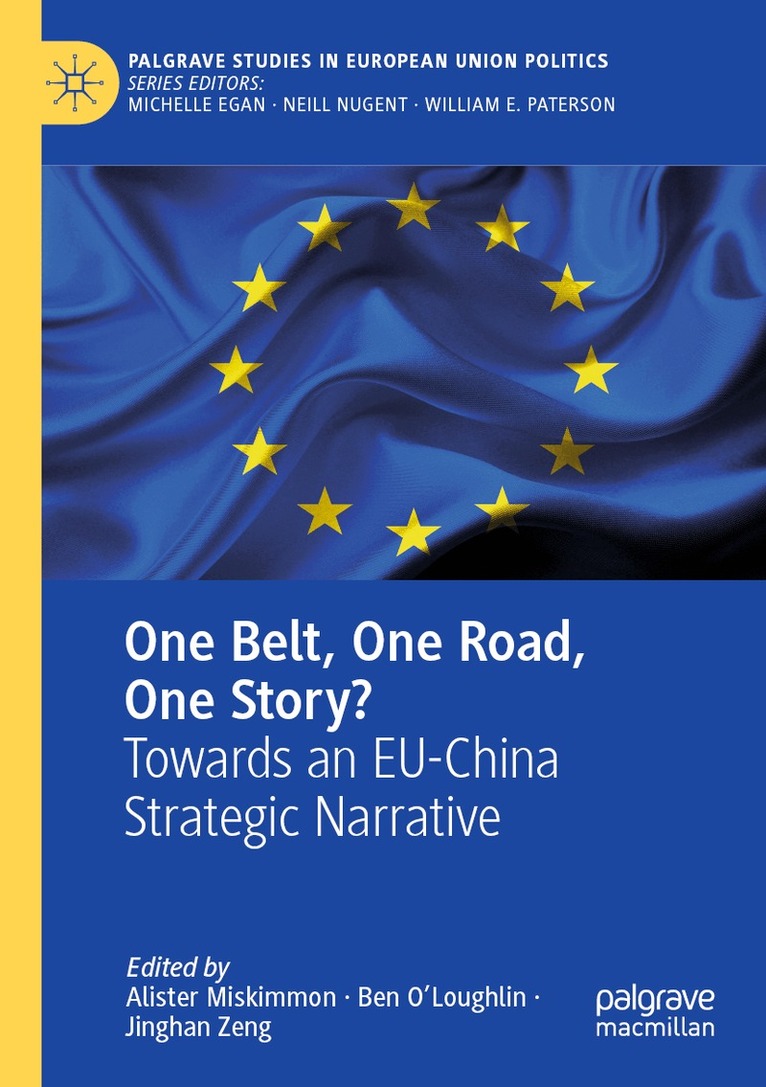
The Belt and Road Initiative, alongside the other policy areas addressed in the chapters, offers ways for people in Europe and China to get to know one another in new ways, and for the EU and its member states and the Chinese state to forge new partnerships.
1 484 kr
Skickas inom 10-15 vardagar
The Belt and Road Initiative, alongside the other policy areas addressed in the chapters, offers ways for people in Europe and China to get to know one another in new ways, and for the EU and its member states and the Chinese state to forge new partnerships.
1 378 kr
Skickas inom 10-15 vardagar
This book studies the three most important Chinese foreign policy concepts under Xi Jinping’s leadership – “New Type of Great Power Relations”, “Belt and Road Initiative” and “Community of Shared Future for Mankind”.
1 378 kr
Skickas inom 10-15 vardagar
This book studies the three most important Chinese foreign policy concepts under Xi Jinping’s leadership – “New Type of Great Power Relations”, “Belt and Road Initiative” and “Community of Shared Future for Mankind”.
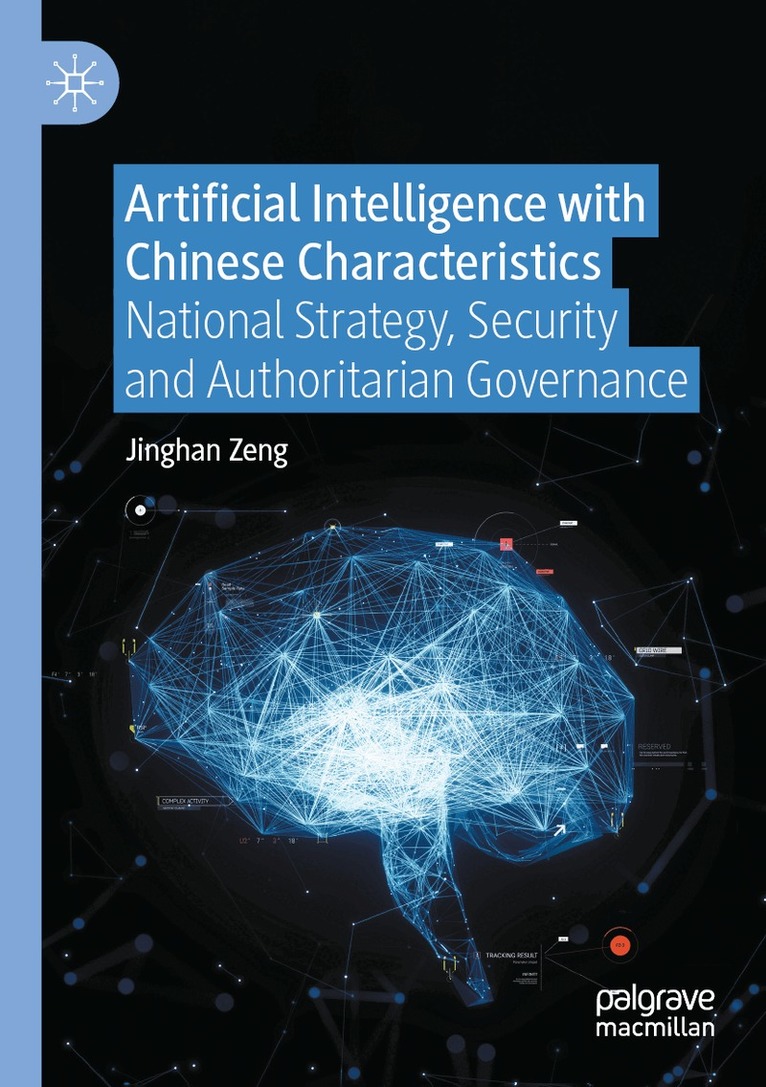
Artificial Intelligence with Chinese Characteristics
National Strategy, Security and Authoritarian Governance
Häftad, Engelska, 2022
326 kr
Skickas inom 10-15 vardagar
“This book provides the first book-lengthy study focusing on Artificial Intelligence (AI) with Chinese characteristics, in line with China’s open ambition of becoming an AI superpower by 2030. China’s unique domestic politics has developed distinct characteristics for its AI approach. By analysing national strategy, security and governance aspects of AI in China, this book argues that China’s AI approach is sophisticated and multifaceted, and it has brought about both considerable benefits and challenges to China. First, many characterize China’s AI approach as a nationally concerted top-down geopolitical strategy to advance Beijing’s unified objective. This book argues that this view is mistaken. It shows that China’s AI politics is largely shaped by economically rather than geopolitically motivated domestic stakeholders. In addition, China’s national AI plan is an upgrade of existing local AI initiatives to the national level, reflecting a bottom-up development.Thus, China’s AI strategy is more of a political manifesto rather than a concrete policy plan. The second part of the book discusses how the Chinese central government has been securitizing AI in order to mobilize local states, market actors, intellectuals and the general public. This security discourse is built on China’s historical anxieties about technology, regime security needs and the growing tension caused by great power competition. Despite its help in convincing domestic actors, however, this securitization trend may undermine key AI objectives. The third part of the book studies the Chinese governance approach to the use of AI. It argues that China’s bold AI practices are part of its broad and incoherent adaptation strategy to governance by digital means. AI is part of a digital technology package that the Chinese authoritarian regime has actively employed not only to improve public services but also to strengthen its authoritarian governance. While China’s AI progress benefits from its unique political and social environment, its ambitious AI plan contains considerable risks. China’s approach is gambling on its success in (a) delivering a booming AI economy, (b) ensuring a smooth social transformation to the age of AI, and (c) proving ideological superiority of its authoritarian and communist values.This book suggests that a more accurate understanding of AI with Chinese characteristics is essential in order to inform the debate regarding what lessons can be learnt from China’s AI approach and how to respond to China’s rise as the AI leader if not superpower.”

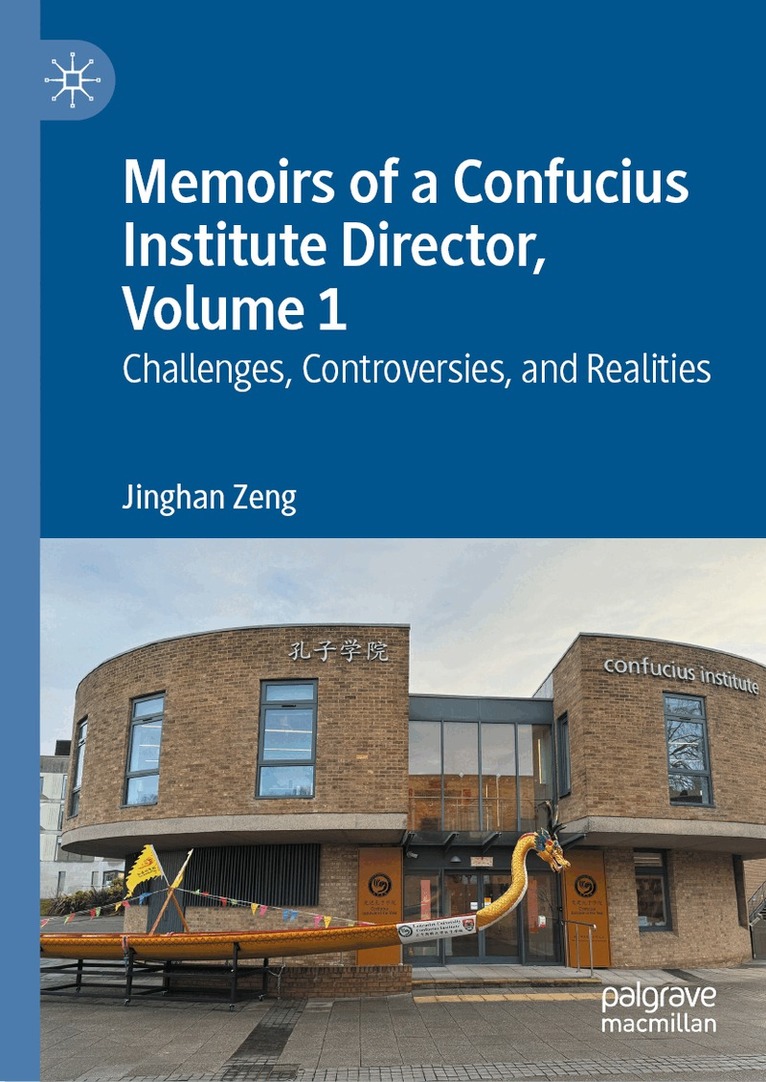
Memoirs of a Confucius Institute Director, Volume 1
Challenges, Controversies, and Realities
Inbunden, Engelska, 2025
1 378 kr
Skickas inom 10-15 vardagar
As China’s flagship platform for cultural diplomacy and international engagement, the global expansion of Confucius Institutes has been accompanied by growing controversy—particularly in the West. This book—and the volumes that follow—is the first of its kind to demystify Confucius Institutes through the personal account of a director. Drawing on the author’s unique background as a Chinese national serving as a UK director and a scholar of Chinese politics, this book offers a rare and nuanced perspective on a deeply contested issue. During the author’s over six-year directorship, his Confucius Institute became an award-winning organisation, receiving recognition both internally and externally. At the same time, he led the Institute in overcoming a series of existential and structural challenges—from navigating the disruptions caused by the COVID-19 pandemic and adapting to the dissolution of the Confucius Institute Headquarters, to responding to the UK’s then-ruling party’s campaign to ban Confucius Institutes. This book offers behind-the-scenes insights into key leadership decisions, internal and external challenges, and the pivotal events that shaped this turbulent era. It also directly addresses the prevailing accusations against Confucius Institutes—that they operate as instruments of propaganda, geopolitical influence, or even espionage, and that they compromise academic freedom or surveil Chinese students abroad. These claims are critically examined through the lens of the author’s lived experience, exposing how political and media narratives in the West often amplify legitimate concerns while oversimplifying complexities and misrepresenting on-the-ground realities.