David D. Kumar – författare
Visar alla böcker från författaren David D. Kumar. Handla med fri frakt och snabb leverans.
4 produkter
4 produkter
Del 6 - Innovations in Science Education and Technology
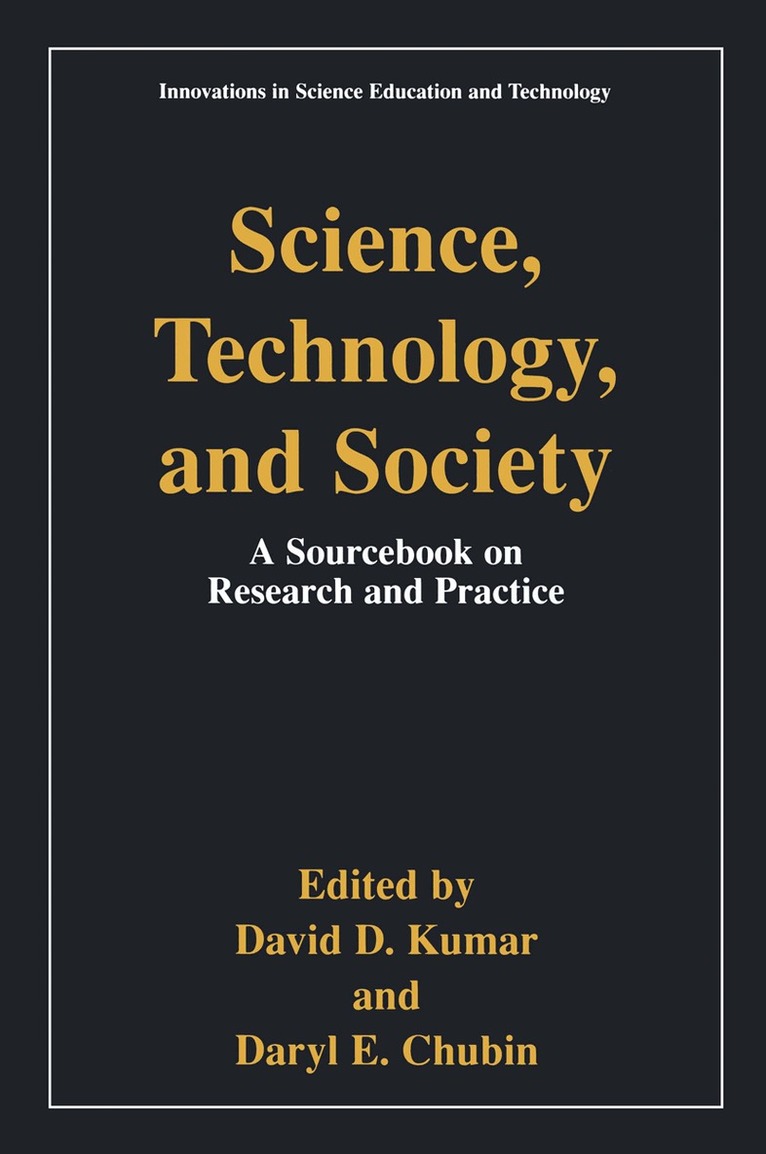
Science, Technology, and Society
Education A Sourcebook on Research and Practice
Häftad, Engelska, 2000
976 kr
Skickas inom 10-15 vardagar
David D. Kumar and Daryl E. Chubin We live in an information age. Technology abounds: information tech nology, communication technology, learning technology. As a once popular song went, "Something's happening here, but it's just not exactly clear." The world appears to be a smaller, less remote place. We live in it, but we are not necessarily closely tied to it. We lack a satisfactory understanding of it. So we are left with a paradox: In an information age, information alone will neither inform nor improve us as citizens nor our democracy, society, or in stitutions. No, improvement will take some effort. It is a heavy burden to be reflective, indeed analytical, and disciplined but only constructively constrained by different perspectives. The science-based technology that makes for the complexity, contro versy, and uncertainty of life sows the seeds of understanding in Science, Technology, and Society. STS, as it is known, encompasses a hybrid area of scholarship now nearly three decades old. As D. R. Sarewitz,a former geologist now congressional staffer and an author, put it After all, the important and often controversial policy dilemmas posed by issues such as nuclear energy, toxic waste disposal, global climate change, or biotech nology cannot be resolved by authoritative scientific knowledge; instead, they must involve a balancing of technical considerations with other criteria that are explicitly nonscientific: ethics, esthetics, equity, ideology. Trade-offs must be made in light of inevitable uncertainties (Sarewitz, 1996, p. 182).
Del 14 - Innovations in Science Education and Technology
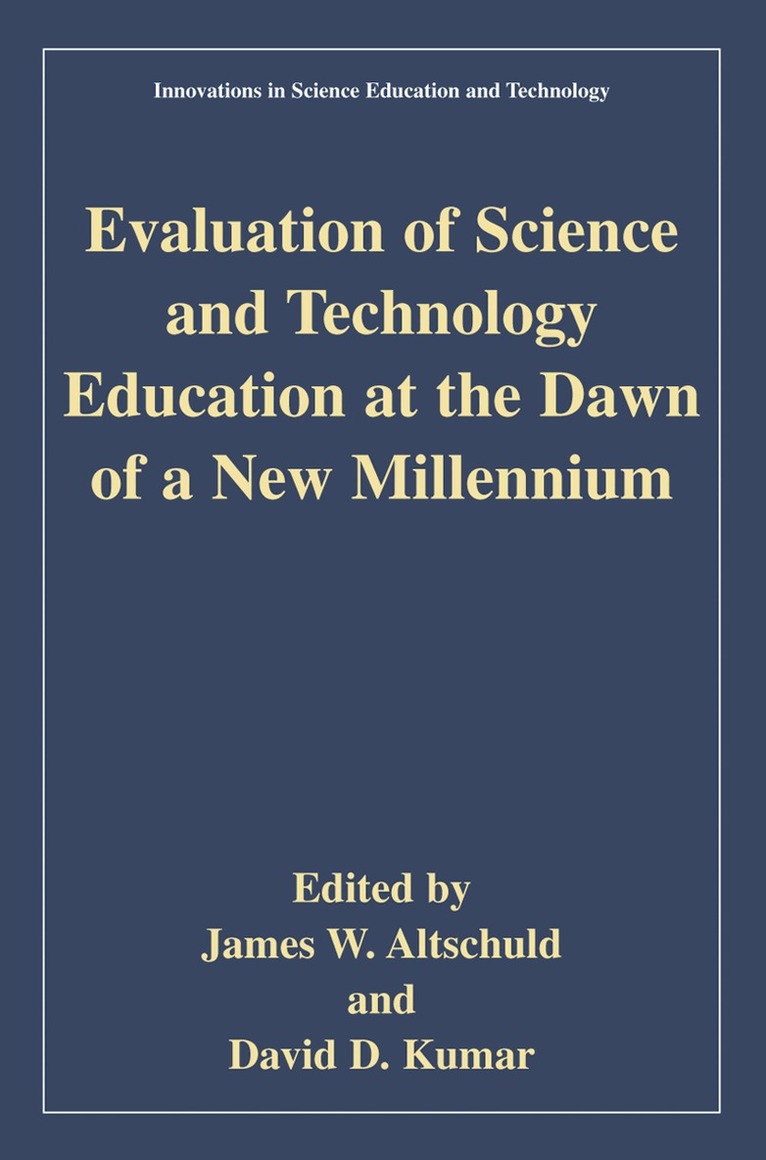
Evaluation of Science and Technology Education at the Dawn of a New Millennium
Häftad, Engelska, 2002
530 kr
Skickas inom 10-15 vardagar
"James Altschuld, David Kumar, and their chapter authors have produced an upbeat, provocative, visionary, and useful volume on educational evaluation. Of special utility is its grounding in issues and practices relating to evaluations of science and technology education. The book should appeal and be useful to a wide range of persons involved in evaluations of educational policy, programs, and (less so) science teachers. These persons include science and technology education experts, educational policymakers, officials of the National Science Foundation, school administrators, classroom teachers, evaluation instructors, evaluation methodologists, practicing evaluators, and test developers, among others. Contents reflecting international studies of curriculum, evaluation of distance education, and evaluation of technology utilization in Australian schools, as well as evaluations in America should make the book appealing to an international audience. Moreover, it provides a global perspective for assessing and strengthening educational evaluation in the US." Daniel L. Stufflebeam, Professor of Education and Director of the Evaluation Center, Western Michigan University For contents, contributors and a free preview: www.new-in-education.com
E-bok
PDF, Engelska, 2006712 kr
Läs direkt efter köp
"James Altschuld, David Kumar, and their chapter authors have produced an upbeat, provocative, visionary, and useful volume on educational evaluation. Of special utility is its grounding in issues and practices relating to evaluations of science and technology education. The book should appeal and be useful to a wide range of persons involved in evaluations of educational policy, programs, and (less so) science teachers. These persons include science and technology education experts, educational policymakers, officials of the National Science Foundation, school administrators, classroom teachers, evaluation instructors, evaluation methodologists, practicing evaluators, and test developers, among others. Contents reflecting international studies of curriculum, evaluation of distance education, and evaluation of technology utilization in Australian schools, as well as evaluations in America should make the book appealing to an international audience. Moreover, it provides a global perspective for assessing and strengthening educational evaluation in the US." Daniel L. Stufflebeam, Professor of Education and Director of the Evaluation Center, Western Michigan University For contents, contributors and a free preview: www.new-in-education.com
E-bok
PDF, Engelska, 20121 223 kr
Läs direkt efter köp
David D. Kumar and Daryl E. Chubin We live in an information age. Technology abounds: information tech nology, communication technology, learning technology. As a once popular song went, "Something''s happening here, but it''s just not exactly clear." The world appears to be a smaller, less remote place. We live in it, but we are not necessarily closely tied to it. We lack a satisfactory understanding of it. So we are left with a paradox: In an information age, information alone will neither inform nor improve us as citizens nor our democracy, society, or in stitutions. No, improvement will take some effort. It is a heavy burden to be reflective, indeed analytical, and disciplined but only constructively constrained by different perspectives. The science-based technology that makes for the complexity, contro versy, and uncertainty of life sows the seeds of understanding in Science, Technology, and Society. STS, as it is known, encompasses a hybrid area of scholarship now nearly three decades old. As D. R. Sarewitz,a former geologist now congressional staffer and an author, put it After all, the important and often controversial policy dilemmas posed by issues such as nuclear energy, toxic waste disposal, global climate change, or biotech nology cannot be resolved by authoritative scientific knowledge; instead, they must involve a balancing of technical considerations with other criteria that are explicitly nonscientific: ethics, esthetics, equity, ideology. Trade-offs must be made in light of inevitable uncertainties (Sarewitz, 1996, p. 182).