David S. Jones – författare
358 kr
Läs direkt efter köp
How race as a category—reinforced by new discoveries in genetics—is used as a basis for practice and policy in law, science, and medicine.
The post–civil rights era perspective of many scientists and scholars was that race was nothing more than a social construction. Recently, however, the relevance of race as a social, legal, and medical category has been reinvigorated by science, especially by discoveries in genetics. Although in 2000 the Human Genome Project reported that humans shared 99.9 percent of their genetic code, scientists soon began to argue that the degree of variation was actually greater than this, and that this variation maps naturally onto conventional categories of race. In the context of this rejuvenated biology of race, the contributors to What''s the Use of Race? Investigate whether race can be a category of analysis without reinforcing it as a basis for discrimination. Can policies that aim to alleviate inequality inadvertently increase it by reifying race differences? The essays focus on contemporary questions at the cutting edge of genetics and governance, examining them from the perspectives of law, science, and medicine. The book follows the use of race in three domains of governance: ruling, knowing, and caring. Contributors first examine the use of race and genetics in the courtroom, law enforcement, and scientific oversight; then explore the ways that race becomes, implicitly or explicitly, part of the genomic science that attempts to address human diversity; and finally investigate how race is used to understand and act on inequities in health and disease. Answering these questions is essential for setting policies for biology and citizenship in the twenty-first century.
3 792 kr
Skickas inom 10-15 vardagar
720 kr
Skickas inom 10-15 vardagar
629 kr
Skickas inom 10-15 vardagar
2 438 kr
Skickas inom 10-15 vardagar
541 kr
Skickas inom 5-8 vardagar
692 kr
Läs direkt efter köp
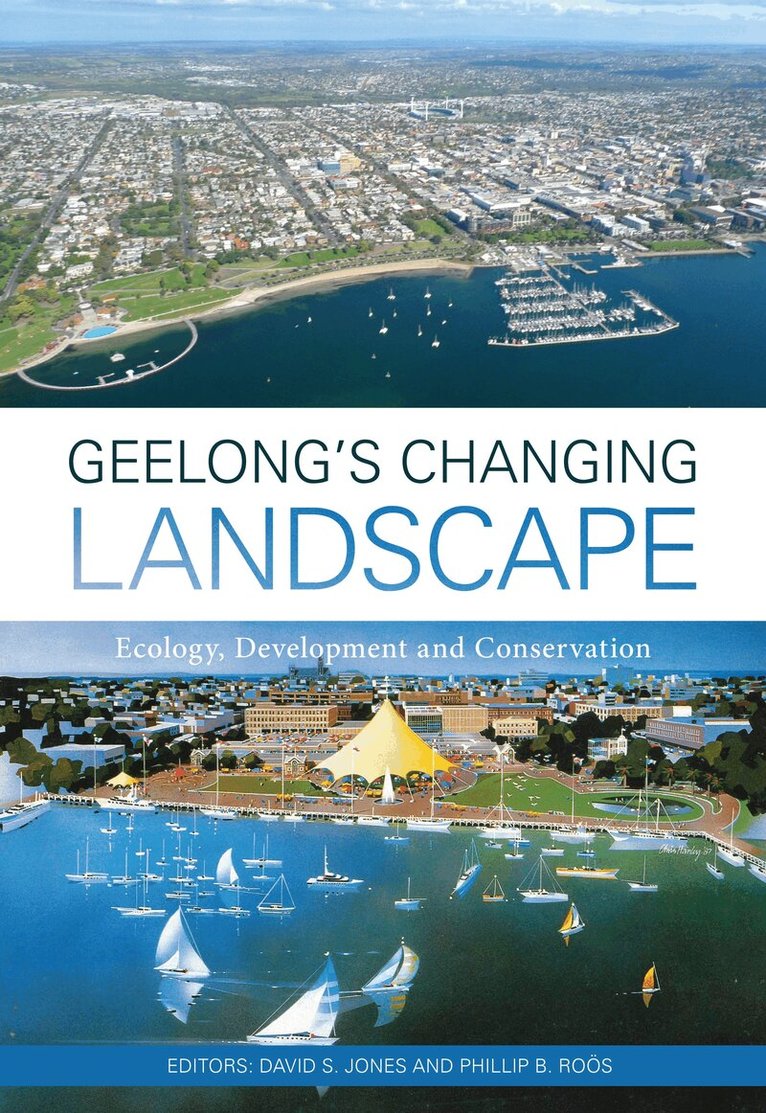
Geelong''s Changing Landscape offers an insightful investigation of the ecological history of the Geelong and Bellarine Peninsula region. Commencing with the penetrating perspectives of Wadawurrung Elders, chapters explore colonisation and post-World War II industrial development through to the present challenges surrounding the ongoing urbanisation of this region.
Expert contributors provide thoughtful analysis of the ecological and cultural characteristics of the landscape, the impact of past actions, and options for ethical future management of the region. This book will be of value to scientists, engineers, land use planners, environmentalists and historians.
Winner, Planning Institute of Australia Awards for Planning Excellence 2020 (Victoria): Cutting Edge Research and TeachingShortlisted, 2020 Victorian Community History Awards: Collaborative Community History Award
378 kr
Skickas inom 7-10 vardagar
849 kr
Läs direkt efter köp
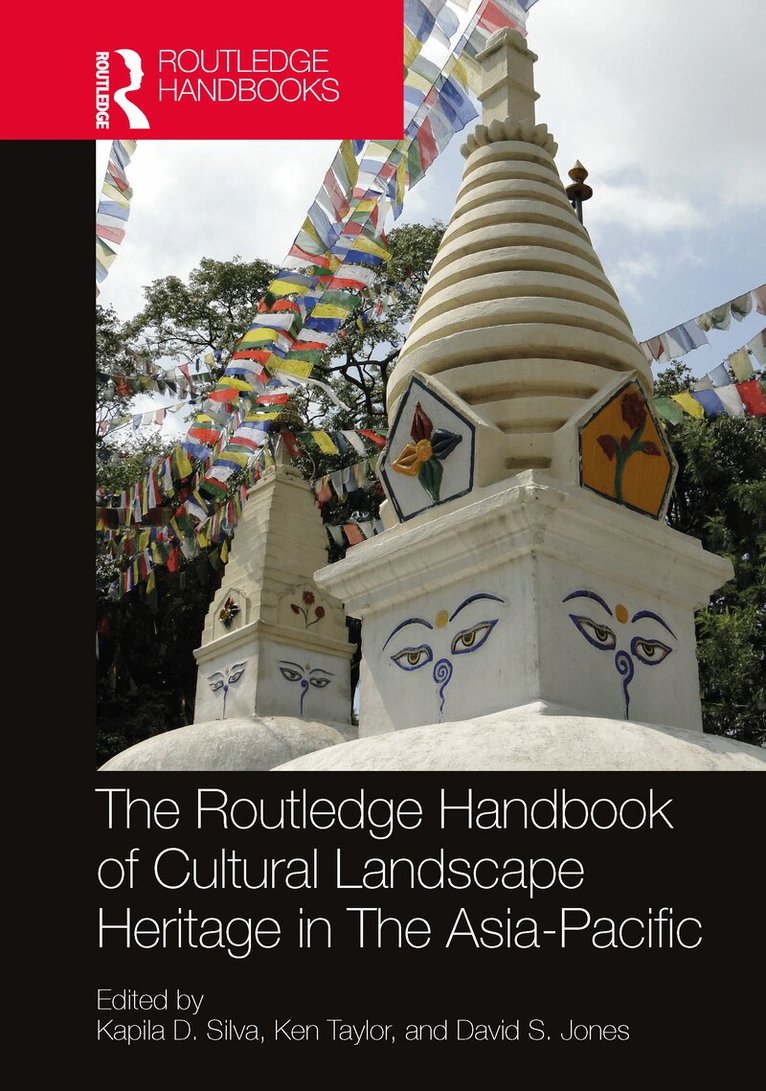
The Routledge Handbook of Cultural Landscape Heritage in the Asia-Pacific revisits the use, growth, and potential of the cultural landscape methodology in the conservation and management of culture-nature heritage in the Asia-Pacific region.
Taking both a retrospective and prospective view of the management of cultural heritage in the region, this volume argues that the plurality and complexity of heritage in the region cannot be comprehensively understood and effectively managed without a broader conceptual framework like the cultural landscape approach. The book also demonstrates that such an approach facilitates the development of a flexible strategy for heritage conservation. Acknowledging the effects of rapid socio-economic development, globalization, and climate change, contributors examine the pressure these issues place on the sustenance of cultural heritage. Including chapters from more than 20 countries across the Asia-Pacific region, the volume reviews the effectiveness of theoretical and practical potentials afforded by the cultural landscape approach and examines how they have been utilized in the Asia-Pacific context for the last three decades.
The Routledge Handbook of Cultural Landscape Heritage in the Asia-Pacific provides a comprehensive analysis of the processes of cultural landscape heritage conservation and management. As a result, it will be of interest to academics, students, and professionals who are based in the fields of cultural heritage management, architecture, urban planning, landscape architecture, and landscape management.
849 kr
Läs direkt efter köp
The Routledge Handbook of Cultural Landscape Heritage in the Asia-Pacific revisits the use, growth, and potential of the cultural landscape methodology in the conservation and management of culture-nature heritage in the Asia-Pacific region.
Taking both a retrospective and prospective view of the management of cultural heritage in the region, this volume argues that the plurality and complexity of heritage in the region cannot be comprehensively understood and effectively managed without a broader conceptual framework like the cultural landscape approach. The book also demonstrates that such an approach facilitates the development of a flexible strategy for heritage conservation. Acknowledging the effects of rapid socio-economic development, globalization, and climate change, contributors examine the pressure these issues place on the sustenance of cultural heritage. Including chapters from more than 20 countries across the Asia-Pacific region, the volume reviews the effectiveness of theoretical and practical potentials afforded by the cultural landscape approach and examines how they have been utilized in the Asia-Pacific context for the last three decades.
The Routledge Handbook of Cultural Landscape Heritage in the Asia-Pacific provides a comprehensive analysis of the processes of cultural landscape heritage conservation and management. As a result, it will be of interest to academics, students, and professionals who are based in the fields of cultural heritage management, architecture, urban planning, landscape architecture, and landscape management.
706 kr
Läs direkt efter köp
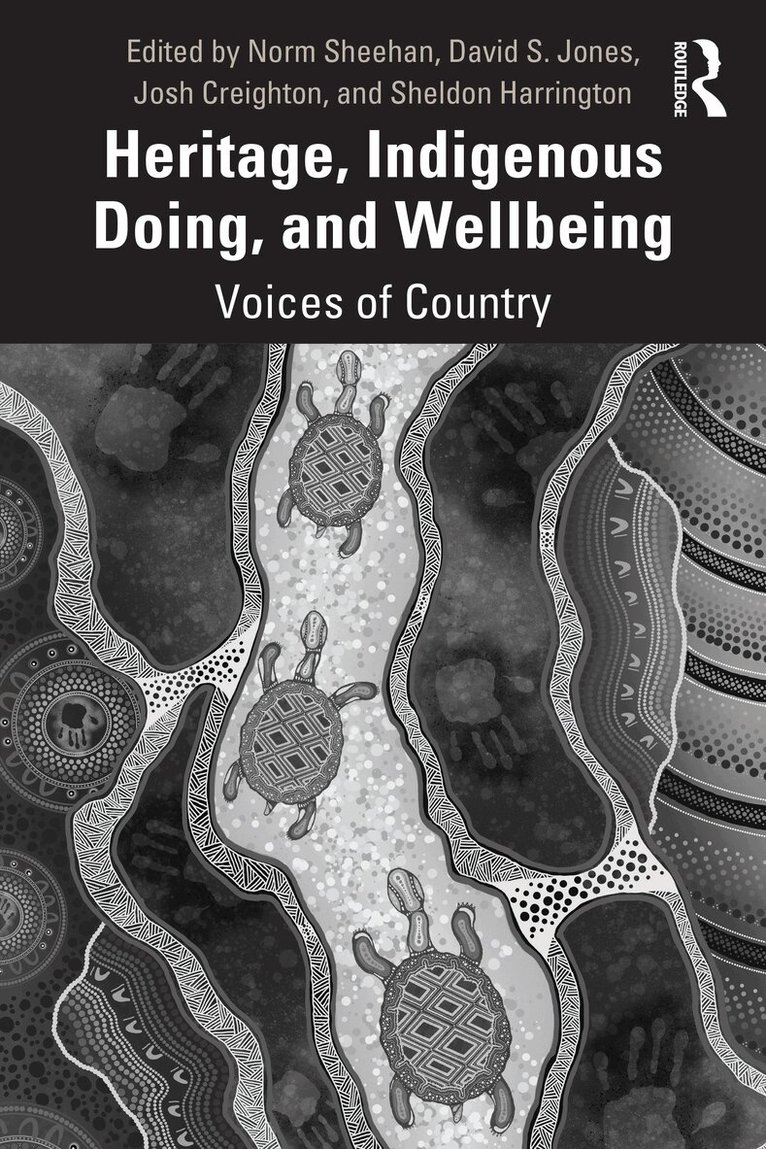
Heritage, Indigenous Doing and Wellbeing presents an Aboriginal Australian relational understanding of the world that offers a counter-narrative to the Western notion of heritage and new insights into the potential for sustaining the complex systems that support all life.
From an Indigenous Australian perspective, the Western concept of heritage is intentionally exclusionary and supports social, political, economic, and environmental injustice. Aboriginal People engage with landscape every day in entirely, different ways, seeing Country as a living ‘heritage’, but in a unique relationship form that engages the individual with place, ancestors, language, and wellbeing. However, Country is most often relegated by heritage proponents to ‘intangible heritage’, and this results in the concept having little legislative, legal, or administrative weight. Drawing on a common understanding of Country as sacred, living, and sentient, rather than as objectified property or resource, the contributors to this book explore a diversity of relationships with Country that demonstrate the richness and the practical utility of this relational understanding.
Heritage, Indigenous Doing, and Wellbeing foregrounds the voices of Australian Aboriginal People who are involved in ‘Caring for Country’. It will be an essential resource for those engaged in the study of Country, heritage, museums, Indigenous Peoples, landscape architecture, environmental studies, planning, and archaeology. It will also be of great interest to heritage practitioners working around the globe.
706 kr
Läs direkt efter köp
Heritage, Indigenous Doing and Wellbeing presents an Aboriginal Australian relational understanding of the world that offers a counter-narrative to the Western notion of heritage and new insights into the potential for sustaining the complex systems that support all life.
From an Indigenous Australian perspective, the Western concept of heritage is intentionally exclusionary and supports social, political, economic, and environmental injustice. Aboriginal People engage with landscape every day in entirely, different ways, seeing Country as a living ‘heritage’, but in a unique relationship form that engages the individual with place, ancestors, language, and wellbeing. However, Country is most often relegated by heritage proponents to ‘intangible heritage’, and this results in the concept having little legislative, legal, or administrative weight. Drawing on a common understanding of Country as sacred, living, and sentient, rather than as objectified property or resource, the contributors to this book explore a diversity of relationships with Country that demonstrate the richness and the practical utility of this relational understanding.
Heritage, Indigenous Doing, and Wellbeing foregrounds the voices of Australian Aboriginal People who are involved in ‘Caring for Country’. It will be an essential resource for those engaged in the study of Country, heritage, museums, Indigenous Peoples, landscape architecture, environmental studies, planning, and archaeology. It will also be of great interest to heritage practitioners working around the globe.
431 kr
Skickas inom 5-8 vardagar
235 kr
Skickas inom 5-8 vardagar
133 kr
Läs direkt efter köp
673 kr
Skickas inom 10-15 vardagar
896 kr
Läs direkt efter köp
673 kr
Skickas inom 10-15 vardagar
1 560 kr
Skickas inom 10-15 vardagar
1 907 kr
Läs direkt efter köp
1 560 kr
Skickas inom 10-15 vardagar
1 918 kr
Kommande
451 kr
Skickas inom 10-15 vardagar
571 kr
Läs direkt efter köp
1 192 kr
Skickas inom 10-15 vardagar
1 582 kr
Läs direkt efter köp
This book offers a fresh perspective on the historical, economic, and cultural foundations of capitalism, cities, and climate change. By exploring the intersection of urbanization, consumerism, and colonialism, the book sheds new light on the origins and development of the economic system that has shaped our world today. What sets this book apart is its unique approach, which challenges conventional wisdom and offers new insights into the complex relationships between culture, politics, and economics. The book is intended for readers interested in the history and evolution of capitalism and its impact on society, as well as those interested in climate change and urbanization. The content level is accessible for general readers, yet sophisticated enough to appeal to scholars and researchers. The two most important features of the book are its fresh perspective on the history of mercantilism and its examination of the economic landscape of cities and climate change. By reading this book, readers gain a deeper understanding of the complex relationships between urbanization, colonialism, and economic policies, and their impact on contemporary society.
1 192 kr
Skickas inom 10-15 vardagar
1 299 kr
Skickas inom 10-15 vardagar
1 214 kr
Läs direkt efter köp
Planning for Urban Country addresses a major gap in knowledge about the translation of Aboriginal values and Country Plans into Australia’s built environment contexts. How do you ‘heal’ Country if it has been devastated by concrete and bitumen, excavations and bulldozing, weeds and introduced plants and animals, and surface, aerial and underground contaminants? How then do Aboriginal values and Country Plan aspirations address urban environments? In this book, David S. Jones explores the major First Nations-informed design and planning transformations in Djilang / Greater Geelong since 2020. Included are short-interlinked essays about the political and cultural context, profiles of key exemplar architectural, landscape and corridor projects, a deep explanation of the legislative, policy and statutory precedents, opportunities and environment that has enabled these opportunities, and the how Wadawurrung past-present-future values have been scaffolded into these changes.
922 kr
Skickas inom 10-15 vardagar