Diego De Brasi - Böcker
Visar alla böcker från författaren Diego De Brasi. Handla med fri frakt och snabb leverans.
2 produkter
2 produkter
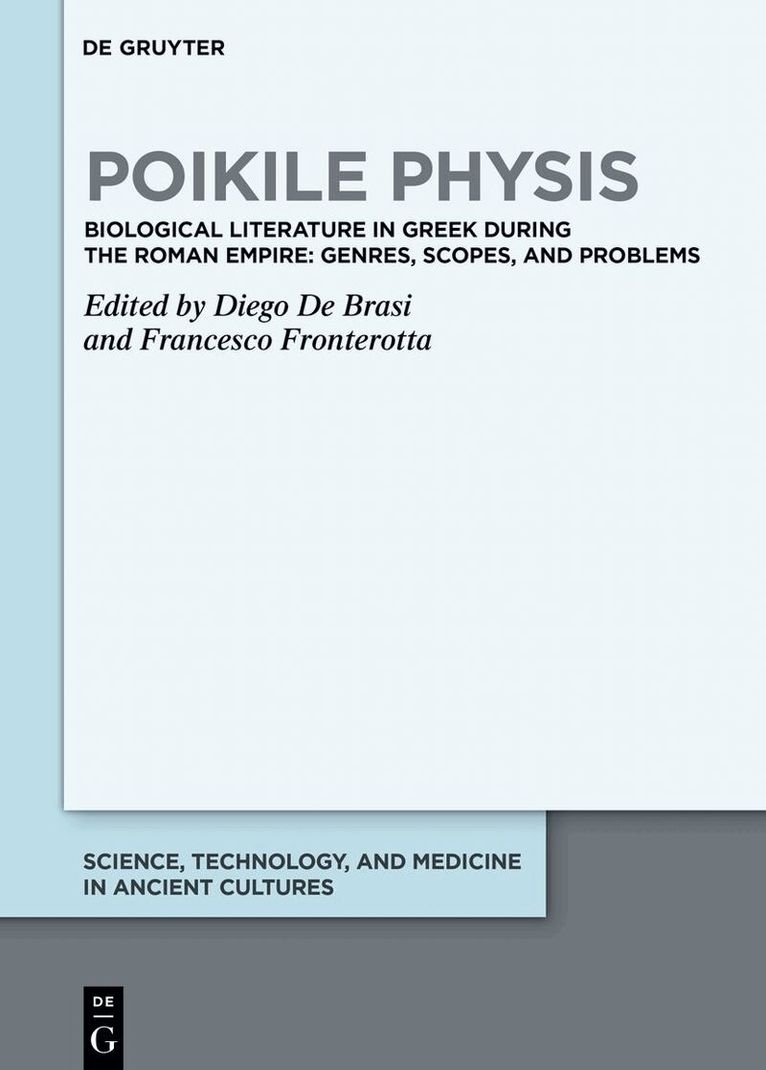
Poikile Physis
Biological Literature in Greek during the Roman Empire: Genres, Scopes, and Problems
Inbunden, Engelska, 2022
1 507 kr
Skickas inom 5-8 vardagar
Biological literature of the Roman imperial period remains somehow ‘underestimated’. It is even quite difficult to speak of biological literature for this period at all: biology (apart from medicine) did not represent, indeed, a specific ‘subgenre’ of scientific literature. Nevertheless, writings as disparate as Philo of Alexandria’s Alexander, Plutarch’s De sollertia animalium or Bruta ratione uti, Aelian’s De Natura Animalium, Oppian’s Halieutika, Pseudo-Oppian’s Kynegetika, and Basil of Caeserea’s Homilies on the Creation engage with zoological, anatomic, or botanical questions. Poikile Physis examines how such writings appropriate, adapt, classify, re-elaborate and present biological knowledge which originated within the previous, mainly Aristotelian, tradition. It offers a holistic approach to these works by considering their reception of scientific material, their literary as well as rhetorical aspects, and their interaction with different socio-cultural conditions. The result of an interdisciplinary discussion among scholars of Greek studies, philosophy and history of science, the volume provides an initial analysis of forms and functions of biological literature in the imperial period.
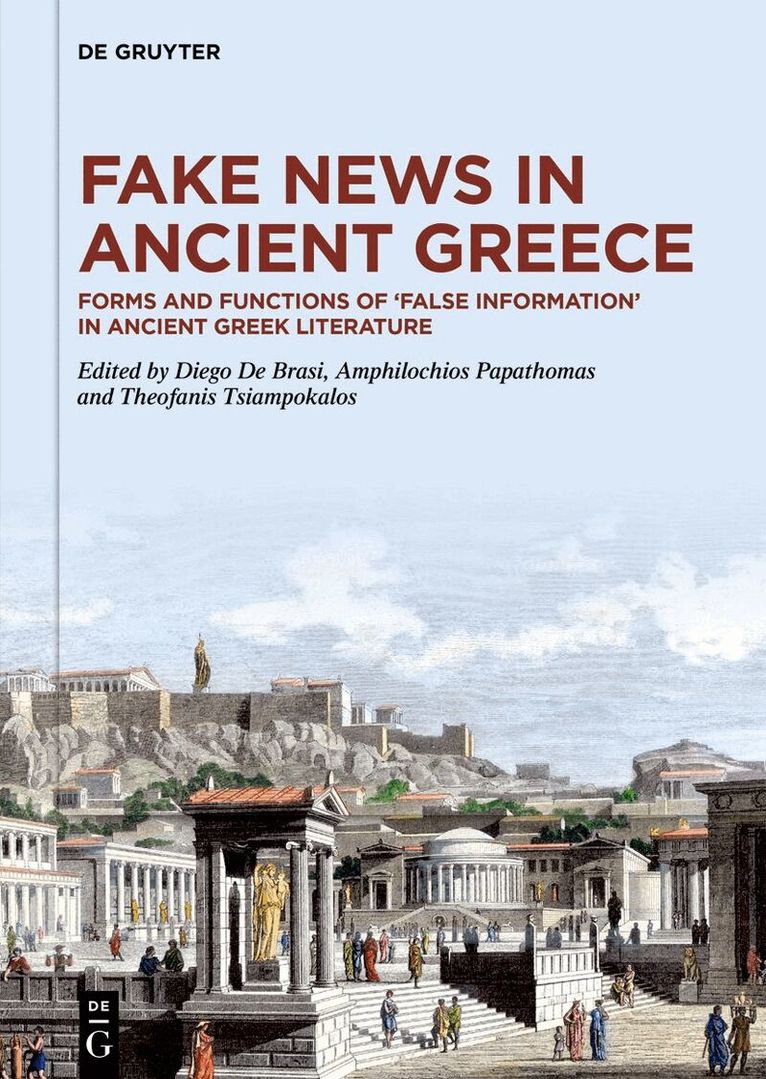
Fake News in Ancient Greece
Forms and Functions of ‘False Information’ in Ancient Greek Literature
Inbunden, Engelska, 2024
1 875 kr
Skickas inom 3-6 vardagar
Scholars have recognized that fake news is not a phenomenon peculiar to the 21st century. While efforts for a more focused approach to fake news in the ancient world have been carried out in the field of Roman history, the phenomenon of fake news in ancient Greece has received limited attention. The contributions in this volume offer a selective approach to this phenomenon by applying media and cultural studies instruments to ancient texts. They pinpoint parallels and differences between ancient and modern fake news by employing methods of literary and cultural studies, as well as historical-documentary analysis of ancient sources. In particular, they explore questions such as: To what extent does reflection on the concepts of truth, lie, and opinion influence ancient Greek political-rhetorical discourse? What is the political or social function of embedding ‘misleading information’ in ancient Greek historiographical texts or pamphlets? Which intentions are pursued with the help of fake news in literary and documentary texts? Can parallels be drawn with modern approaches to fake news? Thus, the volume investigates the mechanisms that historically lay behind the creation, dissemination, and adaptation of ‘misleading information’.