Elizabeth Ashby – författare
Visar alla böcker från författaren Elizabeth Ashby. Handla med fri frakt och snabb leverans.
21 produkter
Globally Resilient Supply Chains for Seasonal and Pandemic Influenza Vaccines
Av Committee on Addressing Issues of Vaccine Distribution and Supply Chains to Advance Pandemic and Seasonal Influenza Preparedness and Response, Board on Global Health m. fl.
E-bok, 2022
892 kr
Lägg i varukorg
Influenza viruses, both seasonal and pandemic, have the potential to disrupt the health and well-being of populations around the world. The global response to the COVID-19 pandemic and prior public health emergencies of international concern illustrate the importance of global preparedness and …
Globally Resilient Supply Chains for Seasonal and Pandemic Influenza Vaccines
Av National Academy of Medicine, and Medicine National Academies of Sciences, Engineering m. fl.
Häftad, 2022
964 kr
Lägg i varukorg
Influenza viruses, both seasonal and pandemic, have the potential to disrupt the health and well-being of populations around the world. The global response to the COVID-19 pandemic and prior public health emergencies of international concern illustrate the importance of global preparedness and …
Toward a Post-Pandemic World
Lessons from COVID-19 for Now and the Future: Proceedings of a Workshop
Av Forum on Microbial Threats, Board on Global Health m. fl.
E-bok, 2022
297 kr
Lägg i varukorg
To take stock of lessons learned from COVID-19 around the world and in the United States, the Forum on Microbial Threats held two virtual workshops during 2021. The first workshop focused on what it means to frame the response to COVID-19 through a "syndemic" approach, and what the implications …
Role of Plant Agricultural Practices on Development of Antimicrobial Resistant Fungi Affecting Human Health
Proceedings of a Workshop Series
Av Forum on Microbial Threats, Board on Global Health m. fl.
E-bok, 2023
446 kr
Lägg i varukorg
Antifungal use in plant agriculture is a widespread practice necessary to safeguard food safety and security. While the impact of antimicrobial resistance (AMR) is a significant global health concern, knowledge gaps exist surrounding antifungal resistance, the connection to plant agriculture, and …
Toward a Common Research Agenda in Infection-Associated Chronic Illnesses
Proceedings of a Workshop
Av Forum on Microbial Threats, Forum on Neuroscience and Nervous System Disorders m. fl.
E-bok, 2024
339 kr
Lägg i varukorg
The National Academies Forum on Microbial Threats and Forum on Neuroscience and Nervous System Disorders hosted a hybrid public workshop in June 2023 to explore opportunities to advance research and treatment of infection-associated chronic illnesses. The illnesses discussed in this workshop, …
Mitigating Arboviral Threat and Strengthening Public Health Preparedness
Proceedings of a Workshop
Av Forum on Microbial Threats, Board on Global Health m. fl.
E-bok, 2024
357 kr
Lägg i varukorg
Arboviruses, or viruses carried by arthropods like mosquitoes or ticks, are responsible for hundreds of thousands of deaths worldwide each year. As the climate changes globally, the geographic distribution of these diseases, including Zika, dengue, chikungunya, West Nile, and yellow fever, are …
Danger Cove Mysteries Boxed Set (Books 6-10)
Danger Cove Mysteries
Av Ellie Ashe, Jean Steffens m. fl.
E-bok
89 kr
Lägg i varukorg
Danger Cove Mysteries Boxed Set (Books 11-15)
Danger Cove Mysteries
Av Sally J. Smith, Nicole Leiren m. fl.
E-bok
90 kr
Lägg i varukorg
Danger Cove Mysteries Boxed Set (Books 1-5)
Danger Cove Mysteries
Av Traci Andrighetti, Gin Jones m. fl.
E-bok, 2019
89 kr
Lägg i varukorg
From the deadly little town of Danger Cove, comes the first 5 full-length cozy mystery novels in the Danger Cove Mysteries series by USA Today bestselling and award winning authors! This boxed set includes:Secret of the Painted Lady (a Danger Cove Renovation Mystery)by Christina A. BurkeMurder and …
Danger Cove Mysteries Boxed Set (Books 16-20)
Danger Cove Mysteries
Av Traci Andrighetti, Nicole Leiren m. fl.
E-bok
89 kr
Lägg i varukorg
Killer Colada
a Danger Cove Cocktail Mystery
Av Elizabeth Ashby, Sibel Hodge
Häftad, 2016
173 kr
Lägg i varukorg
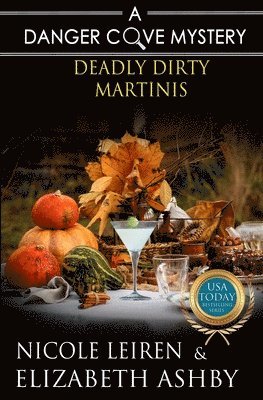
Deadly Dirty Martinis
a Danger Cove Cocktail Mystery
Av Elizabeth Ashby, Nicole Leiren
Häftad, 2017
168 kr
Lägg i varukorg
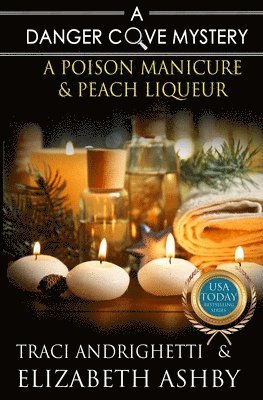
Poison Manicure & Peach Liqueur
a Danger Cove Hair Salon Mystery
Av Elizabeth Ashby, Traci Andrighetti
Häftad, 2017
173 kr
Lägg i varukorg
Danger Cove Mysteries Boxed Set (Books 21-24 & Short Stories)
Danger Cove Mysteries
Av Nicole Leiren, Traci Andrighetti m. fl.
E-bok
92 kr
Lägg i varukorg