Enver Motala – författare
Visar alla böcker från författaren . Handla med fri frakt och snabb leverans.
9 produkter
9 produkter
Häftad, Engelska, 2023
260 kr
Skickas inom 5-8 vardagar
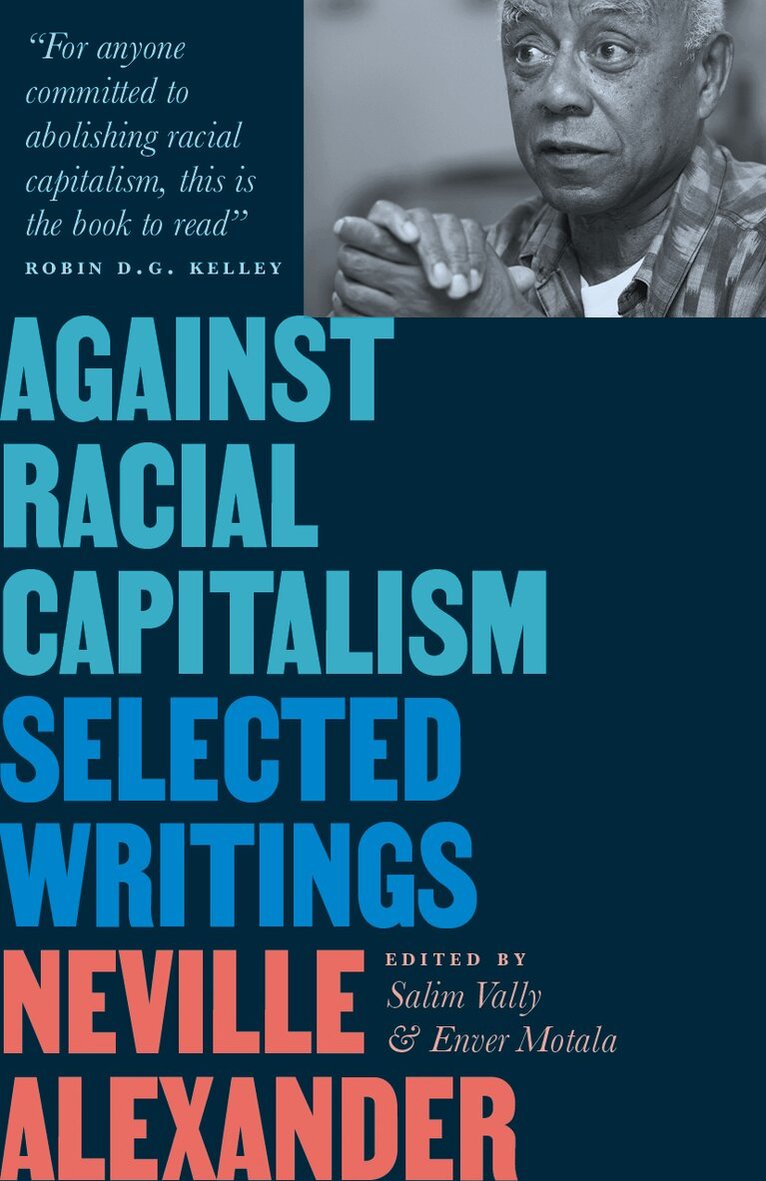
Neville Alexander is not a household name, but he should be. As a revolutionary public intellectual, activist and former political prisoner, he is among the most important theorists of racial capitalism to emerge during the struggle against Apartheid.Alexander's writings engage with some of the important debates in South Africa from the last 50 years, many of which have international resonance today: from the unresolved national question and the relationship between 'race' and class; the continuities of racial capitalism in post-apartheid South Africa; the role and purpose of schooling and higher education; and the importance of nation building and multilingualism. An opponent of the neoliberal trajectory embarked upon by the post-apartheid establishment in the 1990s, Alexander was always reflective and humble but never wavered from his own self-description: a non-dogmatic Marxist, pan-Africanist and internationalist.This carefully curated collection brings his incredible body of work to an international audience for the first time. It features a comprehensive introduction, a timeline of key events in the life of Alexander, selected articles, speeches, op-eds, book chapters and a bibliography of his writings.
Häftad, Engelska, 2019
500 kr
Skickas inom 10-15 vardagar
This title was first published in 2002: Has the South African post-apartheid state been able to achieve its stated goals? What has been the relationship between the process of educational reform and the impact on the state of the Constitution and other laws? This seminal book responds to these questions by examining the development and implementation of social policy in South Africa during the first years of democratic government, particularly in relation to education. The post-apartheid state was immediately faced with a broad spectrum of political, social, economic and human rights issues. The research analyzes whether the aims and objectives of the new administration were achieved; no other single collection of research in South Africa collectively explores the issues raised in this endeavour. The book will appeal to a wide range of professionals including researchers, academics, planners, policy makers, public servants and postgraduate students.
Inbunden, Engelska, 2018
1 787 kr
Skickas inom 10-15 vardagar
This title was first published in 2002: Has the South African post-apartheid state been able to achieve its stated goals? What has been the relationship between the process of educational reform and the impact on the state of the Constitution and other laws? This seminal book responds to these questions by examining the development and implementation of social policy in South Africa during the first years of democratic government, particularly in relation to education. The post-apartheid state was immediately faced with a broad spectrum of political, social, economic and human rights issues. The research analyzes whether the aims and objectives of the new administration were achieved; no other single collection of research in South Africa collectively explores the issues raised in this endeavour. The book will appeal to a wide range of professionals including researchers, academics, planners, policy makers, public servants and postgraduate students.
E-bok
Engelska, 2019915 kr
Läs direkt efter köp
This title was first published in 2002: Has the South African post-apartheid state been able to achieve its stated goals? What has been the relationship between the process of educational reform and the impact on the state of the Constitution and other laws? This seminal book responds to these questions by examining the development and implementation of social policy in South Africa during the first years of democratic government, particularly in relation to education. The post-apartheid state was immediately faced with a broad spectrum of political, social, economic and human rights issues. The research analyzes whether the aims and objectives of the new administration were achieved; no other single collection of research in South Africa collectively explores the issues raised in this endeavour. The book will appeal to a wide range of professionals including researchers, academics, planners, policy makers, public servants and postgraduate students.
E-bok
PDF, Engelska, 2019915 kr
Läs direkt efter köp
This title was first published in 2002: Has the South African post-apartheid state been able to achieve its stated goals? What has been the relationship between the process of educational reform and the impact on the state of the Constitution and other laws? This seminal book responds to these questions by examining the development and implementation of social policy in South Africa during the first years of democratic government, particularly in relation to education. The post-apartheid state was immediately faced with a broad spectrum of political, social, economic and human rights issues. The research analyzes whether the aims and objectives of the new administration were achieved; no other single collection of research in South Africa collectively explores the issues raised in this endeavour. The book will appeal to a wide range of professionals including researchers, academics, planners, policy makers, public servants and postgraduate students.
E-bok
PDF, Engelska, 2017398 kr
Läs direkt efter köp
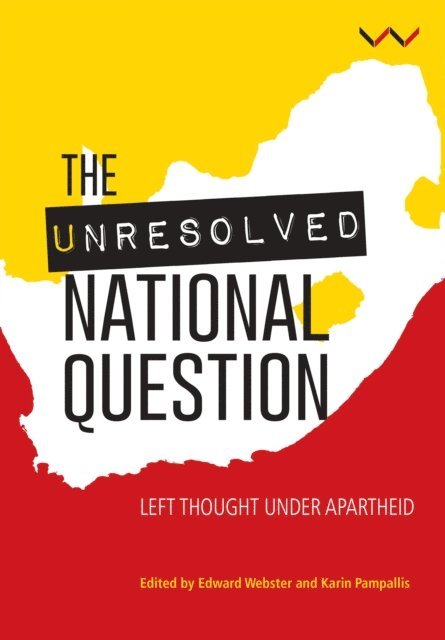
The re-emergence of debates on the decolonisation of knowledge has revived interest in the National Question, which began over a century ago and remains unresolved. Tensions that were suppressed and hidden in the past are now being openly debated. Despite this, the goal of one united nation living prosperously under a constitutional democracy remains elusive. This edited volume examines the way in which various strands of left thought have addressed the National Question, especially during the apartheid years, and goes on to discuss its relevance for South Africa today and in the future. Instead of imposing a particular understanding of the National Question, the editors identified a number of political traditions and allowed contributors the freedom to define the question as they believed appropriate – in other words, to explain what they thought was the Unresolved National Question. This has resulted in a rich tapestry of interweaving perceptions. The volume is structured in two parts. The first examines four foundational traditions: Marxism-Leninism (the Colonialism of a Special Type thesis); the Congress tradition; the Trotskyist tradition; and Africanism. The second part explores the various shifts in the debate from the 1960s onwards, and includes chapters on Afrikaner nationalism, ethnic issues, black consciousness, feminism, workerism and constitutionalism. The editors hope that by revisiting the debates not popularly known among the scholarly mainstream, this volume will become a catalyst for an enriched debate on our identity and our future.
E-bok
Engelska, 2017398 kr
Läs direkt efter köp
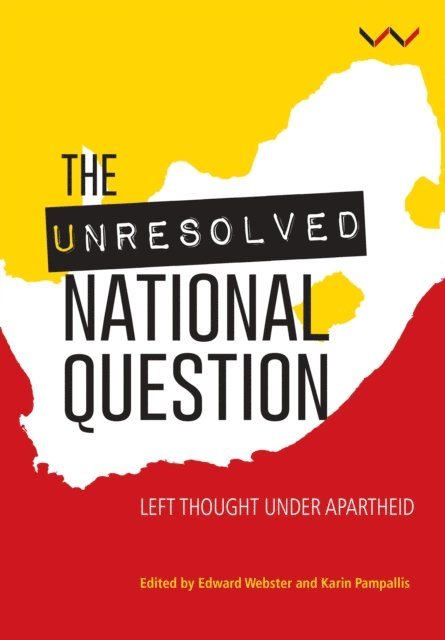
The re-emergence of debates on the decolonisation of knowledge has revived interest in the National Question, which began over a century ago and remains unresolved. Tensions that were suppressed and hidden in the past are now being openly debated. Despite this, the goal of one united nation living prosperously under a constitutional democracy remains elusive. This edited volume examines the way in which various strands of left thought have addressed the National Question, especially during the apartheid years, and goes on to discuss its relevance for South Africa today and in the future. Instead of imposing a particular understanding of the National Question, the editors identified a number of political traditions and allowed contributors the freedom to define the question as they believed appropriate – in other words, to explain what they thought was the Unresolved National Question. This has resulted in a rich tapestry of interweaving perceptions. The volume is structured in two parts. The first examines four foundational traditions: Marxism-Leninism (the Colonialism of a Special Type thesis); the Congress tradition; the Trotskyist tradition; and Africanism. The second part explores the various shifts in the debate from the 1960s onwards, and includes chapters on Afrikaner nationalism, ethnic issues, black consciousness, feminism, workerism and constitutionalism. The editors hope that by revisiting the debates not popularly known among the scholarly mainstream, this volume will become a catalyst for an enriched debate on our identity and our future.
E-bok
PDF, Engelska, 2018445 kr
Läs direkt efter köp
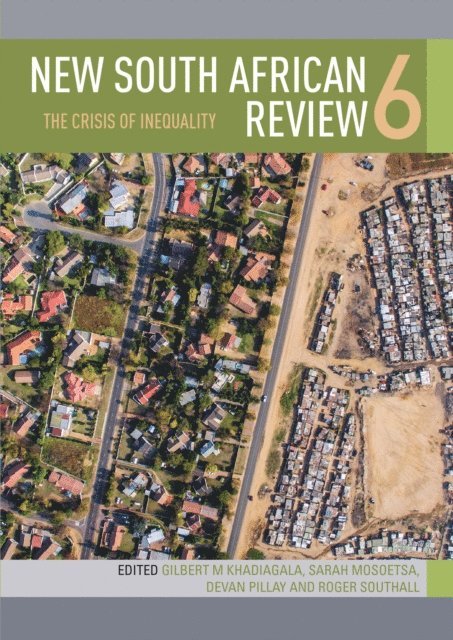
Despite the transition from apartheid to democracy, South Africa is the most unequal country in the world. Its extremes of wealth and poverty undermine intensifying struggles for a better life for all. The wide-ranging essays in this sixth volume of the New South African Review demonstrate how the consequences of inequality extend throughout society and the political economy, crippling the quest for social justice, polarising the politics, skewing economic outcomes and bringing devastating environmental consequences in their wake. Contributors survey the extent and consequences of inequality across fields as diverse as education, disability, agrarian reform, nuclear geography and small towns, and tackle some of the most difficult social, political and economic issues. How has the quest for greater equality affected progressive political discourse? How has inequality reproduced itself, despite best intentions in social policy, to the detriment of the poor and the historically disadvantaged? How have shifts in mining and the financialisation of the economy reshaped the contours of inequality? How does inequality reach into the daily social life of South Africans, and shape the way in which they interact? How does the extent and shape of inequality in South Africa compare with that of other major countries of the global South which themselves are notorious for their extremes of wealth and poverty? South African extremes of inequality reflect increasing inequality globally, and The Crisis of Inequality will speak to all those – general readers, policy makers, researchers and students – who are demanding a more equal world.
E-bok
Engelska, 2018445 kr
Läs direkt efter köp
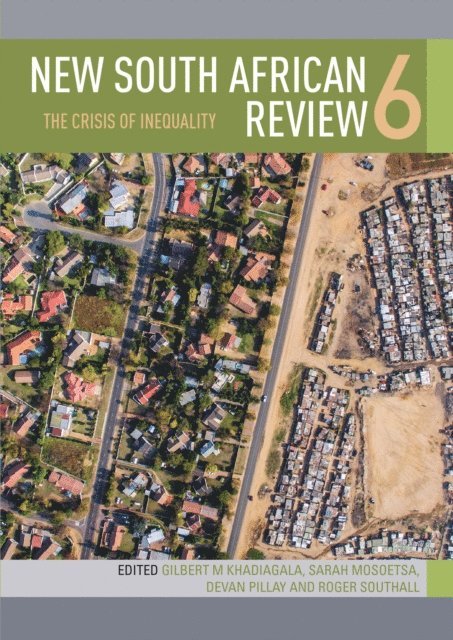
Despite the transition from apartheid to democracy, South Africa is the most unequal country in the world. Its extremes of wealth and poverty undermine intensifying struggles for a better life for all. The wide-ranging essays in this sixth volume of the New South African Review demonstrate how the consequences of inequality extend throughout society and the political economy, crippling the quest for social justice, polarising the politics, skewing economic outcomes and bringing devastating environmental consequences in their wake. Contributors survey the extent and consequences of inequality across fields as diverse as education, disability, agrarian reform, nuclear geography and small towns, and tackle some of the most difficult social, political and economic issues. How has the quest for greater equality affected progressive political discourse? How has inequality reproduced itself, despite best intentions in social policy, to the detriment of the poor and the historically disadvantaged? How have shifts in mining and the financialisation of the economy reshaped the contours of inequality? How does inequality reach into the daily social life of South Africans, and shape the way in which they interact? How does the extent and shape of inequality in South Africa compare with that of other major countries of the global South which themselves are notorious for their extremes of wealth and poverty? South African extremes of inequality reflect increasing inequality globally, and The Crisis of Inequality will speak to all those – general readers, policy makers, researchers and students – who are demanding a more equal world.