Ernst Cassirer – författare
242 kr
Skickas
Ernst Cassirers "Thomas Thorilds ställning i 1700-talets tankeliv" ger en livfull och perspektivrik bild av diktaren och filosofen Thomas Thorild. Boken skrevs under Ernst Cassirers tid i Sverige som flykting från nazitidens Tyskland. I ett efterord ger idéhistorikern Jonas Hansson en bakgrund till bokens tillkomst.Med imponerande lärdom och precision placerar Ernst Cassirer in Thomas Thorilds författarskap i en europeisk tankevärld och klarlägger dess filosofiska förutsättningar. Han kallar i sin bok Thomas Thorild ett av ”de märkvärdigaste och viktigaste fenomenen i svensk litteraturhistoria”: ”Att Thorilds stil besitter en sådan kraft beror helt enkelt på att hans ord, även om de ofta är skrivna med en översvallande lidelse, alltid utstrålar en fast och oföränderlig övertygelse. De är fyllda av ett äkta filosofiskt patos och bärs upp av ett äkta filosofiskt eros. Om stilen är människan, måste Thorild i någon mening vara ’filosof’, dock inte i den meningen att han är en strikt systematiker. Det är ytterst riskfyllt att räkna honom till en viss skola och sammanfatta honom under någon av de traditionella benämningarna som vi är vana vid från beskrivningen av filosofins historia. Thorilds individualitet trotsar alla sådana schematiska definitioner och bryter gång på gång igenom de barriärer som vi försöker bygga med hjälp av dem.” Ernst Cassirer (1874–1945) är mest känd för sitt trebandsverk "De symboliska formernas filosofi" (1923–1929). Han var professor i filosofi i Hamburg, emigrerade 1933 till England, där han undervisade i Oxford, och vidare till Sverige och Göteborg, där han var professor vid dåvarande Göteborgs Högskola. Sina sista år tillbringade han i USA och undervisade vid först Yale- och sedan Columbia-universitetet.
180 kr
Skickas inom 5-8 vardagar
264 kr
Skickas
243 kr
Skickas
154 kr
Skickas inom 3-6 vardagar
Arche : tidskrift för psykoanalys, humaniora och arkitektur Nr 36-37
220 kr
Skickas inom 5-8 vardagar
256 kr
Skickas inom 5-8 vardagar
513 kr
Skickas inom 5-8 vardagar
531 kr
Skickas inom 5-8 vardagar
478 kr
Skickas inom 5-8 vardagar
510 kr
Skickas inom 5-8 vardagar
549 kr
Skickas inom 5-8 vardagar
513 kr
Skickas inom 5-8 vardagar
656 kr
Skickas inom 5-8 vardagar
460 kr
Skickas inom 5-8 vardagar
371 kr
Skickas inom 5-8 vardagar
994 kr
Skickas inom 5-8 vardagar
373 kr
Skickas inom 5-8 vardagar
400 kr
Skickas inom 5-8 vardagar
1 583 kr
Skickas inom 3-6 vardagar
552 kr
Läs direkt efter köp
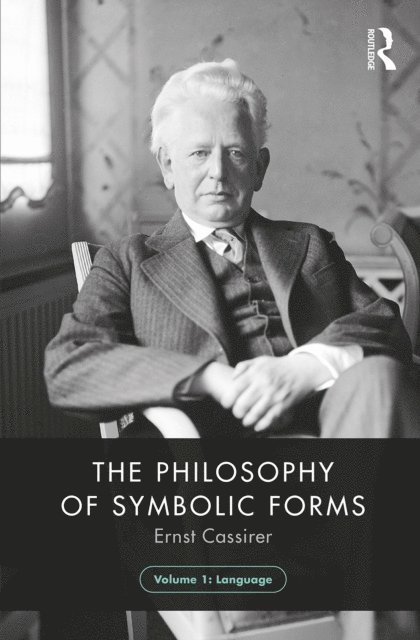
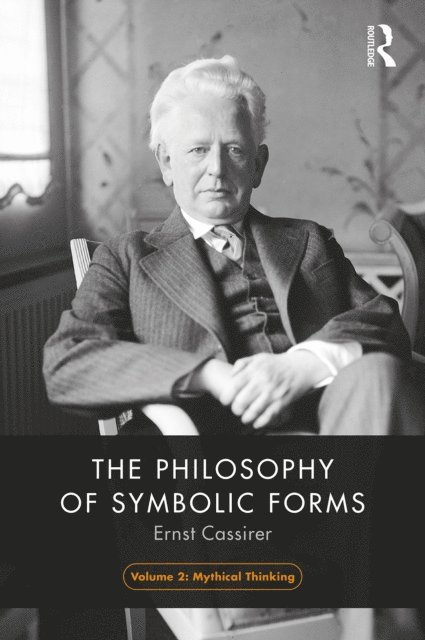
"The Philosophy of Symbolic Forms is a milestone in twentieth century philosophy. Promoting a philosophical vision informed by Kant, it incorporates the philosophical advances achieved in the nineteenth century by German Idealism and Neo-Kantianism, whilst acknowledging the contributions made by his contemporary phenomenologists. It also encompasses empirical and historical research on culture and the most contemporary work on myth, linguistics and psychopathology. As such, it ranks in philosophical importance along with other major works of the twentieth century, such as Edmund Husserl’s Logical Investigations, Martin Heidegger’s Being and Time, and Ludwig Wittgenstein’s Tractatus Logico-Philosophicus.
In the first volume, Cassirer explores the symbolic form of language. Already recognized by thinkers in the tradition of German Idealism, such as Wilhelm von Humboldt, language is the primary medium by which we interact with others and form a common world. As Cassirer emphasizes in the famous Davos Debate with Heidegger, ''there is one objective human world, in which a bridge is built from individual to individual. That I find in the primal phenomenon of language.'' The famous trias Cassirer discerns in the functioning of language – the functions of expression (Ausdruck), presentation (Darstellung), and signification (Bedeutung) – has become paradigmatic for accounts of language, philosophical, linguistic, and anthropological alike."
Sebastian Luft, Professor of Philosophy, Marquette University, USA.
This new translation makes Cassirer’s seminal work available to a new generation of scholars. Each volume includes a translator’s introduction by Steve G. Lofts, a foreword by Peter E. Gordon, a glossary of key terms, and an index.
572 kr
Läs direkt efter köp
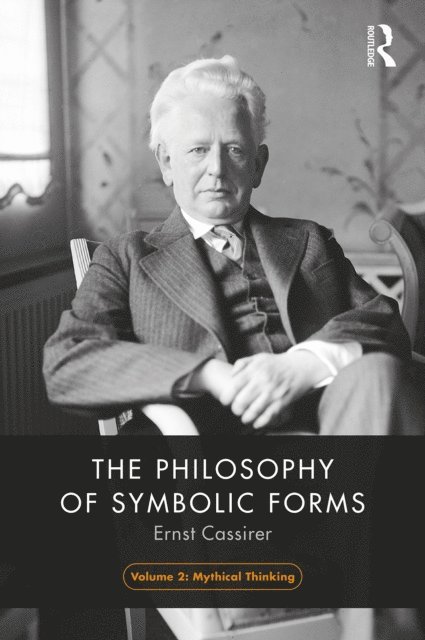
"The Philosophy of Symbolic Forms is one of the landmarks of twentieth century philosophy. Drawing from the influential work of Wilhelm Dilthey, it transformed neo-Kantianism into a new robust philosophy of culture. The second volume, on Mythical Thinking, analyzes the fundamental layers of perception and expression as well as the articulations with religion and the dialectic with other forms, essentially language and art.
The intellectual breadth of the volume is remarkable. It initiated the debate with Martin Heidegger and prompted a long-lasting meditation by Hans Blumenberg. We are only beginning to recognize its importance for our understanding of the power of images in the construction of aesthetics, the self, and the socio-political world. It initiated a discussion within French sociology (Émile Durkheim, Marcel Mauss) that ultimately resurfaced in Pierre Bourdieu, while today it is considered as a resourceful path for cultural and critical theory (Drucilla Cornell and Kenneth M. Panfilio). Finally, this volume also offers solid grounds for a political critique of Nazism - specifically: Alfred Rosenberg’s Myth of the 20th Century and Adolf Hitler’s Mein Kampf - as well as the new emerging totalitarian ideologies."Fabien Capeilleres, Professor of Philosophy, editor of the French edition of Cassirer’s Works.
This new translation makes Cassirer’s seminal work available to a new generation of scholars. Each volume includes a translator’s introduction by Steve G. Lofts, a foreword by Peter E. Gordon, a glossary of key terms, and an index.
572 kr
Läs direkt efter köp
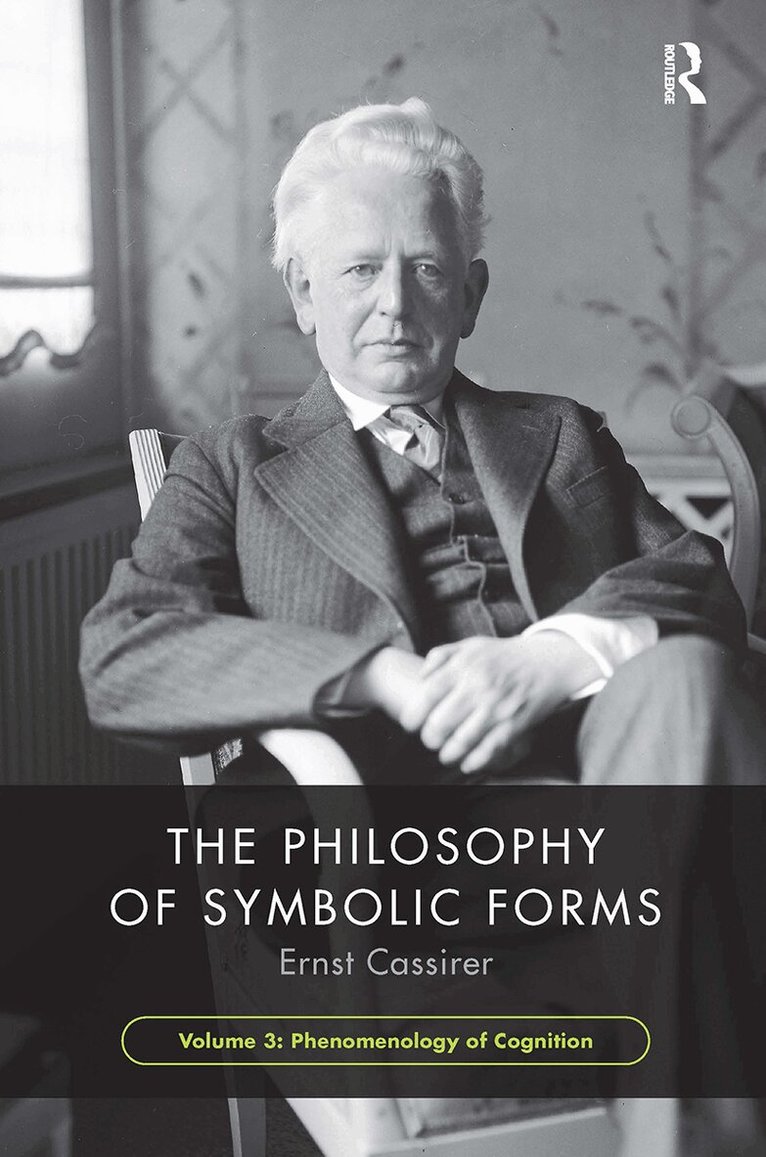
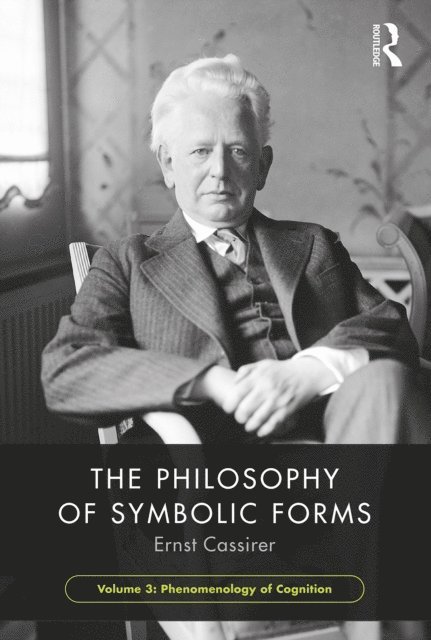
“In his Phenomenology of Cognition, Cassirer provides a comprehensive and systematic account of the dynamic process involved in the whole of human culture as it progresses from the world of myth and its feeling of social belonging to the highest abstractions of mathematics, logic and theoretical physics. Cassirer engages with the most sophisticated and cutting-edge work in fields ranging from ethnology to classics, egyptology and assyriology to ethology, brain science and psychology to logic, mathematics and theoretical physics. His command of philosophy, literature, and the arts is superb.
Echoing his work on Kant, Cassirer begins The Philosophy of Symbolic Forms with the problem posed by the meaning of being for philosophy since Plato. But Cassirer also shows that this problem gains new significance with Kant and with the development of modern culture. Cassirer weaves his conception of the development of knowledge into a broadly Kantian and German idealist dynamic-historical conception of significance and of experience that refuses to accept a fundamental opposition between literary, philosophical and scientific culture. In consequence of his great vision grounded in careful reflection and argument, Cassirer’s systematic conception of the Copernican cosmopolitan-cosmological revolution is still philosophically and scientifically unmatched in contemporary philosophy on both sides of the Atlantic and of the Pacific.”Pierre Keller, Professor of Philosophy, University of California, Riverside, USA.
This new translation makes Cassirer’s seminal work available to a new generation of scholars. Each volume includes a translator’s introduction by Steve G. Lofts, a foreword by Peter E. Gordon, a glossary of key terms, and an index.
552 kr
Läs direkt efter köp
"The Philosophy of Symbolic Forms is a milestone in twentieth century philosophy. Promoting a philosophical vision informed by Kant, it incorporates the philosophical advances achieved in the nineteenth century by German Idealism and Neo-Kantianism, whilst acknowledging the contributions made by his contemporary phenomenologists. It also encompasses empirical and historical research on culture and the most contemporary work on myth, linguistics and psychopathology. As such, it ranks in philosophical importance along with other major works of the twentieth century, such as Edmund Husserl’s Logical Investigations, Martin Heidegger’s Being and Time, and Ludwig Wittgenstein’s Tractatus Logico-Philosophicus.
In the first volume, Cassirer explores the symbolic form of language. Already recognized by thinkers in the tradition of German Idealism, such as Wilhelm von Humboldt, language is the primary medium by which we interact with others and form a common world. As Cassirer emphasizes in the famous Davos Debate with Heidegger, ''there is one objective human world, in which a bridge is built from individual to individual. That I find in the primal phenomenon of language.'' The famous trias Cassirer discerns in the functioning of language – the functions of expression (Ausdruck), presentation (Darstellung), and signification (Bedeutung) – has become paradigmatic for accounts of language, philosophical, linguistic, and anthropological alike."
Sebastian Luft, Professor of Philosophy, Marquette University, USA.
This new translation makes Cassirer’s seminal work available to a new generation of scholars. Each volume includes a translator’s introduction by Steve G. Lofts, a foreword by Peter E. Gordon, a glossary of key terms, and an index.
572 kr
Läs direkt efter köp
"The Philosophy of Symbolic Forms is one of the landmarks of twentieth century philosophy. Drawing from the influential work of Wilhelm Dilthey, it transformed neo-Kantianism into a new robust philosophy of culture. The second volume, on Mythical Thinking, analyzes the fundamental layers of perception and expression as well as the articulations with religion and the dialectic with other forms, essentially language and art.
The intellectual breadth of the volume is remarkable. It initiated the debate with Martin Heidegger and prompted a long-lasting meditation by Hans Blumenberg. We are only beginning to recognize its importance for our understanding of the power of images in the construction of aesthetics, the self, and the socio-political world. It initiated a discussion within French sociology (Émile Durkheim, Marcel Mauss) that ultimately resurfaced in Pierre Bourdieu, while today it is considered as a resourceful path for cultural and critical theory (Drucilla Cornell and Kenneth M. Panfilio). Finally, this volume also offers solid grounds for a political critique of Nazism - specifically: Alfred Rosenberg’s Myth of the 20th Century and Adolf Hitler’s Mein Kampf - as well as the new emerging totalitarian ideologies."Fabien Capeilleres, Professor of Philosophy, editor of the French edition of Cassirer’s Works.
This new translation makes Cassirer’s seminal work available to a new generation of scholars. Each volume includes a translator’s introduction by Steve G. Lofts, a foreword by Peter E. Gordon, a glossary of key terms, and an index.
572 kr
Läs direkt efter köp
“In his Phenomenology of Cognition, Cassirer provides a comprehensive and systematic account of the dynamic process involved in the whole of human culture as it progresses from the world of myth and its feeling of social belonging to the highest abstractions of mathematics, logic and theoretical physics. Cassirer engages with the most sophisticated and cutting-edge work in fields ranging from ethnology to classics, egyptology and assyriology to ethology, brain science and psychology to logic, mathematics and theoretical physics. His command of philosophy, literature, and the arts is superb.
Echoing his work on Kant, Cassirer begins The Philosophy of Symbolic Forms with the problem posed by the meaning of being for philosophy since Plato. But Cassirer also shows that this problem gains new significance with Kant and with the development of modern culture. Cassirer weaves his conception of the development of knowledge into a broadly Kantian and German idealist dynamic-historical conception of significance and of experience that refuses to accept a fundamental opposition between literary, philosophical and scientific culture. In consequence of his great vision grounded in careful reflection and argument, Cassirer’s systematic conception of the Copernican cosmopolitan-cosmological revolution is still philosophically and scientifically unmatched in contemporary philosophy on both sides of the Atlantic and of the Pacific.”Pierre Keller, Professor of Philosophy, University of California, Riverside, USA.
This new translation makes Cassirer’s seminal work available to a new generation of scholars. Each volume includes a translator’s introduction by Steve G. Lofts, a foreword by Peter E. Gordon, a glossary of key terms, and an index.
3 001 kr
Läs direkt efter köp
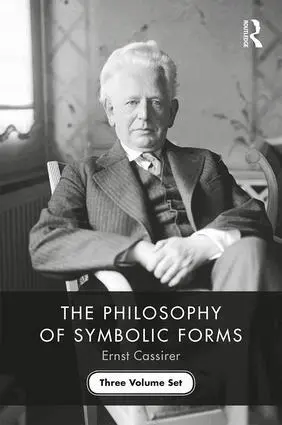
Ernst Cassirer occupies a unique space in twentieth-century philosophy. A great liberal humanist, his multi-faceted work spans the history of philosophy, the philosophy of science, intellectual history, aesthetics, epistemology, the study of language and myth, and more. Cassirer’s thought also anticipates the renewed interest in the origins of analytic and continental philosophy in the Twentieth Century and the divergent paths taken by the ''logicist'' and existential traditions, epitomised by his now legendary debate in 1929 with the philosopher Martin Heidegger, over the question "What is the Human Being?"
The Philosophy of Symbolic Forms is Cassirer''s most important work. It was first published in German in 1923, the third and final volume appearing in 1929. In it Cassirer presents a radical new philosophical worldview - at once rich, creative and controversial - of human beings as fundamentally "symbolic animals", placing signs and systems of expression between themselves and the world.
This major new translation of all three volumes, the first for over fifty years, brings Cassirer''s magnum opus to a new generation of students and scholars. Taken together, the three volumes of The Philosophy of Symbolic Forms are a vital treatise on human beings as symbolic animals and a monumental expression of neo-Kantian thought.
Correcting important errors in previous English editions, this translation reflects the contributions of significant advances in Cassirer scholarship over the last twenty to thirty years. Each volume includes a new introduction and translator''s notes by Steve G. Lofts, a foreword by Peter E. Gordon, a glossary of key terms, and a thorough index.
428 kr
Skickas inom 5-8 vardagar
333 kr
Skickas inom 5-8 vardagar
366 kr
Skickas