Esra Capanoglu – författare
Valorization of Wastes/By-Products in the Design of Functional Foods/Supplements
1 931 kr
Skickas inom 10-15 vardagar
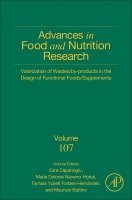
Valorization of Wastes/By-Products in the Design of Functional Foods/Supplements, Volume 106 provides up-to-date information on the valorization and application of by-products/wastes from fruit, vegetable, oil, cocoa, tea, coffee, nuts, seeds, cereals, legumes, citrus and animal-based products. Moreover, safety aspects as well as bioaccessibility/bioavailability of bioactives obtained from by-products/wastes are covered. As agricultural and food wastes constitute a significant problem worldwide because of their adverse effects on the environment, economy and society, this book studies the management and valorization of food wastes and their increasing significance worldwide.
As it is expected that the importance given to waste valorization will increase in the near future, contributing greatly to sustainability and circular economy, this book will help stakeholders such as governments, legislative bodies, policymakers, companies, the public, and all others place special emphasis on this topic.
Covers valorization of by-products/wastes obtained from a variety of food products Provides detailed information about the applications of components extracted from wastes Presents a comprehensive evaluation of by-products/wastes by ensuring data on their safety aspects, bioaccessibility and bioavailability2 304 kr
Skickas inom 11-20 vardagar
2 726 kr
Läs direkt efter köp
A comprehensive reference for assessing the antioxidant potential of foods and essential techniques for developing healthy food products
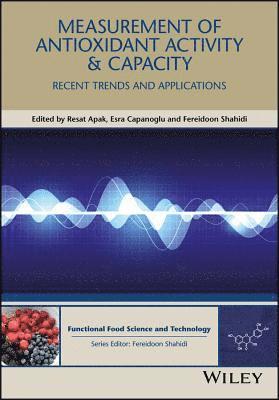
Measurement of Antioxidant Activity and Capacity offers a much-needed resource for assessing the antioxidant potential of food and includes proven approaches for creating healthy food products. With contributions from world-class experts in the field, the text presents the general mechanisms underlying the various assessments, the types of molecules detected, and the key advantages and disadvantages of each method. Both thermodynamic (i.e. efficiency of scavenging reactive species) and kinetic (i.e. rates of hydrogen atom or electron transfer reactions) aspects of available methods are discussed in detail.
A thorough description of all available methods provides a basis and rationale for developing standardized antioxidant capacity/activity methods for food and nutraceutical sciences and industries. This text also contains data on new antioxidant measurement techniques including nanotechnological methods in spectroscopy and electrochemistry, as well as on innovative assays combining several principles. Therefore, the comparison of conventional methods versus novel approaches is made possible. This important resource:
Offers suggestions for assessing the antioxidant potential of foods and their components Includes strategies for the development of healthy functional food products Contains information for identifying antioxidant activity in the body Presents the pros and cons of the available antioxidant determination methods, and helps in the selection of the most appropriate methodWritten for researchers and professionals in the nutraceutical and functional food industries,academia and government laboratories, this text includes the most current knowledge in order to form a common language between research groups and to contribute to the solution of critical problems existing for all researchers working in this field.
2 702 kr
Läs direkt efter köp
A comprehensive reference for assessing the antioxidant potential of foods and essential techniques for developing healthy food products
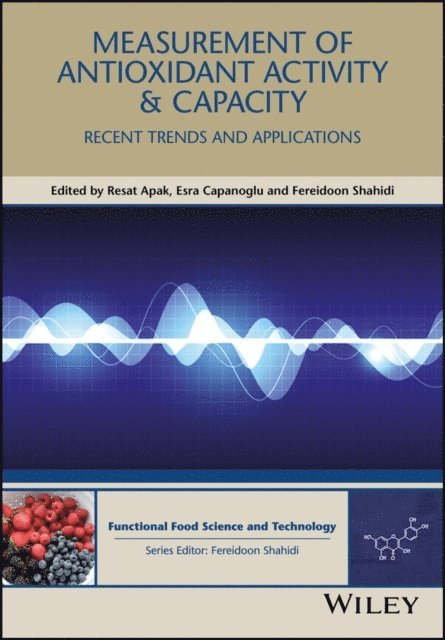
Measurement of Antioxidant Activity and Capacity offers a much-needed resource for assessing the antioxidant potential of food and includes proven approaches for creating healthy food products. With contributions from world-class experts in the field, the text presents the general mechanisms underlying the various assessments, the types of molecules detected, and the key advantages and disadvantages of each method. Both thermodynamic (i.e. efficiency of scavenging reactive species) and kinetic (i.e. rates of hydrogen atom or electron transfer reactions) aspects of available methods are discussed in detail.
A thorough description of all available methods provides a basis and rationale for developing standardized antioxidant capacity/activity methods for food and nutraceutical sciences and industries. This text also contains data on new antioxidant measurement techniques including nanotechnological methods in spectroscopy and electrochemistry, as well as on innovative assays combining several principles. Therefore, the comparison of conventional methods versus novel approaches is made possible. This important resource:
Offers suggestions for assessing the antioxidant potential of foods and their components Includes strategies for the development of healthy functional food products Contains information for identifying antioxidant activity in the body Presents the pros and cons of the available antioxidant determination methods, and helps in the selection of the most appropriate methodWritten for researchers and professionals in the nutraceutical and functional food industries,academia and government laboratories, this text includes the most current knowledge in order to form a common language between research groups and to contribute to the solution of critical problems existing for all researchers working in this field.
2 718 kr
Skickas inom 10-15 vardagar
3 351 kr
Läs direkt efter köp
Bioactive compounds in food, known for their positive health effects, can be lost during handling after harvest, processing and storage. While most foods are exposed to processing to increase shelf life and edibility and to ensure microbial safety, conventional processing methods may have disadvantages, such as decreasing the nutritional quality of foods, long processing times, high temperature and high energy uses. For these reasons, novel non-thermal food processing technologies (including HPP, ultrasound) and novel thermal food processing technologies (including microwave/Ohmic heating) have become widespread.
This book provides a critical evaluation of the effects of conventional, novel non-thermal, and thermal food processing techniques on the retention and bioaccessibility of bioactive compounds in food materials. Within these three categories, many different processing methods are included: fermentation/germination, drying, extrusion, and modified atmosphere packaging, as well as novel technologies, such as microwave heating, ultrasound, high pressure processing, ozonation, and membrane separation processes.
2 718 kr
Skickas inom 10-15 vardagar