Fidel Toldr – författare
10 060 kr
Läs direkt efter köp
1 424 kr
Läs direkt efter köp
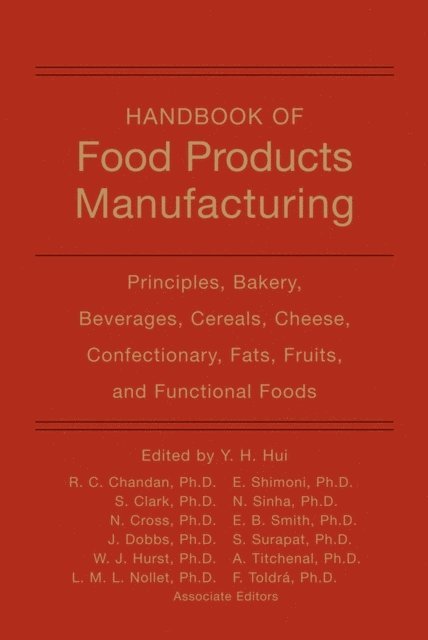
Dry-cured meat products, such as dry-cured ham and dry-fermented sausages, constitute one of the most representative traditional foods that have been produced and consumed throughout history by a diversity of cultures and in different areas of the world. These meat products, which have a high variety of flavors and textures, represent an important part of local economies, particular cultures and gastronomic heritages. Today, there is an important trend to enrich our sensory perceptions, and many consumers and meat industries around the world are getting more and more interested in dry-cured meat products.
This book presents the latest developments in dry-cured meat products, from raw materials and manufactures to the final products, and includes updated scientific and technological information, especially on the safety, quality and nutritional properties of these foods.
This book will be valuable as a reference work for basic/applied scientists and food technologies working in quality control and R&D in the meat industry. It will also serve as a text for advanced undergraduate and graduate students.
4 366 kr
Läs direkt efter köp
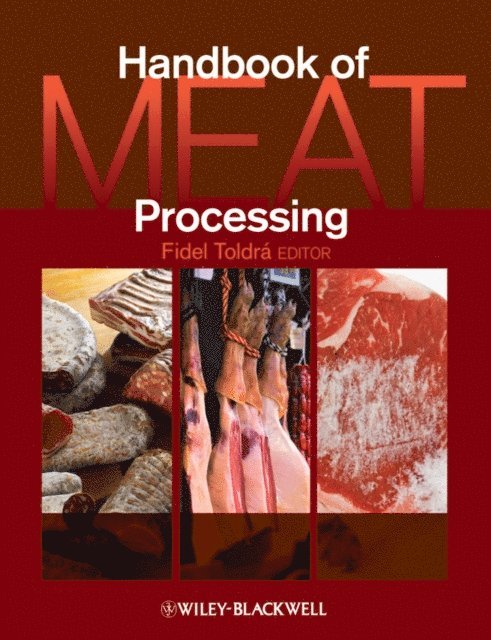
Coverage is divided into three parts. Part one, Technologies, begins with discussions on meat chemistry, biochemistry and quality and then provides background information on main technologies involved in the processing of meat, such as freezing, cooking, smoking, fermentation, emulsification, drying and curing. Also included are key chapters on packaging, spoilage prevention and plant cleaning and sanitation.
Part two, Products, is focused on the description of the manufacture of the most important products, including cooked and dry-cured hams, cooked and fermented sausages, bacon, canned meat, paté, restructured meats and functional meat products. Each chapter addresses raw materials, ingredients and additives, processing technology, main types of products, production data, particular characteristics and sensory aspects, and future trends.
Part three, Controls, offers current approaches for the control of the quality and safety of manufactured meat products, with coverage including sensory evaluation; chemical and biological hazards including GMOs; HACCP; and quality assurance.
This book is an invaluable resource for all meat scientists, meat processors, R&D professionals and product developers.
Key features:
Unparalleled international expertise of editor and contributing authors Addresses the state of the art of manufacturing the most important meat products Special focus on approaches to control the safety and quality of processed meats Extensive coverage of production technologies, sanitation, packaging and sensory evaluation2 942 kr
Läs direkt efter köp
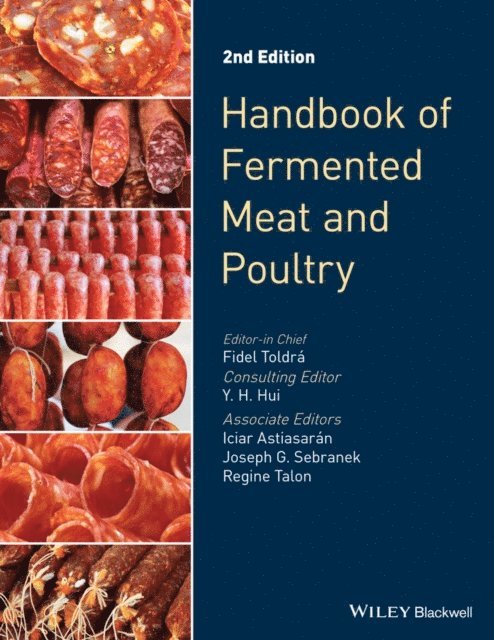
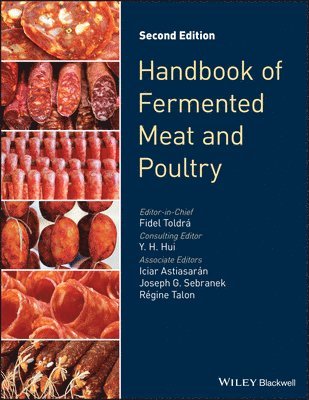
Fermented meat products have been consumed for centuries in many different parts of the world and constitute one of the most important groups of food. Bacterial cultures are used in their manufacture to preserve the meat and confer particular textures and sensory attributes. Examples of fermented meats include salami, chorizo, pepperoni and saucisson.
This fully revised and expanded reference book on meat fermentation presents all the principle fermented meat products and the processing technologies currently used in their manufacture. The 54 chapters of this substantial book are grouped into the following sections:
Meat fermentation worldwide: overview, production and principles Raw materials Microbiology and starter cultures for meat fermentation Sensory attributes Product categories: general considerations Semidry-fermented sausages Dry-fermented sausages Other fermented meats and poultry Ripened meat products Biological and chemical safety of fermented meat products Processing sanitation and quality assuranceThere are five new chapters in the second edition that address the following topics: Smoking and new smoke flavourings; Probiotics; Methodologies for the study of the microbial ecology in fermented sausages; Low sodium in meat products; and Asian sausages.
Handbook of Fermented Meat and Poultry, Second Edition provides readers with a full overview of meat fermentation, the role of microorganisms naturally present and/or added as starter cultures, safety aspects and an account of the main chemical, biochemical, physical and microbiological changes that occur in processing and how they affect final quality. Finally, readers will find the main types of worldwide fermented meat products, typically produced in different areas, with the description of their main characteristics.
2 942 kr
Läs direkt efter köp
Fermented meat products have been consumed for centuries in many different parts of the world and constitute one of the most important groups of food. Bacterial cultures are used in their manufacture to preserve the meat and confer particular textures and sensory attributes. Examples of fermented meats include salami, chorizo, pepperoni and saucisson.
This fully revised and expanded reference book on meat fermentation presents all the principle fermented meat products and the processing technologies currently used in their manufacture. The 54 chapters of this substantial book are grouped into the following sections:
Meat fermentation worldwide: overview, production and principles Raw materials Microbiology and starter cultures for meat fermentation Sensory attributes Product categories: general considerations Semidry-fermented sausages Dry-fermented sausages Other fermented meats and poultry Ripened meat products Biological and chemical safety of fermented meat products Processing sanitation and quality assuranceThere are five new chapters in the second edition that address the following topics: Smoking and new smoke flavourings; Probiotics; Methodologies for the study of the microbial ecology in fermented sausages; Low sodium in meat products; and Asian sausages.
Handbook of Fermented Meat and Poultry, Second Edition provides readers with a full overview of meat fermentation, the role of microorganisms naturally present and/or added as starter cultures, safety aspects and an account of the main chemical, biochemical, physical and microbiological changes that occur in processing and how they affect final quality. Finally, readers will find the main types of worldwide fermented meat products, typically produced in different areas, with the description of their main characteristics.
2 520 kr
Skickas inom 5-8 vardagar
2 800 kr
Läs direkt efter köp
Still the most up-to-date, comprehensive, and authoritative book on food diagnostics available
Featuring seven entirely new chapters, the second edition of this critically acclaimed guide has been extensively revised and updated. Once again delivering food professionals the latest advances in food diagnostics and analysis, the book approaches the topic in several different ways: reviewing novel technologies to evaluate fresh products; describing and analysing in depth specific modern diagnostics; providing analyses of data processing; and discussing global marketing, with insights into future trends.
Written by an international team of experts, this volume not only covers most conventional lab-based analytical methods, but also focuses on leading-edge technologies which are being or are about to be introduced.
Advances in Food Diagnostics, Second Edition:
Covers ultrasound, RMN, chromatography, electronic noses, immunology, GMO detection and microbiological and molecular methodologies for rapid detection of pathogens Explores the principles and applications of immunodiagnostics in food safety and the use of molecular biology to detect and characterize foodborne pathogens Includes DNA-based and protein-based technologies to detect and identify genetically-modified food or food components Focuses on the translation of diagnostics tests from bench to the market in order to illustrate the benefits to the food industry Provides an overview of the business end of food diagnostics; identifying the markets, delineating the sellers and the buyers, comparing current technology with traditional methods, certifying operations and procedures, and analysing diagnostic devices within the food and related industriesThis is an indispensable resource for food scientists, food quality analysts, food microbiologists and food safety professionals. It also belongs on the reference shelves of labs conducting food diagnostics for the analysis of the sensory, quality and safety aspects of food.
2 800 kr
Läs direkt efter köp
Still the most up-to-date, comprehensive, and authoritative book on food diagnostics available
Featuring seven entirely new chapters, the second edition of this critically acclaimed guide has been extensively revised and updated. Once again delivering food professionals the latest advances in food diagnostics and analysis, the book approaches the topic in several different ways: reviewing novel technologies to evaluate fresh products; describing and analysing in depth specific modern diagnostics; providing analyses of data processing; and discussing global marketing, with insights into future trends.
Written by an international team of experts, this volume not only covers most conventional lab-based analytical methods, but also focuses on leading-edge technologies which are being or are about to be introduced.
Advances in Food Diagnostics, Second Edition:
Covers ultrasound, RMN, chromatography, electronic noses, immunology, GMO detection and microbiological and molecular methodologies for rapid detection of pathogens Explores the principles and applications of immunodiagnostics in food safety and the use of molecular biology to detect and characterize foodborne pathogens Includes DNA-based and protein-based technologies to detect and identify genetically-modified food or food components Focuses on the translation of diagnostics tests from bench to the market in order to illustrate the benefits to the food industry Provides an overview of the business end of food diagnostics; identifying the markets, delineating the sellers and the buyers, comparing current technology with traditional methods, certifying operations and procedures, and analysing diagnostic devices within the food and related industriesThis is an indispensable resource for food scientists, food quality analysts, food microbiologists and food safety professionals. It also belongs on the reference shelves of labs conducting food diagnostics for the analysis of the sensory, quality and safety aspects of food.
3 401 kr
Läs direkt efter köp
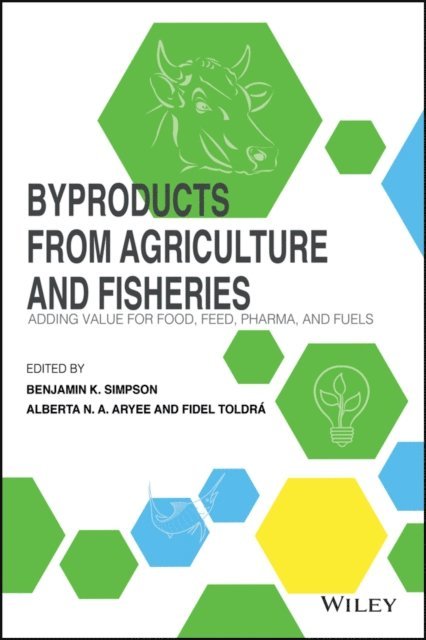
Ranging from biofuels to building materials, and from cosmetics to pharmaceuticals, the list of products that may be manufactured using discards from farming and fishery operations is extensive.
Byproducts from Agriculture and Fisheries examines the procedures and technologies involved in this process of reconstitution, taking an environmentally aware approach as it explores the developing role of value-added byproducts in the spheres of food security, waste management, and climate control. An international group of authors contributes engaging and insightful chapters on a wide selection of animal and plant byproducts, discussing the practical business of byproduct recovery within the vital contexts of shifting socio-economic concerns and the emergence of green chemistry.
This important text:
Covers recent developments, current research, and emerging technologies in the fields of byproduct recovery and utilization Explores potential opportunities for future research and the prospective socioeconomic benefits of green waste management Includes detailed descriptions of procedures for the transformation of the wastes into of value-added food and non-food productsWith its combination of practical instruction and broader commentary, Byproducts from Agriculture and Fisheries offers essential insight and expertise to all students and professionals working in agriculture, environmental science, food science, and any other field concerned with sustainable resources.
3 401 kr
Läs direkt efter köp
Ranging from biofuels to building materials, and from cosmetics to pharmaceuticals, the list of products that may be manufactured using discards from farming and fishery operations is extensive.
Byproducts from Agriculture and Fisheries examines the procedures and technologies involved in this process of reconstitution, taking an environmentally aware approach as it explores the developing role of value-added byproducts in the spheres of food security, waste management, and climate control. An international group of authors contributes engaging and insightful chapters on a wide selection of animal and plant byproducts, discussing the practical business of byproduct recovery within the vital contexts of shifting socio-economic concerns and the emergence of green chemistry.
This important text:
Covers recent developments, current research, and emerging technologies in the fields of byproduct recovery and utilization Explores potential opportunities for future research and the prospective socioeconomic benefits of green waste management Includes detailed descriptions of procedures for the transformation of the wastes into of value-added food and non-food productsWith its combination of practical instruction and broader commentary, Byproducts from Agriculture and Fisheries offers essential insight and expertise to all students and professionals working in agriculture, environmental science, food science, and any other field concerned with sustainable resources.