Frederick E. Grine – författare
Visar alla böcker från författaren Frederick E. Grine. Handla med fri frakt och snabb leverans.
14 produkter
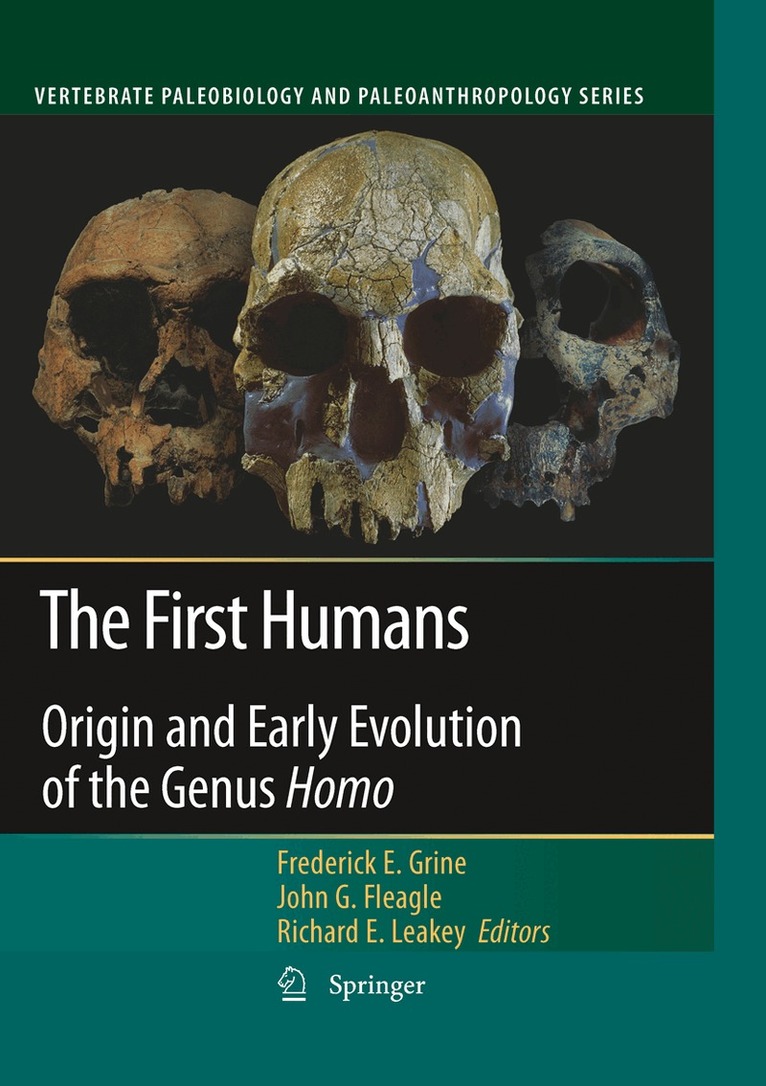
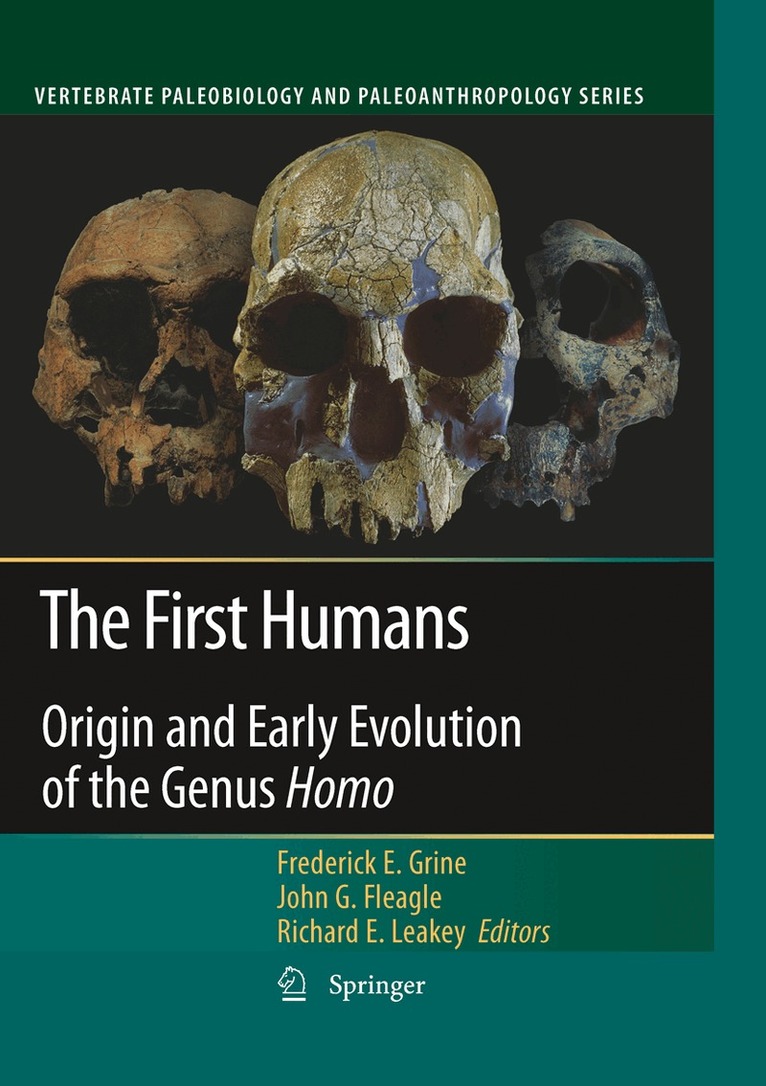
First Humans
Origin and Early Evolution of the Genus Homo
Av Frederick E. Grine, John G Fleagle m. fl.
Inbunden, 2009
1538 kr
Lägg i varukorg
There are some issues in human paleontology that seem to be timeless. Most deal with the origin and early evolution of our own genus – something about which we should care. Some of these issues pertain to taxonomy and systematics. How many species of Homo were there in the Pliocene and Pleistocene? …
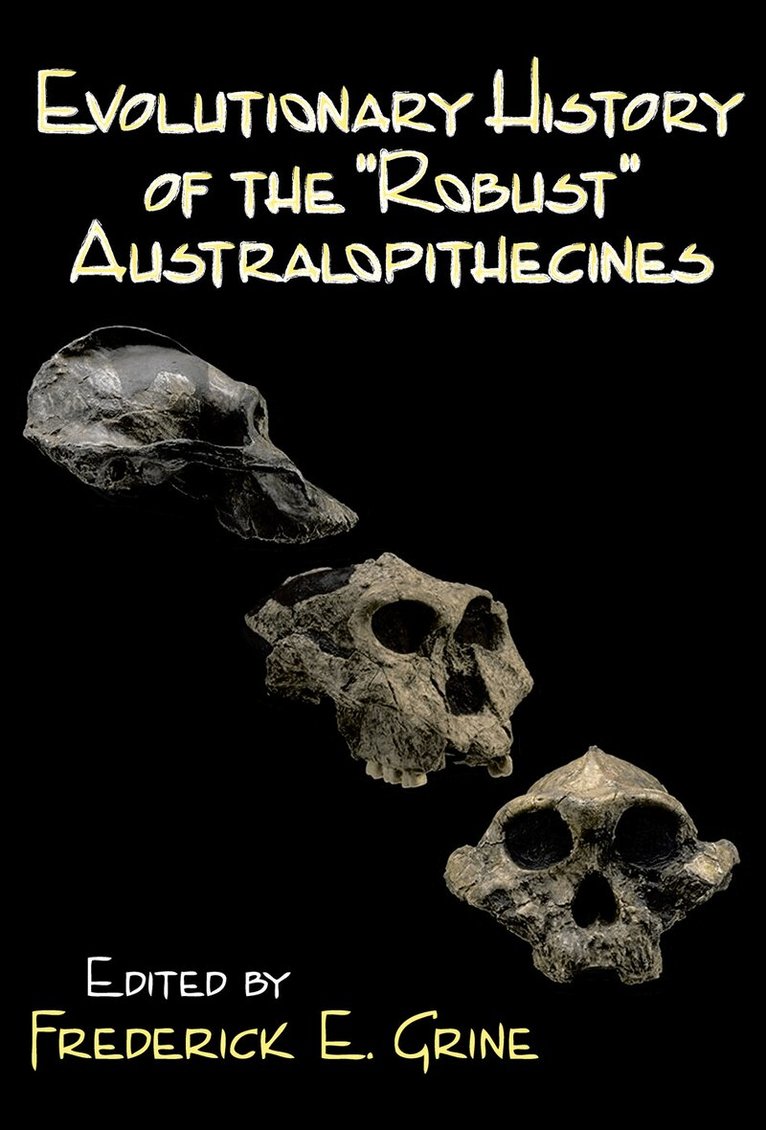
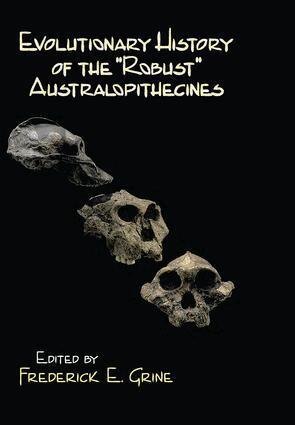
Evolutionary History of the Robust Australopithecines
Häftad, 2008
851 kr
Lägg i varukorg
In paleoanthropology the group of hominids known as the "robust" australopithecines has emerged as one of the most interesting. Through them we have the opportunity to examine the origin, natural history, and ultimate extinction of not just a single species, but of an entire branch in the hominid …
Evolutionary History of the Robust Australopithecines
E-bok, 2017
1034 kr
Lägg i varukorg
In paleoanthropology the group of hominids known as the "robust" australopithecines has emerged as one of the most interesting. Through them we have the opportunity to examine the origin, natural history, and ultimate extinction of not just a single species, but of an entire branch in the hominid …
Evolutionary History of the Robust Australopithecines
E-bok, 2017
1012 kr
Lägg i varukorg
In paleoanthropology the group of hominids known as the "robust" australopithecines has emerged as one of the most interesting. Through them we have the opportunity to examine the origin, natural history, and ultimate extinction of not just a single species, but of an entire branch in the hominid …
First Humans
Origin and Early Evolution of the Genus Homo
Av Richard E. Leakey, John G Fleagle m. fl.
E-bok, 2009
1948 kr
Lägg i varukorg
There are some issues in human paleontology that seem to be timeless. Most deal with the origin and early evolution of our own genus – something about which we should care. Some of these issues pertain to taxonomy and systematics. How many species of Homo were there in the Pliocene and Pleistocene? …
Hofmeyr
A Late Pleistocene Human Skull from South Africa
Inbunden, 2022
1321 kr
Lägg i varukorg
This edited volume provides the historical and geological background, as well as the details pertaining to the morphology and morphometric assessments, of a singular human cranial specimen from the Late Pleistocene discovered in Hofmeyr, South Africa. The chapters are divided into 4 main sections. …
Hofmeyr
A Late Pleistocene Human Skull from South Africa
E-bok, 2022
1838 kr
Lägg i varukorg
This edited volume provides the historical and geological background, as well as the details pertaining to the morphology and morphometric assessments, of a singular human cranial specimen from the Late Pleistocene discovered in Hofmeyr, South Africa. The chapters are divided into 4 main sections. …
Hofmeyr
A Late Pleistocene Human Skull from South Africa
Häftad, 2023
1321 kr
Lägg i varukorg
This edited volume provides the historical and geological background, as well as the details pertaining to the morphology and morphometric assessments, of a singular human cranial specimen from the Late Pleistocene discovered in Hofmeyr, South Africa. The chapters are divided into 4 main sections. …
First Humans
Origin and Early Evolution of the Genus Homo
Av Frederick E. Grine, John G Fleagle m. fl.
Häftad, 2010
1534 kr
Lägg i varukorg
There are some issues in human paleontology that seem to be timeless. Most deal with the origin and early evolution of our own genus – something about which we should care. Some of these issues pertain to taxonomy and systematics. How many species of Homo were there in the Pliocene and Pleistocene? …
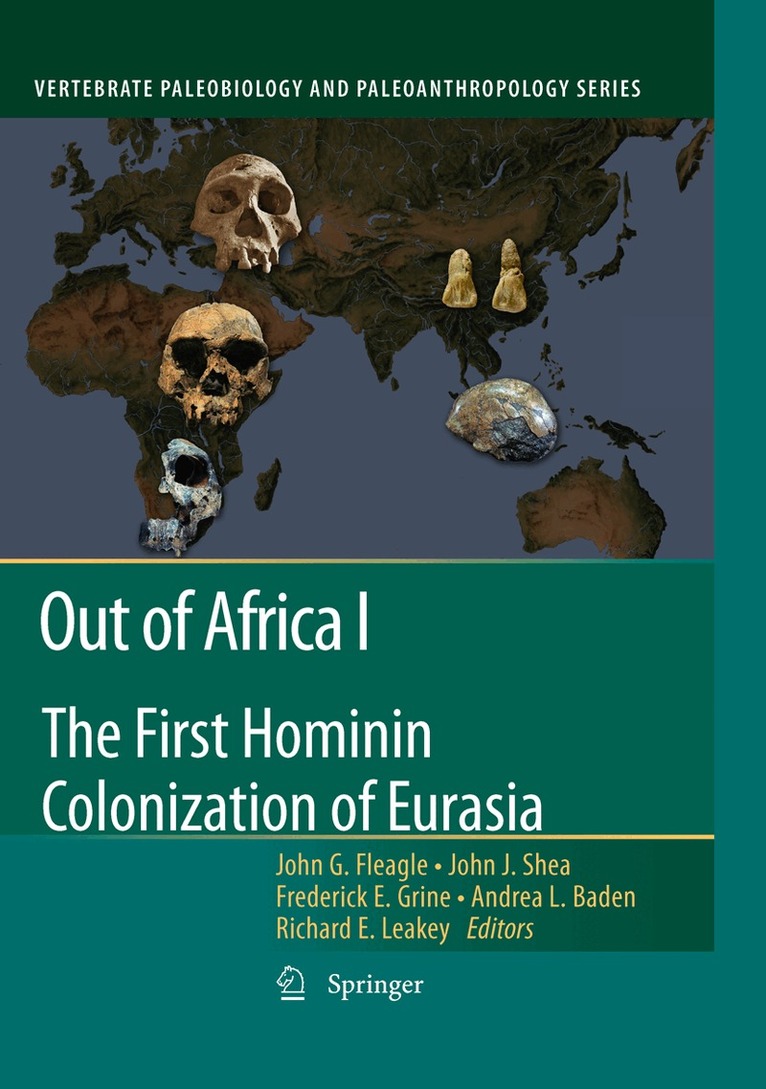
Out of Africa I
The First Hominin Colonization of Eurasia
Av John G Fleagle, John J. Shea m. fl.
Inbunden, 2010
1098 kr
Lägg i varukorg
For the first two thirds of our evolutionary history, we hominins were restricted to Africa. Dating from about two million years ago, hominin fossils first appear in Eurasia. This volume addresses many of the issues surrounding this initial hominin intercontinental dispersal. Why did hominins first …
Out of Africa I
The First Hominin Colonization of Eurasia
Av Richard E. Leakey, Andrea L. Baden m. fl.
E-bok, 2010
1459 kr
Lägg i varukorg
For the first two thirds of our evolutionary history, we hominins were restricted to Africa. Dating from about two million years ago, hominin fossils first appear in Eurasia. This volume addresses many of the issues surrounding this initial hominin intercontinental dispersal. Why did hominins first …
Out of Africa I
The First Hominin Colonization of Eurasia
Av John G Fleagle, John J. Shea m. fl.
Häftad, 2012
1098 kr
Lägg i varukorg
For the first two thirds of our evolutionary history, we hominins were restricted to Africa. Dating from about two million years ago, hominin fossils first appear in Eurasia. This volume addresses many of the issues surrounding this initial hominin intercontinental dispersal. Why did hominins first …
Evolutionary History of the Robust Australopithecines
Inbunden, 2017
1327 kr
Tillfälligt slut
In paleoanthropology the group of hominids known as the "robust" australopithecines has emerged as one of the most interesting. Through them we have the opportunity to examine the origin, natural history, and ultimate extinction of not just a single species, but of an entire branch in the hominid …