Frederick Lau - Böcker
Visar alla böcker från författaren Frederick Lau. Handla med fri frakt och snabb leverans.
11 produkter
11 produkter
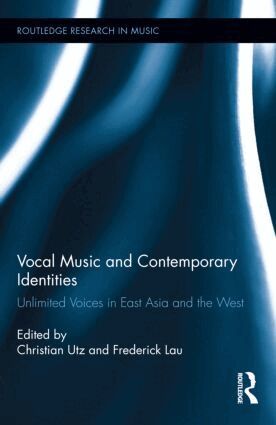
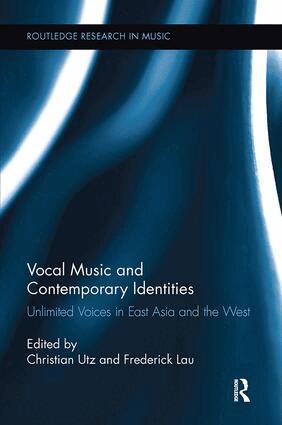
Vocal Music and Contemporary Identities
Unlimited Voices in East Asia and the West
Inbunden, Engelska, 2012
2 306 kr
Skickas inom 10-15 vardagar
Looking at musical globalization and vocal music, this collection of essays studies the complex relationship between the human voice and cultural identity in 20th- and 21st-century music in both East Asian and Western music. The authors approach musical meaning in specific case studies against the background of general trends of cultural globalization and the construction/deconstruction of identity produced by human (and artificial) voices. The essays proceed from different angles, notably sociocultural and historical contexts, philosophical and literary aesthetics, vocal technique, analysis of vocal microstructures, text/phonetics-music-relationships, historical vocal sources or models for contemporary art and pop music, and areas of conflict between vocalization, "ethnicity," and cultural identity. They pinpoint crucial topical features that have shaped identity-discourses in art and popular musical situations since the1950s, with a special focus on the past two decades. The volume thus offers a unique compilation of texts on the human voice in a period of heightened cultural globalization by utilizing systematic methodological research and firsthand accounts on compositional practice by current Asian and Western authors.
303 kr
Skickas inom 7-10 vardagar
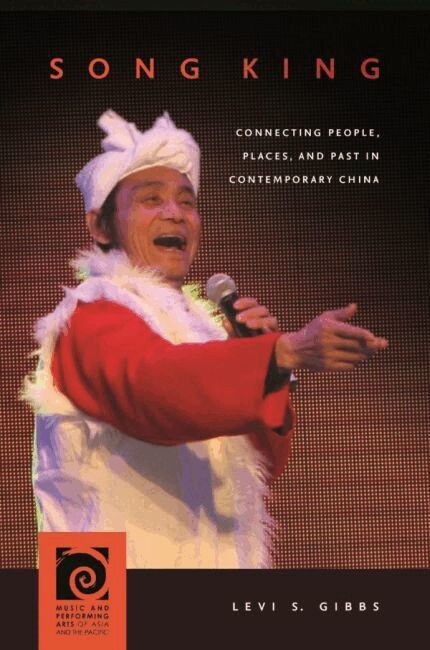
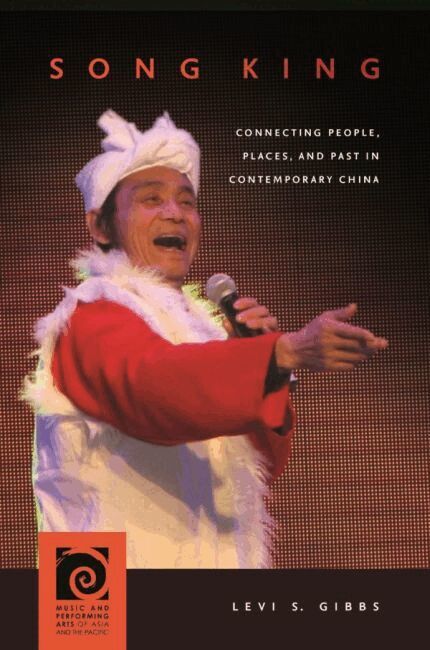
When itinerant singers from China’s countryside become iconic artists, worlds collide. The lives and performances of these representative singers become sites for conversations between the rural and urban, local and national, folk and elite, and traditional and modern. In Song King: Connecting People, Places, and Past in Contemporary China, Levi S. Gibbs examines the life and performances of "Folksong King of Western China" Wang Xiangrong (b. 1952) and explores how itinerant performers come to serve as representative symbols straddling different groups, connecting diverse audiences, and shifting between amorphous, place-based local, regional, and national identities. Moving from place to place, these border walkers embody connections between a range of localities, presenting audiences with traditional, modern, rural, and urban identities among which to continually reposition themselves in an evolving world.Born in a small mountain village near the intersection of the Great Wall and the Yellow River in a border region with a rich history of migration, Wang Xiangrong was exposed to a wide range of songs as a child. The songs of Wang’s youth prepared him to create a repertoire of region-representing pieces and mediate between regions, nations, and multinational corporations in national and international performances. During the course of a career that included meeting Deng Xiaoping in 1980 and running with the Olympic torch in 2008, Wang’s life, songs, and performances have come to highlight various facets of social identity in contemporary China. Drawing on extensive fieldwork with Wang and other professional folksingers from northern Shaanxi province at weddings, Chinese New Year galas, business openings, and Christmas concerts, Song King argues that songs act as public conversations people can join in on. As song kings and queens fuse personal and collective narratives in performances of iconic songs, they provide audiences with compelling models for socializing personal experience, negotiating a sense of self and group in an ever-changing world.
280 kr
Skickas inom 7-10 vardagar
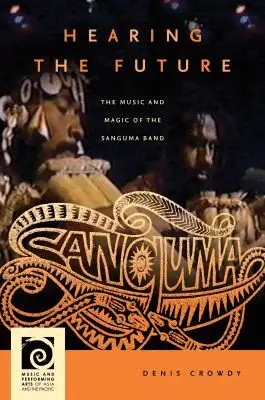
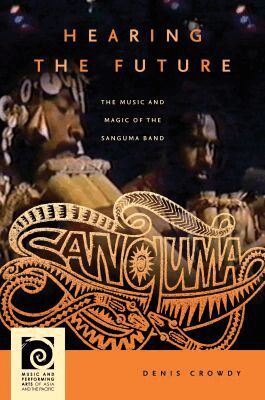
During the turbulent decades of the 1970s and 1980s, Papua New Guinea gained political independence from a colonial hold that had lasted almost a century. It was an exciting time for a diverse group of pioneering musicians who formed a band they named ""Sanguma."" These Melanesian artists heard an imagined future and performed it during a socially and politically critical time for the region. They were united under one goal: to create a sound that represented the birth of a new, sovereign, and distinctly Melanesian nation; and to express their values, identities, and cosmology through their music and performance. Sanguma's experimental music sounded the complex expectations and pressures of their modern nation and helped to steer its postcolonial journey through music.In Hearing the Future, Australian ethnomusicologist Denis Crowdy documents and analyzes the music and activities of the Sanguma band, arguing that their music was a vital form of cultural expression in sync with sociopolitical change then taking place in PNG. Drawing from rock, jazz, and nascent ""world music"" influences, Sanguma reached audiences far from their home nation, introducing the world to modern music, Melanesia-style, with its fusion of old and new, local and global. Performances ranged from ensembles of Melanesian log drums (garamuts) to extended songs and improvisations involving electric guitars, synthesizers, saxophone, trumpet, bamboo percussion, panpipes, and kuakumba flutes. The band sang in a variety of local vernacular languages, as well as in Tok Pisin and English. To further emphasize their ancestral style, the musicians wore decorative headdresses and body decoration from all around the nation, along with distinctive pants featuring indigenous designs.As the optimism of the early years of the nation faded due to harsh economic and social realities, and as an increasingly commercial popular music scene came to dominate public music culture, tensions between a once heard future and the sounding present emerged. Continuing a theoretical trajectory in ethnomusicology, Crowdy explores the role of music in imagining, constructing, and representing national and regional identity. The analysis reveals inherent tensions between distinctly Melanesian ideals and the complexities in navigating the realities of local neoliberal capitalism.
880 kr
Skickas inom 7-10 vardagar
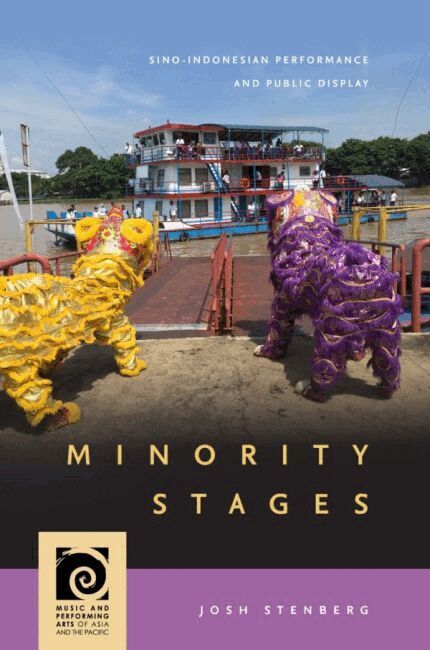
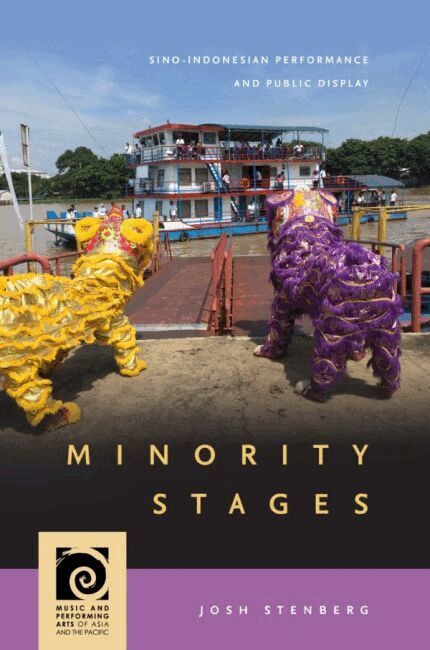
Minority Stages: Sino-Indonesian Performance and Public Display offers intriguing new perspectives on historical and contemporary Sino-Indonesian performance. For the first time in a major study, this community’s diverse performance practices are brought together as a family of genres. Combining fieldwork with evidence from Indonesian, Chinese, and Dutch primary and secondary sources, Josh Stenberg takes a close look at Chinese Indonesian self-representation, covering genres from the Dutch colonial period to the present day. From glove puppets of Chinese origin in East Java and Hakka religious processions in West Kalimantan, to wartime political theatre on Sumatra and contemporary Sino-Sundanese choirs and dance groups in Bandung, this book takes readers on a tour of hybrid and diverse expressions of identity, tracing the stories and strategies of minority self-representation over time. Each performance form is placed in its social and historical context, highlighting how Sino-Indonesian groups and individuals have represented themselves locally and nationally to the archipelago’s majority population as well as to Indonesian state power. In the last twenty years, the long political suppression of manifestations of Chinese culture in Indonesia has lifted, and a wealth of evidence now coming to light shows how Sino-Indonesians have long been an integral part of Indonesian culture, including the performing arts. Valorizing that contribution challenges essentialist readings of ethnicity or minority, complicates the profile of a group that is often considered solely in socioeconomic terms, and enriches the understanding of Indonesian culture, Southeast Asian Chinese identities, and transnational cultural exchanges. Minority Stages helps counter the dangerous either/or thinking that is a mainstay of ethnic essentialism in general and of Chinese and Indonesian nationalisms in particular, by showing the fluidity and adaptability of Sino-Indonesian identity as expressed in performance and public display.
757 kr
Skickas inom 7-10 vardagar
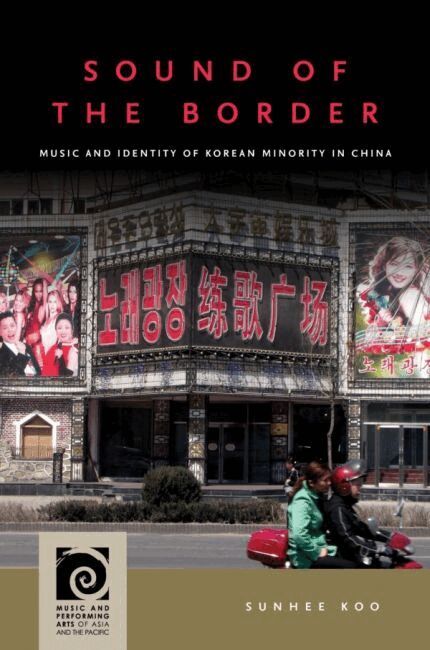
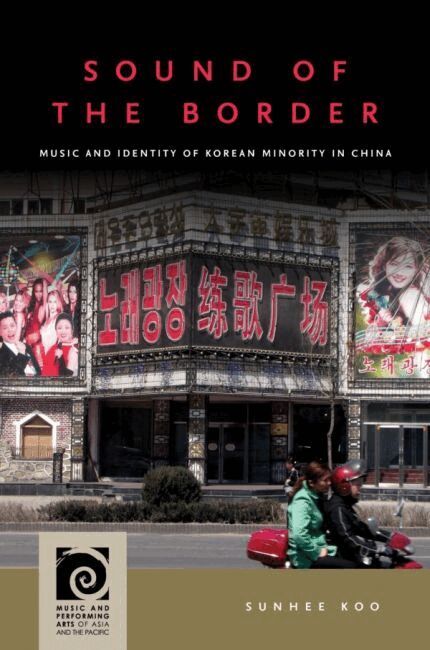
Using ethnographic data collected in China and South Korea between 2004 and 2011, Sound of the Border provides a comprehensive view of the music of Koreans in China (Chaoxianzu), from its time as manifestation of a displaced culture to its return home after more than a century of amalgamation and change in China. As the first English-language book on the music and identity of China's Korean minority community, this study investigates diasporic mutations of Korean culture, influenced by power dynamics in the host country and the constant renewal of relationships with the homeland. Between the 1860s and the 1940s, about two million Koreans migrated to China in search of economic opportunity and political stability. Settling primarily in the northeastern part of China bordering the Russian Far East, these Koreans had flexibility in crossing geopolitical and cultural boundaries throughout the first half of the twentieth century. In 1949, the majority of Koreans in China accepted their new citizenship designation as one of the PRC's fifty-five official national minorities. The subsequent partition of the Korean peninsula in 1953 further politicized their ethnic identity, and for the next forty years they were only authorized to interact with North Korea. It was only in the early 1990s that Chaoxianzu were able to renew their relationship with South Korea, although they now faced new challenges due to an ethno-national prejudice as it focused on the nation's industrial advancement as the most prominent measure of its social superiority.Sunhee Koo examines the unique construction of diasporic Korean music in China and uses it as a window to understanding the complexities and diversification of Korean identity, shaped by the ideological and political bifurcation and post-Cold War political resurgence that have affected Northeast Asia. The performances of Korean Chinese musicians-positioned between their adopted state and the two Koreas-embody a complex cultural intersection crisscrossing ideological, political, and social boundaries in historical and present-day Northeast Asia. Migrants enact their agency in creating a unique sound for Korean Chinese identity through navigating cultural resources accessed in their host and the two distinctive motherlands.
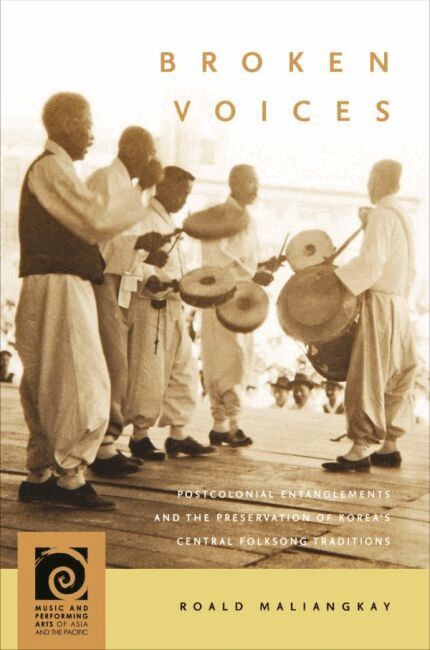
Broken Voices
Postcolonial Entanglements and the Preservation of Korea's Central Folksong Traditions
Häftad, Engelska, 2020
294 kr
Skickas inom 7-10 vardagar
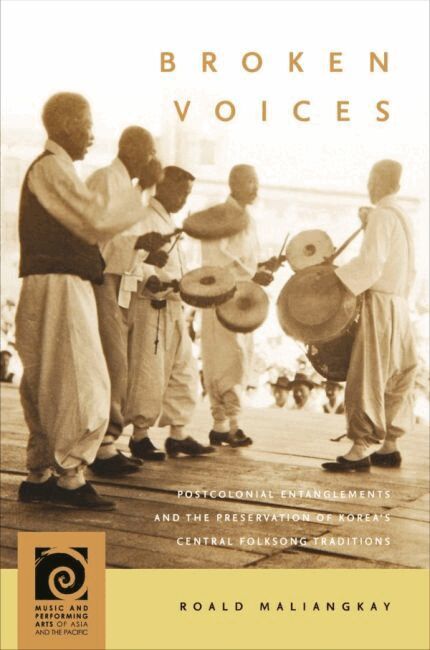
Broken Voices is the first English-language book on Korea's rich folksong heritage, and the first major study of the effects of Japanese colonialism on the intangible heritage of its former colony. Folksongs and other music traditions continue to be prominent in South Korea, which today is better known for its technological prowess and the Korean Wave of popular entertainment. In 2009, many Koreans reacted with dismay when China officially recognized the folksong Arirang, commonly regarded as the national folksong in North and South Korea, as part of its national intangible cultural heritage. They were vindicated when versions from both sides of the DMZ were included in UNESCO's Representative List of the Intangible Cultural Heritage of Humanity a few years later. At least on a national level, folksongs thus carry significant political importance. But what are these Korean folksongs about, and who has passed them on over the years, and how? Broken Voices describes how the major repertoires were transmitted and performed in and around Seoul. It sheds light on the training and performance of professional entertainment groups and singers, including kisaeng, the entertainment girls often described as Korean geisha. Personal stories of noted singers describe how the colonial period, the media, the Korean War, and personal networks have affected work opportunities and the standardization of genres.As the object of resentment (and competition) and a source of creative inspiration, the image of Japan has long affected the way in which Koreans interpret their own culture. Roald Maliangkay describes how an elaborate system of heritage management was first established in modern Korea and for what purposes. His analysis uncovers that folksong traditions have changed significantly since their official designation; one major change being gender representation and its effect on sound and performance. Ultimately, Broken Voices raises an important issue of cultural preservation-traditions that fail to attract practitioners and audiences are unsustainable, so compromises may be unwelcome, but imperative.
294 kr
Skickas inom 7-10 vardagar
Minority Stages: Sino-Indonesian Performance and Public Display offers intriguing new perspectives on historical and contemporary Sino-Indonesian performance. For the first time in a major study, this community’s diverse performance practices are brought together as a family of genres. Combining fieldwork with evidence from Indonesian, Chinese, and Dutch primary and secondary sources, Josh Stenberg takes a close look at Chinese Indonesian self-representation, covering genres from the Dutch colonial period to the present day. From glove puppets of Chinese origin in East Java and Hakka religious processions in West Kalimantan, to wartime political theatre on Sumatra and contemporary Sino-Sundanese choirs and dance groups in Bandung, this book takes readers on a tour of hybrid and diverse expressions of identity, tracing the stories and strategies of minority self-representation over time. Each performance form is placed in its social and historical context, highlighting how Sino-Indonesian groups and individuals have represented themselves locally and nationally to the archipelago’s majority population as well as to Indonesian state power. In the last twenty years, the long political suppression of manifestations of Chinese culture in Indonesia has lifted, and a wealth of evidence now coming to light shows how Sino-Indonesians have long been an integral part of Indonesian culture, including the performing arts. Valorizing that contribution challenges essentialist readings of ethnicity or minority, complicates the profile of a group that is often considered solely in socioeconomic terms, and enriches the understanding of Indonesian culture, Southeast Asian Chinese identities, and transnational cultural exchanges. Minority Stages helps counter the dangerous either/or thinking that is a mainstay of ethnic essentialism in general and of Chinese and Indonesian nationalisms in particular, by showing the fluidity and adaptability of Sino-Indonesian identity as expressed in performance and public display.
294 kr
Skickas inom 7-10 vardagar
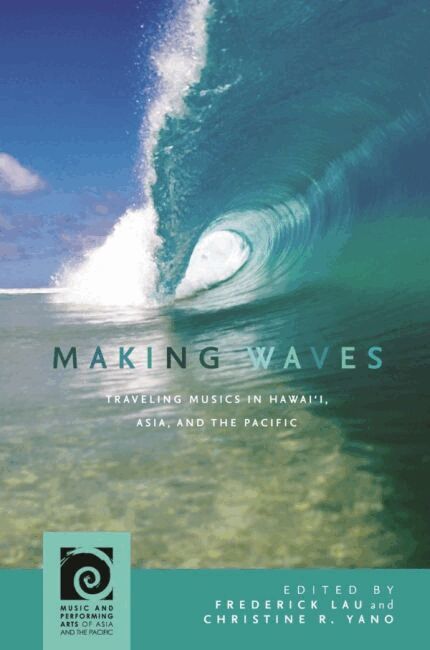
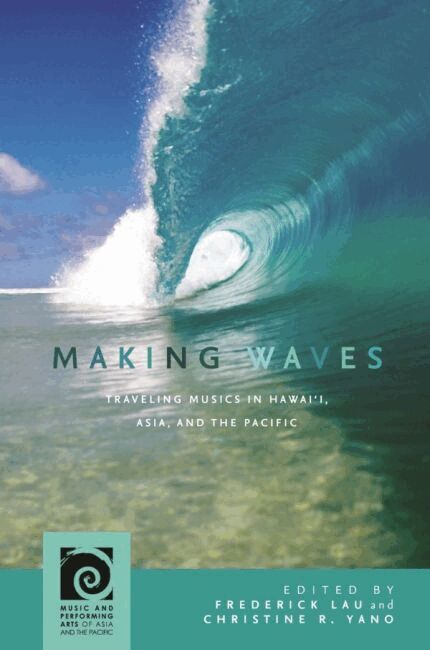
Musical sounds are some of the most mobile human elements, crossing national, cultural, and regional boundaries at an ever-increasing pace in the twentieth and twenty-first centuries. Whole musical products travel easily, though not necessarily intact, via musicians, CDs (and earlier, cassettes), satellite broadcasting, digital downloads, and streaming. The introductory chapter by the volume editors develops two framing metaphors: "traveling musics" and "making waves." The wave-making metaphor illuminates the ways that traveling musics traverse flows of globalization and migration, initiating change, and generating energy of their own. Each of the nine contributors further examines music—its songs, makers, instruments, aurality, aesthetics, and images—as it crosses oceans, continents, and islands. In the process of landing in new homes, music interacts with older established cultural environments, sometimes in unexpected ways and with surprising results. They see these traveling musics in Hawai‘i, Asia, and the Pacific as "making waves"—that is, not only riding flows of globalism, but instigating ripples of change. What is the nature of those ripples? What constitutes some of the infrastructure for the wave itself? What are some of the effects of music landing on, transported to, or appropriated from distant shores? How does the Hawai‘i-Asia-Pacific context itself shape and get shaped by these musical waves? The two poetic and evocative metaphors allow the individual contributors great leeway in charting their own course while simultaneously referring back to the influence of their mentor and colleague Ricardo D. Trimillos, whom they identify as "the wave maker." The volume attempts to position music as at once ritual and entertainment, esoteric and exoteric, tradition and creativity, within the cultural geographies of Hawai‘i, Asia, and the Pacific. In doing so, they situate music at the very core of global human endeavors.
771 kr
Skickas inom 7-10 vardagar
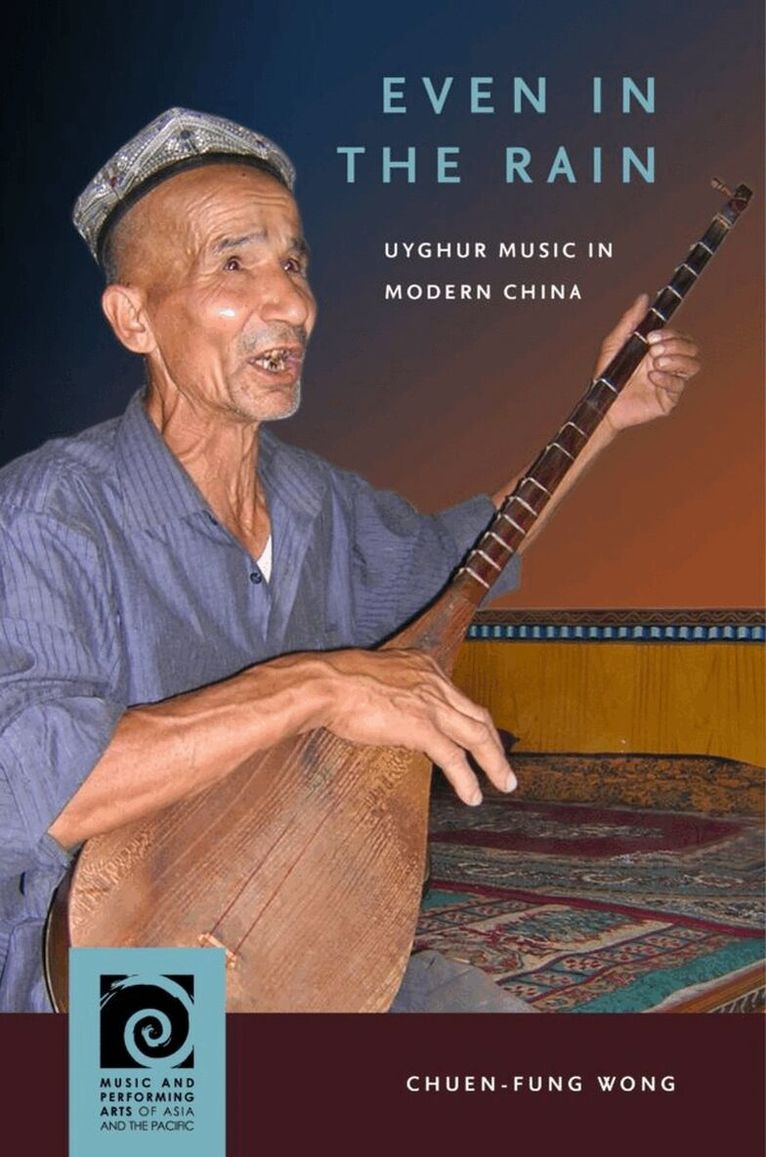
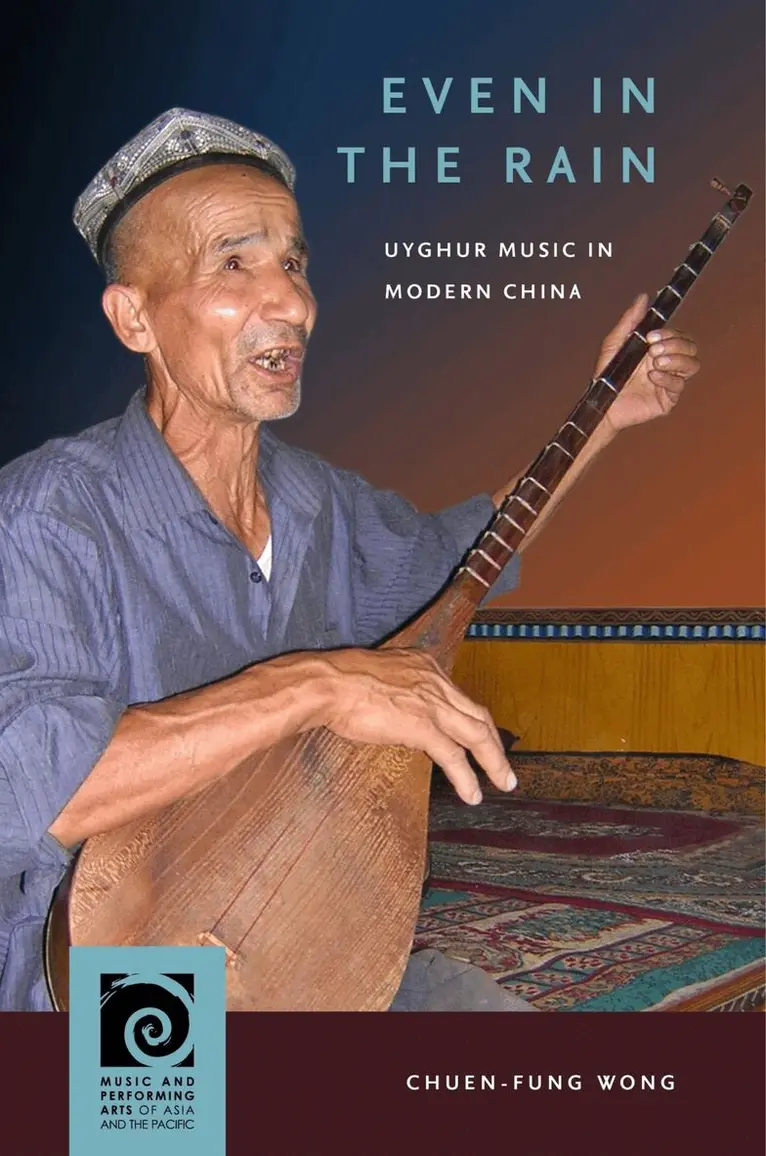
Even in the Rain: Uyghur Music in Modern China explores music as constitutive of Uyghur cultural and social life where subaltern experiences of ethnicity, race, and nationhood are indexed. A Central Asian Turkic-speaking, predominantly Muslim people, the Uyghur are identified in China as one of the fifty-five officially designated "minority nationalities." Drawing on extensive fieldwork in the Uyghur homeland in the far Chinese northwest, Chuen-Fung Wong focuses on aspects of Uyghur music making as it faces the state’s management of minority art expressions. Music serves as a metaphor of the Uyghur nation--as heritage (miras), culture (medeniyet), and tradition (en’ene)--while it struggles to survive, respond, and adapt to the Chinese state’s aggressive maneuvering and the broader intercultural influences that have shaped Uyghur performing arts in modern times. As the Uyghur and other non-Han peoples in China continue to be minoritized under the pretexts of multiculturalism and cultural enlightenment, local musicians and audiences react with a vast range of performing and listening approaches to engage assimilation, racism, and other grim realities of everyday life.Even in the Rain provides the political, historical, and theoretical context to address overlapping genres and soundscapes, which are bound by creative processes that have negotiated the state’s minority policy and the collective pursuit of identity. With a focus on the minoritized musical consciousness in Uyghur performance, especially on the ways in which Uyghur musicians encounter modernity under a colonial context, this book examines the cultivation of a unique musical deftness that has allowed musicians to move across the various localizing strategies and intercultural practices. Uyghur musical modernity should not be understood as the passive acceptance of outside influences--and certainly not the erasure of indigenous elements and national heritage. Local traditions and hegemonic influences sometimes appear to be more collaborating than conflicting, in that subaltern expressions actively opt to manifest in forms that are dominant and deemed universal. This timely and comprehensive analysis spans approximately seven decades of modern Uyghur musical life, during which musicians and audiences adopted an array of methods, experimenting with new identity formations to navigate life as often reluctant Chinese citizens.
294 kr
Skickas inom 7-10 vardagar
Even in the Rain: Uyghur Music in Modern China explores music as constitutive of Uyghur cultural and social life where subaltern experiences of ethnicity, race, and nationhood are indexed. A Central Asian Turkic-speaking, predominantly Muslim people, the Uyghur are identified in China as one of the fifty-five officially designated "minority nationalities." Drawing on extensive fieldwork in the Uyghur homeland in the far Chinese northwest, Chuen-Fung Wong focuses on aspects of Uyghur music making as it faces the state’s management of minority art expressions. Music serves as a metaphor of the Uyghur nation--as heritage (miras), culture (medeniyet), and tradition (en’ene)--while it struggles to survive, respond, and adapt to the Chinese state’s aggressive maneuvering and the broader intercultural influences that have shaped Uyghur performing arts in modern times. As the Uyghur and other non-Han peoples in China continue to be minoritized under the pretexts of multiculturalism and cultural enlightenment, local musicians and audiences react with a vast range of performing and listening approaches to engage assimilation, racism, and other grim realities of everyday life.Even in the Rain provides the political, historical, and theoretical context to address overlapping genres and soundscapes, which are bound by creative processes that have negotiated the state’s minority policy and the collective pursuit of identity. With a focus on the minoritized musical consciousness in Uyghur performance, especially on the ways in which Uyghur musicians encounter modernity under a colonial context, this book examines the cultivation of a unique musical deftness that has allowed musicians to move across the various localizing strategies and intercultural practices. Uyghur musical modernity should not be understood as the passive acceptance of outside influences--and certainly not the erasure of indigenous elements and national heritage. Local traditions and hegemonic influences sometimes appear to be more collaborating than conflicting, in that subaltern expressions actively opt to manifest in forms that are dominant and deemed universal. This timely and comprehensive analysis spans approximately seven decades of modern Uyghur musical life, during which musicians and audiences adopted an array of methods, experimenting with new identity formations to navigate life as often reluctant Chinese citizens.
Vocal Music and Contemporary Identities
Unlimited Voices in East Asia and the West
Häftad, Engelska, 2017
689 kr
Skickas inom 10-15 vardagar
Looking at musical globalization and vocal music, this collection of essays studies the complex relationship between the human voice and cultural identity in 20th- and 21st-century music in both East Asian and Western music. The authors approach musical meaning in specific case studies against the background of general trends of cultural globalization and the construction/deconstruction of identity produced by human (and artificial) voices. The essays proceed from different angles, notably sociocultural and historical contexts, philosophical and literary aesthetics, vocal technique, analysis of vocal microstructures, text/phonetics-music-relationships, historical vocal sources or models for contemporary art and pop music, and areas of conflict between vocalization, "ethnicity," and cultural identity. They pinpoint crucial topical features that have shaped identity-discourses in art and popular musical situations since the1950s, with a special focus on the past two decades. The volume thus offers a unique compilation of texts on the human voice in a period of heightened cultural globalization by utilizing systematic methodological research and firsthand accounts on compositional practice by current Asian and Western authors.