Hans Schaffers - Böcker
Visar alla böcker från författaren Hans Schaffers. Handla med fri frakt och snabb leverans.
6 produkter
6 produkter
Future Internet
Future Internet Assembly 2011: Achievements and Technological Promises
Häftad, Engelska, 2011
534 kr
Skickas inom 10-15 vardagar
Irrespective of whether we use economic or societal metrics, the Internet is one of the most important technical infrastructures in existence today. It will be a catalyst for much of our innovation and prosperity in the future. A competitive Europe will require Internet connectivity and services beyond the capabilities offered by current technologies. Future Internet research is therefore a must. This book is published in full compliance with the Open Access publishing initiative; it is based on the research carried out within the Future Internet Assembly (FIA). It contains a sample of representative results from the recent FIA meetings spanning a broad range of topics, all being of crucial importance for the future Internet. The book includes 32 contributions and has been structured into the following sections, each of which is preceded by a short introduction:Foundations: architectural issues; socio-economic issues; security and trust; and experiments and experimental design. Future Internet Areas: networks, services, and content; and applications.
534 kr
Skickas inom 10-15 vardagar
Irrespective of whether we use economic or societal metrics, the Internet is one of the most important technical infrastructures in existence today. It will serve as a catalyst for much of our innovation and prosperity in the future. A competitive Europe will require Internet connectivity and services beyond the capabilities offered by current technologies. Future Internet research is therefore a must.The Future Internet Assembly (FIA) is a successful and unique bi-annual conference that brings together participants of over 150 projects from several distinct but interrelated areas in the EU Framework Programme 7. The 20 full papers included in this volume were selected from 40 submissions, and are preceded by a vision paper describing the FIA Roadmap. The papers have been organized into topical sections on the foundations of Future Internet, the applications of Future Internet, Smart Cities, and Future Internet infrastructures.
609 kr
Skickas inom 10-15 vardagar
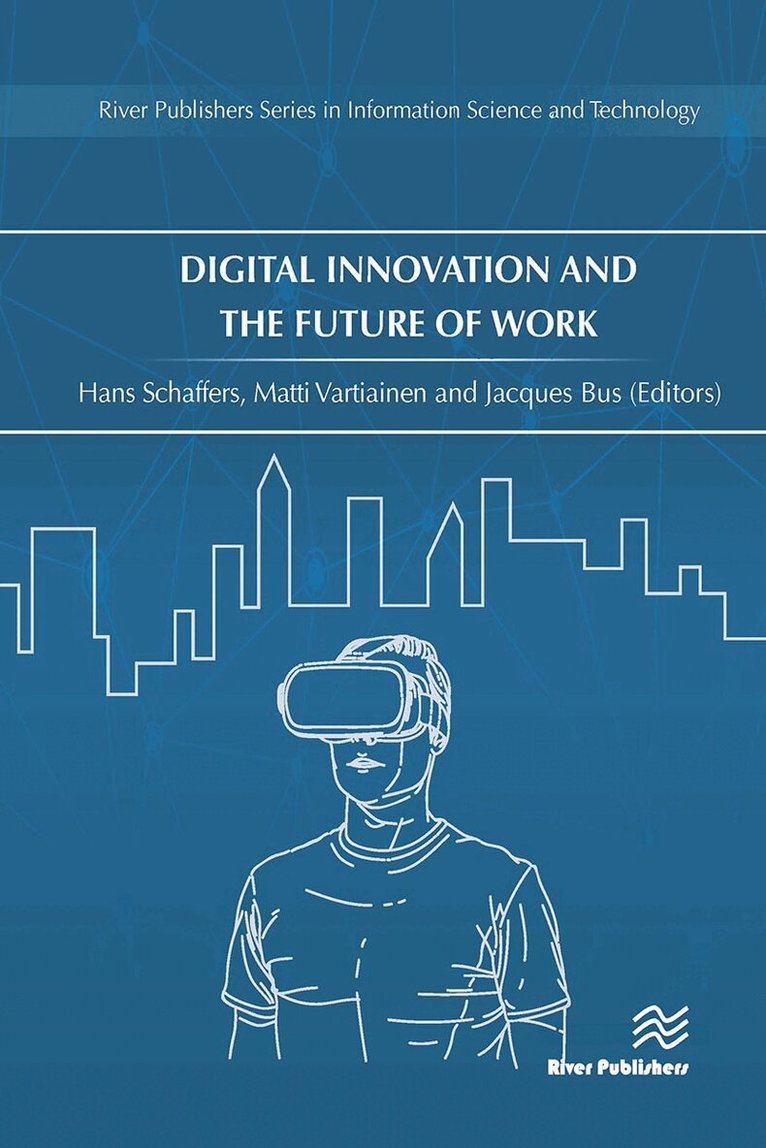
The concept of digitalization captures the widespread adoption of digital technologies in our lives, in the structure and functioning of organizations and in the transformation of our economy and society. Digital technologies for data processing and communication underly high-impact innovations including the Internet of Things, wireless multimedia, artificial intelligence, big data, enterprise platforms, social networks and blockchain. These digital innovations not only bring new opportunities for prosperity and wellbeing but also affect our behaviors, activities, and daily lives. They enable and shape new forms of production and new working practices in sectors such as manufacturing, healthcare, logistics and supply chains, energy, and public and business services. Digital innovations are not purely technological but form part of comprehensive systemic innovations of a sociotechnical and networked nature, requiring the alignment of technology, processes, organizations, and humans. Examples are platform-based work, customer driven value creating networks, and urban public service systems. Building on widespread networking, algorithmic decisions and sharing of personal data, these innovations raise intensive societal and ethical debates regarding key issues such as data sovereignty and privacy intrusion, business models based on data surveillance and negative externalization, quality of work and jobs, and market dominance versus regulation. In this context, this book focuses on the implications of digitalization for the domain of work. The book studies the changing nature of work as well as new forms of digitally enabled organizations, work practices and cooperation. The book sheds light on the technological, economic, and political forces shaping the new world of work and on the prospects for human-centric and responsible innovations.
Building the Future Internet through FIRE
a Research and Experimentation based Approach
Häftad, Engelska, 2024
525 kr
Skickas inom 10-15 vardagar
The Internet as we know it today is the result of a continuous activity for improving network communications, end user services, computational processes and also information technology infrastructures. The Internet has become a critical infrastructure for the human-being by offering complex networking services and end-user applications that all together have transformed all aspects, mainly economical, of our lives. Recently, with the advent of new paradigms and the progress in wireless technology, sensor networks and information systems and also the inexorable shift towards everything connected paradigm, first as known as the Internet of Things and lately envisioning into the Internet of Everything, a data-driven society has been created. In a data-driven society, productivity, knowledge, and experience are dependent on increasingly open, dynamic, interdependent and complex Internet services. The challenge for the Internet of the Future design is to build robust enabling technologies, implement and deploy adaptive systems, to create business opportunities considering increasing uncertainties and emergent systemic behaviors where humans and machines seamlessly cooperate.
1 364 kr
Skickas inom 10-15 vardagar
The concept of digitalization captures the widespread adoption of digital technologies in our lives, in the structure and functioning of organizations and in the transformation of our economy and society. Digital technologies for data processing and communication underly high-impact innovations including the Internet of Things, wireless multimedia, artificial intelligence, big data, enterprise platforms, social networks and blockchain. These digital innovations not only bring new opportunities for prosperity and wellbeing but also affect our behaviors, activities, and daily lives. They enable and shape new forms of production and new working practices in sectors such as manufacturing, healthcare, logistics and supply chains, energy, and public and business services. Digital innovations are not purely technological but form part of comprehensive systemic innovations of a sociotechnical and networked nature, requiring the alignment of technology, processes, organizations, and humans. Examples are platform-based work, customer driven value creating networks, and urban public service systems. Building on widespread networking, algorithmic decisions and sharing of personal data, these innovations raise intensive societal and ethical debates regarding key issues such as data sovereignty and privacy intrusion, business models based on data surveillance and negative externalization, quality of work and jobs, and market dominance versus regulation. In this context, this book focuses on the implications of digitalization for the domain of work. The book studies the changing nature of work as well as new forms of digitally enabled organizations, work practices and cooperation. The book sheds light on the technological, economic, and political forces shaping the new world of work and on the prospects for human-centric and responsible innovations. To this end, the book brings together a number of studies in five major topics: 1. The evolution of digital technology impacting ways of working; 2. The role of artificial intelligence in new ways of working; 3. Transformation of work, jobs and employment; 4. Digitalization and need for skills and competencies; and 5. New forms of decentralized working and cooperation.
Building the Future Internet through FIRE
2016 FIRE Book: a Research and Experimentation based Approach
Inbunden, Engelska, 2017
1 224 kr
Skickas inom 10-15 vardagar
The Internet as we know it today is the result of a continuous activity for improving network communications, end user services, computational processes and also information technology infrastructures. The Internet has become a critical infrastructure for the human-being by offering complex networking services and end-user applications that all together have transformed all aspects, mainly economical, of our lives. Recently, with the advent of new paradigms and the progress in wireless technology, sensor networks and information systems and also the inexorable shift towards everything connected paradigm, first as known as the Internet of Things and lately envisioning into the Internet of Everything, a data-driven society has been created. In a data-driven society, productivity, knowledge, and experience are dependent on increasingly open, dynamic, interdependent and complex Internet services. The challenge for the Internet of the Future design is to build robust enabling technologies, implement and deploy adaptive systems, to create business opportunities considering increasing uncertainties and emergent systemic behaviors where humans and machines seamlessly cooperate.