Henri Lonitz - Böcker
Visar alla böcker från författaren Henri Lonitz. Handla med fri frakt och snabb leverans.
8 produkter
8 produkter
447 kr
Skickas inom 10-15 vardagar
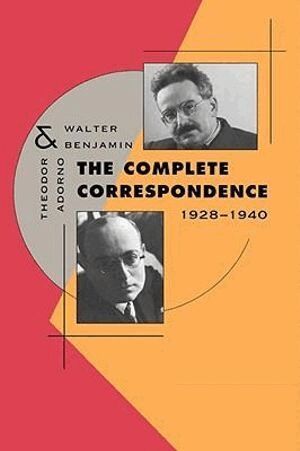
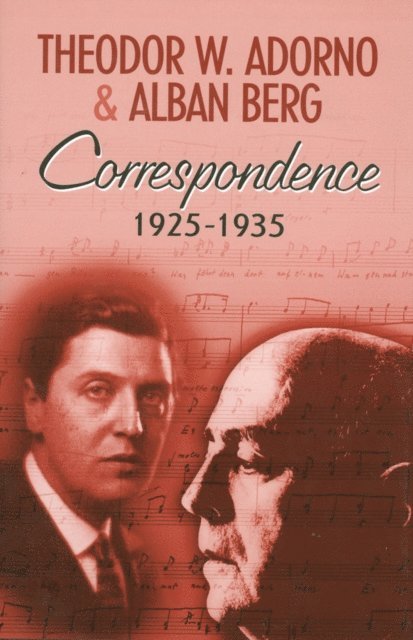
The correspondence between Walter Benjamin and Theodor Adorno, which appears here for the first time in its entirety in English translation, must rank among the most significant to have come down to us from that notable age of barbarism, the twentieth century. Benjamin and Adorno formed a uniquely powerful pair. Benjamin, riddle-like in his personality and given to tactical evasion, and Adorno, full of his own importance, alternately support and compete with each other throughout the correspondence, until its imminent tragic end becomes apparent to both writers. Each had met his match, and happily, in the other. This book is the story of an elective affinity. Adorno was the only person who managed to sustain an intimate intellectual relationship with Benjamin for nearly twenty years. No one else, not even Gershom Scholem, coaxed so much out of Benjamin.The more than one hundred letters in this book will allow readers to trace the developing character of Benjamin's and Adorno's attitudes toward each other and toward their many friends. When this book appeared in German, it caused a sensation because it includes passages previously excised from other German editions of the letters--passages in which the two friends celebrate their own intimacy with frank remarks about other people. Ideas presented elliptically in the theoretical writings are set forth here with much greater clarity. Not least, the letters provide material crucial for understanding the genesis of Benjamin's Arcades Project.
162 kr
Skickas inom 7-10 vardagar
In December 1945 Thomas Mann wrote a famous letter to Adorno in which he formulated the principle of montage adopted in his novel Doctor Faustus. The writer expressly invited the philosopher to 'consider, with me, how such a work - and I mean Leverkuhn's work - could more or less be practically realized'. Their close collaboration on questions concerning the character of the fictional composer's putatively late works (Adorno produced specific sketches which are included as an appendix to the present volume) effectively laid the basis for a further exchange of letters.The ensuing correspondence between the two men documents a rare encounter of creative tension between literary tradition and aesthetic modernism which would be sustained right up until the novelist's death in 1955. In the letters, Thomas Mann openly acknowledged his 'fascinated reading' of Adorno's Minima Moralia and commented in detail on the 'Essay on Wagner', which he was as eager to read as 'the one in the Book of Revelation consumes a book which tastes "as sweet as honey"'. Adorno in turn offered detailed observations upon and frequently enthusiastic commendations of Mann's later writings, such as The Holy Sinner, The Betrayed One and The Confessions of Felix Krull. Their correspondence also touches upon issues of great personal significance, notably the sensitive discussion of the problems of returning from exile to postwar Germany.The letters are extensively annotated and offer the reader detailed notes concerning the writings, events and personalities referred or alluded to in the correspondence.
273 kr
Kommande
789 kr
Skickas inom 7-10 vardagar
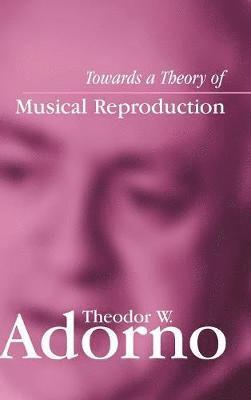
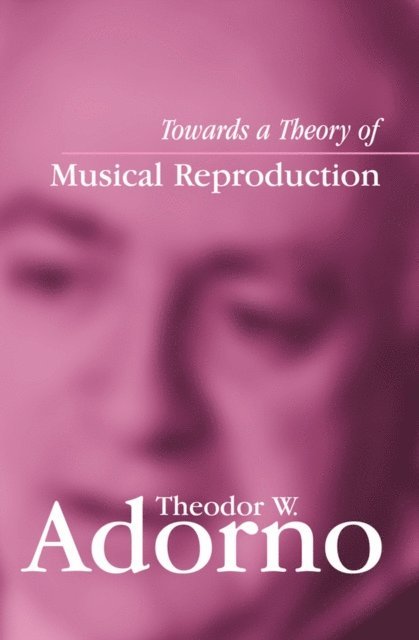
At the beginning of his career in the 1920s, Adorno sketched a plan to write a major work on the theory of musical reproduction, a task he returned to time and again throughout his career but never completed. The choice of the word reproduction as opposed to interpretation indicates a primary supposition: that there is a clearly defined musical text whose precision exceeds what is visible on the page, and that the performer has the responsibility to reproduce it as accurately as possible, beyond simply playing what is written. This task, according to Adorno, requires a detailed understanding of all musical parameters in their historical context, and his reflections upon this task lead to a fundamental study of the nature of notation and musical sense. In the various notes and texts brought together in Towards a Theory of Musical Reproduction, one finds Adorno constantly circling around an irresolvable paradox: interpretation can only fail the work, yet only through it can musics true essence be captured. While he at times seems more definite in his pronouncement of a musical scores absolute value just as a book is read silently, not aloud his discourse repeatedly displays his inability to cling to that belief. It is this quality of uncertainty in his reflections that truly indicates the scope of the discourse and its continuing relevance to musical thought and practice today.
286 kr
Skickas inom 11-20 vardagar
At the beginning of his career in the 1920s, Adorno sketched a plan to write a major work on the theory of musical reproduction, a task he returned to time and again throughout his career but never completed. The choice of the word reproduction as opposed to interpretation indicates a primary supposition: that there is a clearly defined musical text whose precision exceeds what is visible on the page, and that the performer has the responsibility to reproduce it as accurately as possible, beyond simply playing what is written. This task, according to Adorno, requires a detailed understanding of all musical parameters in their historical context, and his reflections upon this task lead to a fundamental study of the nature of notation and musical sense. In the various notes and texts brought together in Towards a Theory of Musical Reproduction, one finds Adorno constantly circling around an irresolvable paradox: interpretation can only fail the work, yet only through it can musics true essence be captured. While he at times seems more definite in his pronouncement of a musical scores absolute value just as a book is read silently, not aloud his discourse repeatedly displays his inability to cling to that belief. It is this quality of uncertainty in his reflections that truly indicates the scope of the discourse and its continuing relevance to musical thought and practice today.
172 kr
Skickas inom 3-6 vardagar
320 kr
Skickas inom 3-6 vardagar
803 kr
Skickas inom 3-6 vardagar