Herbert S. Lin – författare
Visar alla böcker från författaren Herbert S. Lin. Handla med fri frakt och snabb leverans.
28 produkter
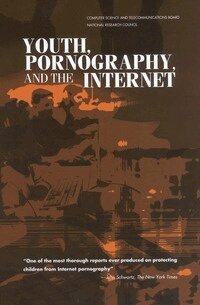
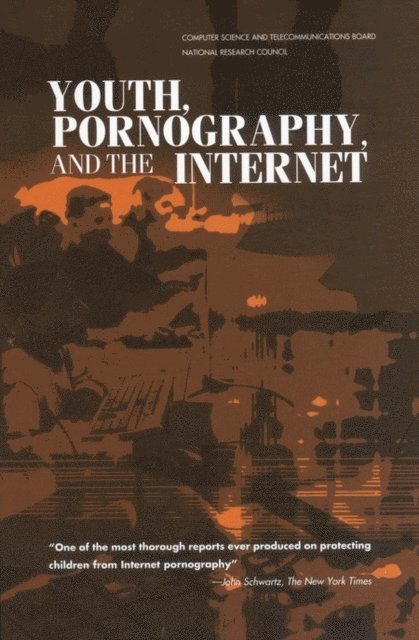
Youth, Pornography, and the Internet
Av National Research Council, Computer Science and Telecommunications Board m. fl.
Häftad, 2002
815 kr
Lägg i varukorg
The Internet has changed the way we access the world. This is especially true for kids, who soak up new technologies like eager little sponges. They have access to an enormous array of material, including educational links, sports info, chat roomsa "and, unfortunately, pornography. But we must …
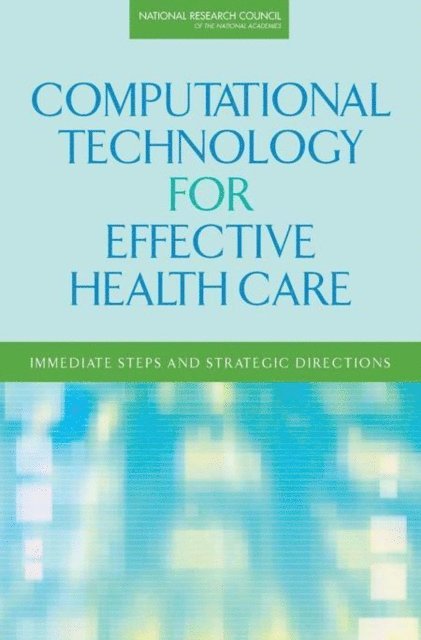
Computational Technology for Effective Health Care
Immediate Steps and Strategic Directions
Av Committee on Engaging the Computer Science Research Community in Health Care Informatics, Computer Science and Telecommunications Board m. fl.
E-bok, 2009
468 kr
Lägg i varukorg
Despite a strong commitment to delivering quality health care, persistent problems involving medical errors and ineffective treatment continue to plague the industry. Many of these problems are the consequence of poor information and technology (IT) capabilities, and most importantly, the lack …
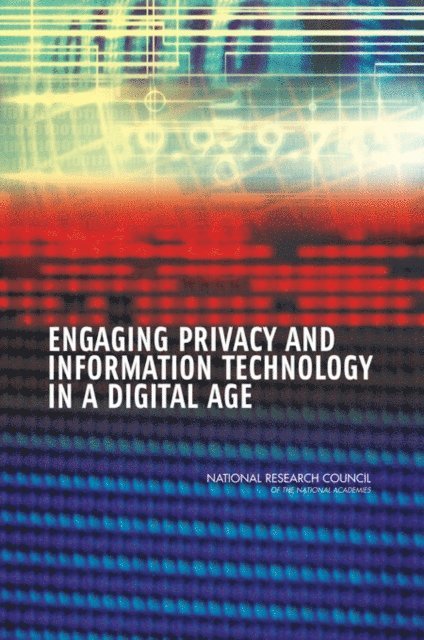
Engaging Privacy and Information Technology in a Digital Age
Av Committee on Privacy in the Information Age, Computer Science and Telecommunications Board m. fl.
E-bok, 2007
813 kr
Lägg i varukorg
Privacy is a growing concern in the United States and around the world. The spread of the Internet and the seemingly boundaryless options for collecting, saving, sharing, and comparing information trigger consumer worries. Online practices of business and government agencies may present new ways to …
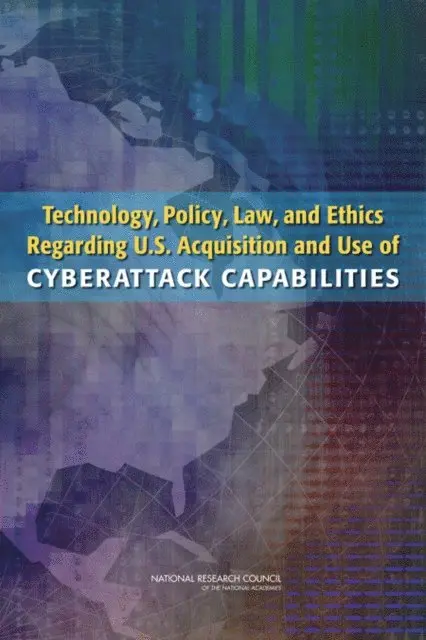
Technology, Policy, Law, and Ethics Regarding U.S. Acquisition and Use of Cyberattack Capabilities
Av Committee on Offensive Information Warfare, Computer Science and Telecommunications Board m. fl.
E-bok, 2009
650 kr
Lägg i varukorg
The United States is increasingly dependent on information and information technology for both civilian and military purposes, as are many other nations. Although there is a substantial literature on the potential impact of a cyberattack on the societal infrastructure of the United States, little …
Computational Technology for Effective Health Care
Immediate Steps and Strategic Directions
Av Committee on Engaging the Computer Science Research Community in Health Care Informatics, Computer Science and Telecommunications Board m. fl.
E-bok, 2009
681 kr
Lägg i varukorg
Despite a strong commitment to delivering quality health care, persistent problems involving medical errors and ineffective treatment continue to plague the industry. Many of these problems are the consequence of poor information and technology (IT) capabilities, and most importantly, the lack …
Catalyzing Inquiry at the Interface of Computing and Biology
Av Committee on Frontiers at the Interface of Computing and Biology, Computer Science and Telecommunications Board m. fl.
E-bok, 2005
1039 kr
Lägg i varukorg
Advances in computer science and technology and in biology over the last several yearshave opened up the possibility for computing to help answer fundamental questions inbiology and for biology to help with new approaches to computing. Making the most ofthe research opportunities at the interface …
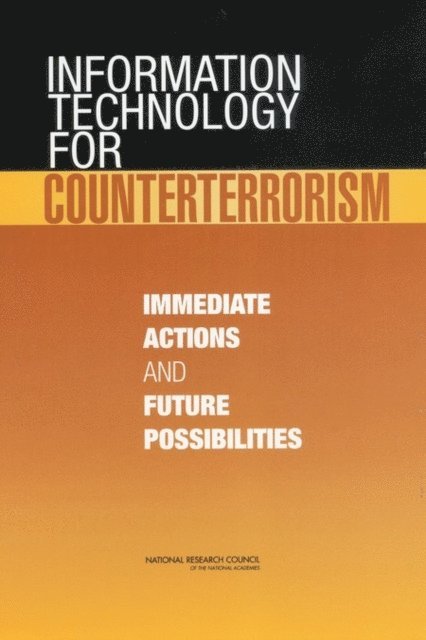
Information Technology for Counterterrorism
Immediate Actions and Future Possibilities
Av Committee on the Role of Information Technology in Responding to Terrorism, Computer Science and Telecommunications Board m. fl.
E-bok, 2003
624 kr
Lägg i varukorg
Information technology (IT) is essential to virtually all of the nation''s critical infrastructures making them vulnerable by a terrorist attack on their IT system. An attack could be on the system itself or use the IT system to launch or exacerbate another type of attack. IT can also be used as a …
Youth, Pornography, and the Internet
Av Committee to Study Tools and Strategies for Protecting Kids from Pornography and Their Applicability to Other Inappropriate Internet Content, Computer Science and Telecommunications Board m. fl.
E-bok, 2002
981 kr
Lägg i varukorg
The Internet has changed the way we access the world. This is especially true for kids, who soak up new technologies like eager little sponges. They have access to an enormous array of material, including educational links, sports info, chat rooms—and, unfortunately, pornography. But we must …
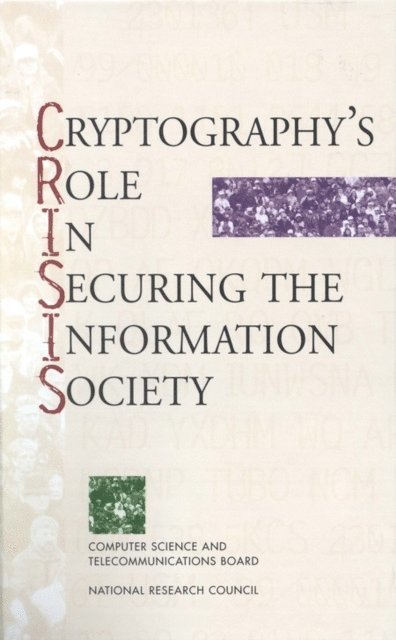
Cryptography's Role in Securing the Information Society
Av Committee to Study National Cryptography Policy, Computer Science and Telecommunications Board m. fl.
E-bok, 1996
1134 kr
Lägg i varukorg
For every opportunity presented by the information age, there is an opening to invade the privacy and threaten the security of the nation, U.S. businesses, and citizens in their private lives. The more information that is transmitted in computer-readable form, the more vulnerable we become to …
Review of the FBI's Trilogy Information Technology Modernization Program
Av Committee on the FBI's Trilogy Information Technology Modernization Program, Computer Science and Telecommunications Board m. fl.
E-bok, 2004
416 kr
Lägg i varukorg
The Federal Bureau of Investigation (FBI) is in the process of developing a modern information technology (IT) system—the Trilogy program— that is designed to provide a high-speed network, modern workstations and software, and an application—the Virtual Case File (VCF)—to enhance the ability of …
Toward a Safer and More Secure Cyberspace
Av Committee on Improving Cybersecurity Research in the United States, Computer Science and Telecommunications Board m. fl.
E-bok, 2007
953 kr
Lägg i varukorg
Given the growing importance of cyberspace to nearly all aspects of national life, a secure cyberspace is vitally important to the nation, but cyberspace is far from secure today. The United States faces the real risk that adversaries will exploit vulnerabilities in the nation''s critical …
Emerging and Readily Available Technologies and National Security
A Framework for Addressing Ethical, Legal, and Societal Issues
Av Committee on Ethical and Societal Implications of Advances in Militarily Significant Technologies That Are Rapidly Changing and Increasingly Globally Accessible, Computer Science and Telecommunications Board m. fl.
E-bok, 2014
847 kr
Lägg i varukorg
Emerging and Readily Available Technologies and National Security is a study on the ethical, legal, and societal issues relating to the research on, development of, and use of rapidly changing technologies with low barriers of entry that have potential military application, such as information …
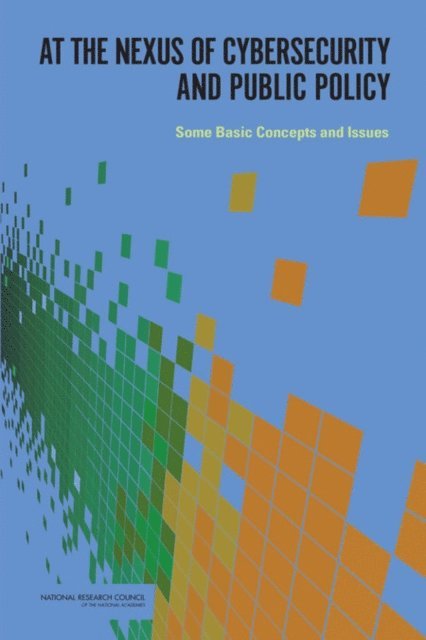
At the Nexus of Cybersecurity and Public Policy
Some Basic Concepts and Issues
Av Committee on Developing a Cybersecurity Primer: Leveraging Two Decades of National Academies Work, Computer Science and Telecommunications Board m. fl.
E-bok, 2014
642 kr
Lägg i varukorg
We depend on information and information technology (IT) to make many of our day-to-day tasks easier and more convenient. Computers play key roles in transportation, health care, banking, and energy. Businesses use IT for payroll and accounting, inventory and sales, and research and development. …
Information Technology for Counterterrorism
Immediate Actions and Future Possibilities
Av Committee on the Role of Information Technology in Responding to Terrorism, Computer Science and Telecommunications Board m. fl.
E-bok, 2003
425 kr
Lägg i varukorg
Information technology (IT) is essential to virtually all of the nation''s critical infrastructures making them vulnerable by a terrorist attack on their IT system. An attack could be on the system itself or use the IT system to launch or exacerbate another type of attack. IT can also be used as a …
Youth, Pornography, and the Internet
Av Committee to Study Tools and Strategies for Protecting Kids from Pornography and Their Applicability to Other Inappropriate Internet Content, Computer Science and Telecommunications Board m. fl.
E-bok, 2002
660 kr
Lägg i varukorg
The Internet has changed the way we access the world. This is especially true for kids, who soak up new technologies like eager little sponges. They have access to an enormous array of material, including educational links, sports info, chat rooms—and, unfortunately, pornography. But we must …
Cryptography's Role in Securing the Information Society
Av Committee to Study National Cryptography Policy, Computer Science and Telecommunications Board m. fl.
E-bok, 1996
616 kr
Lägg i varukorg
For every opportunity presented by the information age, there is an opening to invade the privacy and threaten the security of the nation, U.S. businesses, and citizens in their private lives. The more information that is transmitted in computer-readable form, the more vulnerable we become to …
Catalyzing Inquiry at the Interface of Computing and Biology
Av Committee on Frontiers at the Interface of Computing and Biology, Computer Science and Telecommunications Board m. fl.
E-bok, 2005
918 kr
Lägg i varukorg
Advances in computer science and technology and in biology over the last several yearshave opened up the possibility for computing to help answer fundamental questions inbiology and for biology to help with new approaches to computing. Making the most ofthe research opportunities at the interface …
Rights and Responsibilities of Participants in Networked Communities
Av Steering Committee on Rights and Responsibilities of Participants in Networked Communities, and Applications Commission on Physical Sciences, Mathematics m. fl.
E-bok, 1994
364 kr
Lägg i varukorg
This book describes a number of social and legal issues as they relate to various members of electronically networked communities. After a brief introduction to relevant legal precedents and to the manner in which societies develop norms for social behavior, the book explores right and …
Review of the FBI's Trilogy Information Technology Modernization Program
Av Committee on the FBI's Trilogy Information Technology Modernization Program, Computer Science and Telecommunications Board m. fl.
E-bok, 2004
286 kr
Lägg i varukorg
The Federal Bureau of Investigation (FBI) is in the process of developing a modern information technology (IT) system—the Trilogy program— that is designed to provide a high-speed network, modern workstations and software, and an application—the Virtual Case File (VCF)—to enhance the ability of …
Engaging Privacy and Information Technology in a Digital Age
Av Committee on Privacy in the Information Age, Computer Science and Telecommunications Board m. fl.
E-bok, 2007
648 kr
Lägg i varukorg
Privacy is a growing concern in the United States and around the world. The spread of the Internet and the seemingly boundaryless options for collecting, saving, sharing, and comparing information trigger consumer worries. Online practices of business and government agencies may present new ways to …
Toward a Safer and More Secure Cyberspace
Av Committee on Improving Cybersecurity Research in the United States, Computer Science and Telecommunications Board m. fl.
E-bok, 2007
762 kr
Lägg i varukorg
Given the growing importance of cyberspace to nearly all aspects of national life, a secure cyberspace is vitally important to the nation, but cyberspace is far from secure today. The United States faces the real risk that adversaries will exploit vulnerabilities in the nation''s critical …
Rights and Responsibilities of Participants in Networked Communities
Av National Research Council, Division on Engineering and Physical Sciences m. fl.
Häftad, 1994
1193 kr
Tillfälligt slut
This book describes a number of social and legal issues as they relate to various members of electronically networked communities. After a brief introduction to relevant legal precedents and to the manner in which societies develop norms for social behavior, the book explores right and …
Cryptography's Role in Securing the Information Society
Av National Research Council, Division on Engineering and Physical Sciences m. fl.
Inbunden, 1996
1732 kr
Tillfälligt slut
For every opportunity presented by the information age, there is an opening to invade the privacy and threaten the security of the nation, U.S. businesses, and citizens in their private lives. The more information that is transmitted in computer-readable form, the more vulnerable we become to …
Information Technology for Counterterrorism
Immediate Actions and Future Possibilities
Av National Research Council, Division on Engineering and Physical Sciences m. fl.
Häftad, 2003
643 kr
Tillfälligt slut
Information technology (IT) is essential to virtually all of the nationa (TM)s critical infrastructures making them vulnerable by a terrorist attack on their IT system. An attack could be on the system itself or use the IT system to launch or exacerbate another type of attack. IT can also be used …
Review of the FBI's Trilogy Information Technology Modernization Program
Av National Research Council, Division on Engineering and Physical Sciences m. fl.
Häftad, 2004
523 kr
Tillfälligt slut
The Federal Bureau of Investigation (FBI) is in the process of developing a modern information technology (IT) systema "the Trilogy programa " that is designed to provide a high-speed network, modern workstations and software, and an applicationa "the Virtual Case File (VCF)a "to enhance the …
Catalyzing Inquiry at the Interface of Computing and Biology
Av National Research Council, Division on Engineering and Physical Sciences m. fl.
Häftad, 2005
916 kr
Tillfälligt slut
Advances in computer science and technology and in biology over the last several years have opened up the possibility for computing to help answer fundamental questions in biology and for biology to help with new approaches to computing. Making the most of the research opportunities at the …
Computational Technology for Effective Health Care
Immediate Steps and Strategic Directions
Av National Research Council, Division on Engineering and Physical Sciences m. fl.
Häftad, 2009
700 kr
Tillfälligt slut
Despite a strong commitment to delivering quality health care, persistent problems involving medical errors and ineffective treatment continue to plague the industry. Many of these problems are the consequence of poor information and technology (IT) capabilities, and most importantly, the lack …
Technology, Policy, Law, and Ethics Regarding U.S. Acquisition and Use of Cyberattack Capabilities
Av National Research Council, Division on Engineering and Physical Sciences m. fl.
Häftad, 2009
763 kr
Tillfälligt slut
The United States is increasingly dependent on information and information technology for both civilian and military purposes, as are many other nations. Although there is a substantial literature on the potential impact of a cyberattack on the societal infrastructure of the United States, little …