Hugo Letiche - Böcker
Visar alla böcker från författaren Hugo Letiche. Handla med fri frakt och snabb leverans.
9 produkter
9 produkter
2 081 kr
Skickas inom 10-15 vardagar
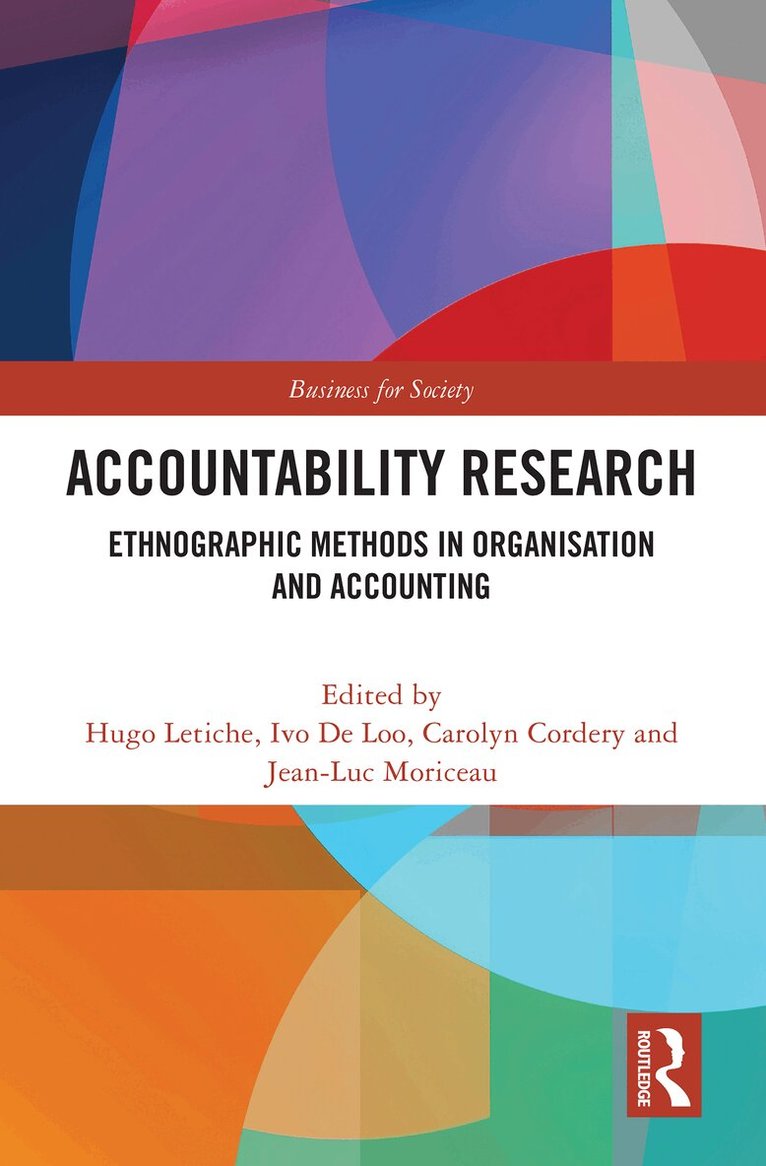
This book discusses (auto- )ethnographies of accountability, undertaken (in close collaboration) by a multinational group of accounting and organization theory researchers over a period of three years. The key assumption underlying the book is that accountability is inherently an identity- creating process where the study of account- making has to be done participatively, with radical openness to the one(s) being researched, as well as to their context. That openness we call ‘ethnography’. The values or assumptions inherent to the practices of account and identity-making, in a specific context, are what (auto- )ethnographies seek to describe and identify. These values and assumptions warrant critical, ethical reflection, and this is what the researchers presented here have tried to provide.The chapters in this book all are mini- studies of relatedness. The scale of examination is intimate; the reflections provided by the researchers are mainly methodological.This book is of interest to accounting and organization theory students and scholars who believe that accountability can fruitfully be studied through (auto-) ethnography. The book extends currently existing views on how accountability can be handled and discharged between researchers and their researched, when local, intimate settings are studied.
695 kr
Kommande
This book discusses (auto- )ethnographies of accountability, undertaken (in close collaboration) by a multinational group of accounting and organization theory researchers over a period of three years. The key assumption underlying the book is that accountability is inherently an identity- creating process where the study of account- making has to be done participatively, with radical openness to the one(s) being researched, as well as to their context. That openness we call ‘ethnography’. The values or assumptions inherent to the practices of account and identity-making, in a specific context, are what (auto- )ethnographies seek to describe and identify. These values and assumptions warrant critical, ethical reflection, and this is what the researchers presented here have tried to provide.The chapters in this book all are mini- studies of relatedness. The scale of examination is intimate; the reflections provided by the researchers are mainly methodological.This book is of interest to accounting and organization theory students and scholars who believe that accountability can fruitfully be studied through (auto-) ethnography. The book extends currently existing views on how accountability can be handled and discharged between researchers and their researched, when local, intimate settings are studied.
1 069 kr
Skickas inom 5-8 vardagar
Joe L. Kincheloe (1950–2008) was one of North America’s leading critical pedagogy scholars. He defined post-formalist thought in terms of deconstruction, affectivity, and non-linearity. His deconstruction focused on the context of ideas, ideologies, and teaching. It was a form of sociological deconstruction, and as such, inspired by Derrida, but different from him as well. In effect, Kincheloe was trying to marry Derrida to Foucault by making deconstruction see power in thought, relationships, and the world. Kincheloe’s ‘turn to affect’ was inspired by feminism and radical pedagogy. It was ‘affect’ focused on (in)justice and the social practices of repression. His ‘self-other’ construct was inherently politicized by his identification of ‘unfreedom’ with capitalism and the assumption that this link determines affect. Kincheloe assumed that linear rationality was inadequate to understanding human needs and hopes. Freedom as dynamism was seen to be inherently non-linear. The prison of rationality (it can only repeat the same, over and over again) was the crux of his critique of Newtonian-Cartesian linearity. Kincheloe attempted to construct a concept of ‘place’—such as the classroom. But it was a particular, concrete classroom and not an abstract or theoretical one. Here, the three concepts could come together. ‘Place’ is context, and to understand it, deconstruction is needed. ‘Place’ exists as it is felt and requires affectivity; it is eventful, alive, and dynamic. It requires non-linearity to be understood. Post-formalism, Pedagogy Lives (in memory of Kincheloe’s contribution) encompasses each of the basic principles of Kincheloe’s post-formal thought.
617 kr
Skickas inom 7-10 vardagar
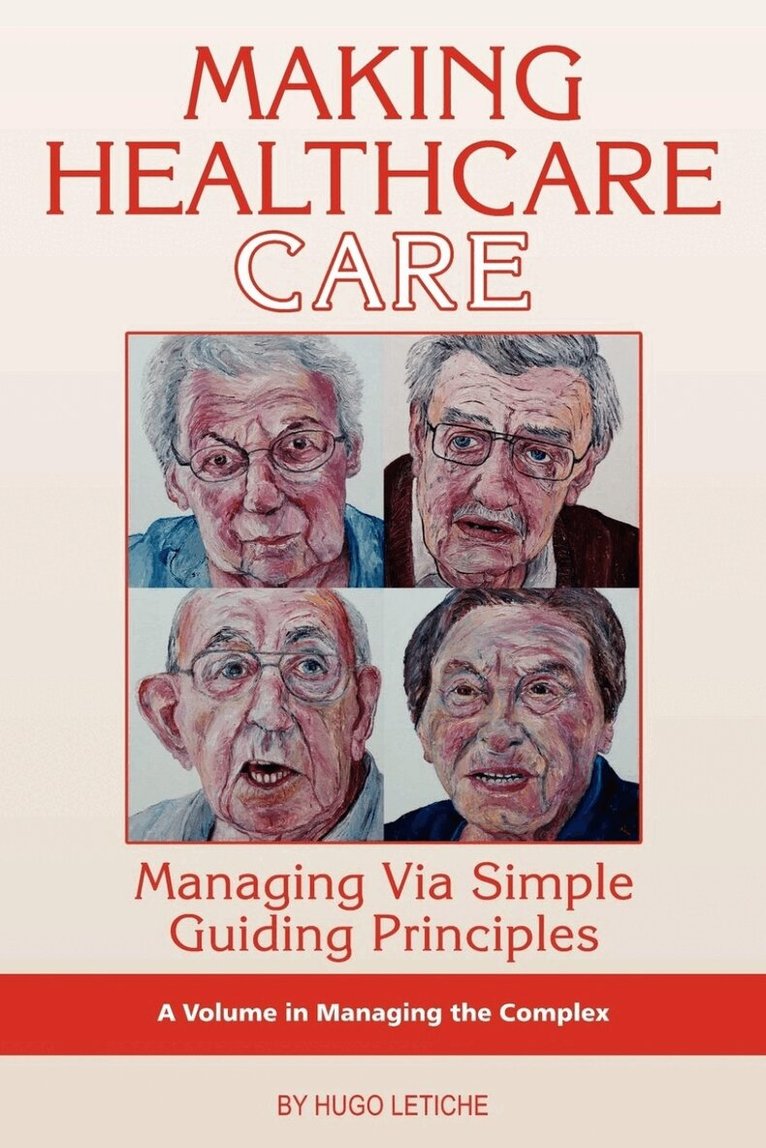
In this volume, Hugo Letiche tackles the all-important question, is there “care” in healthcare? If, as Klaus Krippendorff(2006) argues, “meaning is a structured space, a network of expected senses, a set of possibilities…[that] emerges in the use of language,” then within the healthcare systems of today, the meaning of “care” has been defined to be the eradication of a problem. We must recognize that patients do not wish to regarded merely as a problem requiring eradication.Letiche is opposed to the very idea that complexity reduction can address the humanity of each individual healthcare situation. He argues that, through narratives and through complexity based social theory, the complexity of each individual situation must be transcended through mindful listening and engaged dialogue. Letiche suggests that in the absence of such mindfulness, the lack of time for true listening, and the inability of providers and systems to allow for patients and family to engage in dialogue lies both the roots of the problem and the potential for its solution. If complexity theory has a role in the analysis understanding and betterment of social systems, then approaches such as the one Letiche undertakes herein will become essential tools of the trade.
1 090 kr
Skickas inom 7-10 vardagar
In this volume, Hugo Letiche tackles the all-important question, is there “care” in healthcare? If, as Klaus Krippendorff(2006) argues, “meaning is a structured space, a network of expected senses, a set of possibilities…[that] emerges in the use of language,” then within the healthcare systems of today, the meaning of “care” has been defined to be the eradication of a problem. We must recognize that patients do not wish to regarded merely as a problem requiring eradication.Letiche is opposed to the very idea that complexity reduction can address the humanity of each individual healthcare situation. He argues that, through narratives and through complexity based social theory, the complexity of each individual situation must be transcended through mindful listening and engaged dialogue. Letiche suggests that in the absence of such mindfulness, the lack of time for true listening, and the inability of providers and systems to allow for patients and family to engage in dialogue lies both the roots of the problem and the potential for its solution. If complexity theory has a role in the analysis understanding and betterment of social systems, then approaches such as the one Letiche undertakes herein will become essential tools of the trade.
1 350 kr
Skickas inom 7-10 vardagar
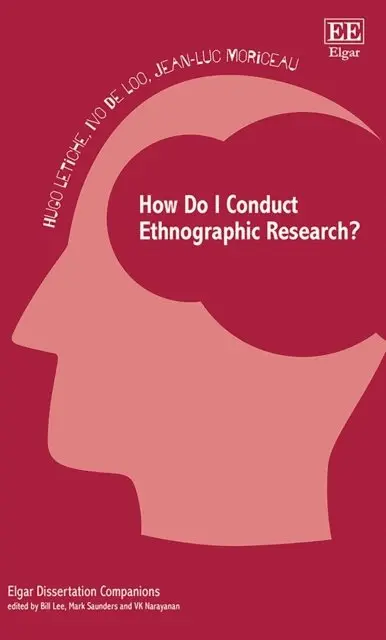
Providing indispensable guidance to how to engage in and carry out ethnographic research, this book highlights the potential advantages and possible pitfalls of this type of qualitative studies. Hugo Letiche, Ivo De Loo and Jean-Luc Moriceau paint a full picture of this fascinating research approach, focusing on its adaptability in the field, when researchers become actively involved with those who they are researching.How Do I Conduct Ethnographic Research? addresses three forms of ethnographic analysis: ethnography, autoethnography, and netnography. Each chapter begins with specific aims to be addressed, and is concluded with helpful exercises to strengthen both one’s theoretical and practical academic skills. Stressing the role of researcher choice-making, this timely book aids the reader in devising a unique approach that best suits the context of their research.This book is crucial for postgraduate students of business and management, marketing, strategy and organization, as well as related subject areas such as finance and human resource management. Those who are new to ethnographic research will additionally find this guide to be invaluable.
417 kr
Skickas inom 7-10 vardagar
Providing indispensable guidance to how to engage in and carry out ethnographic research, this book highlights the potential advantages and possible pitfalls of this type of qualitative studies. Hugo Letiche, Ivo De Loo and Jean-Luc Moriceau paint a full picture of this fascinating research approach, focusing on its adaptability in the field, when researchers become actively involved with those who they are researching.How Do I Conduct Ethnographic Research? addresses three forms of ethnographic analysis: ethnography, autoethnography, and netnography. Each chapter begins with specific aims to be addressed, and is concluded with helpful exercises to strengthen both one’s theoretical and practical academic skills. Stressing the role of researcher choice-making, this timely book aids the reader in devising a unique approach that best suits the context of their research.This book is crucial for postgraduate students of business and management, marketing, strategy and organization, as well as related subject areas such as finance and human resource management. Those who are new to ethnographic research will additionally find this guide to be invaluable.
2 037 kr
Skickas inom 7-10 vardagar
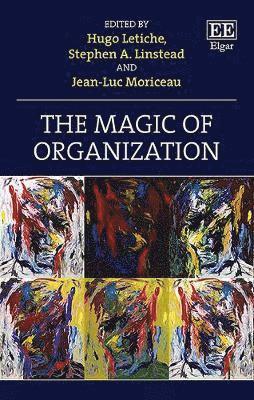
Exploring magic as a creative necessity in contemporary business, this book clarifies the differences between magic as an organizational resource and magic as fakery, pretence and manipulation. Using this lens, it highlights insights into the relationship between anthropology and business, and organizational studies.The Magic of Organization looks at our economy and its dependence on magic, as success depends on innovation and creativity to produce the unexpected and amazing; but perhaps also the bogus and deceitful. Exposing the unpredictability of magic, the book reveals clear links between magic and uncontrollable and non-linear ways of organizing. Chapters discuss the double-edged sword of magic: while organizations, economies and finance depend on magical thought and actions for inspiration and surprise, they also fear them; what if the magic is real?With its clarity on how the turn-to-ontology in anthropology is significant for organizational studies, this book will be an illuminating read for students of creativity and innovation.
881 kr
Skickas inom 5-8 vardagar
Turn to Film: Film in the Business School offers creative and powerful uses of film in the business school classroom and surveys the pedagogical and performative value of watching films with students. This volume examines not only how film offers opportunities for learning and investigation, but also how they can be sources of ideological poison, self-delusion and mis-representation. Throughout the text, renowned contributors embrace film’s power to embark on new adventures of thought by inventing images and signs, and by bringing novel concepts and fresh perspectives to the classroom. If film often reveals organizational dysfunctionality and absurdity, it also teaches us to understand the other, to see difference, and to accept experimentation. A wide spectra of films are examined for their pedagogical value in terms of what can be learned, explored and discussed by teaching with film and how film can be used as a tool of research and investigation. The book sees film in the classroom as an educational challenge wherein rich learning and personal development are encouraged.