Hylke Dijkstra - Böcker
Visar alla böcker från författaren Hylke Dijkstra. Handla med fri frakt och snabb leverans.
6 produkter
6 produkter
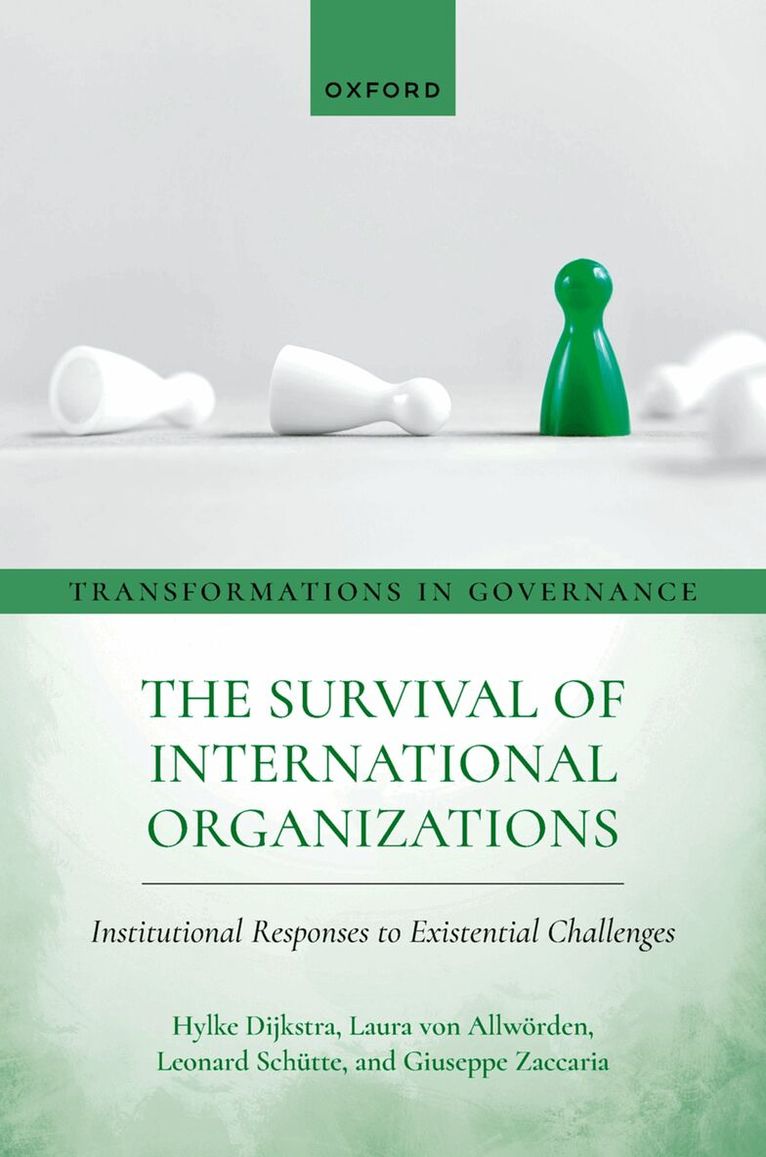
The Survival of International Organizations
Institutional Responses to Existential Challenges
Inbunden, Engelska, 2025
1 146 kr
Skickas inom 5-8 vardagar
This is an open access title available under the terms of a CC BY-NC-ND 4.0 International licence. It is free to read on the Oxford Academic platform and offered as a free PDF download from OUP and selected open access locations.While international organizations (IOs) have played a central role in global governance in the post-Cold War period, during the last decade many have struggled. Due to the rise of populism, the Trump Presidency, and the renewed assertiveness of the emerging powers, various IOs have been challenged in ways that put their ability to perform core functions at risk. The Survival of International Organizations studies the responses of IOs to such existential challenges. It focuses on the central institutional actors inside IOs - IO leaders and their bureaucracies - that have a strong interest in the survival and well-being of their organizations. Presenting six case studies and drawing on more than 100 interviews, this book highlights the variation in the way in which these institutional actors try to cope with and counter existential challenges: Some fight tooth and nail to keep their IOs relevant, while other institutional actors are more circumspect in their actions. The Survival of International Organizations examines the IOs themselves as well as both those who lead IOs at the top and the desk officers who keep the machinery running. This behind-the-scenes view uncovers important processes about the survival of IOs and international institutions. It demonstrates that institutional actors try to tailor their responses to the specific types of existential challenges, but that their ability to do so depends on the quality of their leadership, organizational structure, and embedding in external networks. Transformations in Governance is a major academic book series from Oxford University Press. It is designed to accommodate the impressive growth of research in comparative politics, international relations, public policy, federalism, and environmental and urban studies concerned with the dispersion of authority from central states to supranational institutions, subnational governments, and public-private networks. It brings together work that advances our understanding of the organization, causes, and consequences of multilevel and complex governance. The series is selective, containing annually a small number of books of exceptionally high quality by leading and emerging scholars.The series is edited by Liesbet Hooghe and Gary Marks of the University of North Carolina, Chapel Hill, and Walter Mattli of the University of Oxford.
486 kr
Tillfälligt slut
The third edition of this popular core textbook provides wide-ranging coverage of the structure, internal working, policies and performance of international organizations such as the UN, EU, IMF and World Bank. Such organizations have never been so important in addressing the challenges that face our increasingly globalised world. This book introduces students to theories with which to approach international organizations, their history, and their ability to respond to contemporary issues in world politics from nuclear disarmament, climate change and human rights protection, to trade, monetary and financial relations, and international development. Underpinning the text is the authors' unique model that views international organizations as actual organizations. Reacting to world events, political actors provide the 'inputs' which are converted by the political systems of these organizations (through various decision-making procedures) into 'outputs' that achieve varying levels of real-world impact and effectiveness.This is the perfect text for undergraduate and postgraduate students of politics and international relations taking courses on International organization and global governance, as well as essential reading for those studying the UN, the EU and Globalization. New to this Edition:- Draws on the most recent research in the field and considers some of the significant world events of the last decade to ensure that the book is completely up to date.- Two separate chapters considering Trade and Development, and Finance and Monetary Relations respectively.- Fully accounts for the challenges to international organizations by the emerging powers, the Trump administration and Brexit
725 kr
Skickas inom 10-15 vardagar
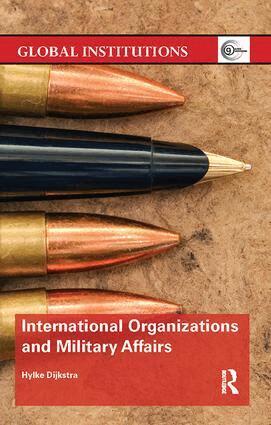
From the UN Department of Peacekeeping Operations to the NATO International Staff and the European External Action Service, international bureaucrats make decisions that affect life and death. In carrying out their functions, these officials not only facilitate the work of the member states, but also pursue their own distinct agendas. This book analyzes how states seek to control secretariats when it comes to military operations by international organizations. It introduces an innovative theoretical framework that identifies different types of control mechanisms. The book presents six empirical chapters on the UN, NATO, and EU secretariats. It provides new data from a unique dataset and in-depth interviews. It shows that member states employ a wide range of control mechanisms to reduce the potential loss of influence. They frequently forfeit the gains of delegation to avoid becoming dependent on the work of secretariats. Yet while states invest heavily in control, this book also argues that they cannot benefit from the services of secretariats and keep full control over outcomes in international organizations. In their delegation and control decisions, states face trade-offs and have to weigh different cost categories: the costs of policy, administrative capacity, and agency loss.This book will be of interest to scholars, postgraduates, and officials in international organizations and national governments, dealing with questions of international political economy, security studies, and military affairs.
1 982 kr
Skickas inom 10-15 vardagar
From the UN Department of Peacekeeping Operations to the NATO International Staff and the European External Action Service, international bureaucrats make decisions that affect life and death. In carrying out their functions, these officials not only facilitate the work of the member states, but also pursue their own distinct agendas. This book analyzes how states seek to control secretariats when it comes to military operations by international organizations. It introduces an innovative theoretical framework that identifies different types of control mechanisms. The book presents six empirical chapters on the UN, NATO, and EU secretariats. It provides new data from a unique dataset and in-depth interviews. It shows that member states employ a wide range of control mechanisms to reduce the potential loss of influence. They frequently forfeit the gains of delegation to avoid becoming dependent on the work of secretariats. Yet while states invest heavily in control, this book also argues that they cannot benefit from the services of secretariats and keep full control over outcomes in international organizations. In their delegation and control decisions, states face trade-offs and have to weigh different cost categories: the costs of policy, administrative capacity, and agency loss.This book will be of interest to scholars, postgraduates, and officials in international organizations and national governments, dealing with questions of international political economy, security studies, and military affairs.
1 476 kr
Skickas inom 10-15 vardagar
The fourth edition of this popular core textbook provides wide-ranging coverage of the structure, workings, policies and performance of international organizations such as the UN, EU, IMF and World Bank. Such organizations have never been so important in addressing the challenges that face our increasingly globalised world. This book introduces students to theories with which to approach international organizations, their history, and their ability to respond to contemporary issues in world politics from security and defence and climate change, to trade, migration and refugees, human rights protection, and international development. Underpinning the text is the authors' unique model that views international organizations as actual organizations. Reacting to world events, political actors provide the 'inputs' which are converted by the political systems of these organizations into 'outputs' that achieve varying levels of real-world impact and effectiveness.This is the perfect text for undergraduate and postgraduate students of politics and international relations taking courses on international organization and global governance, as well as essential reading for those studying the UN, the EU and globalization.New to this Edition:- Draws on the most recent research in the field and considers some of the significant world events of the last decade to ensure that the book is completely up to date.- New separate chapters considering NATO, international organizations in the field of migration and refugees as well as a new chapter on regional organizations such as the African Union, ASEAN and MERCOSUR.- Fully accounts for the challenges to international organizations by the emerging powers, the Trump administration, geopolitics and crises of legitimacy.
448 kr
Skickas
The fourth edition of this popular core textbook provides wide-ranging coverage of the structure, workings, policies and performance of international organizations such as the UN, EU, IMF and World Bank. Such organizations have never been so important in addressing the challenges that face our increasingly globalised world. This book introduces students to theories with which to approach international organizations, their history, and their ability to respond to contemporary issues in world politics from security and defence and climate change, to trade, migration and refugees, human rights protection, and international development. Underpinning the text is the authors' unique model that views international organizations as actual organizations. Reacting to world events, political actors provide the 'inputs' which are converted by the political systems of these organizations into 'outputs' that achieve varying levels of real-world impact and effectiveness.This is the perfect text for undergraduate and postgraduate students of politics and international relations taking courses on international organization and global governance, as well as essential reading for those studying the UN, the EU and globalization.New to this Edition:- Draws on the most recent research in the field and considers some of the significant world events of the last decade to ensure that the book is completely up to date.- New separate chapters considering NATO, international organizations in the field of migration and refugees as well as a new chapter on regional organizations such as the African Union, ASEAN and MERCOSUR.- Fully accounts for the challenges to international organizations by the emerging powers, the Trump administration, geopolitics and crises of legitimacy.