Jasjit Suri - Böcker
Visar alla böcker från författaren Jasjit Suri. Handla med fri frakt och snabb leverans.
6 produkter
6 produkter
747 kr
Skickas inom 10-15 vardagar
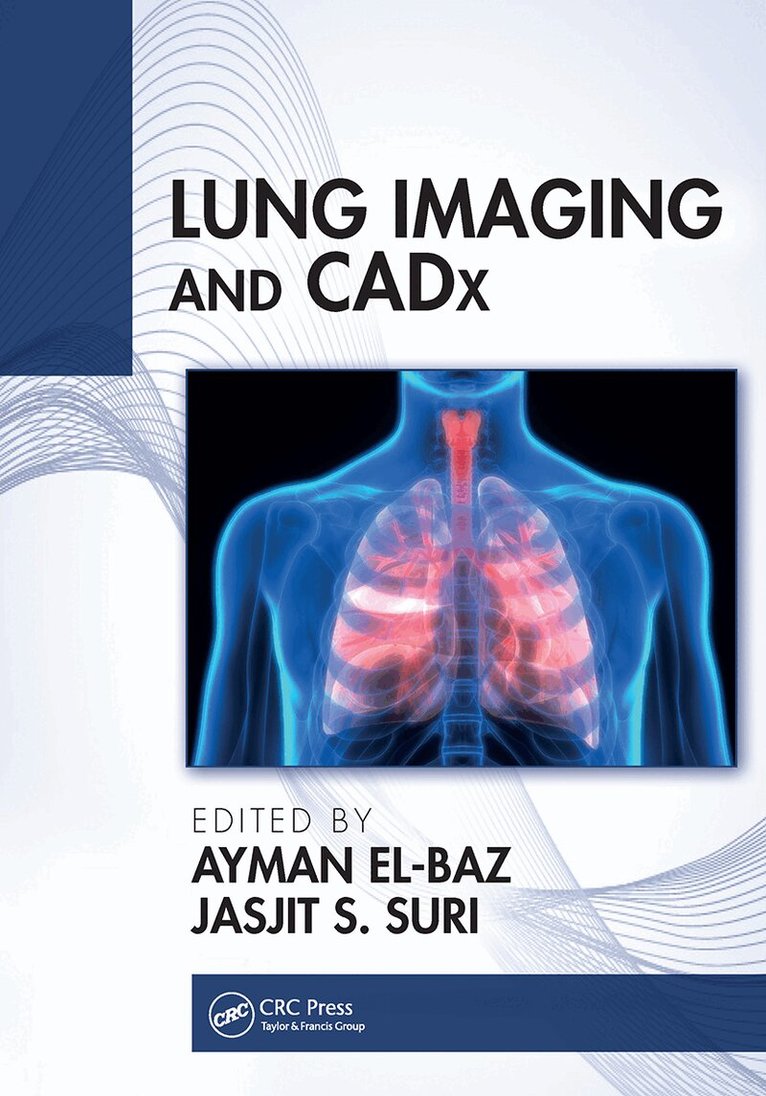
Developing an effective computer-aided diagnosis (CAD) system for lung cancer is of great clinical importance and can significantly increase the patient's chance for survival. For this reason, CAD systems for lung cancer have been investigated in a large number of research studies. A typical CAD system for lung cancer diagnosis is composed of four main processing steps: segmentation of the lung fields, detection of nodules inside the lung fields, segmentation of the detected nodules, and diagnosis of the nodules as benign or malignant. This book overviews the current state-of-the-art techniques that have been developed to implement each of these CAD processing steps. Overviews the latest state-of-the-art diagnostic CAD systems for lung cancer imaging and diagnosis Offers detailed coverage of 3D and 4D image segmentation Illustrates unique fully automated detection systems coupled with 4D Computed Tomography (CT) Written by authors who are world-class researchers in the biomedical imaging sciences Includes extensive references at the end of each chapter to enhance further study Ayman El-Baz is a professor, university scholar, and chair of the Bioengineering Department at the University of Louisville, Louisville, Kentucky. He earned his bachelor’s and master’s degrees in electrical engineering in 1997 and 2001, respectively. He earned his doctoral degree in electrical engineering from the University of Louisville in 2006. In 2009, he was named a Coulter Fellow for his contributions to the field of biomedical translational research. He has 17 years of hands-on experience in the fields of bio-imaging modeling and noninvasive computer-assisted diagnosis systems. He has authored or coauthored more than 500 technical articles (132 journals, 23 books, 57 book chapters, 211 refereed-conference papers, 137 abstracts, and 27 U.S. patents and disclosures). Jasjit S. Suri is an innovator, scientist, a visionary, an industrialist, and an internationally known world leader in biomedical engineering. He has spent over 25 years in the field of biomedical engineering/devices and its management. He received his doctorate from the University of Washington, Seattle, and his business management sciences degree from Weatherhead School of Management, Case Western Reserve University, Cleveland, Ohio. He was awarded the President’s Gold Medal in 1980 and named a Fellow of the American Institute of Medical and Biological Engineering for his outstanding contributions in 2004. In 2018, he was awarded the Marquis Life Time Achievement Award for his outstanding contributions and dedication to medical imaging and its management.
2 565 kr
Skickas inom 10-15 vardagar
Developing an effective computer-aided diagnosis (CAD) system for lung cancer is of great clinical importance and can significantly increase the patient's chance for survival. For this reason, CAD systems for lung cancer have been investigated in a large number of research studies. A typical CAD system for lung cancer diagnosis is composed of four main processing steps: segmentation of the lung fields, detection of nodules inside the lung fields, segmentation of the detected nodules, and diagnosis of the nodules as benign or malignant. This book overviews the current state-of-the-art techniques that have been developed to implement each of these CAD processing steps. Overviews the latest state-of-the-art diagnostic CAD systems for lung cancer imaging and diagnosis Offers detailed coverage of 3D and 4D image segmentation Illustrates unique fully automated detection systems coupled with 4D Computed Tomography (CT) Written by authors who are world-class researchers in the biomedical imaging sciences Includes extensive references at the end of each chapter to enhance further studyAyman El-Baz is a professor, university scholar, and chair of the Bioengineering Department at the University of Louisville, Louisville, Kentucky. He earned his bachelor’s and master’s degrees in electrical engineering in 1997 and 2001, respectively. He earned his doctoral degree in electrical engineering from the University of Louisville in 2006. In 2009, he was named a Coulter Fellow for his contributions to the field of biomedical translational research. He has 17 years of hands-on experience in the fields of bio-imaging modeling and noninvasive computer-assisted diagnosis systems. He has authored or coauthored more than 500 technical articles (132 journals, 23 books, 57 book chapters, 211 refereed-conference papers, 137 abstracts, and 27 U.S. patents and disclosures). Jasjit S. Suri is an innovator, scientist, a visionary, an industrialist, and an internationally known world leader in biomedical engineering. He has spent over 25 years in the field of biomedical engineering/devices and its management. He received his doctorate from the University of Washington, Seattle, and his business management sciences degree from Weatherhead School of Management, Case Western Reserve University, Cleveland, Ohio. He was awarded the President’s Gold Medal in 1980 and named a Fellow of the American Institute of Medical and Biological Engineering for his outstanding contributions in 2004. In 2018, he was awarded the Marquis Life Time Achievement Award for his outstanding contributions and dedication to medical imaging and its management.
2 164 kr
Skickas inom 10-15 vardagar
The book covers novel strategies of state of the art in engineering and clinical analysis and approaches for analyzing abdominal imaging, including lung, mediastinum, pleura, liver, kidney and gallbladder. In the last years the imaging techniques have experienced a tremendous improvement in the diagnosis and characterization of the pathologies that affect abdominal organs. In particular, the introduction of extremely fast CT scanners and high Magnetic field MR Systems allow imaging with an exquisite level of detail the anatomy and pathology of liver, kidney, pancreas, gallbladder as well as lung and mediastinum. Moreover, thanks to the development of powerful computer hardware and advanced mathematical algorithms the quantitative and automated\semi automated diagnosis of the pathology is becoming a reality. Medical image analysis plays an essential role in the medical imaging field, including computer-aided diagnosis, organ/lesion segmentation, image registration, and image-guided therapy. This book will cover all the imaging techniques, potential for applying such imaging clinically, and offer present and future applications as applied to the abdomen and thoracic imaging with the most world renowned scientists in these fields. The main aim of this book is to help advance scientific research within the broad field of abdominal imaging. This book focuses on major trends and challenges in this area, and it presents work aimed to identify new techniques and their use in medical imaging analysis for abdominal imaging.
2 164 kr
Skickas inom 10-15 vardagar
The book covers novel strategies of state of the art in engineering and clinical analysis and approaches for analyzing abdominal imaging, including lung, mediastinum, pleura, liver, kidney and gallbladder. In the last years the imaging techniques have experienced a tremendous improvement in the diagnosis and characterization of the pathologies that affect abdominal organs. In particular, the introduction of extremely fast CT scanners and high Magnetic field MR Systems allow imaging with an exquisite level of detail the anatomy and pathology of liver, kidney, pancreas, gallbladder as well as lung and mediastinum. Moreover, thanks to the development of powerful computer hardware and advanced mathematical algorithms the quantitative and automated\semi automated diagnosis of the pathology is becoming a reality. Medical image analysis plays an essential role in the medical imaging field, including computer-aided diagnosis, organ/lesion segmentation, image registration, and image-guided therapy. This book will cover all the imaging techniques, potential for applying such imaging clinically, and offer present and future applications as applied to the abdomen and thoracic imaging with the most world renowned scientists in these fields. The main aim of this book is to help advance scientific research within the broad field of abdominal imaging. This book focuses on major trends and challenges in this area, and it presents work aimed to identify new techniques and their use in medical imaging analysis for abdominal imaging.
1 625 kr
Skickas inom 10-15 vardagar
Various disciplines have been bene?ted by the advent of high-performance computing in achieving practical solutions to their problems and the area of health care is no exception to this. Signal processing and data mining tools have been developed to enhance the computational capabilities so as to help clinicians in diagnosis and treatment. The electrocardiogram (ECG) is a representative signal containing inf- mation about the condition of the heart. The shape and size of the P-QRS-T wave and the time intervals between various peaks contains useful infor- tion about the nature of disease a?icting the heart. However, the human - server cannot directly monitor these subtle details. Besides, since biosignals are highly subjective, the symptoms may appear at random in the timescale. The presence of cardiac abnormalities are generally re?ected in the shape of ECG waveform and heart rate. However, by the very nature of biosignals, this re?ection would be random in the timescale. That is, the diseases may not show up all the time, but would manifest at certain irregular (random) intervals during the day. Therefore the study of ECG pattern and heart rate variability has to be carried out over extended periods of time (i. e. , for 24 hours). Naturally the volume of the data to be handled is enormous and its study is tedious and time consuming. As a consequence, the possibility of the analyst missing (or misreading) vital information is high.
1 625 kr
Skickas inom 10-15 vardagar
Various disciplines have been bene?ted by the advent of high-performance computing in achieving practical solutions to their problems and the area of health care is no exception to this. Signal processing and data mining tools have been developed to enhance the computational capabilities so as to help clinicians in diagnosis and treatment. The electrocardiogram (ECG) is a representative signal containing inf- mation about the condition of the heart. The shape and size of the P-QRS-T wave and the time intervals between various peaks contains useful infor- tion about the nature of disease a?icting the heart. However, the human - server cannot directly monitor these subtle details. Besides, since biosignals are highly subjective, the symptoms may appear at random in the timescale. The presence of cardiac abnormalities are generally re?ected in the shape of ECG waveform and heart rate. However, by the very nature of biosignals, this re?ection would be random in the timescale. That is, the diseases may not show up all the time, but would manifest at certain irregular (random) intervals during the day. Therefore the study of ECG pattern and heart rate variability has to be carried out over extended periods of time (i. e. , for 24 hours). Naturally the volume of the data to be handled is enormous and its study is tedious and time consuming. As a consequence, the possibility of the analyst missing (or misreading) vital information is high.