Jennifer Clapp - Böcker
Visar alla böcker från författaren Jennifer Clapp. Handla med fri frakt och snabb leverans.
14 produkter
14 produkter
245 kr
Skickas inom 7-10 vardagar
We all need food to survive, and forty percent of the world’s population relies on agriculture for their livelihood. Yet control over food is concentrated in relatively few hands. Turmoil in the world food economy in recent decades has highlighted a number of vulnerabilities and contradictions inherent in the way we currently organize this vital sector. Extremes of both undernourishment and overnourishment affect a significant proportion of humanity. And attempts to increase production through the spread of an industrial model of agriculture has resulted in serious ecological consequences. The fully revised and expanded third edition of this popular book explores how the rise of industrial agriculture, corporate control, inequitable agricultural trade rules, and the financialization of food have each enabled powerful actors to gain fundamental influence over the practices that dominate the world food economy and result in uneven consequences for both people and planet. A variety of movements have emerged that are making important progress in establishing alternative food systems, but, as Clapp’s penetrating analysis ably shows, significant challenges remain.
111 kr
Tillfälligt slut
519 kr
Skickas inom 3-6 vardagar
449 kr
Tillfälligt slut
Titans of Industrial Agriculture
How a Few Giant Corporations Came to Dominate the Farm Sector and Why It Matters
Häftad, Engelska, 2025
452 kr
Skickas
2 165 kr
Skickas inom 10-15 vardagar
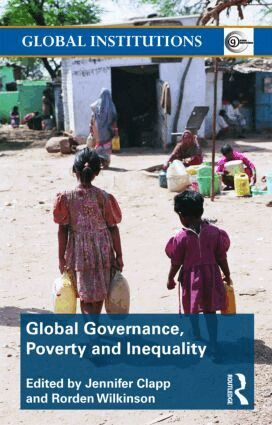
A series of crises unfolded in the latter part of the first decade of the 21st Century which combined to exacerbate already profound conditions of global economic inequality and poverty in the world’s poorest countries. In 2007, the unsound lending practices that caused a collapse in the US housing market ushered in a broader economic crisis that reverberated throughout the global financial system. This economic shockwave had a global impact, triggering not just instability in other industrialized countries, but also in their developing world counterparts, also highlighting deficiencies in the current structures of global governance to protect the world’s poorest and most disadvantaged.This book offers answers to questions raised about the role of global governance in the attenuation and amelioration of world poverty and inequality. The contributors interrogate the role of systems of governance at a time of global economic crisis and continuing environmental degradation against a backdrop of acceleration in inequalities within and between communities and across the globe. Evaluating how existing systems can be reformed or redesigned to be more effective at addressing issues of poverty and inequality and providing a comprehensive discussion of a wide range of global governance initiatives this work will be essential reading for students and scholars of global governance, international relations and international organizations.
729 kr
Skickas inom 10-15 vardagar
A series of crises unfolded in the latter part of the first decade of the 21st Century which combined to exacerbate already profound conditions of global economic inequality and poverty in the world’s poorest countries. In 2007, the unsound lending practices that caused a collapse in the US housing market ushered in a broader economic crisis that reverberated throughout the global financial system. This economic shockwave had a global impact, triggering not just instability in other industrialized countries, but also in their developing world counterparts, also highlighting deficiencies in the current structures of global governance to protect the world’s poorest and most disadvantaged.This book offers answers to questions raised about the role of global governance in the attenuation and amelioration of world poverty and inequality. The contributors interrogate the role of systems of governance at a time of global economic crisis and continuing environmental degradation against a backdrop of acceleration in inequalities within and between communities and across the globe. Evaluating how existing systems can be reformed or redesigned to be more effective at addressing issues of poverty and inequality and providing a comprehensive discussion of a wide range of global governance initiatives this work will be essential reading for students and scholars of global governance, international relations and international organizations.
674 kr
Skickas inom 10-15 vardagar
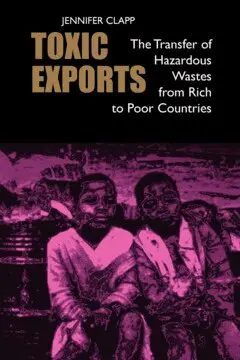
In recent years, international trade in toxic waste and hazardous technologies by firms in rich industrialized countries has emerged as a routine practice. Many poor countries have accepted these deadly imports but are ill equipped to manage the materials safely. For more than a decade, environmentalists and the governments of developing countries have lobbied intensively and generated public outcry in an attempt to halt hazardous transfers from Northern industrialized nations to the Third World, but the practice continues. In her insightful and important book, Jennifer Clapp addresses this alarming problem.Clapp describes the responses of those engaged in hazard transfer to international regulations, and in particular to the 1989 adoption of the Basel Convention. She pinpoints a key weakness of the regulations—because hazard transfer is dynamic, efforts to stop one form of toxic export prompt new forms to emerge. For instance, laws intended to ban the disposal of toxic wastes in the Third World led corporations to ship these byproducts to poor countries for "recycling." And, Clapp warns, current efforts to prohibit this "recycling movement" may accelerate a new business endeavor: the relocation to poor countries of entire industries that generate toxic wastes. Clapp concludes that the dynamic nature of hazard transfer results from increasingly fluid global trade and investment relations in the context of a highly unequal world, and from the leading role played by multinational corporations and environmental NGOs. Governments, she maintains, have for too long failed to capture the initiative and have instead only reacted to these opposing forces.
487 kr
Skickas inom 10-15 vardagar
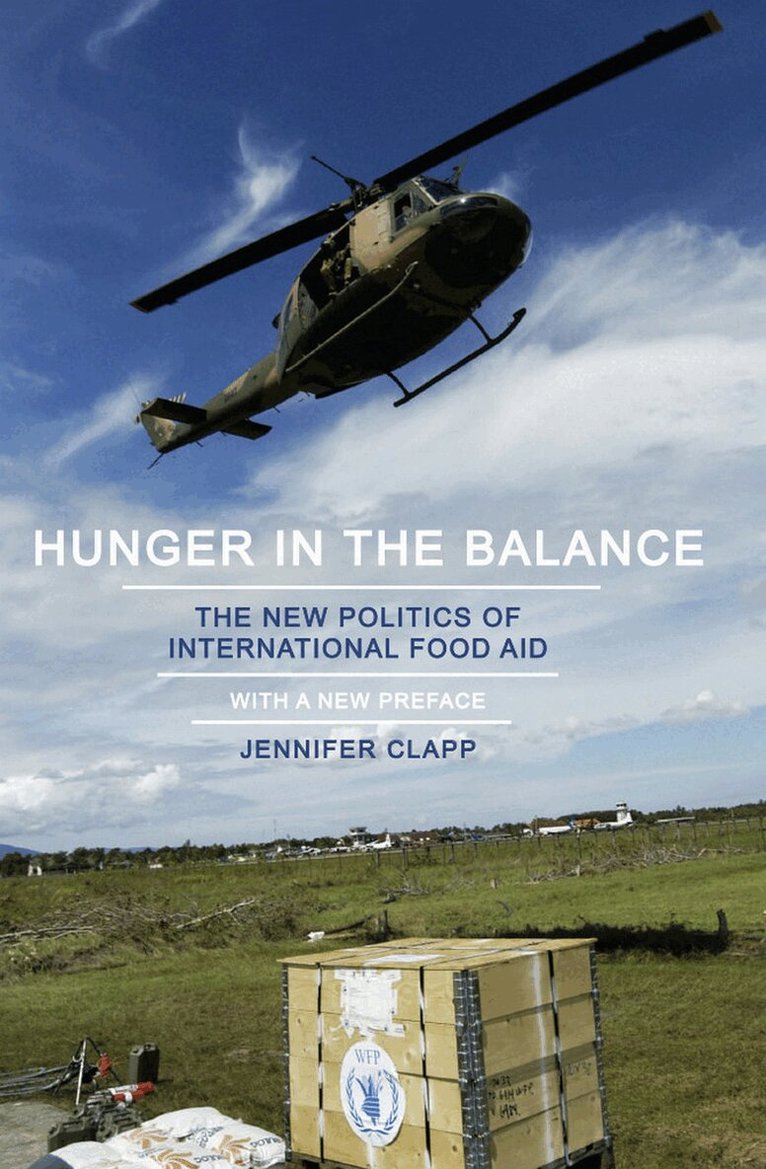
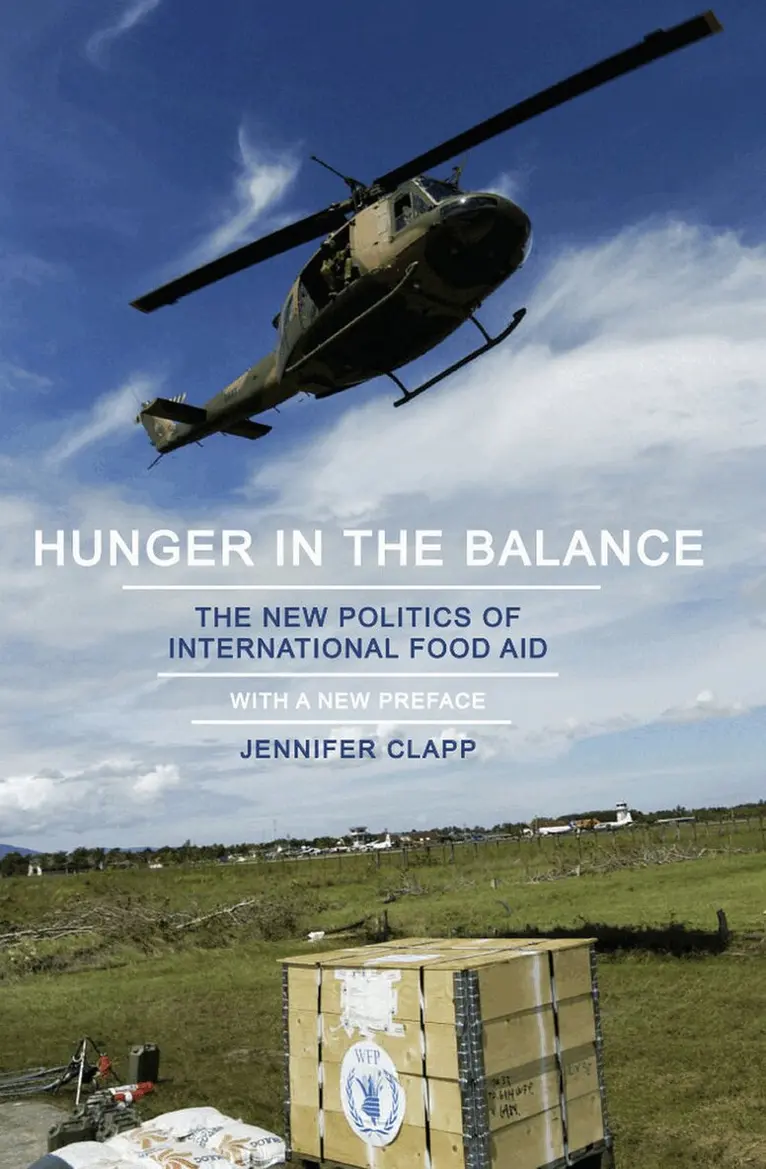
Food aid has become a contentious issue in recent decades, with sharp disagreements over genetically modified crops, agricultural subsidies, and ways of guaranteeing food security in the face of successive global food crises. In Hunger in the Balance, Jennifer Clapp provides a timely and comprehensive account of the contemporary politics of food aid, explaining the origins and outcomes of recent clashes between donor nations—and between donors and recipients.She identifies fundamental disputes between donors over "tied" food aid, which requires that food be sourced in the donor country, versus "untied" aid, which provides cash to purchase food closer to the source of hunger. These debates have been especially intense between the major food aid donors, particularly the European Union and the United States. Similarly, the EU's rejection of GMO agricultural imports has raised concerns among recipients about accepting GMO foodstuffs from the United States. For the several hundred million people who at present have little choice but to rely on food aid for their daily survival, Clapp concludes, the consequences of these political differences are profound.
327 kr
Skickas inom 10-15 vardagar
In recent years, international trade in toxic waste and hazardous technologies by firms in rich industrialized countries has emerged as a routine practice. Many poor countries have accepted these deadly imports but are ill equipped to manage the materials safely. For more than a decade, environmentalists and the governments of developing countries have lobbied intensively and generated public outcry in an attempt to halt hazardous transfers from Northern industrialized nations to the Third World, but the practice continues. In her insightful and important book, Jennifer Clapp addresses this alarming problem.Clapp describes the responses of those engaged in hazard transfer to international regulations, and in particular to the 1989 adoption of the Basel Convention. She pinpoints a key weakness of the regulations—because hazard transfer is dynamic, efforts to stop one form of toxic export prompt new forms to emerge. For instance, laws intended to ban the disposal of toxic wastes in the Third World led corporations to ship these byproducts to poor countries for "recycling." And, Clapp warns, current efforts to prohibit this "recycling movement" may accelerate a new business endeavor: the relocation to poor countries of entire industries that generate toxic wastes. Clapp concludes that the dynamic nature of hazard transfer results from increasingly fluid global trade and investment relations in the context of a highly unequal world, and from the leading role played by multinational corporations and environmental NGOs. Governments, she maintains, have for too long failed to capture the initiative and have instead only reacted to these opposing forces.
364 kr
Skickas inom 7-10 vardagar
Food aid has become a contentious issue in recent decades, with sharp disagreements over genetically modified crops, agricultural subsidies, and ways of guaranteeing food security in the face of successive global food crises. In Hunger in the Balance, Jennifer Clapp provides a timely and comprehensive account of the contemporary politics of food aid, explaining the origins and outcomes of recent clashes between donor nations—and between donors and recipients.She identifies fundamental disputes between donors over "tied" food aid, which requires that food be sourced in the donor country, versus "untied" aid, which provides cash to purchase food closer to the source of hunger. These debates have been especially intense between the major food aid donors, particularly the European Union and the United States. Similarly, the EU's rejection of GMO agricultural imports has raised concerns among recipients about accepting GMO foodstuffs from the United States. For the several hundred million people who at present have little choice but to rely on food aid for their daily survival, Clapp concludes, the consequences of these political differences are profound.
740 kr
Skickas inom 7-10 vardagar
We all need food to survive, and forty percent of the world’s population relies on agriculture for their livelihood. Yet control over food is concentrated in relatively few hands. Turmoil in the world food economy in recent decades has highlighted a number of vulnerabilities and contradictions inherent in the way we currently organize this vital sector. Extremes of both undernourishment and overnourishment affect a significant proportion of humanity. And attempts to increase production through the spread of an industrial model of agriculture has resulted in serious ecological consequences. The fully revised and expanded third edition of this popular book explores how the rise of industrial agriculture, corporate control, inequitable agricultural trade rules, and the financialization of food have each enabled powerful actors to gain fundamental influence over the practices that dominate the world food economy and result in uneven consequences for both people and planet. A variety of movements have emerged that are making important progress in establishing alternative food systems, but, as Clapp’s penetrating analysis ably shows, significant challenges remain.
503 kr
Skickas inom 10-15 vardagar
The global food crisis is a stark reminder of the fragility of the global food system. The Global Food Crisis: Governance Challenges and Opportunities captures the debate about how to go forward and examines the implications of the crisis for food security in the world's poorest countries, both for the global environment and for the global rules and institutions that govern food and agriculture. In this volume, policy-makers and scholars assess the causes and consequences of the most recent food price volatility and examine the associated governance challenges and opportunities, including short-term emergency responses, the ecological dimensions of the crisis, and the longer-term goal of building sustainable global food systems. The recommendations include vastly increasing public investment in small-farm agriculture; reforming global food aid and food research institutions; establishing fairer international agricultural trade rules; promoting sustainable agricultural methods; placing agriculture higher on the post-Kyoto climate change agenda; revamping biofuel policies; and enhancing international agricultural policy-making. Co-published with the Centre for International Governance Innovation
Del 8 - Agrarian Change & Peasant Studies
Speculative Harvests
Financialization, Food, and Agriculture
Häftad, Engelska, 2018
241 kr
Skickas inom 5-8 vardagar