John T. Cacioppo - Böcker
Visar alla böcker från författaren John T. Cacioppo. Handla med fri frakt och snabb leverans.
14 produkter
14 produkter
4 197 kr
Skickas inom 5-8 vardagar
The complexities of the brain and nervous system make neuroscience an inherently interdisciplinary pursuit, one that comprises disparate basic, clinical, and applied disciplines. Behavioral neuroscientists approach the brain and nervous system as instruments of sensation and response; cognitive neuroscientists view the same systems as a solitary computer with a focus on representations and processes.The Oxford Handbook of Social Neuroscience marks the emergence of a third broad perspective in this field. Social neuroscience emphasizes the functions that emerge through the coaction and interaction of conspecifics, the neural mechanisms that underlie these functions, and the commonality and differences across social species and superorganismal structures.With an emphasis on the neural, hormonal, cellular, and genetic mechanisms underlying social behavior, social neuroscience places emphasis on the associations and influences between social and biological levels of organization. This complex interdisciplinary perspective demands theoretical, methodological, statistical, and inferential rigor to effectively integrate basic, clinical, and applied perspectives on the nervous system and brain. Reflecting the diverse perspectives that make up this field, The Oxford Handbook of Social Neuroscience brings together perspectives from across the sciences in one authoritative volume.
2 164 kr
Skickas inom 3-6 vardagar
The complexities of the brain and nervous system make neuroscience an inherently interdisciplinary pursuit, one that comprises disparate basic, clinical, and applied disciplines. Behavioral neuroscientists approach the brain and nervous system as instruments of sensation and response; cognitive neuroscientists view the same systems as a solitary computer with a focus on representations and processes.The Oxford Handbook of Social Neuroscience marks the emergence of a third broad perspective in this field. Social neuroscience emphasizes the functions that emerge through the coaction and interaction of conspecifics, the neural mechanisms that underlie these functions, and the commonality and differences across social species and superorganismal structures.With an emphasis on the neural, hormonal, cellular, and genetic mechanisms underlying social behavior, social neuroscience places emphasis on the associations and influences between social and biological levels of organization. This complex interdisciplinary perspective demands theoretical, methodological, statistical, and inferential rigor to effectively integrate basic, clinical, and applied perspectives on the nervous system and brain. Reflecting the diverse perspectives that make up this field, The Oxford Handbook of Social Neuroscience brings together perspectives from across the sciences in one authoritative volume.
167 kr
Skickas inom 7-10 vardagar
University of Chicago social neuroscientist John T. Cacioppo pioneered research on the startling effects of loneliness: a sense of isolation or social rejection disrupts not only our ability to think and will power but also our immune systems, and can be as damaging as obesity or smoking. On the flip side, social connection can be a powerful therapy. Cacioppo’s sophisticated studies relying on brain imaging, analysis of blood pressure, immune response, stress hormones, behavior, and even gene expression show that human beings are simply far more intertwined and interdependent—physiologically as well as psychologically—than our cultural assumptions have ever allowed us to acknowledge.Loneliness traces the evolution of these tandem forces, showing how, for our primitive ancestors, survival depended not on greater brawn but on greater commitments to each other. Serving as a prompt to repair frayed social bonds, the pain of loneliness engendered a fear response so powerfully disruptive that even now, millions of years later, a persistent sense of rejection or isolation can impair DNA transcription in our immune cells. This disruption also impairs our ability to read social signals and exercise social skills, as well as limits our ability to internally regulate our emotions—all of which can combine to trap us in self-defeating behaviors that reinforce the very isolation and rejection that we dread.Loneliness shows us how to overcome this feedback loop to achieve better health and greater happiness. As individuals and as a society, we have everything to gain, and everything to lose, in how well or how poorly we manage our need for social bonds.
4 152 kr
Skickas inom 11-20 vardagar
As technology has made imaging of the brain noninvasive and inexpensive, nearly every psychologist in every subfield is using pictures of the brain to show biological connections to feelings and behavior. Handbook of Neuroscience for the Behavioral Sciences provides psychologists and other behavioral scientists with a solid foundation in the increasingly critical field of neuroscience. Current and accessible, it provides in two comprehensive volumes the information they need to understand the new biological bases, research tools, and implications of brain and gene research as it relates to psychology.
2 031 kr
Skickas inom 7-10 vardagar
Handbook of Neuroscience for the Behavioral Sciences, Volume 1As technology has made imaging of the brain noninvasive and inexpensive, nearly every psychologist in every subfield is using pictures of the brain to show biological connections to feelings and behavior. Handbook of Neuroscience for the Behavioral Sciences, Volume I provides psychologists and other behavioral scientists with a solid foundation in the increasingly critical field of neuroscience. Current and accessible, this volume provides the information they need to understand the new biological bases, research tools, and implications of brain and gene research as it relates to psychology.
2 243 kr
Skickas inom 11-20 vardagar
As technology has made imaging of the brain noninvasive and inexpensive, nearly every psychologist in every subfield is using pictures of the brain to show biological connections to feelings and behavior. Handbook of Neuroscience for the Behavioral Sciences, Volume II provides psychologists and other behavioral scientists with a solid foundation in the increasingly critical field of neuroscience. Current and accessible, this volume provides the information they need to understand the new biological bases, research tools, and implications of brain and gene research as it relates to psychology.
889 kr
Skickas inom 7-10 vardagar
When people are in a certain mood, whether elation or depression, that mood is often communicated to others. When we are talking to someone who is depressed it may make us feel depressed, whereas if we talk to someone who is feeling self-confident and buoyant we are likely to feel good about ourselves. This phenomenon, known as emotional contagion, is identified here, and compelling evidence for its affect is offered from a variety of disciplines - social and developmental psychology, history, cross-cultural psychology, experimental psychology, and psychopathology.
373 kr
Skickas inom 7-10 vardagar
When people are in a certain mood, whether elation or depression, that mood is often communicated to others. When we are talking to someone who is depressed it may make us feel depressed, whereas if we talk to someone who is feeling self-confident and buoyant we are likely to feel good about ourselves. This phenomenon, known as emotional contagion, is identified here, and compelling evidence for its affect is offered from a variety of disciplines - social and developmental psychology, history, cross-cultural psychology, experimental psychology, and psychopathology.
880 kr
Skickas inom 7-10 vardagar
A textbook that lays down the foundational principles for understanding social neuroscienceHumans, like many other animals, are a highly social species. But how do our biological systems implement social behaviors, and how do these processes shape the brain and biology? Spanning multiple disciplines, Introduction to Social Neuroscience seeks to engage students and scholars alike in exploring the effects of the brain’s perceived connections with others. This wide-ranging textbook provides a quintessential foundation for comprehending the psychological, neural, hormonal, cellular, and genomic mechanisms underlying such varied social processes as loneliness, empathy, theory-of-mind, trust, and cooperation.Stephanie and John Cacioppo posit that our brain is our main social organ. They show how the same objective relationship can be perceived as friendly or threatening depending on the mental states of the individuals involved in that relationship. They present exercises and evidence-based findings readers can put into practice to better understand the neural roots of the social brain and the cognitive and health implications of a dysfunctional social brain. This textbook’s distinctive features include the integration of human and animal studies, clinical cases from medicine, multilevel analyses of topics from genes to societies, and a variety of methodologies.Unveiling new facets to the study of the social brain’s anatomy and function, Introduction to Social Neuroscience widens the scientific lens on human interaction in society.The first textbook on social neuroscience intended for advanced undergraduates and graduate studentsChapters address the psychological, neural, hormonal, cellular, and genomic mechanisms underlying the brain’s perceived connections with othersMaterials integrate human and animal studies, clinical cases, multilevel analyses, and multiple disciplines
2 509 kr
Skickas inom 7-10 vardagar
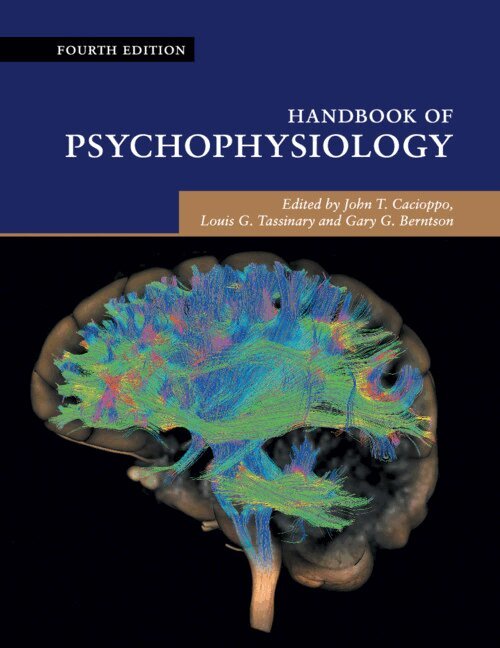
The Handbook of Psychophysiology has been the authoritative resource for more than a quarter of a century. Since the third edition was published a decade ago, the field of psychophysiological science has seen significant advances, both in traditional measures such as electroencephalography, event-related brain potentials, and cardiovascular assessments, and in novel approaches and methods in behavioural epigenetics, neuroimaging, psychoneuroimmunology, psychoneuroendocrinology, neuropsychology, behavioural genetics, connectivity analyses, and non-contact sensors. At the same time, a thoroughgoing interdisciplinary focus has emerged as essential to scientific progress. Emphasizing the need for multiple measures, careful experimental design, and logical inference, the fourth edition of the Handbook provides updated and expanded coverage of approaches, methods, and analyses in the field. With state-of-the-art reviews of research in topical areas such as stress, emotion, development, language, psychopathology, and behavioural medicine, the Handbook remains the essential reference for students and scientists in the behavioural, cognitive, and biological sciences.
810 kr
Skickas inom 7-10 vardagar
The Handbook of Psychophysiology has been the authoritative resource for more than a quarter of a century. Since the third edition was published a decade ago, the field of psychophysiological science has seen significant advances, both in traditional measures such as electroencephalography, event-related brain potentials, and cardiovascular assessments, and in novel approaches and methods in behavioural epigenetics, neuroimaging, psychoneuroimmunology, psychoneuroendocrinology, neuropsychology, behavioural genetics, connectivity analyses, and non-contact sensors. At the same time, a thoroughgoing interdisciplinary focus has emerged as essential to scientific progress. Emphasizing the need for multiple measures, careful experimental design, and logical inference, the fourth edition of the Handbook provides updated and expanded coverage of approaches, methods, and analyses in the field. With state-of-the-art reviews of research in topical areas such as stress, emotion, development, language, psychopathology, and behavioural medicine, the Handbook remains the essential reference for students and scientists in the behavioural, cognitive, and biological sciences.
1 443 kr
Skickas inom 10-15 vardagar
It has been over 10 years since we initiated work on our first series of collaborative experiments. As graduate students, we had great fun planning, conducting, and writing this research (Petty & Cacioppo, 1977). We enjoyed arguing with each other at our initial meeting in 1973 and have sub sequently become best friends, but neither of us suspected at the time that we would or could actively maintain a research collaboration over the next decade, or that we would now find ourselves in a position to write this monograph. As we note in Chapter 1, we began our studies of persuasion at a time when social psychology was in "crisis," and interest in research on attitude change in particular was declining. As we write this, we are aware of six new volumes on persuasion that are in press or in preparation and that should appear over the next few years. In retrospect, it is not so surprising that research on attitudes and persuasion would reemerge as a central concern of social psychology. We believe that human feelings, beliefs, and behaviors, whether in the domain of interpersonal relations (e. g. , marriage, aggression), politics (e. g. , voting, revolution), health (e. g. , following a medical regimen), or economics (e. g. , consumer purchases) are greatly influenced by the evaluations people have of other people, objects, and issues. Furthermore, evaluations (attitudes) are influenced by affect, cognition, and behavior.
2 032 kr
Skickas inom 10-15 vardagar
Neuroscientists and cognitive scientists have collaborated for more than a decade with the common goal of understanding how the mind works. These collaborations have helped unravel puzzles of the mind, including aspects of perception, imagery, attention, and memory. Many aspects of the mind, however, require a more comprehensive approach to reveal the mystery of mind-brain connections. Attraction, altruism, speech recognition, affiliation, attachment, attitudes, identification, kin recognition, cooperation, competition, empathy, sexuality, communication, dominance, persuasion, obedience, morality, contagion, nurturance, violence, and person memory are just a few. Through classic and contemporary articles and reviews, Social Neuroscience: Key Readings illustrates the complementary nature of social, cognitive, and biological levels of analysis and how research integrating these levels can foster more comprehensive theories of the mechanisms underlying complex behavior and the mind.
706 kr
Skickas inom 10-15 vardagar
Neuroscientists and cognitive scientists have collaborated for more than a decade with the common goal of understanding how the mind works. These collaborations have helped unravel puzzles of the mind, including aspects of perception, imagery, attention, and memory. Many aspects of the mind, however, require a more comprehensive approach to reveal the mystery of mind-brain connections. Attraction, altruism, speech recognition, affiliation, attachment, attitudes, identification, kin recognition, cooperation, competition, empathy, sexuality, communication, dominance, persuasion, obedience, morality, contagion, nurturance, violence, and person memory are just a few. Through classic and contemporary articles and reviews, Social Neuroscience: Key Readings illustrates the complementary nature of social, cognitive, and biological levels of analysis and how research integrating these levels can foster more comprehensive theories of the mechanisms underlying complex behavior and the mind.