Kaushik Basu – författare
Visar alla böcker från författaren Kaushik Basu. Handla med fri frakt och snabb leverans.
50 produkter
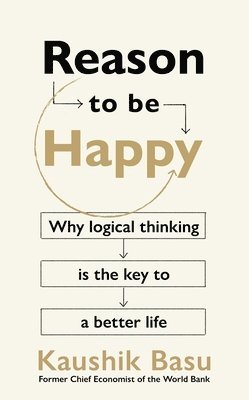
Reason to Be Happy
Why logical thinking is the key to a better life
Av Kaushik Basu
Inbunden, 2024
187 kr
Lägg i varukorg
'Reason to Be Happy is a wise and witty book that shows how thinking clearly can help us find happiness in our daily lives, get more of what we want, and even make the world a better place' Hannah FryWhy do our friends have more friends than we do? How do you book the best available seats on a …
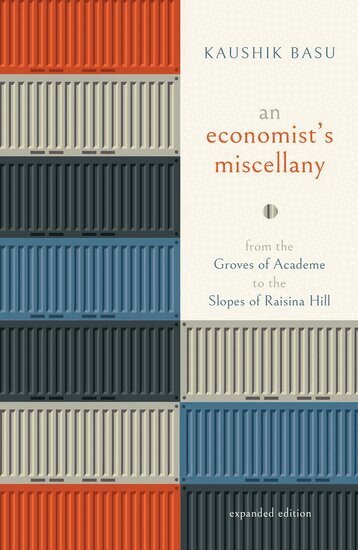
An Economist's Miscellany
From the Groves of Academe to the Slopes of Raisina Hill
Av Kaushik Basu
Inbunden, 2020
565 kr
Lägg i varukorg
'Philosophy has to be deductive, poetry romantic, plays and fiction humorous, and politics intriguing if they are to catch my attention,' writes Kaushik Basu. All these interests are on display in An Economist's Miscellany, which brings together an eclectic collection of writings on the world of …
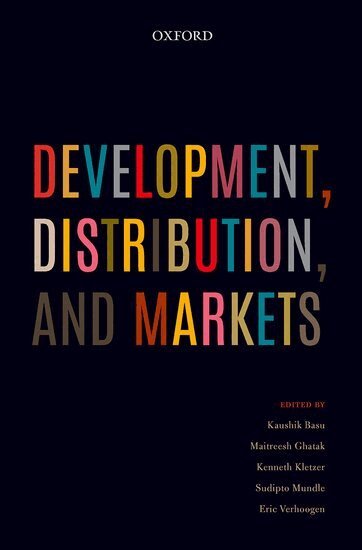
Development, Distribution, and Markets
Av Kaushik Basu, Maitreesh Ghatak m. fl.
Inbunden, 2021
668 kr
Lägg i varukorg
This volume is a testament to the breadth and policy relevance of development economics today. It grapples with questions on how to design anti-poverty policies and under what conditions we can expect them to be successful. It concentrates on programmes and policies for India and covers …
Arguments for a Better World: Essays in Honor of Amartya Sen
Volume I: Ethics, Welfare, and Measurement
E-bok, 2008
1338 kr
Lägg i varukorg
Amartya Sen has made deep and lasting contributions to the academic disciplines of economics, philosophy, and the social sciences more broadly. He has engaged in policy dialogue and public debate, advancing the cause of a human development focused policy agenda, and a tolerant and democratic …
Arguments for a Better World: Essays in Honor of Amartya Sen
Volume II: Society, Institutions, and Development
E-bok, 2008
1338 kr
Lägg i varukorg
Amartya Sen has made deep and lasting contributions to the academic disciplines of economics, philosophy, and the social sciences more broadly. He has engaged in policy dialogue and public debate, advancing the cause of a human development focused policy agenda, and a tolerant and democratic …
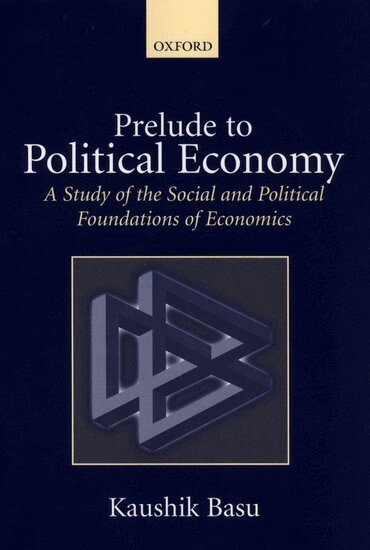
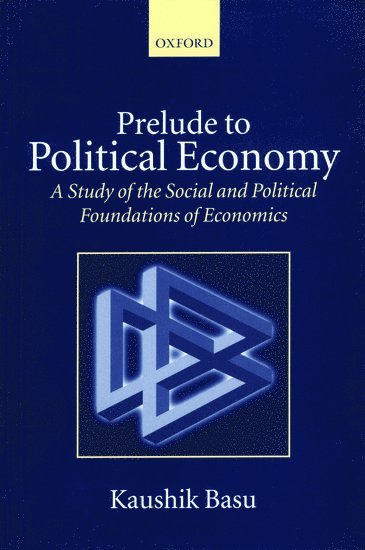
Prelude to Political Economy
A Study of the Social and Political Foundations of Economics
Av Kaushik Basu
Inbunden, 2000
1035 kr
Lägg i varukorg
Mainstream economics was founded on many strong assumptions. Institutions and politics were treated as irrelevant, government as exogenous, social norms as epiphenomena. As an initial gambit this was fine. But as the horizons of economic inquiry have broadened, these assumptions have become …
Arguments for a Better World: Essays in Honor of Amartya Sen
Volume I: Ethics, Welfare, and Measurement
Av Kaushik Basu, Kaushik Basu m. fl.
Inbunden, 2008
2077 kr
Lägg i varukorg
Amartya Sen has made deep and lasting contributions to the academic disciplines of economics, philosophy, and the social sciences more broadly. He has engaged in policy dialogue and public debate, advancing the cause of a human development focused policy agenda, and a tolerant and democratic …
Arguments for a Better World: Essays in Honor of Amartya Sen
Volume II: Society, Institutions, and Development
Inbunden, 2008
2077 kr
Lägg i varukorg
Amartya Sen has made deep and lasting contributions to the academic disciplines of economics, philosophy, and the social sciences more broadly. He has engaged in policy dialogue and public debate, advancing the cause of a human development focused policy agenda, and a tolerant and democratic …
Prelude to Political Economy
A Study of the Social and Political Foundations of Economics
Av Kaushik Basu
Häftad, 2003
653 kr
Lägg i varukorg
Mainstream economics was founded on many strong assumptions. Institutions and politics were treated as irrelevant, government as exogenous, social norms as epiphenomena. As an initial gambit this was fine. But as the horizons of economic inquiry have broadened, these assumptions have become …
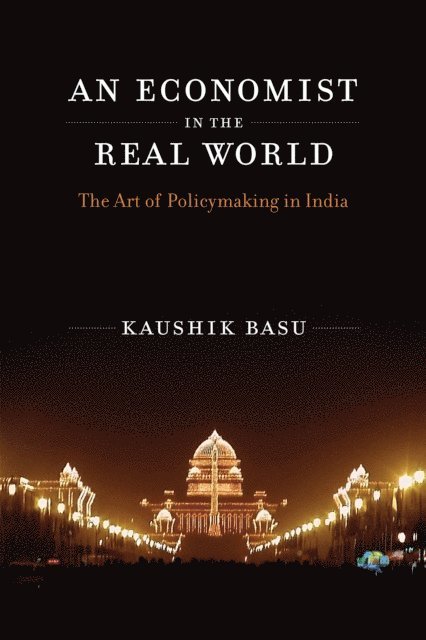
Economist in the Real World
Av Kaushik Basu
E-bok, 2015
369 kr
Lägg i varukorg
An economist''s perspective on the nuts and bolts of economic policymaking, based on his experience as the Chief Economic Adviser in India. In December 2009, the economist Kaushik Basu left the rarefied world of academic research for the nuts and bolts of policymaking. Appointed by the then Prime …
Analytical Development Economics
The Less Developed Economy Revisited
Av Kaushik Basu
Häftad, 2003
855 kr
Lägg i varukorg
Economist in the Real World
The Art of Policymaking in India
Av Kaushik Basu
Häftad, 2017
435 kr
Lägg i varukorg
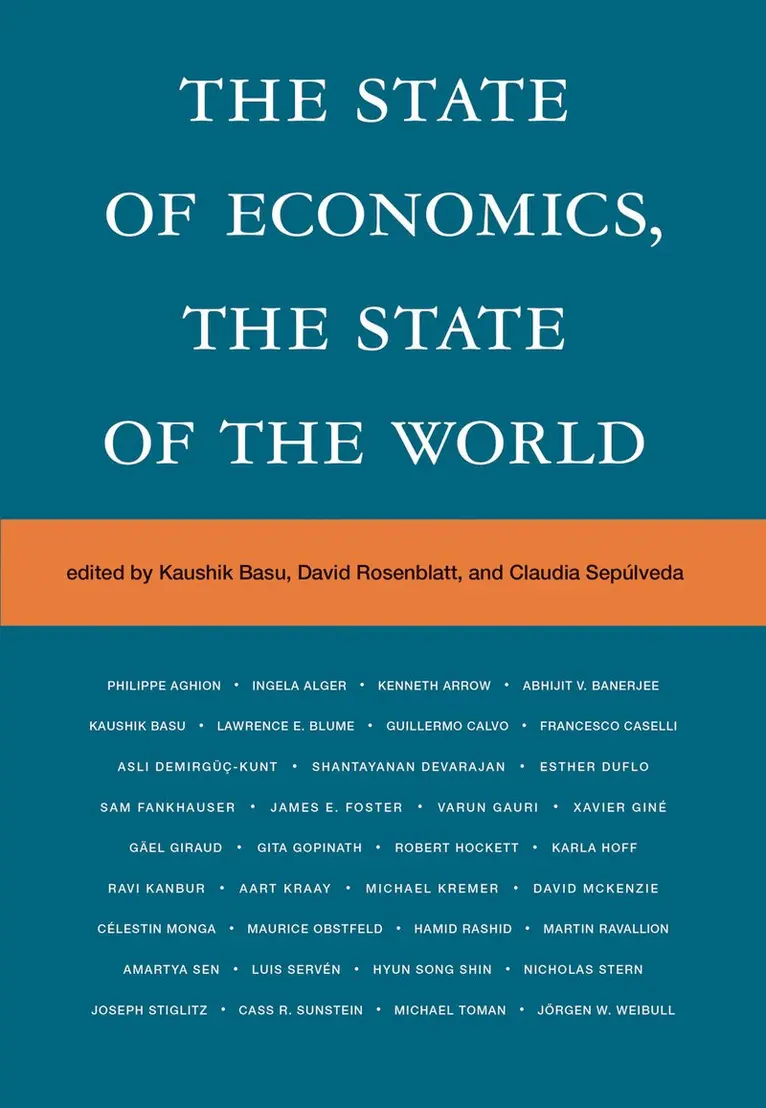
State of Economics, the State of the World
Av Kaushik Basu, David Rosenblatt m. fl.
Häftad, 2025
611 kr
Lägg i varukorg
Interdisciplinary approaches to literacy and development
Av Kaushik Basu, Bryan Maddox m. fl.
Inbunden, 2009
787 kr
Lägg i varukorg
The links between literacy and development have been the focus of research conducted by both economists and anthropologists. Yet researchers from these different disciplines have tended to work in isolation from each other. This book aims to create a space for new interdisciplinary debate in this …
Interdisciplinary approaches to literacy and development
Av Kaushik Basu, Bryan Maddox m. fl.
Häftad, 2013
397 kr
Lägg i varukorg
The links between literacy and development have been the focus of research conducted by both economists and anthropologists. Yet researchers from these different disciplines have tended to work in isolation from each other. This book aims to create a space for new interdisciplinary debate in this …
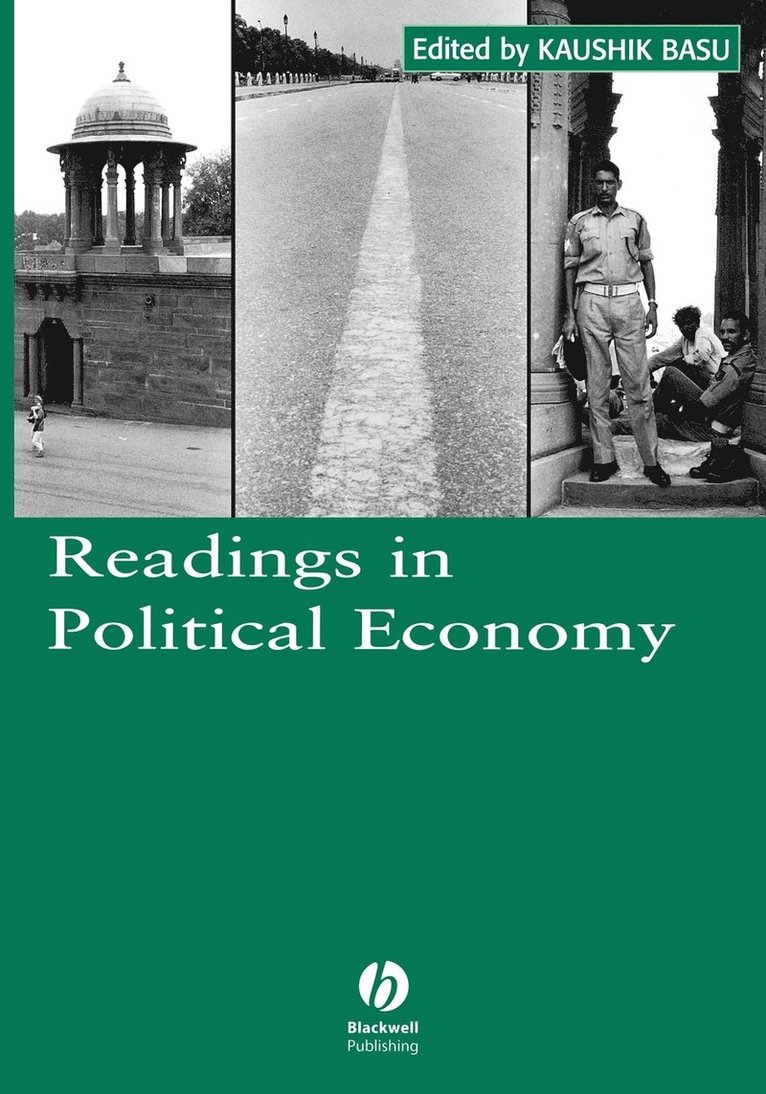
Readings in Political Economy
Av Basu, Kaushik Basu
Häftad, 2002
799 kr
Lägg i varukorg
Ranging from authoritative seminal pieces to striking contemporary papers, the readings in this volume explore the complex intersections between politics and economics from the perspectives of both disciplines.
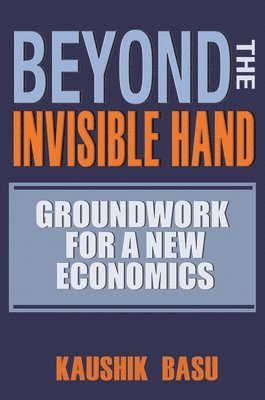
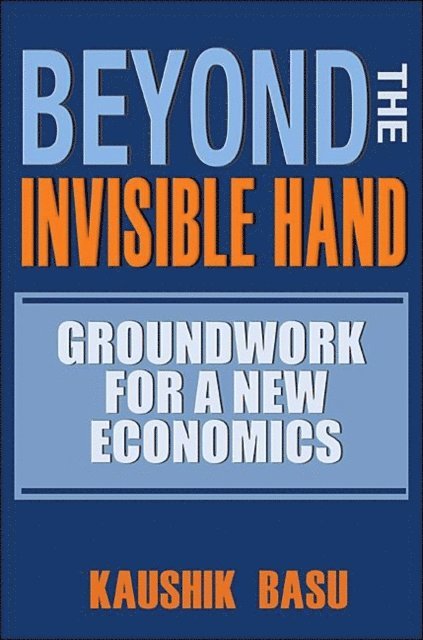
Beyond the Invisible Hand
Groundwork for a New Economics
Av Kaushik Basu
Häftad, 2016
281 kr
Lägg i varukorg
One of the central tenets of mainstream economics is Adam Smith's proposition that, given certain conditions, self-interested behavior by individuals leads them to the social good, almost as if orchestrated by an invisible hand. This deep insight has, over the past two centuries, been taken out of …
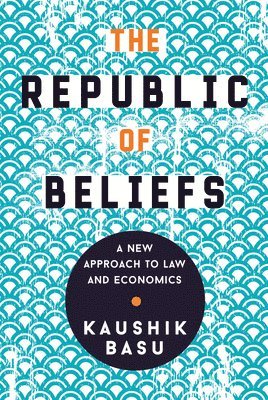
Republic of Beliefs
A New Approach to Law and Economics
Av Kaushik Basu
Inbunden, 2018
282 kr
Lägg i varukorg
A leading economist offers a radically new approach to the economic analysis of the lawIn The Republic of Beliefs, Kaushik Basu, one of the world's leading economists, argues that the traditional economic analysis of the law has significant flaws and has failed to answer certain critical questions …
Republic of Beliefs
A New Approach to Law and Economics
Av Kaushik Basu
Häftad, 2020
446 kr
Lägg i varukorg
A leading economist offers a radically new approach to the economic analysis of the lawThe Republic of Beliefs argues that the traditional economic analysis of the law has significant flaws and has failed to answer certain critical questions satisfactorily. Why are good laws drafted but never …
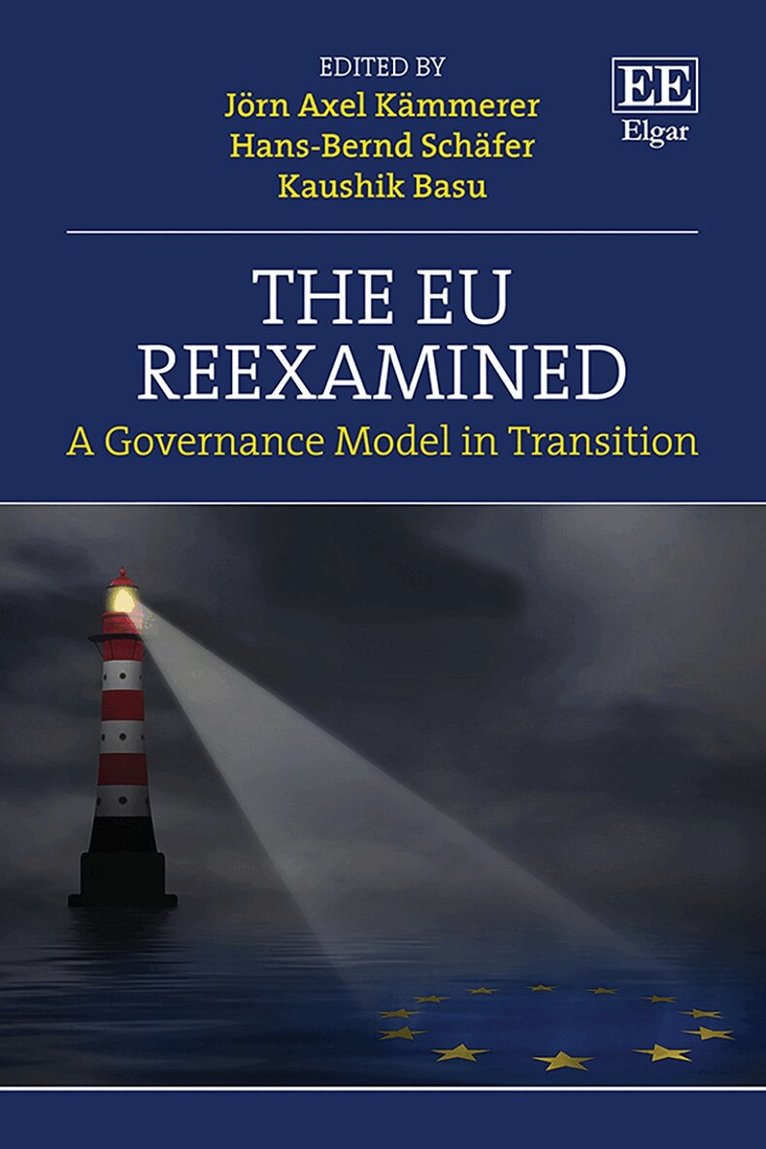
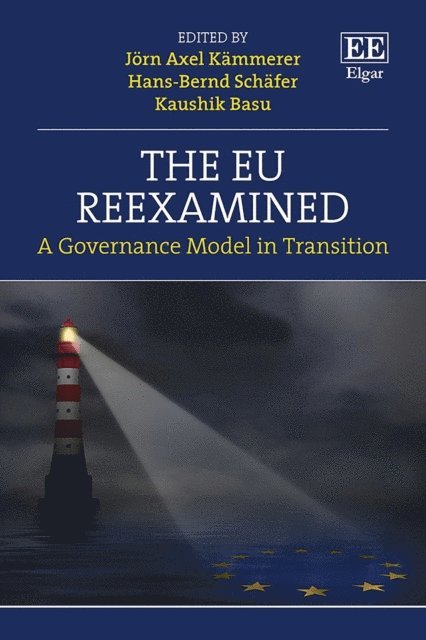
EU Reexamined
A Governance Model in Transition
Av Jörn A. Kämmerer, Hans-Bernd Schäfer m. fl.
Inbunden, 2024
2049 kr
Lägg i varukorg
Adopting an interdisciplinary approach, this book examines the experience of the European Union in bringing multiple sovereign nations under a common economic umbrella, and goes on to ask if the EU can serve as a blueprint for other regions that are striving for economic integration or if it is …
EU Reexamined
A Governance Model in Transition
Av Kaushik Basu, Hans-Bernd Schafer m. fl.
E-bok, 2024
413 kr
Lägg i varukorg
Adopting an interdisciplinary approach, this book examines the experience of the European Union in bringing multiple sovereign nations under a common economic umbrella, and goes on to ask if the EU can serve as a blueprint for other regions that are striving for economic integration or if it is …
Interdisciplinary approaches to literacy and development
Av Anna Robinson-Pant, Bryan Maddox m. fl.
E-bok, 2013
444 kr
Lägg i varukorg
The links between literacy and development have been the focus of research conducted by both economists and anthropologists. Yet researchers from these different disciplines have tended to work in isolation from each other. This book aims to create a space for new interdisciplinary debate in this …
Interdisciplinary approaches to literacy and development
Av Anna Robinson-Pant, Bryan Maddox m. fl.
E-bok, 2013
430 kr
Lägg i varukorg
The links between literacy and development have been the focus of research conducted by both economists and anthropologists. Yet researchers from these different disciplines have tended to work in isolation from each other. This book aims to create a space for new interdisciplinary debate in this …
Beyond the Invisible Hand
Groundwork for a New Economics
Av Kaushik Basu
E-bok, 2010
412 kr
Lägg i varukorg
Why economics needs to focus on fairness and not just efficiency One of the central tenets of mainstream economics is Adam Smith''s proposition that, given certain conditions, self-interested behavior by individuals leads them to the social good, almost as if orchestrated by an invisible hand. This …
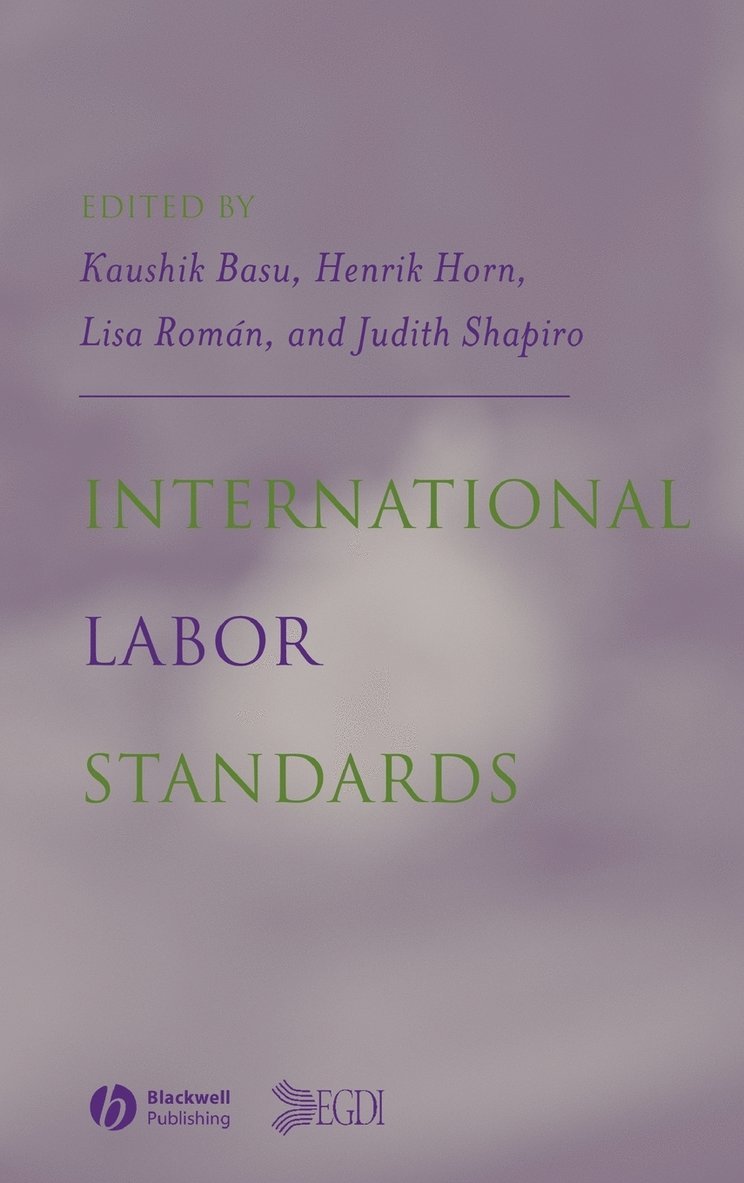
International Labor Standards
History, Theory, and Policy Options
Inbunden, 2003
1733 kr
Lägg i varukorg
International Labor Standards: History, Theory, and Policy OptionsThis book addresses the controversial call for international labor standards, seeking to productively further this debate by considering the economic implications and history of these standards. A result of an initiative by Professor …
International Labor Standards
History, Theory, and Policy Options
Av Basu, Horn Henrik m. fl.
Häftad, 2003
741 kr
Lägg i varukorg
International Labor Standards: History, Theory, and Policy OptionsThis book addresses the controversial call for international labor standards, seeking to productively further this debate by considering the economic implications and history of these standards. A result of an initiative by Professor …
International Labor Standards
History, Theory, and Policy Options
Av Judith Shapiro, Lisa Roman m. fl.
E-bok, 2008
2013 kr
Lägg i varukorg
This book addresses the controversial call for international labor standards, seeking to productively further this debate by considering the economic implications and history of these standards. A result of an initiative by Professor Kaushik Basu in his capacity as member of the Expert Group of …
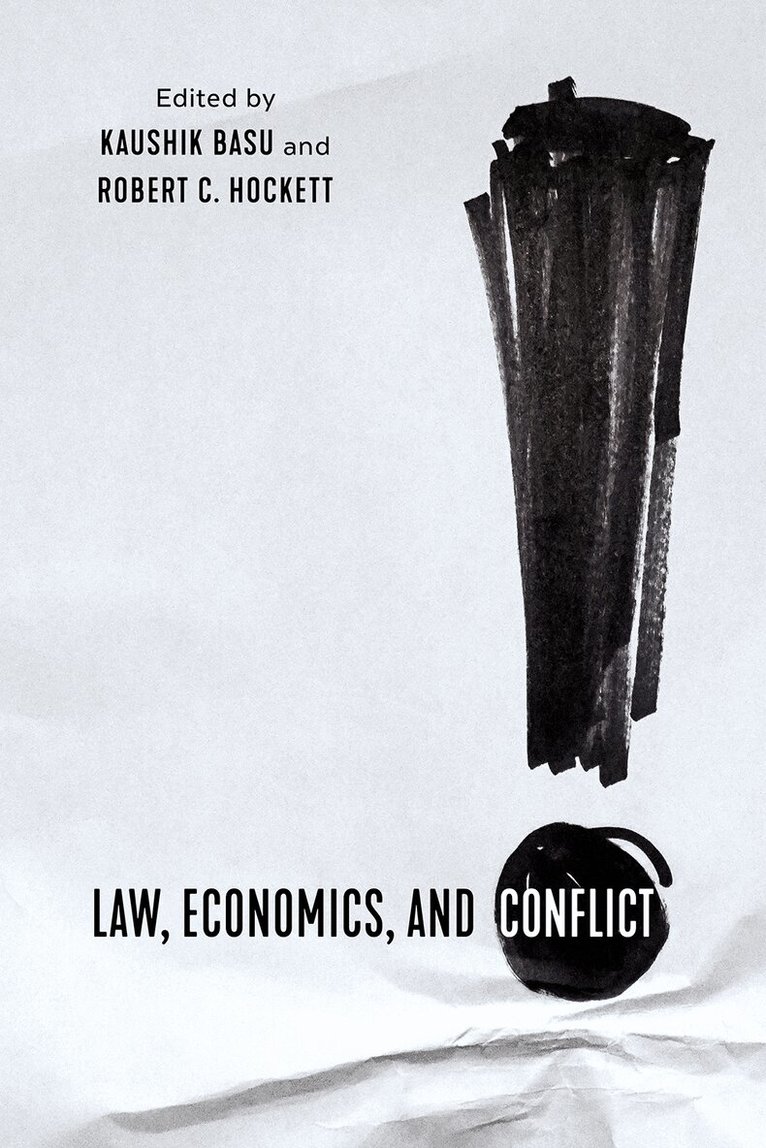
Law, Economics, and Conflict
Av Kaushik Basu, Robert C. Hockett
Häftad, 2021
346 kr
Lägg i varukorg
In Law, Economics, and Conflict, Kaushik Basu and Robert C. Hockett bring together international experts to offer new perspectives on how to take analytic tools from the realm of academic research out into the real world to address pressing policy questions. As the essays discuss, political …
Law, Economics, and Conflict
Av Kaushik Basu, Robert C. Hockett
Inbunden, 2021
1645 kr
Lägg i varukorg
In Law, Economics, and Conflict, Kaushik Basu and Robert C. Hockett bring together international experts to offer new perspectives on how to take analytic tools from the realm of academic research out into the real world to address pressing policy questions. As the essays discuss, political …
Reason to Be Happy
Why logical thinking is the key to a better life
Av Kaushik Basu
E-bok, 2024
170 kr
Lägg i varukorg
'Reason to Be Happy is a wise and witty book that shows how thinking clearly can help us find happiness in our daily lives, get more of what we want, and even make the world a better place' Hannah FryWhy do our friends have more friends than we do? How do you book the best available seats on a …