Keith Hampson - Böcker
Visar alla böcker från författaren Keith Hampson. Handla med fri frakt och snabb leverans.
8 produkter
8 produkter
724 kr
Skickas inom 10-15 vardagar
In an increasingly globalised built environment industry, achieving higher levels of integration across organisational and software boundaries can lead to improved economic, social and environmental outcomes. This book is the direct result of a collaborative global network of industry and academic researchers spread across nine countries as part of CIB’s (International Council for Research and Innovation in Building and Construction) Task Group 90 (TG90) Information Integration in Construction (IICON). The book provides a broad view of some of the opportunities and challenges brought by integrating information across organisational and system boundaries in the built environment industry. Chapters cover a large range of topics and are separated into three sections: resources, processes and added value. They provide a much-needed international perspective on a current global evolution in the industry and present leading original research and valuable lessons for researchers, industry practitioners, government clients and policy makers across the industry. Key features include: a broad range of topics that are not covered elsewhere in the literature; contributions from a diverse group of industry research leaders from across the globe; exemplar case studies providing real-world examples of where information integration has been a key factor for success or lack thereof has been at the root cause of failure; an analysis of future priority areas for research and development investment as well as their strategic implications for public and private decision-makers; the book will deliver innovation in best practice methodology for information sharing across disciplines and between the design, construction and asset management sectors.
1 855 kr
Tillfälligt slut
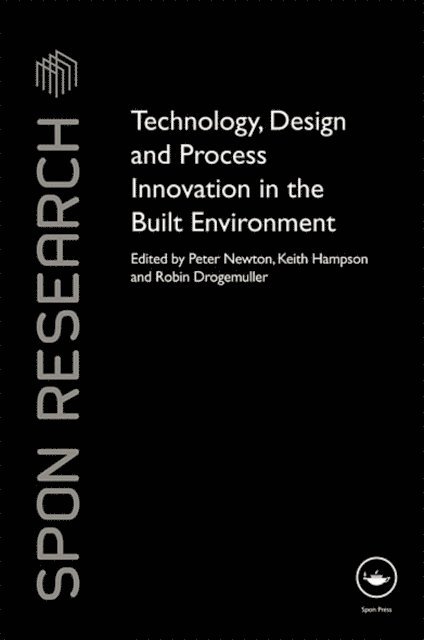
Buildings and infrastructure represent principal assets of any national economy as well as prime sources of environmental degradation. Making them more sustainable represents a key challenge for the construction, planning and design industries and governments at all levels; and the rapid urbanisation of the 21st century has turned this into a global challenge.This book embodies the results of a major research programme by members of the Australia Co-operative Research Centre for Construction Innovation and its global partners, presented for an international audience of construction researchers, senior professionals and advanced students. It covers four themes, applied to regeneration as well as to new build, and within the overall theme of Innovation: Sustainable Materials and Manufactures, focusing on building material products, their manufacture and assembly – and the reduction of their ecological ‘fingerprints’, the extension of their service lives, and their re-use and recyclability. It also explores the prospects for applying the principles of the assembly line. Virtual Design, Construction and Management, viewed as increasing sustainable development through automation, enhanced collaboration (such as virtual design teams), real time BL performance assessment during design, simulation of the construction process, life-cycle management of project information (zero information loss) risk minimisation, and increased potential for innovation and value adding. Integrating Design, Construction and Facility Management over the Project Life Cycle, by converging ICT, design science engineering and sustainability science. Integration across spatial scales, enabling building–infrastructure synergies (such as water and energy efficiency). Convergences between IT and design and operational processes are also viewed as a key platform increased sustainability.
2 361 kr
Skickas inom 10-15 vardagar
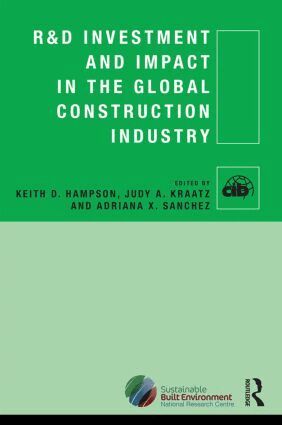
R&D Investment and Impact in the Global Construction Industry brings together contributions from leading industry researchers in a diverse group of countries to investigate the role of research and development (R&D) in the construction industry. Investment in R&D is a proven factor in economic growth, and helps develop a more productive and innovative industry. This book explores how policy makers and industry leaders can better target future investment; and how industry and researchers can manage their efforts to improve productivity whilst addressing the environmental and social needs of their communities. Case studies present projects where R&D ideas funded by both the private and public sectors have been translated from research into practice or policy, and examine drivers, successes and barriers to the delivery of R&D in industry. Based on research from members of the CIB Task Group 85 (R&D Investment and Impact) and concluding with key insights for maximising the impact of R&D in the future, the book holds valuable lessons for practitioners, policy makers and researchers across the international construction industry.
1 434 kr
Skickas inom 7-10 vardagar
Construction has been an industry characterised by disputes, fierce competitiveness and fragmentation - all major obstacles to development. Now, however, a relationship-based approach to project procurement, through partnering and alliancing, aims to bring about a fundamental change. This book addresses the critical relationship issues for a more collaborative and sustainable construction industry. It looks at how project procurement and project alliancing partner selection works, and how risk and crisis resolution are managed. It provides readers with guidance and models on how to put a relationship-based approach to procurement into practice, drawing on specific prototypes from an actual, successful project that can be adapted.
2 444 kr
Skickas inom 10-15 vardagar
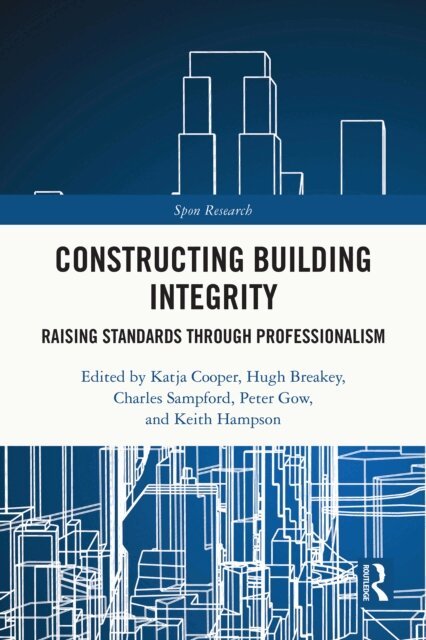
Constructing Building Integrity examines how ethical and professional standards can be raised in the residential apartment sector. Recent incidents in a number of countries, culminating in London’s Grenfell Tower inferno that claimed 72 lives, have highlighted systemic failures in the building industry’s professional and regulatory standards frameworks. These disasters raise serious questions over how consumer confidence and public trust can be improved when outcomes for multi-level, multi-owned apartment buildings remain sub-optimal.To address this issue, the book explores how cross-professional interactions, regulatory oversight, public accountability, and the ‘integrity systems’ that govern individual professions' ethical and professional standards can be strengthened to enhance professionalism and improve consumer outcomes.Focusing primarily on Australia but with wider relevance, the book draws on interdisciplinary research and insights from academics and industry experts. It discusses how integrity system components function and interact, how ethical risks and challenges impede their effectiveness, and what additional mechanisms can strengthen them. It provides timely guidance for built environment students, industry professionals, regulators, and businesses active in the sector on how product quality and professionalism can be enhanced across the life-cycle of residential apartment buildings.
752 kr
Skickas inom 10-15 vardagar
R&D Investment and Impact in the Global Construction Industry brings together contributions from leading industry researchers in a diverse group of countries to investigate the role of research and development (R&D) in the construction industry. Investment in R&D is a proven factor in economic growth, and helps develop a more productive and innovative industry. This book explores how policy makers and industry leaders can better target future investment; and how industry and researchers can manage their efforts to improve productivity whilst addressing the environmental and social needs of their communities. Case studies present projects where R&D ideas funded by both the private and public sectors have been translated from research into practice or policy, and examine drivers, successes and barriers to the delivery of R&D in industry. Based on research from members of the CIB Task Group 85 (R&D Investment and Impact) and concluding with key insights for maximising the impact of R&D in the future, the book holds valuable lessons for practitioners, policy makers and researchers across the international construction industry.
2 374 kr
Skickas inom 10-15 vardagar
In an increasingly globalised built environment industry, achieving higher levels of integration across organisational and software boundaries can lead to improved economic, social and environmental outcomes. This book is the direct result of a collaborative global network of industry and academic researchers spread across nine countries as part of CIB’s (International Council for Research and Innovation in Building and Construction) Task Group 90 (TG90) Information Integration in Construction (IICON). The book provides a broad view of some of the opportunities and challenges brought by integrating information across organisational and system boundaries in the built environment industry. Chapters cover a large range of topics and are separated into three sections: resources, processes and added value. They provide a much-needed international perspective on a current global evolution in the industry and present leading original research and valuable lessons for researchers, industry practitioners, government clients and policy makers across the industry. Key features include: a broad range of topics that are not covered elsewhere in the literature; contributions from a diverse group of industry research leaders from across the globe; exemplar case studies providing real-world examples of where information integration has been a key factor for success or lack thereof has been at the root cause of failure; an analysis of future priority areas for research and development investment as well as their strategic implications for public and private decision-makers; the book will deliver innovation in best practice methodology for information sharing across disciplines and between the design, construction and asset management sectors.
676 kr
Skickas inom 10-15 vardagar
Buildings and infrastructure represent principal assets of any national economy as well as prime sources of environmental degradation. Making them more sustainable represents a key challenge for the construction, planning and design industries and governments at all levels; and the rapid urbanisation of the 21st century has turned this into a global challenge.This book embodies the results of a major research programme by members of the Australia Co-operative Research Centre for Construction Innovation and its global partners, presented for an international audience of construction researchers, senior professionals and advanced students. It covers four themes, applied to regeneration as well as to new build, and within the overall theme of Innovation: Sustainable Materials and Manufactures, focusing on building material products, their manufacture and assembly – and the reduction of their ecological ‘fingerprints’, the extension of their service lives, and their re-use and recyclability. It also explores the prospects for applying the principles of the assembly line. Virtual Design, Construction and Management, viewed as increasing sustainable development through automation, enhanced collaboration (such as virtual design teams), real time BL performance assessment during design, simulation of the construction process, life-cycle management of project information (zero information loss) risk minimisation, and increased potential for innovation and value adding. Integrating Design, Construction and Facility Management over the Project Life Cycle, by converging ICT, design science engineering and sustainability science. Integration across spatial scales, enabling building–infrastructure synergies (such as water and energy efficiency). Convergences between IT and design and operational processes are also viewed as a key platform increased sustainability.