Keyan G. Tomaselli – författare
2 195 kr
Skickas inom 10-15 vardagar
2 193 kr
Skickas inom 10-15 vardagar
600 kr
Skickas inom 10-15 vardagar
1 396 kr
Skickas inom 10-15 vardagar
590 kr
Skickas inom 10-15 vardagar
731 kr
Läs direkt efter köp
706 kr
Läs direkt efter köp
This volume adopts a transversal South-South approach to the study of visual culture in transnational, transcultural, and geopolitical contexts.
Every day hundreds of people travel back and forth between southern countries, including Australia, Argentina, Brazil, Chile, New Zealand, Indonesia, Timor-Leste, and South Africa. With these people travel cultures, experiences, memories, and images. This creates the conditions for the generation, sharing, and circulation of new knowledge that is both southern and about the South as a specific kind of material and imaginary territory (or territories). It does so through the study of the southern hemisphere’s screen cultures, addressing the broad spectrum of cultural expression in both traditional and new screen media, including film, television, video, digital, interactive, and online and portable technologies.
This book was originally published as a special issue of Critical Arts.
706 kr
Läs direkt efter köp
This volume adopts a transversal South-South approach to the study of visual culture in transnational, transcultural, and geopolitical contexts.
Every day hundreds of people travel back and forth between southern countries, including Australia, Argentina, Brazil, Chile, New Zealand, Indonesia, Timor-Leste, and South Africa. With these people travel cultures, experiences, memories, and images. This creates the conditions for the generation, sharing, and circulation of new knowledge that is both southern and about the South as a specific kind of material and imaginary territory (or territories). It does so through the study of the southern hemisphere’s screen cultures, addressing the broad spectrum of cultural expression in both traditional and new screen media, including film, television, video, digital, interactive, and online and portable technologies.
This book was originally published as a special issue of Critical Arts.
682 kr
Läs direkt efter köp
This book examines China’s identity transformations with a focus on self-perceptions and their representations and communication in the mass media. By considering the internal dynamics of change, it explores the emerging multifaceted ‘China brand’.
With its growing economic clout, China has taken a proactive stance in shaping global economic and strategic order through ambitious programmes such as the Asian Infrastructure Investment Bank and the ‘Belt and Road’ initiative. However, as a developing country, China is at pains to manage its own transformations while trying to carve out an international identity. Arguably, China’s unique sense of history and identities may lead to a ‘contested modernity’ or ‘multiple modernities’; radically different from the prevalent classical theories of modernisation and convergence of industrial societies. To understand China’s trajectory of future development has been a major issue in international affairs. This book is concerned with how China’s hybridised identities are articulated, and intertwined with situational, institutional, and societal dynamics – and how they are interwoven with China’s international outlook which converges with or diverges from China’s historical assumptions and beliefs.
This book will be of interest to those studying China’s identity in the media; situated at the juncture of past, present, and future, and between China and the wider world. The chapters in this book were originally published in Critical Arts.
706 kr
Läs direkt efter köp
This book examines China’s identity transformations with a focus on self-perceptions and their representations and communication in the mass media. By considering the internal dynamics of change, it explores the emerging multifaceted ‘China brand’.
With its growing economic clout, China has taken a proactive stance in shaping global economic and strategic order through ambitious programmes such as the Asian Infrastructure Investment Bank and the ‘Belt and Road’ initiative. However, as a developing country, China is at pains to manage its own transformations while trying to carve out an international identity. Arguably, China’s unique sense of history and identities may lead to a ‘contested modernity’ or ‘multiple modernities’; radically different from the prevalent classical theories of modernisation and convergence of industrial societies. To understand China’s trajectory of future development has been a major issue in international affairs. This book is concerned with how China’s hybridised identities are articulated, and intertwined with situational, institutional, and societal dynamics – and how they are interwoven with China’s international outlook which converges with or diverges from China’s historical assumptions and beliefs.
This book will be of interest to those studying China’s identity in the media; situated at the juncture of past, present, and future, and between China and the wider world. The chapters in this book were originally published in Critical Arts.
812 kr
Läs direkt efter köp
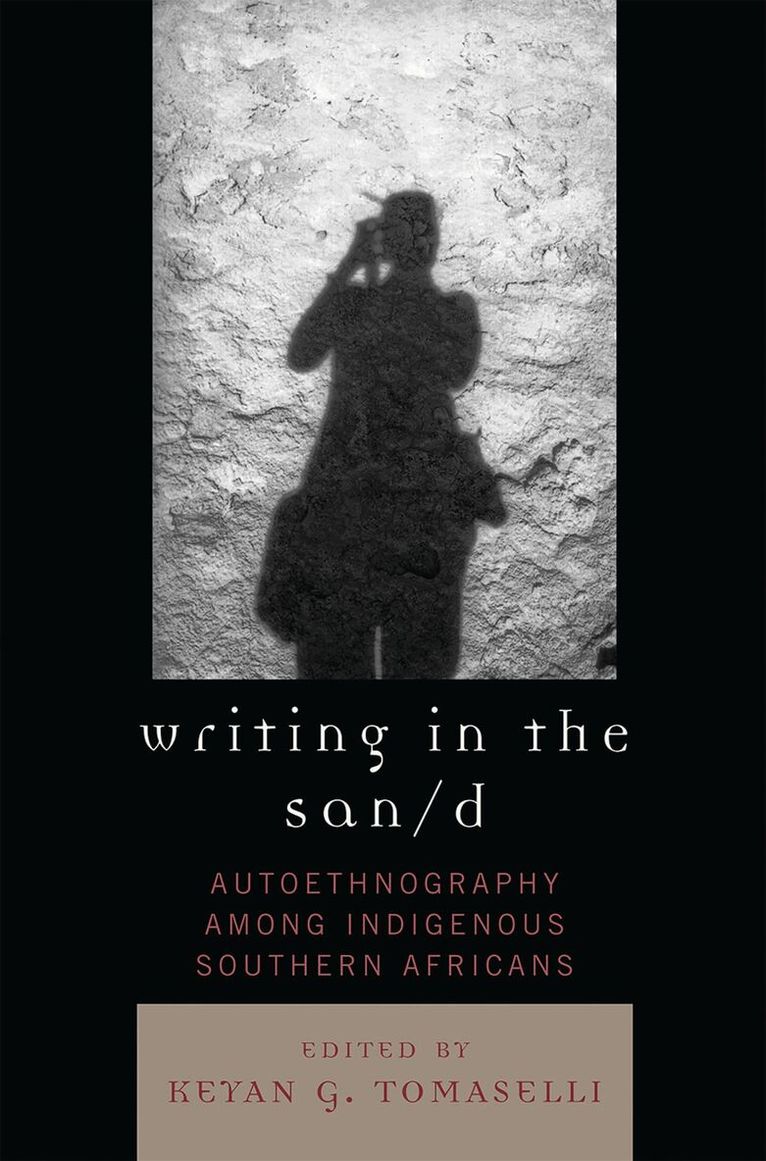
The San (hunter- gatherers) and Khoe (herders) of southern Africa were dispossessed of their land before, during and after the European colonial period, which started in 1652. They were often enslaved and forbidden from practicing their culture and speaking their languages. In South Africa, under apartheid, after 1948, they were reclassified as “Coloured” which further undermined Khoe and San culture, forcing them to reconfigure and realign their identities and loyalties. Southern Africa is no longer under colonial or apartheid rule; the San and Khoe, however, continue in the struggle to maintain the remnants of their languages and cultures, and are marginalised by the dominant peoples of the region. The San in particular, continue to command very extensive research attention from a variety of disciplines, from anthropology and linguistics to genetics. They are, however, usually studied as static historical objects but they are not merely peoples of the past, as is often assumed; they are very much alive in contemporary society with cultural and language needs.
This book brings together studies from a range of disciplines to examine what it means to be Indigenous Khoe and San in contemporary southern Africa. It considers the current constraints on Khoe and San identity, language and culture, constantly negotiating an indeterminate social positioning where they are treated as the inconvenient indigenous. Usually studied as original anthropos, but out of their time, this book shifts attention from the past to the present, and how the San have negotiated language, literacy and identity for coping in the period of modernity. It reveals that Afrikaans is indeed an African language, incubated not only by Cape Malay slaves working in the kitchens of the early Dutch settlers, but also by the Khoe and San who interacted with sailors from passing ships plying the West coast of southern Africa from the 14th century. The book re- examines the idea of literacy, its relationship to language, and how these shape identity.
The chapters in this book were originally published in the journal Critical Arts: South-North Cultural and Media Studies.
812 kr
Läs direkt efter köp
The San (hunter- gatherers) and Khoe (herders) of southern Africa were dispossessed of their land before, during and after the European colonial period, which started in 1652. They were often enslaved and forbidden from practicing their culture and speaking their languages. In South Africa, under apartheid, after 1948, they were reclassified as “Coloured” which further undermined Khoe and San culture, forcing them to reconfigure and realign their identities and loyalties. Southern Africa is no longer under colonial or apartheid rule; the San and Khoe, however, continue in the struggle to maintain the remnants of their languages and cultures, and are marginalised by the dominant peoples of the region. The San in particular, continue to command very extensive research attention from a variety of disciplines, from anthropology and linguistics to genetics. They are, however, usually studied as static historical objects but they are not merely peoples of the past, as is often assumed; they are very much alive in contemporary society with cultural and language needs.
This book brings together studies from a range of disciplines to examine what it means to be Indigenous Khoe and San in contemporary southern Africa. It considers the current constraints on Khoe and San identity, language and culture, constantly negotiating an indeterminate social positioning where they are treated as the inconvenient indigenous. Usually studied as original anthropos, but out of their time, this book shifts attention from the past to the present, and how the San have negotiated language, literacy and identity for coping in the period of modernity. It reveals that Afrikaans is indeed an African language, incubated not only by Cape Malay slaves working in the kitchens of the early Dutch settlers, but also by the Khoe and San who interacted with sailors from passing ships plying the West coast of southern Africa from the 14th century. The book re- examines the idea of literacy, its relationship to language, and how these shape identity.
The chapters in this book were originally published in the journal Critical Arts: South-North Cultural and Media Studies.
793 kr
Läs direkt efter köp
This volume examines the crisis of humanities narratives in the context of neoliberal capitalism and of the emergence and consolidation of the metrics-driven, corporate, managerial university. Do narratives of the crisis of the humanities mobilize specific notions of value and prestige? How are these notions classed, gendered and racialized? How do narratives of the crisis of the humanities relate to current debates and contestations surrounding decolonization? Does the crisis of a traditional configuration of the humanities open up opportunities to use their institutional space for work that is both socially and politically relevant and academically rigorous? The aim is to provide a counter-narrative of the present and future of the humanities.
In addition to the study of a multiplicity of media texts and other multimodal expressive forms, formats and platforms and genres, a communicative turn in the humanities entails deepening the study of the value chains in which they are inserted and their conditions of production, circulation and reception. Communicative and digital capitalism, now labelled the Fourth Industrial Revolution, is on its way to bringing its own waves of struggles and confrontations to our campuses and beyond, to which humanities scholars and activists can make a vital contribution—should some of us decide to do so.
This book will be of interest to researchers and advanced students of art, literature, media and cultural studies, education, politics, sociology, and social and cultural anthropology. The chapters in this book were originally published in the journal Critical Arts: South-North Cultural and Media Studies.
765 kr
Läs direkt efter köp
This volume examines the crisis of humanities narratives in the context of neoliberal capitalism and of the emergence and consolidation of the metrics-driven, corporate, managerial university. Do narratives of the crisis of the humanities mobilize specific notions of value and prestige? How are these notions classed, gendered and racialized? How do narratives of the crisis of the humanities relate to current debates and contestations surrounding decolonization? Does the crisis of a traditional configuration of the humanities open up opportunities to use their institutional space for work that is both socially and politically relevant and academically rigorous? The aim is to provide a counter-narrative of the present and future of the humanities.
In addition to the study of a multiplicity of media texts and other multimodal expressive forms, formats and platforms and genres, a communicative turn in the humanities entails deepening the study of the value chains in which they are inserted and their conditions of production, circulation and reception. Communicative and digital capitalism, now labelled the Fourth Industrial Revolution, is on its way to bringing its own waves of struggles and confrontations to our campuses and beyond, to which humanities scholars and activists can make a vital contribution—should some of us decide to do so.
This book will be of interest to researchers and advanced students of art, literature, media and cultural studies, education, politics, sociology, and social and cultural anthropology. The chapters in this book were originally published in the journal Critical Arts: South-North Cultural and Media Studies.
600 kr
Skickas inom 10-15 vardagar
2 524 kr
Skickas inom 10-15 vardagar
690 kr
Skickas inom 10-15 vardagar
2 281 kr
Skickas inom 10-15 vardagar
673 kr
Skickas inom 10-15 vardagar
2 508 kr
Skickas inom 10-15 vardagar
661 kr
Skickas inom 10-15 vardagar
2 435 kr
Skickas inom 10-15 vardagar
642 kr
Skickas inom 10-15 vardagar
2 508 kr
Skickas inom 10-15 vardagar
2 690 kr
Läs direkt efter köp
This volume provides an overview of fundamental or ‘grounding’ themes in African Cultural Studies, including the articulation of African cultural studies, the issue of Africa’s diaspora(s), African identity and identifications, and media studies in Africa and its relationship with cultural studies. The first of two volumes, the book predominantly pulls together a rich reservoir of previously published articles from Critical Arts: South-North Cultural and Media Studies, mapping a long history of the field that draws from a diverse range of origins and locations, especially from within Africa itself.
The first section of the book addresses how African cultural studies has been called for and explained, both as a comprehensive continental (and sometimes national) discourse and as being in conversation with established global cultural studies. The second section addresses the African diaspora and what might be termed diasporic African cultural studies. A third principal theme explored is how African identities and identifications are articulated in African cultural studies. On spatiality, the volume takes a stance on the exclusive continental versus continuity conception of Africa: the African diaspora is treated as contributory and its relationship to the continent as problematic, while taking up continental Africa as the principal location of African cultural studies. In terms of identity, Blackness is taken up as the dominant (but importantly, not exclusive) racial identity, and identification of African cultural studies and gender and social class are also addressed in novel ways. The book ends with an examination of the complex relationship between media studies and cultural studies. This book will be a key resource for academics, researchers and advanced students of African cultural studies, media and cultural studies, African studies, history, politics, sociology, and social and cultural anthropology, while also being of interest to those seeking an introduction to the sub-field of African cultural studies.
2 690 kr
Läs direkt efter köp
This volume provides an overview of fundamental or ‘grounding’ themes in African Cultural Studies, including the articulation of African cultural studies, the issue of Africa’s diaspora(s), African identity and identifications, and media studies in Africa and its relationship with cultural studies. The first of two volumes, the book predominantly pulls together a rich reservoir of previously published articles from Critical Arts: South-North Cultural and Media Studies, mapping a long history of the field that draws from a diverse range of origins and locations, especially from within Africa itself.
The first section of the book addresses how African cultural studies has been called for and explained, both as a comprehensive continental (and sometimes national) discourse and as being in conversation with established global cultural studies. The second section addresses the African diaspora and what might be termed diasporic African cultural studies. A third principal theme explored is how African identities and identifications are articulated in African cultural studies. On spatiality, the volume takes a stance on the exclusive continental versus continuity conception of Africa: the African diaspora is treated as contributory and its relationship to the continent as problematic, while taking up continental Africa as the principal location of African cultural studies. In terms of identity, Blackness is taken up as the dominant (but importantly, not exclusive) racial identity, and identification of African cultural studies and gender and social class are also addressed in novel ways. The book ends with an examination of the complex relationship between media studies and cultural studies. This book will be a key resource for academics, researchers and advanced students of African cultural studies, media and cultural studies, African studies, history, politics, sociology, and social and cultural anthropology, while also being of interest to those seeking an introduction to the sub-field of African cultural studies.
2 690 kr
Läs direkt efter köp
This volume focuses on the directions that African cultural studies has taken over the years and covers the following central themes: contemporary issues in African cultural studies; Gender and the making of identity; the dual discourses of Afropessimism and Afrofuturism; problematizing the African diaspora and methodology and African cultural studies.
The second of two volumes, the book predominantly pulls together a rich reservoir of previously published articles from Critical Arts: South-North Cultural and Media Studies. Taken together the two volumes re-expose for international readers sets of theories, methodologies and studies that not only have been influenced by global trends, but which themselves have contributed to shaping those trends. While the first volume addressed foundational themes and issues in African cultural studies, this second volume focuses on the directions that African cultural studies is taking; the complex ways in which gender can be seen at work in the making of identity; the juxtaposition of two relatively new themes in African cultural studies, namely Afropessimism and Afrofuturism; the ways in which the presence of continental Africans in the diaspora problematize taken-for-granted conceptions of diaspora and diasporic identity; identifying some of the methodological issues and approaches that have been taken up in African cultural studies work.
This book will be a key resource for academics, researchers and advanced students of African cultural studies, media and cultural studies, African studies, history, politics, sociology, and social and cultural anthropology, while also being of interest to those seeking an introduction to the sub-field of African cultural studies.
2 690 kr
Läs direkt efter köp
This volume focuses on the directions that African cultural studies has taken over the years and covers the following central themes: contemporary issues in African cultural studies; Gender and the making of identity; the dual discourses of Afropessimism and Afrofuturism; problematizing the African diaspora and methodology and African cultural studies.
The second of two volumes, the book predominantly pulls together a rich reservoir of previously published articles from Critical Arts: South-North Cultural and Media Studies. Taken together the two volumes re-expose for international readers sets of theories, methodologies and studies that not only have been influenced by global trends, but which themselves have contributed to shaping those trends. While the first volume addressed foundational themes and issues in African cultural studies, this second volume focuses on the directions that African cultural studies is taking; the complex ways in which gender can be seen at work in the making of identity; the juxtaposition of two relatively new themes in African cultural studies, namely Afropessimism and Afrofuturism; the ways in which the presence of continental Africans in the diaspora problematize taken-for-granted conceptions of diaspora and diasporic identity; identifying some of the methodological issues and approaches that have been taken up in African cultural studies work.
This book will be a key resource for academics, researchers and advanced students of African cultural studies, media and cultural studies, African studies, history, politics, sociology, and social and cultural anthropology, while also being of interest to those seeking an introduction to the sub-field of African cultural studies.
970 kr
Läs direkt efter köp
This book brings together a selection of articles that have been published throughout a series of special issues of the journal Critical Arts: South-North Cultural and Media Studies that originally focused on the so-called ‘ethnographic turn’ in contemporary arts. An increasing wave of art events has occurred since the 1990s that have displayed significant similarities with anthropology and ethnography in their theorizations of cultural difference and representational practices. The aim of these works was to revisit the ethnographic turn in contemporary art by bringing together contributions from theorists, artists and critics, to engage critically with the ethnographic perspective in their work. This focus on the ‘ethnographic turn’ has been expanded in subsequent special issues to explore how culture and society can be critically explored and challenged trough the detour of art, how contemporary art practices engage with participation, interaction and technology in an increasingly digital (screen) culture, and what the role can be of (critical) art to conceptualize, contest and/ or develop an engaged and critical pedagogy.
This collection aims to re-expose the special issues to an international audience by presenting a (non-exhaustive) selection of articles that exemplify the different perspectives and discussions that are tackled throughout. It starts with three of the introductory articles that have attracted large readerships and that give a detailed introduction for the special issues. The compilation ends with three so-called Vignettes, these are short statements and reflections by artists about their practice, which are an important feature of the special issues.
936 kr
Läs direkt efter köp
This book brings together a selection of articles that have been published throughout a series of special issues of the journal Critical Arts: South-North Cultural and Media Studies that originally focused on the so-called ‘ethnographic turn’ in contemporary arts. An increasing wave of art events has occurred since the 1990s that have displayed significant similarities with anthropology and ethnography in their theorizations of cultural difference and representational practices. The aim of these works was to revisit the ethnographic turn in contemporary art by bringing together contributions from theorists, artists and critics, to engage critically with the ethnographic perspective in their work. This focus on the ‘ethnographic turn’ has been expanded in subsequent special issues to explore how culture and society can be critically explored and challenged trough the detour of art, how contemporary art practices engage with participation, interaction and technology in an increasingly digital (screen) culture, and what the role can be of (critical) art to conceptualize, contest and/ or develop an engaged and critical pedagogy.
This collection aims to re-expose the special issues to an international audience by presenting a (non-exhaustive) selection of articles that exemplify the different perspectives and discussions that are tackled throughout. It starts with three of the introductory articles that have attracted large readerships and that give a detailed introduction for the special issues. The compilation ends with three so-called Vignettes, these are short statements and reflections by artists about their practice, which are an important feature of the special issues.