Laurence Totelin – författare
722 kr
Skickas inom 10-15 vardagar
2 738 kr
Skickas inom 10-15 vardagar
762 kr
Skickas inom 10-15 vardagar
774 kr
Läs direkt efter köp
From ancient Egypt to Imperial Rome, from Greek medicine to early Christianity, this volume examines how human bodily fluids influenced ideas about gender, sexuality, politics, emotions, and morality, and how those ideas shaped later European thought.
Comprising 24 chapters across seven key themes—language, gender, eroticism, nutrition, dissolution, death, and afterlife—this volume investigates bodily fluids in the context of the current sensory turn. It asks fundamental questions about physicality and fluidity: how were bodily fluids categorised and differentiated? How were fluids trapped inside the body perceived, and how did this perception alter when those fluids were externalised? Do ancient approaches complement or challenge our modern sensibilities about bodily fluids? How were religious practices influenced by attitudes towards bodily fluids, and how did religious authorities attempt to regulate or restrict their appearance? Why were some fluids taboo, and others cherished? In what ways were bodily fluids gendered? Offering a range of scholarly approaches and voices, this volume explores how ideas about the body and the fluids it contained and externalised are culturally conditioned and ideologically determined. The analysis encompasses the key geographic centres of the ancient Mediterranean basin, including Greece, Rome, Byzantium, and Egypt. By taking a longue durée perspective across a richly intertwined set of territories, this collection is the first to provide a comprehensive, wide-ranging study of bodily fluids in the ancient world.
Bodily Fluids in Antiquity will be of particular interest to academic readers working in the fields of classics and its reception, archaeology, anthropology, and ancient to Early Modern history. It will also appeal to more general readers with an interest in the history of the body and history of medicine.
Chapter 10 of this book is freely available as a downloadable Open Access PDF at http://www.taylorfrancis.com under a Creative Commons Attribution-Non Commercial-No Derivatives (CC-BY-NC-ND) 4.0 license.
774 kr
Läs direkt efter köp
From ancient Egypt to Imperial Rome, from Greek medicine to early Christianity, this volume examines how human bodily fluids influenced ideas about gender, sexuality, politics, emotions, and morality, and how those ideas shaped later European thought.
Comprising 24 chapters across seven key themes—language, gender, eroticism, nutrition, dissolution, death, and afterlife—this volume investigates bodily fluids in the context of the current sensory turn. It asks fundamental questions about physicality and fluidity: how were bodily fluids categorised and differentiated? How were fluids trapped inside the body perceived, and how did this perception alter when those fluids were externalised? Do ancient approaches complement or challenge our modern sensibilities about bodily fluids? How were religious practices influenced by attitudes towards bodily fluids, and how did religious authorities attempt to regulate or restrict their appearance? Why were some fluids taboo, and others cherished? In what ways were bodily fluids gendered? Offering a range of scholarly approaches and voices, this volume explores how ideas about the body and the fluids it contained and externalised are culturally conditioned and ideologically determined. The analysis encompasses the key geographic centres of the ancient Mediterranean basin, including Greece, Rome, Byzantium, and Egypt. By taking a longue durée perspective across a richly intertwined set of territories, this collection is the first to provide a comprehensive, wide-ranging study of bodily fluids in the ancient world.
Bodily Fluids in Antiquity will be of particular interest to academic readers working in the fields of classics and its reception, archaeology, anthropology, and ancient to Early Modern history. It will also appeal to more general readers with an interest in the history of the body and history of medicine.
Chapter 10 of this book is freely available as a downloadable Open Access PDF at http://www.taylorfrancis.com under a Creative Commons Attribution-Non Commercial-No Derivatives (CC-BY-NC-ND) 4.0 license.
797 kr
Läs direkt efter köp
797 kr
Läs direkt efter köp
866 kr
Läs direkt efter köp
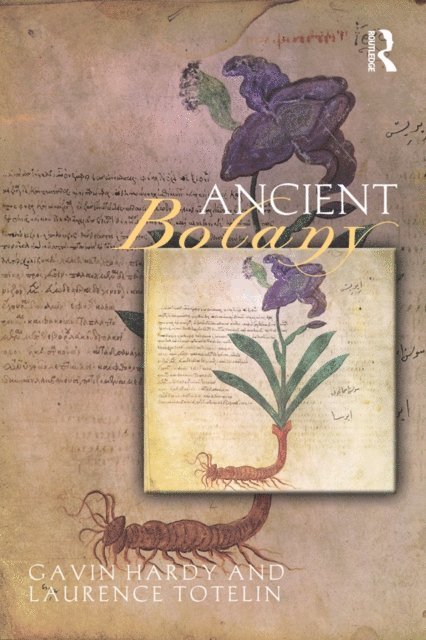
Gavin Hardy and Laurence Totelin have brought together their botanical and historical knowledge to produce this unique overview of ancient botany. It examines all the founding texts of botanical science, such as Theophrastus'' Enquiry into Plants, Dioscorides'' Materia Medica, Pliny the Elder''s Natural History, Nicolaus of Damascus'' On Plants, and Galen'' On Simple Remedies, but also includes lesser known texts ranging from the sixth century BCE to the seventh century CE, as well as some material evidence. The authors adopt a thematic approach rather than a chronological one, considering important issues such as the definition of a plant, nomenclature, classifications, physiology, the link between plants and their environment, and the numerous usages of plants in the ancient world. The book also takes care to place ancient botany in its historical, social and economic context. The authors have explained all technical botanical terms and ancient history notions, and as a result, this work will appeal to historians of ancient science, medicine and technology; classicists; and botanists interested in the history of their discipline.
866 kr
Läs direkt efter köp
Gavin Hardy and Laurence Totelin have brought together their botanical and historical knowledge to produce this unique overview of ancient botany. It examines all the founding texts of botanical science, such as Theophrastus'' Enquiry into Plants, Dioscorides'' Materia Medica, Pliny the Elder''s Natural History, Nicolaus of Damascus'' On Plants, and Galen'' On Simple Remedies, but also includes lesser known texts ranging from the sixth century BCE to the seventh century CE, as well as some material evidence. The authors adopt a thematic approach rather than a chronological one, considering important issues such as the definition of a plant, nomenclature, classifications, physiology, the link between plants and their environment, and the numerous usages of plants in the ancient world. The book also takes care to place ancient botany in its historical, social and economic context. The authors have explained all technical botanical terms and ancient history notions, and as a result, this work will appeal to historians of ancient science, medicine and technology; classicists; and botanists interested in the history of their discipline.
2 508 kr
Skickas inom 10-15 vardagar
2 800 kr
Skickas inom 10-15 vardagar
421 kr
Läs direkt efter köp
345 kr
Skickas inom 5-8 vardagar
995 kr
Skickas inom 5-8 vardagar
2 422 kr
Skickas inom 3-6 vardagar
1 683 kr
Läs direkt efter köp
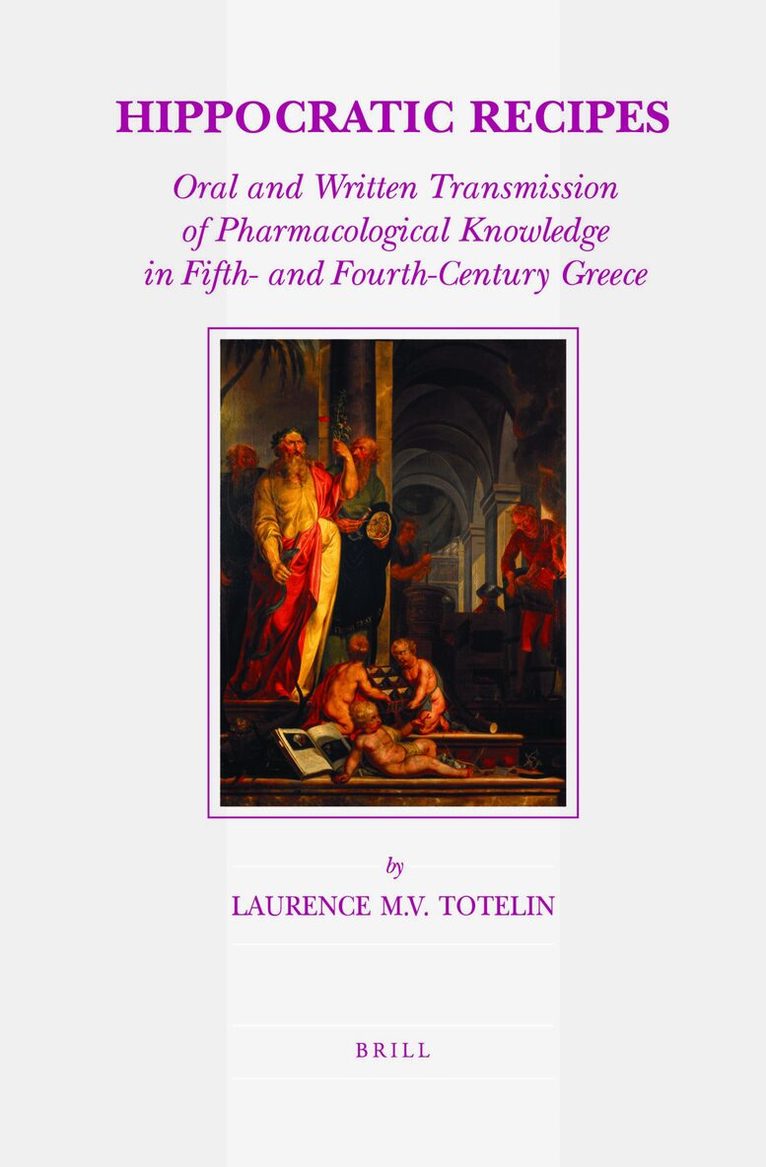
Hippocratic Recipes
Oral and Written Transmission of Pharmacological Knowledge in Fifth- and Fourth-Century Greece
3 144 kr
Skickas inom 5-8 vardagar