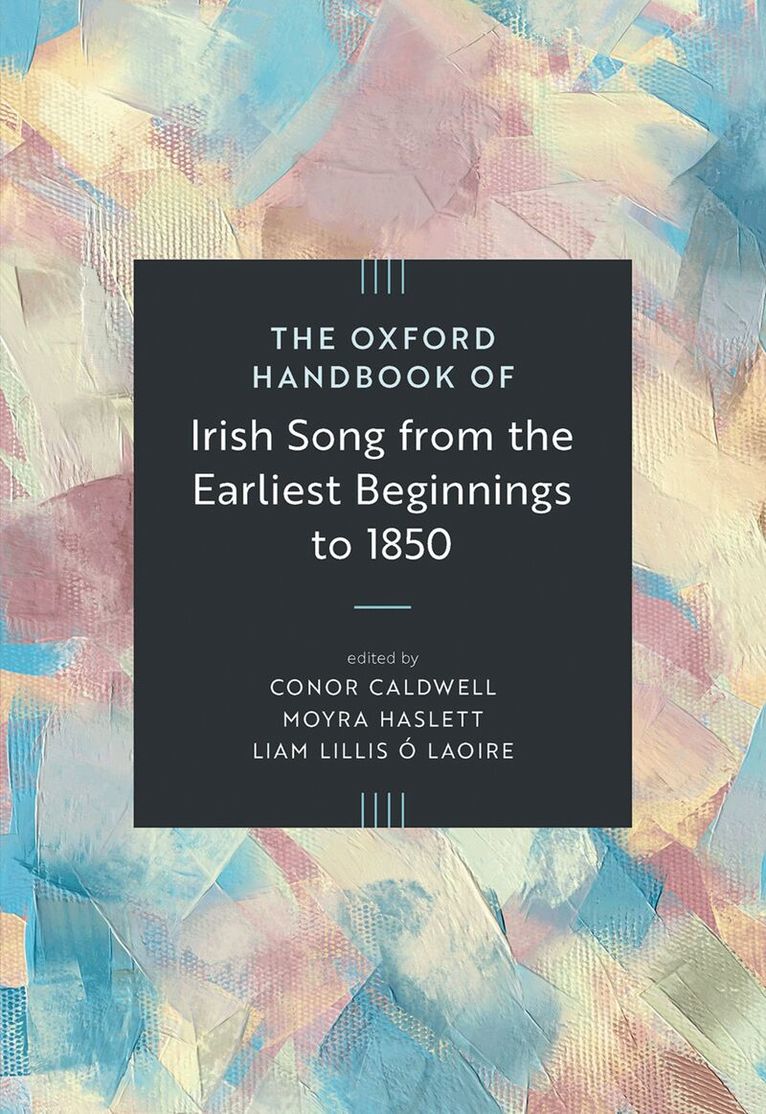
This Handbook explores song in Ireland from early times to the modern period across all traditions. From descriptions of song in the Old Irish period to an exploration of the music of keening, the volume breaks new ground in Irish musical and cultural studies. Thirty-nine chapters explore the rich diversity of singing traditions in Ireland, including sacred and ceremonial song, traditional singing in Irish and anglophone ballads, songs of love and of political activism, and examine how songs circulated in print, manuscript and oral forms. Turlough Carolan (Toirdhealbhach Ó Cearbhalláin) and Thomas Moore feature as identifiable and famous song-composers, in addition to eighteenth-century Gaelic poets and song-writers such as Seán Clárach Mac Domhnaill, Eoghan Rua Ó Súilleabháin and Máire Bhuí Ní Laeire. Notable collectors of Irish song also form an important strand: from Bunting's coterie of scribes to the work of Petrie and Goodman. Equally important, however, are the anonymous singers who transmitted diverse traditions of song through families and communities. This authoritative overview provides a platform for researchers across multiple disciplines to access knowledge about Irish song traditions as well as setting the scene for new research directions on the performance, social contexts, historical significance, and modern adaptations of Irish song.
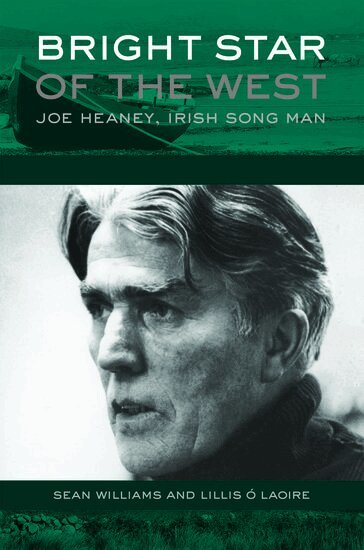
Bright Star of the West traces the life, repertoire, and influence of Joe Heaney, Ireland's greatest sean-nós ("old style") singer. Born in 1919, Joe Heaney grew up in a politically volatile time, as his native Ireland became a democracy. He found work and relative fame as a singer in London before moving to Scotland. Eventually, like many others searching for greater opportunity, he emigrated to the United States, where he worked as a doorman while supplementing his income with appearances at folk festivals, concerts and clubs. As his reputation and following grew, Heaney gained entry to the folk music scene and began leading workshops as a visiting artist at several universities. In 1982 the National Endowment for the Arts awarded Heaney America's highest honor in folk and traditional arts, the prestigious National Heritage Fellowship. Heaney's works did not become truly popular in his homeland until many years after his death. Today he is hailed as a seminal figure of traditional song and is revered by those who follow traditional music. Authors Sean Williams and Lillis Ó Laoire address larger questions about song, identity, and culture. They explore the deep ambivalence both the Irish and Irish-Americans felt toward the traditional aspects of their culture, examining other critical issues, such as gender and masculinity, authenticity, and contemporary marketing and consumption of sean-nós singing in both Ireland and the United States. Comingling Heaney's own words with the authors' comprehensive research and analysis, Bright Star of the West weaves a poignant critical biography of the man, the music, and his continuing legacy in Ireland and the United States.
Bright Star of the West examines the life, repertoire, and influence of Ireland''s greatest sean-nos (old-style) singer, Joe Heaney (1919-1984). Best known for popularing this form of Gaelic a cappella folk song in the United States, authors Sean Williams and Lillis ? Laoire reveal the ways in which Heaney''s life story demonstrates the intertwining of music with political memory and cultural understanding.
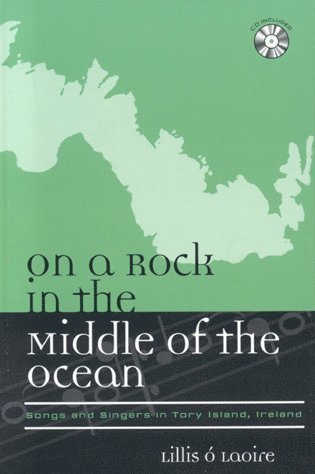
Taking as its subject the small Gaelic-speaking community of Tory Island off the Donegal coast of Ireland, On a Rock in the Middle of the Ocean tries to answer the deceptively simple question of why people sing. The book focuses on aspects of song transmission and performance, showing how early exposure to musical culture led certain individuals to be singled out and given special encouragement to express themselves. Individual desire and ability to overcome the rigors of social scrutiny are important factors in the development of an active public performer. In a special study of one song, author Lillis Ó Laoire shows how the song itself emerges as a mediator of dilemmas and tensions in island life. In a meticulous exposition of the links between music, text, and performance, the vicissitudes of island life are revealed while these tensions are alleviated by singing humorous ribald lyrics to provide a deliberate contrast. Comparisons are drawn to argue that the interpretation of songs to reveal particular worlds of meaning is a widespread human activity, found in similar configurations at both global and local levels. In Tory's context, the book further asserts that such mediation contributes to a strongly realized sense of identity and historical continuity among the islanders. The book includes an audio CD of folk music from Tory Island, featuring traditional ballads, tunes, and dances.
This Handbook explores song in Ireland from early times to the modern period across all traditions. From descriptions of song in the Old Irish period to an exploration of the music of keening, the volume breaks new ground in Irish musical and cultural studies. Thirty-nine chapters explore the rich diversity of singing traditions in Ireland, including sacred and ceremonial song, traditional singing in Irish and anglophone ballads, songs of love and of political activism, and examine how songs circulated in print, manuscript and oral forms. Turlough Carolan (Toirdhealbhach Ó Cearbhalláin) and Thomas Moore feature as identifiable and famous song-composers, in addition to eighteenth-century Gaelic poets and song-writers such as Seán Clárach Mac Domhnaill, Eoghan Rua Ó Súilleabháin and Máire Bhuí Ní Laeire. Notable collectors of Irish song also form an important strand: from Bunting's coterie of scribes to the work of Petrie and Goodman. Equally important, however, are the anonymous singers who transmitted diverse traditions of song through families and communities. This authoritative overview provides a platform for researchers across multiple disciplines to access knowledge about Irish song traditions as well as setting the scene for new research directions on the performance, social contexts, historical significance, and modern adaptations of Irish song.
Bright Star of the West traces the life, repertoire, and influence of Joe Heaney, Ireland's greatest sean-nós ("old style") singer. Born in 1919, Joe Heaney grew up in a politically volatile time, as his native Ireland became a democracy. He found work and relative fame as a singer in London before moving to Scotland. Eventually, like many others searching for greater opportunity, he emigrated to the United States, where he worked as a doorman while supplementing his income with appearances at folk festivals, concerts and clubs. As his reputation and following grew, Heaney gained entry to the folk music scene and began leading workshops as a visiting artist at several universities. In 1982 the National Endowment for the Arts awarded Heaney America's highest honor in folk and traditional arts, the prestigious National Heritage Fellowship. Heaney's works did not become truly popular in his homeland until many years after his death. Today he is hailed as a seminal figure of traditional song and is revered by those who follow traditional music. Authors Sean Williams and Lillis Ó Laoire address larger questions about song, identity, and culture. They explore the deep ambivalence both the Irish and Irish-Americans felt toward the traditional aspects of their culture, examining other critical issues, such as gender and masculinity, authenticity, and contemporary marketing and consumption of sean-nós singing in both Ireland and the United States. Comingling Heaney's own words with the authors' comprehensive research and analysis, Bright Star of the West weaves a poignant critical biography of the man, the music, and his continuing legacy in Ireland and the United States.
Bright Star of the West examines the life, repertoire, and influence of Ireland''s greatest sean-nos (old-style) singer, Joe Heaney (1919-1984). Best known for popularing this form of Gaelic a cappella folk song in the United States, authors Sean Williams and Lillis ? Laoire reveal the ways in which Heaney''s life story demonstrates the intertwining of music with political memory and cultural understanding.
Taking as its subject the small Gaelic-speaking community of Tory Island off the Donegal coast of Ireland, On a Rock in the Middle of the Ocean tries to answer the deceptively simple question of why people sing. The book focuses on aspects of song transmission and performance, showing how early exposure to musical culture led certain individuals to be singled out and given special encouragement to express themselves. Individual desire and ability to overcome the rigors of social scrutiny are important factors in the development of an active public performer. In a special study of one song, author Lillis Ó Laoire shows how the song itself emerges as a mediator of dilemmas and tensions in island life. In a meticulous exposition of the links between music, text, and performance, the vicissitudes of island life are revealed while these tensions are alleviated by singing humorous ribald lyrics to provide a deliberate contrast. Comparisons are drawn to argue that the interpretation of songs to reveal particular worlds of meaning is a widespread human activity, found in similar configurations at both global and local levels. In Tory's context, the book further asserts that such mediation contributes to a strongly realized sense of identity and historical continuity among the islanders. The book includes an audio CD of folk music from Tory Island, featuring traditional ballads, tunes, and dances.